How to Read a Tire Date Code on Your Car Tire Safely
What you need before checking tire age
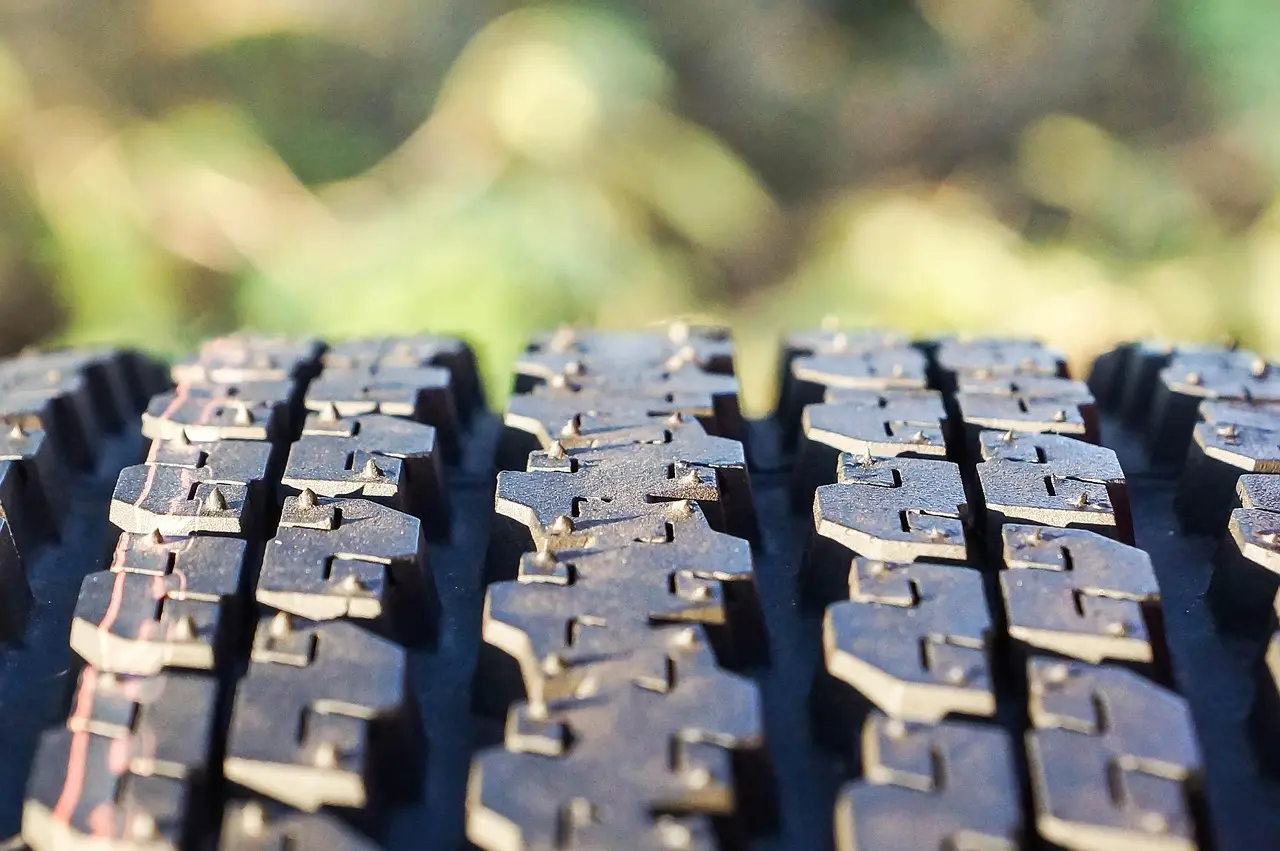


- A flashlight or a bright phone light
- A phone camera for zooming the sidewall stamp
- Gloves, if the wheel is dirty or hot
- A wheel chock if you need safer access on a slope
- Paper or a notes app to record all four tire codes
- Optional: a tire pressure gauge
- Optional: a tread-depth gauge
- Park on level ground and set the parking brake.
- Turn the steering wheel to expose more of the outer sidewall.
- Find the DOT/TIN string and photograph it.
- Check the inner sidewall if the date stamp is missing.
- Write down every code, including the spare tire.
- Compare the dates before you decide on replacement.
Where is the tire date code on the sidewall?
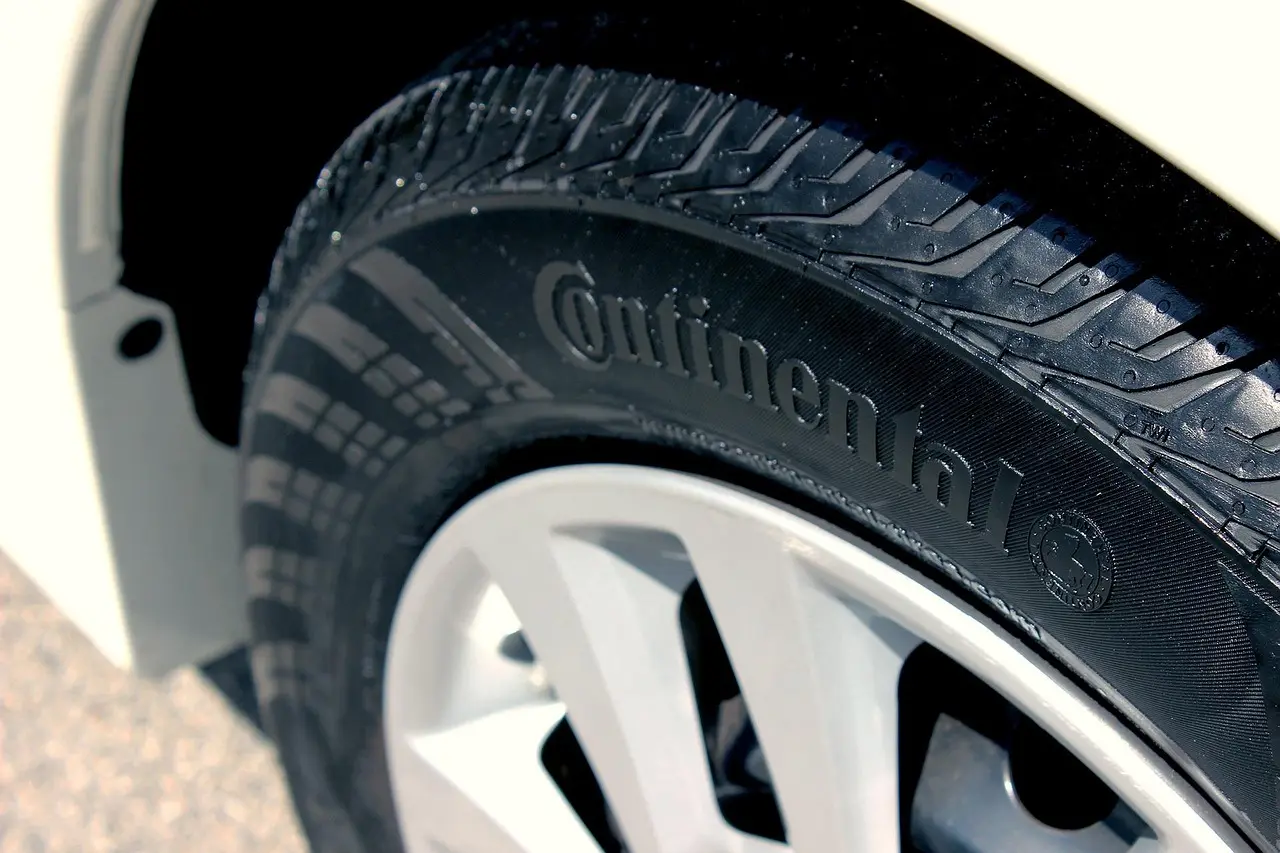
The date code is usually molded into the tire sidewall as part of the DOT Tire Identification Number, often in the last four digits and sometimes easier to spot on the outer sidewall first. Explain that the date code is usually the last four digits. If the stamp is hard to see, check the inner sidewall too; many tires hide the date where the wheel faces the suspension or brake hardware.
This guide is part of our Car tire maintenance guide series.
Lighting matters. Use a flashlight at a low angle so raised lettering throws a shadow, then rotate the wheel a little at a time. A phone camera can help more than your eyes because zoom makes faint molded numbers easier to read.
What to look for on the sidewall
The full DOT/TIN string can include the DOT prefix, a plant or manufacturing code, a tire size code, optional branding or model segments, and the date code at the end. Only the final four digits matter for age, but the full string matters for recall checks.
Say your tire looks new but the date is on the inboard side and partly covered by the brake rotor. A small mirror, a torch, and a slight wheel turn can reveal the stamp without removing the wheel.
How do you read the DOT/TIN code?
Read the DOT Tire Identification Number from left to right, then interpret the last four digits as the week and year in a week-year format. For example, 2321 means the 23rd week of 2021. The week number is usually 01 through 52, and some years include week 53.
The earlier sections identify the maker and tire build details, while the final four digits indicate the manufacture date. That date is the production date, not the purchase date.
- Locate the full DOT/TIN on the sidewall.
- Ignore the letters before the final four digits.
- Read the last two digits as the year.
- Read the first two digits as the week of that year.
- Record the result in a simple month-year note, such as week 23 of 2021.
| DOT/TIN ending | Decoded week | Decoded year | Plain meaning |
|---|---|---|---|
| 2321 | 23 | 2021 | Made in the 23rd week of 2021 |
| 0119 | 01 | 2019 | Made in the first week of 2019 |
| 5318 | 53 | 2018 | Made in week 53 of 2018 |
Do tires expire even if they look new?
Yes. A tire can look unused and still be old because purchase date and production date are different. New-old-stock tires may sit in a warehouse or shop for years before sale, so the sidewall date can be older than the invoice date by a wide margin.
That gap matters. A tire sold today may already be several years into its service life, and that age affects inspection timing even if the tread still looks deep. Check the spare too; it is often older than the road tires.
How to judge new-old-stock risk
Compare the date code with the current year. If a tire is already several years old at purchase, inspect it carefully for storage damage, flat spots, ozone cracking, and hardening before mounting it. Storage conditions matter; heat, sunlight, and poor ventilation age rubber faster.
Picture a shopper buying two front tires dated 0720 and two rear tires dated 1122. The newer pair is not automatically safer if the older pair has been stored well, but the age gap should still shape inspection and replacement timing.
How old is too old for a tire?

Age alone does not decide everything, but it does set the urgency. A common rule of thumb is to inspect tires more closely at about 6 years and think about replacement at around 10 years from manufacture, even if tread still looks usable. Severe heat, sun exposure, and heavy loads can shorten that window.
Use age with tread depth, sidewall cracks, dry rot, uneven wear, bulges, and cuts. A tire with good tread but visible cracking deserves attention sooner than a newer tire with clean sidewalls. Driving pattern matters too; daily highway use, seasonal storage, and low-mileage garage storage age tires differently.
Age-based decision guide
| Decoded age | Road tire action | Spare tire action | Mixed-date axle pair action |
|---|---|---|---|
| Under 5 years | Monitor at normal service intervals | Inspect and record the code | Acceptable if tread and wear match closely |
| 5 to 6 years | Inspect now if cracks, hardening, or damage appear | Inspect before trusting it as a spare | Compare both tires for similar wear and handling |
| 7 to 9 years | Replace soon unless a qualified inspection supports continued use | Replace soon if the spare must be roadworthy | Replace in pairs if one tire is materially older |
| 10 years or older | Replace now | Replace now | Replace now if both tires are on the same axle |
What if one tire has a different date code than the others?
A different date code is common, but it can matter if the gap is large or if the tires sit on the same axle. Matching dates are less important than matching wear, size, load rating, and condition, yet a much older tire beside a much newer one can create uneven aging and inspection risk.
If one tire is several years older than its partner on the same axle, replace in pairs when possible. That keeps age, grip, and wear closer together. For a spare, a different date is normal because many spares are never rotated with the main set.
What to do with mixed-date tires
- Compare all four dates and note the oldest tire.
- Check whether the older tire is on the same axle as a newer tire.
- Inspect tread depth, sidewall condition, and wear pattern on both.
- Replace in pairs if age difference or wear difference is large.
- Record the spare separately so it is not forgotten.
How can I tell if my tires are too old to use?
Start with the date, then inspect the rubber. A tire is too old to use when age combines with cracks, dry rot, stiffness, sidewall damage, tread separation, or uneven wear. If the date code is unreadable, treat that as a service problem and get a professional inspection before the tire stays on the road.
Use the full TIN for recall searches too. Brand, model, and production range matter because recalls often apply only to specific builds, not every tire with the same size.
If the code is hard to find or partly hidden
- Turn the steering wheel to expose more sidewall.
- Check both sides of the tire for the DOT/TIN.
- Use a flashlight at a low angle.
- Photograph the stamp and zoom in.
- Have a tire shop confirm the code if it remains unreadable.
When should I replace tires based on age?
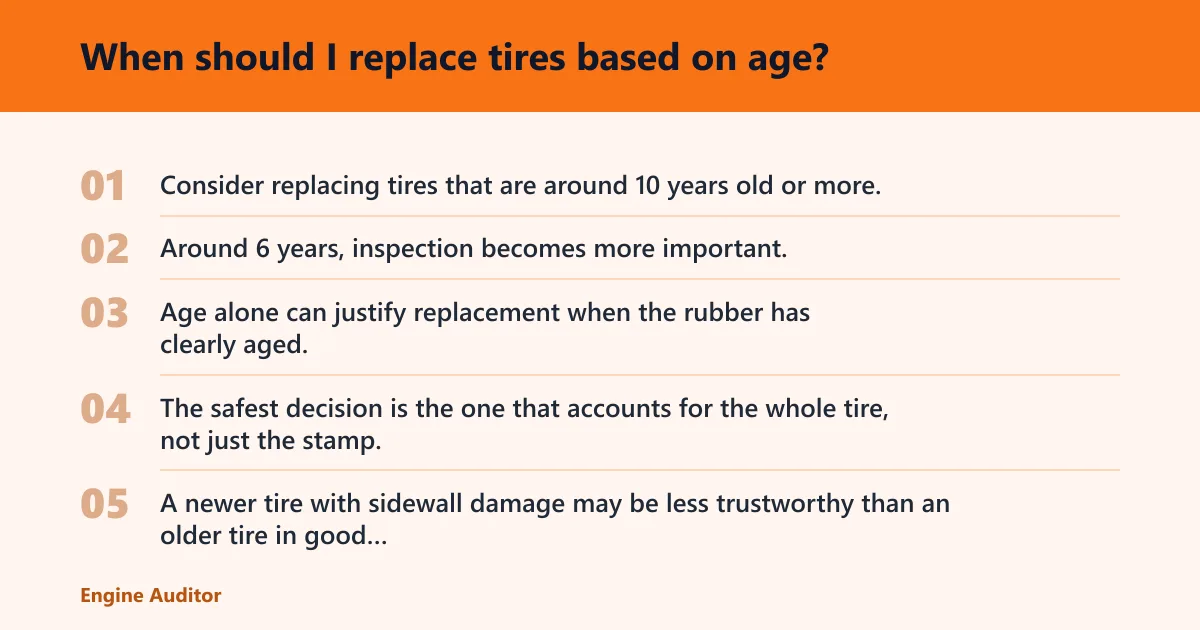
Consider replacing tires that are around 10 years old or more, or sooner if you notice cracking, dry rot, bulges, exposed cords, uneven wear, or impact damage. Around 6 years, inspection becomes more important, especially for tires stored outdoors or used in heat. Age alone can justify replacement when the rubber has clearly aged.
The safest decision is the one that accounts for the whole tire, not just the stamp. A newer tire with sidewall damage may be less trustworthy than an older tire in good condition, but age still sets the outer limit for acceptable use.
Tire recall lookup and manufacturer contact
Keep the full TIN before you call a dealer or manufacturer. The full code ties the tire to a specific plant, model, and production range, which is what recall searches usually need. If a recall or warranty question comes up, give the complete DOT/TIN and the tire size.
Common mistakes
Many people read only the outer sidewall and miss a hidden inboard date code. Others assume all four tires were made at the same time, then ignore one older replacement on the axle. Another common error is treating the purchase date as proof of a fresh tire.
Older spare tires are easy to overlook. So are unused seasonal tires that sat in a basement or garage for years. If the code is unreadable, do not guess; get the tire inspected before driving on it.
Prevention is simple: record all four date codes, plus the spare, the next time the tires are rotated or replaced.
Frequently asked questions
How do I read the date code on a tire?
Find the final four digits of the DOT/TIN on the sidewall and read them as week and year. A code like 2321 means the 23rd week of 2021. If the stamp is hidden, check the inner sidewall and use a light at a low angle.
Where is the tire date code located on the sidewall?
It is usually at the end of the DOT/TIN string on the sidewall, often easier to spot on the outer side first. On some tires, the code is on the inner sidewall, so you may need to turn the wheel or use a mirror and flashlight.
What does the last 4 digits on a tire mean?
The last four digits are the manufacture date in WWYY format. The first two digits are the week of production, and the last two are the year. A code of 0119 means week 1 of 2019.
How old is a tire with code 2321?
That tire was made in the 23rd week of 2021. To judge age, compare that date with the current year and inspect for cracking, dry rot, and damage. If it is near 10 years old, replacement is usually the safer call.
Is the tire date code on all four tires the same?
Not always. Tires are often made on different dates, especially if one was replaced later or bought from different inventory. Compare all four, and pay extra attention when two tires on the same axle have a large age gap.
Products related to this article
Sponsored / affiliate links. As an Amazon Associate I earn from qualifying purchases. I may earn additional commission from eligible campaigns.