Is It Safe To Use Wd-40 On Car Tires? Read This First
Many people have a can of WD-40 hanging around. It’s great for squeaky hinges or loosening rusty bolts. But can you use it on your car tires?
This is a common question, and it’s wise to ask it before you spray. Tire health is super important for safety. We want to make sure you know what’s best for your car.
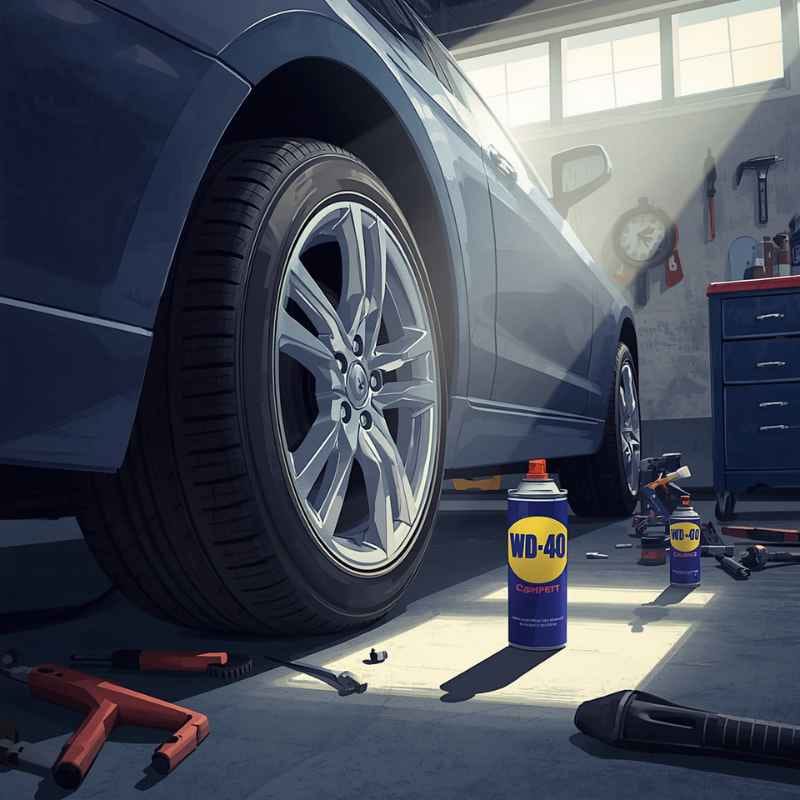
Using WD-40 on car tires is generally not recommended by tire manufacturers or automotive experts. While it might seem like a quick fix for cleaning or shining, it can degrade the rubber over time, potentially leading to cracking and reduced traction. It’s safer to use products specifically designed for tire care.
What Is WD-40 and What Does It Do?
WD-40 is a popular product. Its main job is to displace water. That’s where the “WD” comes from.

Fix-A-Flat
Fix-A-Flat S60420 Aerosol Emergency Flat Tire Repair…
- Emergency flat tire repair solution, connect, inflate and go! The easiest and quickest way to temporarily repair a flat tire in an…
- Fix-a-Flat is designed to seal small tread tire punctures up to 1/4 of an inch in diameter in seconds and provide enough inflation…
- Flats happen, so be prepared with Fix-a-Flat, an easy-to-use, better alternative to the spare tire and perfect for roadside emerge…
As an Amazon Associate I earn from qualifying purchases.
It also lubricates, penetrates, and cleans. It’s made of various oils and solvents. These can be tough on some materials.
Think of it like a super-cleaner and a light oil.
It’s used for many things around the house and garage. From quieting squeaky doors to preventing rust. Its wide range of uses makes it a go-to for many tasks.
But this versatility is also why we need to be careful where we use it.
The solvents in WD-40 can break down certain materials. This is fine for metal. It helps to remove grime and rust.
But rubber is a different story. Rubber needs to be flexible and strong. Solvents can make rubber brittle.
This is a key point to remember.

My Own Close Call with the Wrong Product
I remember one sunny Saturday a few years back. I was detailing my old pickup truck. It was a real beauty, but the tires were looking a bit sad.
I wanted them to shine like new. I was really proud of that truck. I wanted everything to look perfect.
My friend handed me a can of something shiny. “Try this,” he said. “It’ll make them pop.” It looked like a tire shine product.
So I went ahead and sprayed it on. The tires did get a nice, dark sheen. I felt pretty pleased with myself.
The truck looked much better.
A few weeks later, though, I noticed something odd. There were tiny cracks appearing on the sidewalls. They weren’t deep, but they were there.
I started to get a knot in my stomach. I hadn’t used anything harsh, or so I thought. It turned out the “shine” product had some petroleum distillates in it.
They were slowly eating away at the rubber.
That experience taught me a huge lesson. Always check labels. Always use products made for your car’s specific parts.
What works for metal isn’t always good for rubber. It was a costly lesson in paying attention to detail.
The Science Behind Rubber Degradation
What happens: Rubber is made of polymers. These are long chains of molecules. Solvents can attack these chains.
They can break them apart or swell them up.
Why it matters: This weakens the rubber. It loses its flexibility. It becomes prone to damage.
Think of it like a rubber band left in the sun for too long. It gets stiff and brittle.
Common culprits: Petroleum-based solvents are a major concern. Many degreasers and cleaners contain them. Always check the ingredients.
Why WD-40 Isn’t Ideal for Your Car Tires
Car tires are made of a special blend of rubber. They need to be tough. They handle heat, cold, water, and friction.
They need to grip the road. They need to stay flexible.
WD-40 contains solvents. These solvents can strip away protective oils from the rubber. This makes the rubber dry out.
Dry rubber cracks easily. Think about dry skin. It gets rough and might even break.
Tire rubber can do the same thing.
When rubber cracks, it’s a big problem. It can affect the tire’s integrity. This means it might not be safe to drive on.
Small cracks can become big problems very quickly. Especially at high speeds or under heavy loads.
Plus, WD-40 can make your tires slippery. It leaves a film on the surface. This film reduces the friction between your tires and the road.
Good friction is needed for safe driving. You need good grip for stopping and turning. A slippery tire is a dangerous tire.
Quick Scan: WD-40 vs. Tire Health
- WD-40 Main Use: Water displacement, lubrication, cleaning metal.
- Tire Material: Natural and synthetic rubber compounds.
- WD-40 Impact on Rubber: Can strip oils, dry out rubber, cause cracking.
- Tire Needs: Flexibility, grip, resistance to elements.
- WD-40 Outcome for Tires: Reduced lifespan, potential safety hazard (slippery, brittle).
The Risks of Using WD-40 on Tires
Let’s break down the specific risks. It’s not just about making your tires look bad. It’s about safety.
Your tires are the only thing connecting your car to the road. They need to be in top shape.
One major risk is premature tire wear. The solvents in WD-40 can degrade the rubber compound. This means the tire might wear down faster than it should.
You’ll end up replacing them sooner. That costs money.
Another serious risk is tire sidewall damage. The sidewall is flexible. It flexes as the tire rolls.
If the rubber becomes brittle, it can develop cracks. These cracks can spread. A damaged sidewall can lead to a blowout.
A tire blowout at speed is extremely dangerous. It can cause you to lose control of your vehicle.
Then there’s the reduced traction issue. WD-40 leaves a residue. This residue acts like a lubricant.
It makes the tire surface slick. This is especially bad in wet conditions. Your car might slide more easily.
Braking distances could increase. This can lead to accidents.
Consider the heat generated by driving. As tires roll, they get warm. Heat can make the solvents in WD-40 more aggressive.
This can speed up the damage process. What might seem okay at first can become a problem as you drive.
Contrast: Normal Tire vs. WD-40 Damaged Tire
Normal Tire
- Healthy, flexible rubber.
- Good grip on the road.
- Uniform black color.
- Smooth sidewall surface.
- Resilient to normal road conditions.
WD-40 Affected Tire
- Dry, brittle rubber.
- Slightly shiny or greasy surface.
- Visible hairline cracks on sidewall.
- Reduced traction, especially when wet.
- Faster wear in certain spots.
What to Use Instead for Tire Care
So, if not WD-40, then what? Thankfully, there are many products made specifically for tires. These are designed to be safe for rubber.
They also give you the look you want.
For cleaning your tires, use a dedicated tire cleaner. These cleaners are formulated to break down brake dust and road grime. They are usually water-based.
They won’t damage the rubber. You can find them at auto parts stores.
For that deep black shine, look for tire dressings or tire shines. These products are made to condition the rubber. They also provide a protective layer.
Many are water-based. Some are silicone-based. Read the labels to ensure they are safe for your tires.
Avoid products with harsh solvents or petroleum distillates.
Some tire dressings offer UV protection. This is great for preventing sun damage. Prolonged sun exposure can also degrade rubber.
A good dressing can help keep your tires looking good and lasting longer.
Remember to apply these products correctly. Always clean the tire first. Then apply the dressing evenly with an applicator pad.
Wipe off any excess. This ensures a uniform look and prevents sling onto your car’s paint.
Real-World Scenarios and Tire Health
Think about where and how you drive. Are you often on hot asphalt? Do you live in an area with harsh winters?
These factors put extra stress on your tires.
If you drive in very hot climates, tire rubber needs to remain flexible. Heat can make it brittle. Using a product that dries out the rubber, like WD-40 might, makes it worse.
You want a dressing that nourishes the rubber, not strips it.
In areas with a lot of salt on the roads in winter, tires face chemical exposure. While WD-40 isn’t a salt remover, its solvent action could potentially make the rubber more porous to other damaging elements. A good quality tire conditioner can help.
Driving habits also play a role. Frequent hard braking or sharp turns put stress on the tire’s sidewalls. If the rubber is already weakened by harsh chemicals, these actions can exacerbate damage.
Making sure your tires are in good condition is key for safe performance.
When you’re just trying to get dirt off, soap and water is often enough. You don’t always need a heavy-duty cleaner. For a quick shine before a car show, a proper tire dressing is the way to go.
Observational Flow: Tire Care Routine
1. Wash: Use car soap and water or a dedicated tire cleaner. Rinse thoroughly.
2. Dry: Pat dry with a clean microfiber towel.
3. Inspect: Look for any signs of damage, like cracks or embedded objects.
4. Apply Dressing: Use a tire shine product designed for rubber. Apply with an applicator.
5. Wipe Excess: Buff off any extra product to avoid sling.
What This Means for Your Tires and Safety
The bottom line is that using WD-40 on your car tires can be a risk. It might seem like an easy fix for a dull tire. But the long-term consequences can be serious.
You could end up with damaged tires and a safety problem.
When is it okay to use WD-40 near tires? Maybe for a quick clean of the rim if it’s really grimy and you’re careful not to get it on the rubber. But even then, it’s best to use a dedicated wheel cleaner.
They are formulated for that purpose.
When should you definitely worry? If you see any cracking on the sidewall. If your tires feel unusually hard or less flexible.
If you notice your car is sliding more than usual, especially in wet conditions. These are all signs that something is wrong.
A simple check you can do is the “pinch test” on the sidewall (when the tire is cold). Gently pinch the sidewall. It should feel pliable and somewhat soft.
If it feels stiff, hard, or brittle, that’s a bad sign. It suggests the rubber has degraded.
Always prioritize products made for tires. They are engineered to protect and enhance the rubber. They won’t compromise its structure or safety features.
Your tires are critical safety components. Treat them with the right care.
Quick Fixes & Best Practices for Tire Appearance
Myth: WD-40 makes tires look black and shiny, so it’s good.
Reality: While it might temporarily darken rubber, it damages it. Use specialized tire shines instead.
Tip: For a natural black look, a water-based tire dressing is best. It nourishes the rubber.
Tip: If you want to clean tires, use a dedicated tire cleaner. Avoid harsh degreasers.
Tip: Always check product labels for warnings about rubber or plastics.
Frequently Asked Questions About WD-40 and Tires
Can WD-40 be used to clean tire rims?
While WD-40 can cut through grease and grime on metal rims, it’s best to use a dedicated wheel cleaner. Many wheel cleaners are formulated to be safe for different rim finishes and won’t risk getting on the tire’s rubber. If you must use WD-40, be extremely careful not to spray it on the tire itself and wipe the rim thoroughly afterward.
Will WD-40 make my tires crack?
Yes, there is a significant risk. The solvents in WD-40 can degrade the rubber compounds in tires. This drying and weakening effect can lead to premature cracking, especially on the tire’s sidewalls over time.
Is it safe to spray WD-40 on car tires for a temporary shine?
No, it is not considered safe or recommended. While it might give a temporary dark look, the petroleum-based solvents can harm the rubber. This can compromise the tire’s integrity and reduce its lifespan, potentially creating a safety hazard.
What happens if WD-40 gets on my tires?
If WD-40 accidentally gets on your tires, it’s best to clean it off as soon as possible. Use a dedicated tire cleaner or mild soap and water. This helps to remove the solvent before it has a chance to significantly damage the rubber.
Are there any safe alternatives to WD-40 for tire care?
Absolutely. For cleaning, use a specific tire cleaner. For shining and conditioning, use tire dressings or tire shines.
These products are formulated to be safe for rubber and provide UV protection and a desired finish without causing damage.
How often should I condition my tires?
The frequency depends on your climate and driving conditions. Generally, applying a tire dressing every 4-8 weeks is a good practice. More often if you live in a very sunny or dry climate, or if you notice the tires looking dull and dry.
Can WD-40 affect tire pressure?
WD-40 itself does not directly change tire pressure. However, if the rubber is degraded and develops small leaks due to the solvent, it could indirectly lead to a slow loss of air pressure over time. Always check your tire pressure regularly.
Final Thoughts on Tire Safety
Taking care of your car’s tires is more than just keeping them clean. It’s about ensuring they perform safely. Using the right products matters a great deal.
WD-40 has its place, but car tires aren’t it. Stick to products made for tires.
Your tires are a vital part of your vehicle’s safety system. Protecting them means protecting yourself and others on the road. A little research goes a long way.
Always read labels and choose wisely.
Related pick: Check today's price on Amazon
Products related to this article
Sponsored / affiliate links. As an Amazon Associate I earn from qualifying purchases. I may earn additional commission from eligible campaigns.