How to Check Car Tire Tread Depth at Home: Fast Guide
Check tire tread depth at home with a ruler or tread gauge. If the main grooves are 2/32 inch or less, replace the tire, and many drivers may want to plan sooner at around 4/32 inch in wet conditions. I have seen worn or uneven tires stretch stopping distance, start hydroplaning, and hide alignment or inflation faults that burn through new tread fast. This guide shows how to measure tread, read wear patterns, and decide whether your tires are still safe.
This guide is part of our Car tire maintenance guide series.
What you’ll need
- Tread depth gauge, an inexpensive tool that reads in 1/32-inch increments
- Penny and quarter for quick coin checks
- Flashlight for the grooves and shoulder area
- Rag to wipe mud, stones, or road film from the tread
- Notebook or phone to record center, inner-edge, and outer-edge readings
- Tire pressure note so you can compare wear with inflation history
How do I check tire tread depth at home?
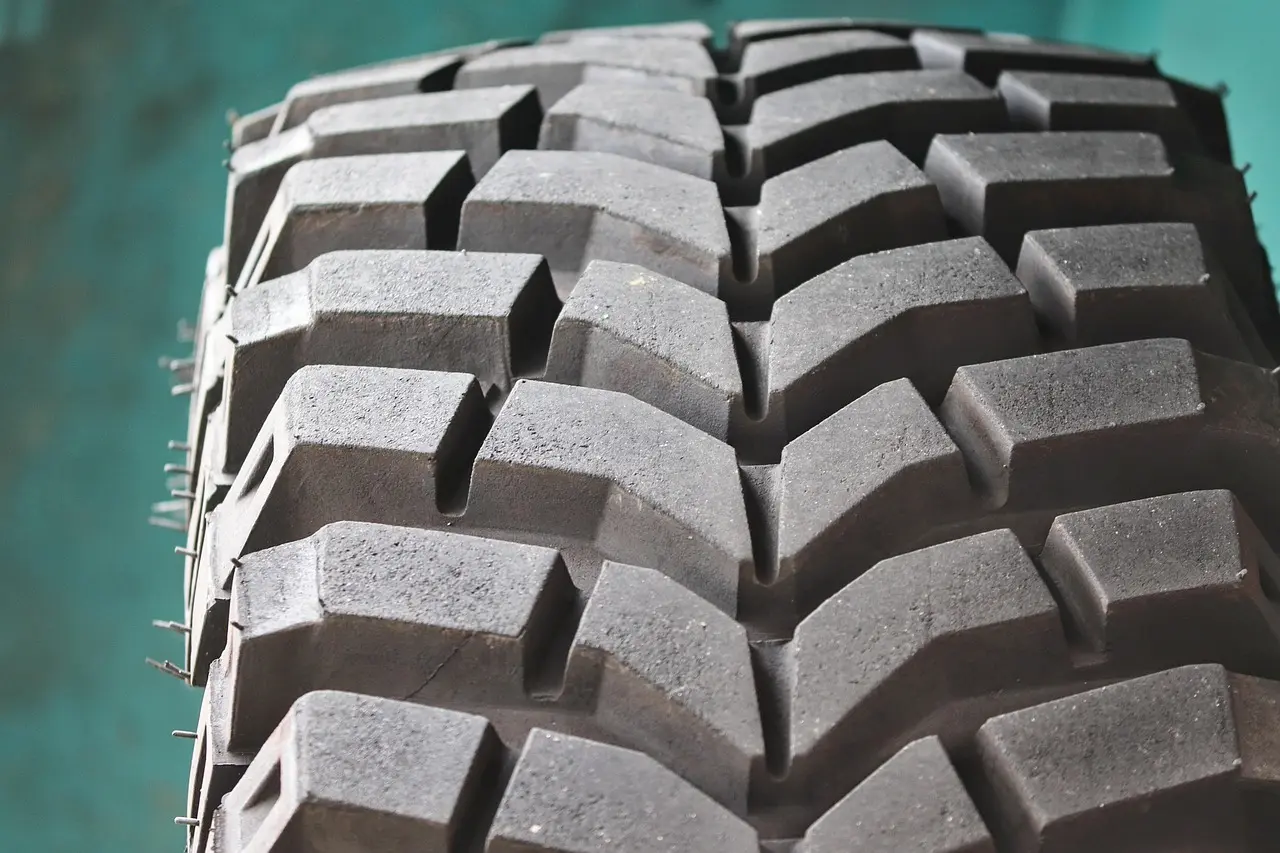
Use a tread depth gauge on the lowest-looking part of each tire, not just the center of one groove. Measure the center, inner edge, and outer edge on all four tires. The pattern matters as much as the number, because uneven wear can point to inflation or alignment problems.
Measure the tire the right way
- Park on level ground and let the tires cool.
- Brush away stones and dirt so the grooves are visible.
- Find the most worn or lowest point in the tread.
- Place the gauge in the groove and press flat to the tread blocks.
- Read the depth in 1/32-inch increments and write it down.
- Repeat at the center, inner edge, and outer edge of each tire.
Why the shallowest spot matters
A clean reading in one groove can hide a bad shoulder. I have measured tires that looked fine in the center and were nearly finished on the inside edge. Start with the lowest area, then compare it across the width.

How do the penny and quarter tests compare?

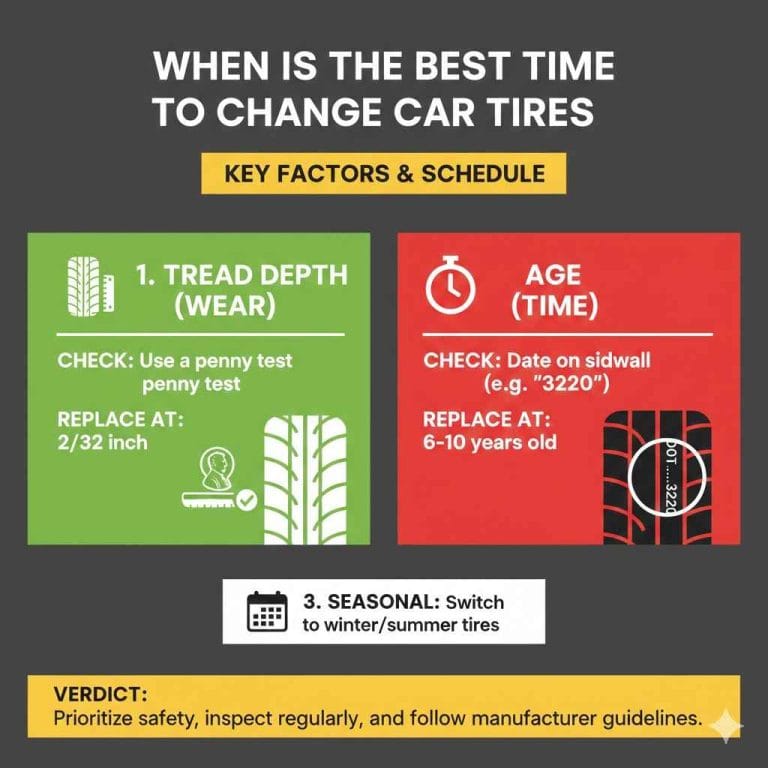
The penny test is the quick legal check, and the quarter test is the more conservative rain check. A Lincoln cent sets the 2/32 inch minimum, while a Washington quarter gives a 4/32 inch threshold that fits wet-road caution better. If Washington’s head is visible in the quarter test, the tire needs replacement.
Use the penny test for the legal floor
Insert a penny into the groove with Lincoln’s head upside down and facing you. If the top of his head is visible, tread has reached the 2/32 inch limit. That means the tire is at the legal minimum, not a healthy margin.
Use the quarter test for rain decisions
Drop in a quarter with Washington’s head down. If the top of his head is visible, treat the tire as past the 4/32 inch safe limit for wet conditions. AAA suggests this check because wet performance drops before the legal minimum is reached.
When coins and gauges disagree
If the coin says one thing and the gauge says another, trust the gauge and inspect the exact groove again. Coins are fast, but they can miss a worn shoulder or a spot that is lower than the rest of the tread.
How do I check tread wear bars?
Tread wear bars are molded raised bars in the grooves. Virtually all new tires have them, and when the tread is even with the bars, the tire is worn and needs replacement. They mark the legal minimum at 2/32 inch, but they are not a good target for wet weather. (thedrive.com)
Find the bars in the grooves
Look between the tread blocks for small raised bridges running across the groove. They sit lower than the tread when the tire is healthy. As the tire wears down, those bars become easier to see.
Use them as a warning, not a finish line
When the tread is flush with the bars, the tire is done for legal purposes. Long before that point, braking in rain gets worse. A tire can still be legal and still be a poor choice for heavy water on the road.
How to read wear patterns across the tire
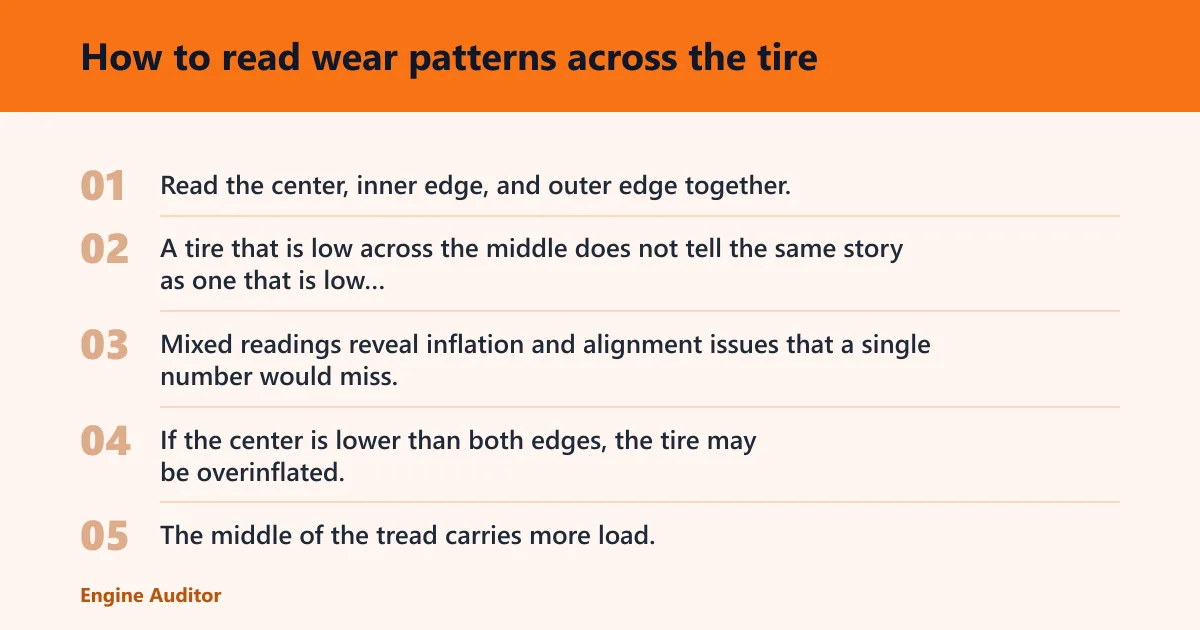
Read the center, inner edge, and outer edge together. A tire that is low across the middle does not tell the same story as one that is low only on one shoulder. Mixed readings reveal inflation and alignment issues that a single number would miss.
Center wear points to overinflation
If the center is lower than both edges, the tire may be overinflated. The middle of the tread carries more load, and the shoulders can look healthier while the center wears out first. That is a pressure clue, not just a tread-depth number.
Both shoulders point to underinflation
If both the inner and outer edges are lower than the center, underinflation is a common cause. The tire flexes more at the shoulders, and the middle can look misleadingly acceptable. Check pressures before assuming the tire is simply “old.”
One-edge wear points to alignment trouble
If the inner edge is much lower than the outer edge, or the reverse, suspect alignment or suspension issues. That kind of wear can eat through one side while the rest of the tire still looks serviceable. Rotation may help, but a worn edge needs a repair decision too.
Use this one-page inspection checklist
Fill out one row for each tire, then compare the pattern before deciding. This keeps the check fast and makes mixed wear easier to spot. If one reading is much lower than the others, treat that tire as the priority.
| Tire position | Center | Inner edge | Outer edge | Pattern to note | Likely cause | Next move |
|---|---|---|---|---|---|---|
| Front left | 6/32 | 5/32 | 6/32 | Even | Normal wear | Monitor |
| Front right | 7/32 | 4/32 | 4/32 | Both shoulders lower | Underinflation | Check pressure, inspect again |
| Rear left | 4/32 | 4/32 | 6/32 | Inner edge lower | Alignment or suspension | Schedule inspection |
| Rear right | 3/32 | 3/32 | 3/32 | Low everywhere | General wear | Replace soon |
Decision rule: 5/32 inch or more across the tread usually means monitor closely; 4/32 inch is the point where many drivers should plan replacement for wet weather; 2/32 inch or less means replace now.
How often should I check my tire tread?
Check tread about once or twice a month and before long trips. The Drive says the check can take about two minutes, and Carvira says tread depth checks take less than five minutes. That is quick enough to fold into fuel fill-ups or monthly pressure checks.
Make it part of a walkaround
Inspect all four tires in one pass. Look for uneven wear, cuts, bulges, and stones while the gauge is out. A fast monthly check catches the tire that is wearing oddly before it becomes a roadside problem.
What should I do if one part of the tire is more worn?
Start by matching the wear pattern to likely causes: center wear suggests overinflation, both shoulders suggest underinflation, and one-edge wear often points to alignment or suspension problems. Then decide whether the tire needs pressure correction, rotation, an inspection, or replacement.
If that didn’t work, try this next
- Check cold tire pressure and set it to the door-jamb specification.
- Compare the same tire at center, inner edge, and outer edge again after a short drive cycle.
- Rotate tires if the wear is uneven but still above the replace-now threshold.
- Book an alignment check if one shoulder keeps dropping faster than the rest.
- Replace the tire if the lowest reading is at 2/32 inch or the wet-weather margin is gone.
What should I do if one part of the tire is more worn?
Do not judge the tire by its best-looking section. The shallowest area decides the safety margin, because that is the first part to lose grip in rain. If one shoulder is low and the others are not, fix the cause before new tires wear the same way.
Prevention
Check pressures monthly and rotate on schedule so the same corner does not keep taking the abuse.
Common mistakes
Most bad tire checks fail because the reader measures the wrong place or stops at the first number that looks decent. Avoid that by checking the lowest point, comparing all four tires, and separating legal minimum from wet-weather safety.
- Measuring only the center groove and ignoring both shoulders.
- Checking one tire and assuming the others match.
- Using the penny test alone and calling it good enough for rain.
- Waiting until the tread bars are fully flush before planning replacement.
- Ignoring a one-edge wear pattern that points to alignment trouble.
Frequently asked questions
How do I check tire tread depth at home?
Use a tread depth gauge, a penny, or a quarter on the lowest groove area. Check the center, inner edge, and outer edge on all four tires, then compare the lowest reading to the 4/32 inch wet-weather line and the 2/32 inch legal minimum.
Is the penny test or quarter test better for tires?
The quarter test is better for most replacement decisions because it warns earlier in wet conditions. The penny test only tells you when the tread is at the legal minimum. If the quarter shows Washington’s head, plan replacement rather than waiting for the penny limit.
What tread depth means I need new tires?
At 2/32 inch or less, the tire is done and should be replaced. Many drivers should plan earlier at 4/32 inch if the roads are wet often, because stopping distance and hydroplaning risk get worse before the legal minimum arrives.
Where on the tire should I measure tread depth?
Measure the center, inner edge, and outer edge across the tread width, starting with the lowest-looking spot. That catches uneven wear that one central reading can miss. If one area is much lower, use that number for the decision.
How do tread wear bars tell me if tires are worn out?
Wear bars are the raised strips molded into the grooves. When the tread is even with them, the tire has reached 2/32 inch and needs replacement. They are a built-in legal-minimum marker, not a sign that the tire still has good wet grip.
How do I know if my tires are still safe in wet weather?
If the lowest reading is 4/32 inch or more, the tire usually still has a better rain margin. Below that, wet stopping distance climbs and hydroplaning risk rises. If one shoulder is lower than the rest, treat that tire as the weak link.
Products related to this article
Sponsored / affiliate links. As an Amazon Associate I earn from qualifying purchases. I may earn additional commission from eligible campaigns.