How Often Should You Check Your Motor Oil? Expert Answer
How often should you check your motor oil is a question every driver should know the answer to. Regular oil checks can prevent costly engine damage and keep your car running smoothly for years.
Simply put, check your motor oil at least once a month, and always before a long road trip. If you drive an older car, tow heavy loads, or frequently drive in stop-and-go traffic, check it every two weeks or before every fuel fill-up.
Key Takeaways
- Checking your motor oil monthly is the best baseline for most drivers.
- How often should you check your motor oil depends on your driving habits, vehicle age, and climate.
- Your car’s oil life monitor is helpful, but it does not replace a physical dipstick check.
- Low or dirty oil can cause overheating, increased wear, and engine failure.
How Often Should You Check Your Motor Oil? The General Rule
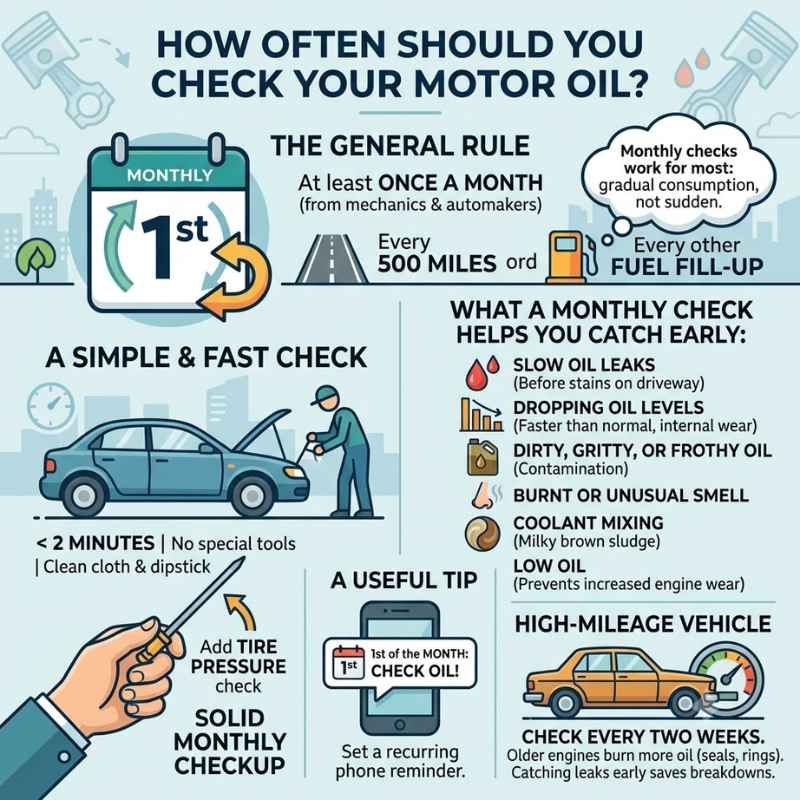
The general rule from most mechanics and automakers is to check your motor oil at least once a month. Some manufacturers recommend every 500 miles or every other fuel fill-up. Monthly checks work well for most drivers because oil consumption tends to be gradual, not sudden.
A monthly check takes less than two minutes. You do not need any special tools, just a clean cloth and your car’s dipstick. Combine the check with a quick tire pressure inspection and you have a solid monthly vehicle checkup.
Here is what a monthly oil check helps you catch early:
- Slow oil leaks before they leave stains on your driveway
- Oil levels that are dropping faster than normal, which may indicate internal engine wear
- Oil that looks dirty, gritty, or frothy, signaling contamination
- A burnt or unusual smell from the dipstick
- Coolant mixing with oil, which appears as a milky brown sludge
- Low oil that could lead to increased engine wear between oil changes
Tip: Set a recurring reminder on your phone for the first day of each month. That makes the habit impossible to forget.
If you drive a high-mileage vehicle, check every two weeks instead of monthly. Older engines naturally burn more oil as seals and piston rings wear. Catching a slow leak early can save you from a breakdown on the highway.
What Does Your Driving Style Have to Do With Oil Checks?
Your driving habits directly affect how quickly your oil breaks down and drops below safe levels. A driver who cruises on the highway every day will test oil less often than someone who sits in city traffic. Severe driving conditions require more frequent checks.
Engine oil works harder under stress. When you drive short distances, the engine never fully warms up, which allows moisture to build up in the oil. Stop-and-go traffic increases engine temperature and shears the oil’s protective additives.
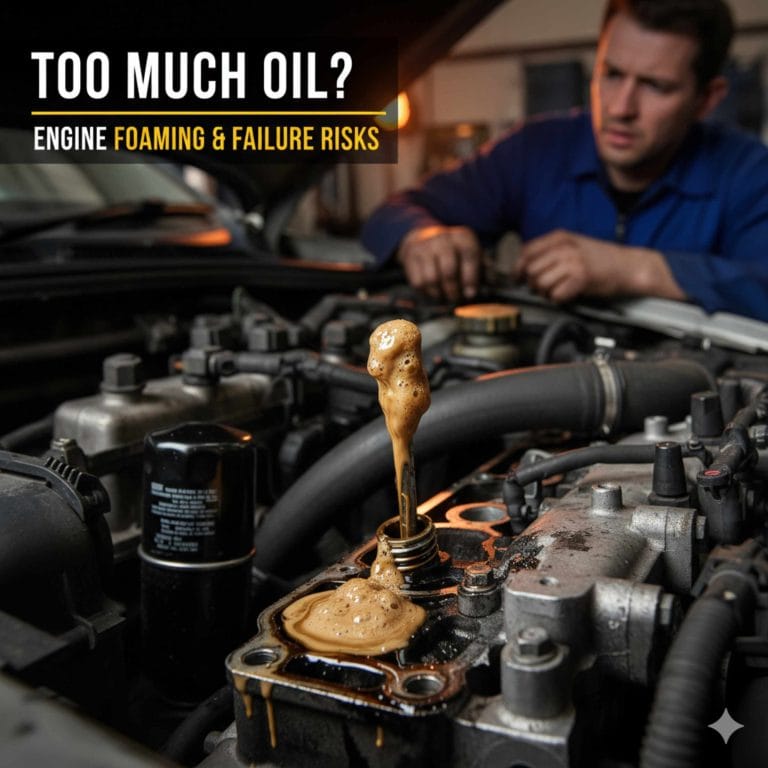
Towing heavy loads pushes oil pressure higher and can cause the oil to foam.
Use this table to match your driving style with a recommended check interval:
| Driving Style | Recommended Check Interval |
|---|---|
| Highway commuter, moderate miles | Once a month |
| Short trips under 5 miles or stop-and-go traffic | Every two weeks |
| Towing trailers, carrying heavy loads | Before every trip or weekly |
| Off-road or dusty conditions | Every week |
| Garaged classic or occasional weekend driver | Before each drive |
Track your mileage between oil checks. If you notice the level drops by a quart after only a few hundred miles, that is a red flag. Have a professional inspect the engine for leaks or internal issues.
What Do Manufacturer Recommendations Say About Oil Check Frequency?
Your owner’s manual is the final authority for your specific vehicle. While general advice is helpful, automakers set intervals based on engine design, oil type, and expected driving conditions. Many modern manuals suggest checking oil at every other fuel fill-up, which works out to about once a week for the average driver.
European luxury brands often have longer factory intervals because they use extended-life synthetic oils. Some BMW and Mercedes-Benz models use electronic oil sensors and only advise physical checks between services. Older domestic trucks and sedans still rely heavily on the dipstick.
Here are a few examples from common manufacturer guidelines:
| Brand | Typical Recommendation |
|---|---|
| Toyota | Check at every fuel fill-up for older models; monthly for newer models |
| Ford | Check when the warning light appears or every 5,000 miles |
| Honda | Check monthly or before a long trip |
| BMW | Rely on CBS oil life monitor; check dipstick only if equipped |
| Chevrolet | Check at every oil change and between changes if warning appears |
Ignoring the manual can lead to warranty disputes. If you have a lease or a warranty, follow the manufacturer’s schedule closely. Take a photo of the relevant page in your owner’s manual and keep it in your phone for quick reference.
How to Check Your Motor Oil in 5 Simple Steps
Checking your motor oil is easy, but most people skip it because they are not sure how to read the dipstick correctly. This five-step process works for nearly every gasoline engine, from a compact sedan to a full-size pickup truck.
Follow these steps exactly to get an accurate reading:
- Park on a level surface and turn off the engine. Wait 5 to 10 minutes so the oil settles back into the oil pan.
- Pull the dipstick out and wipe it clean with a lint-free cloth or paper towel.
- Reinsert the dipstick fully, then pull it out again and hold it horizontally.
- Check the oil level against the two marks or crosshatched area near the tip. The level should fall between the minimum and maximum marks.
- Inspect the oil color and texture. If it looks like honey or light tea, it is healthy. If it is black, gritty, or milky, it is time for a change or a leak inspection.
Important: Always check your oil with the vehicle off and the engine cold or slightly warm. Never check it right after a hard drive, because hot oil expands and gives a false high reading.
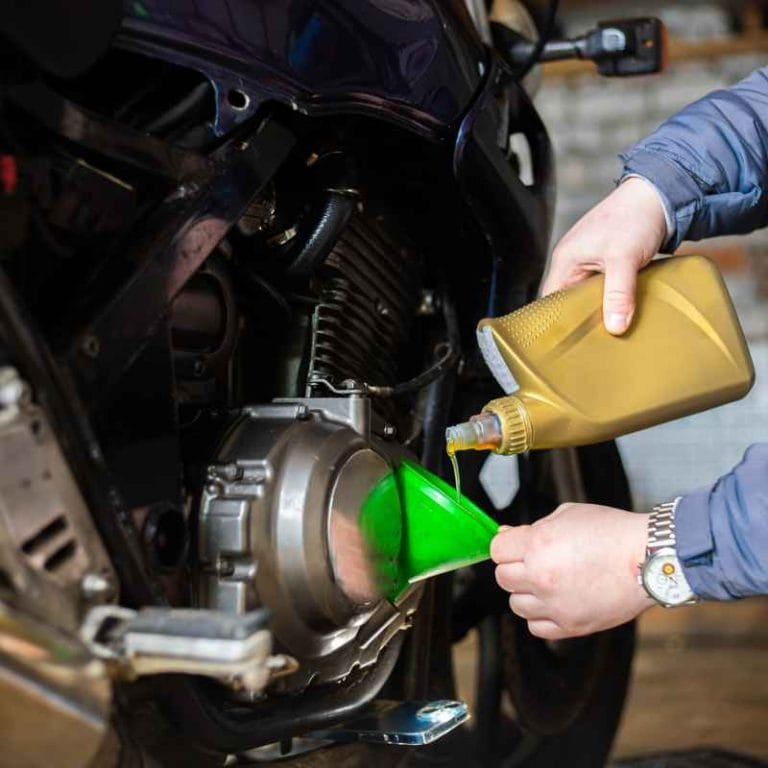
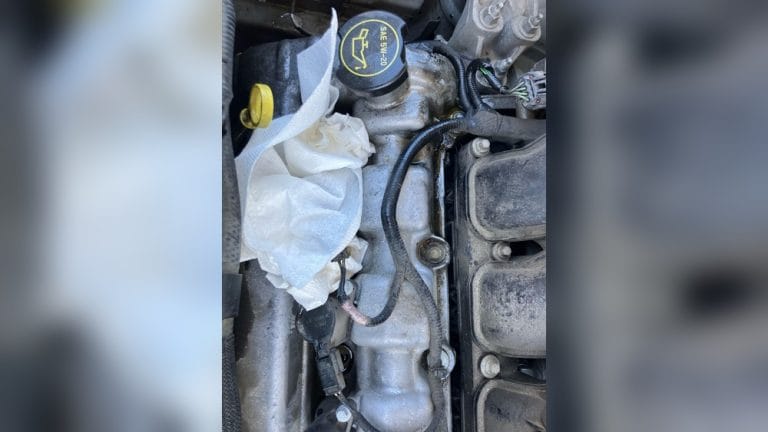
If the level is low, add oil in small increments. Use the viscosity grade listed on your oil filler cap or in the owner’s manual. Overfilling the engine is just as bad as running it low, so add a half quart at a time and recheck the dipstick.
Keep a spare quart of the correct oil in your trunk. This simple habit means you can top off right away instead of driving with a low oil level.
Common Signs Your Car Needs an Oil Check Right Now
Sometimes you will not catch the oil level in time, but your car sends clear signals. Knowing these signs can prevent thousands of dollars in engine repairs. Do not ignore these warning indicators.
The most obvious sign is the oil pressure warning light on your dashboard. That red oil can icon means the pressure has dropped dangerously low. Pull over immediately, turn off the engine, and check the dipstick.
If the level is low and the engine is hot, wait for it to cool before adding oil.
Here are other signs that you need to check your oil right away:
- Engine noises like ticking, tapping, or knocking, especially at startup
- Burning oil smell coming from the engine bay or vents
- Blue or gray exhaust smoke, which usually means oil is burning
- Oil spots or puddles under your car after parking
- Sluggish acceleration or rough idle
- Overheating, even on short trips
- The dipstick looks dry or the oil is very dark and thick
Warning: If your oil pressure light turns on, do not drive more than a few hundred yards. Running an engine without oil pressure can seize the crankshaft and destroy the engine in less than a minute.
Regular checks help you spot these issues early. A small leak that drips onto the ground is far easier to fix than a seized bearing. If you notice any of these signs and your oil level looks fine, have a mechanic check the oil filter and pressure sensor.
What Happens If You Never Check Your Motor Oil?
Skipping oil checks does not cause instant failure, but it quietly shortens your engine’s life. Oil gradually gets consumed, leaks develop, and additives break down. The result is expensive damage that is completely preventable.
The American Petroleum Institute states that oil lubricates, cleans, cools, and protects engine components. When oil levels drop, these functions fail. The engine has to work harder, friction increases, and temperatures rise.
Over time, metal parts grind against each other and wear out prematurely.
Here is what can happen when you never check your motor oil:
- Accelerated wear on pistons, bearings, and cylinder walls
- Sludge buildup that clogs oil passages and starves critical parts
- Overheating from reduced heat transfer, which can warp cylinder heads
- Complete engine seizure that requires a full replacement
- Catalytic converter damage due to oil entering the exhaust system
Data from CarCare.org suggests that about 25% of drivers rarely or never check their oil between professional services. This is surprising because a simple check takes less than two minutes. Car owners who regularly check oil report fewer breakdowns and longer engine life.
Important: A new engine costs anywhere from $3,000 to $8,000 installed. A quart of oil costs less than $10. The math is clear: check your oil regularly.
Your oil filter also plays a role. A clogged filter restricts flow and bypass valve contamination can go straight into the engine. Changing the oil on schedule is important, but checking the level between changes is equally vital.
Does Weather Change How Often You Should Check Your Motor Oil?
Extreme temperatures place extra stress on engine oil. In very cold climates, oil thickens and flows slowly during cold starts. In hot climates, oil thins out and burns off faster.
Both situations mean you should check your oil more frequently than a driver in a moderate climate.
Cold weather driving is especially hard on oil because condensation forms inside the engine. Short trips in winter prevent the engine from reaching full operating temperature, which leaves moisture in the oil. This can create a muddy sludge that damages engine parts.
Check your oil every two weeks during winter, especially if you take short trips.
Hot weather causes oil to break down faster. High outdoor temperatures combined with engine heat oxidize the oil and reduce its viscosity. If you live in a desert climate or drive through mountain passes, check your oil every two weeks during summer months.
- Cold climates: check every two weeks from November through March
- Hot climates: check every two weeks from June through September
- Humid or rainy climates: inspect the dipstick for milky residue
- High altitude: turbocharged engines may consume more oil at elevation
Tip: Switch to a winter-grade oil if your owner’s manual recommends it. A lower cold-temperature viscosity, like 0W-20, helps oil flow more easily at startup.
Seasonal changes make it smart to time your oil check with the temperature swings. When you switch your wiper blades or adjust tire pressure for a season, add an extra oil check at the same time.
Can You Trust Your Car’s Oil Life Monitor?
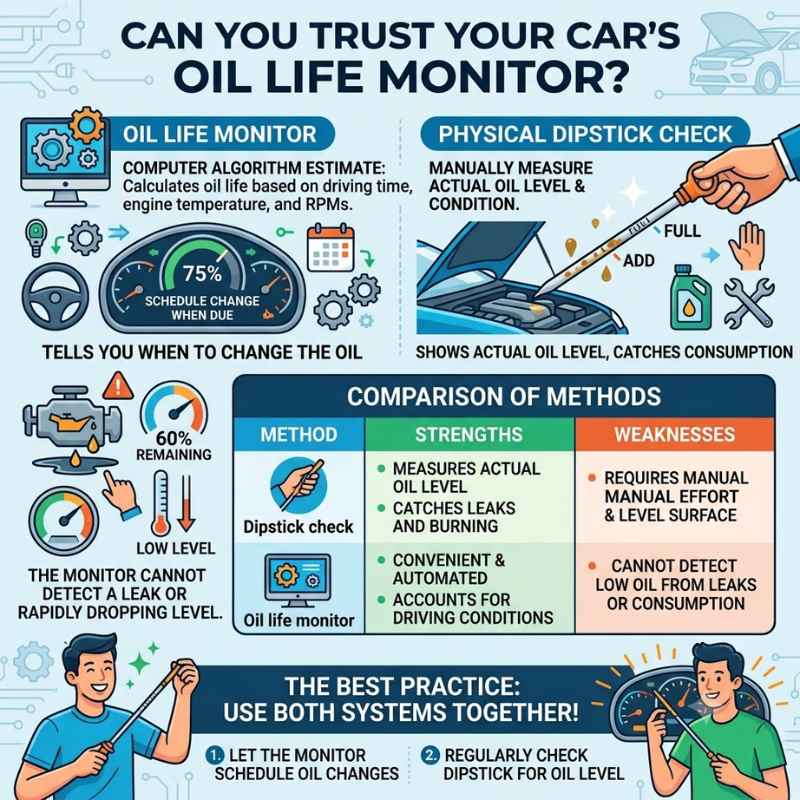
Modern cars come with computer algorithms that estimate oil life based on engine temperature, RPMs, and driving time. These monitors are helpful, but they are not a replacement for a physical dipstick check. Oil life monitors tell you when to schedule an oil change; they do not measure the actual oil level.
The monitor calculates how much life the oil has left, but it cannot detect a leak or a rapidly dropping level. You could have 60% oil life remaining on the dashboard and still be down a quart because of a slow leak. Rely only on the dipstick for level, and use the monitor for timing changes.
Here is a quick comparison of both methods:
| Method | Strengths | Weaknesses |
|---|---|---|
| Dipstick check | Measures actual oil level, catches leaks and burning | Requires manual effort and a level surface |
| Oil life monitor | Convenient, accounts for driving conditions | Cannot detect low oil from leaks or consumption |
Use both systems together. Let the oil life monitor tell you when to schedule a professional oil change. Use the dipstick monthly to confirm there is enough oil in the engine right now.
Frequently Asked Questions
Can I check my motor oil while the car is running?
No. Always turn off the engine and wait a few minutes before checking. A running engine has oil splashing inside the crankcase, which gives an inaccurate reading and is dangerous around moving parts.
Is it bad to check your oil too often?
No. You can check your oil as often as you want as long as the engine is off and cool. Frequent checks do not harm the engine and help you catch leaks and burning early.
What should motor oil look like on the dipstick?
Fresh oil looks translucent with a honey or amber color. Dark or opaque oil is still normal for older oil, but gritty particles or a milky, creamy look are signs of contamination.
How much oil should be on the dipstick?
The oil level should sit between the minimum and maximum marks on the dipstick. If it sits below the minimum mark, add a small amount of the recommended viscosity and recheck.
Do I need to check oil with the engine hot or cold?
It is best to check when the engine is cold or at least 5 to 10 minutes after turning it off. The owner’s manual for your car will give a specific recommendation, so follow that.
Final Thoughts
How often should you check your motor oil comes down to a few simple rules: monthly for most drivers, every two weeks for severe conditions, and before every long trip. Trust your dipstick over dashboard sensors, and inspect the oil color each time. A two-minute habit can prevent thousands of dollars in engine repairs and keep your car dependable for many more miles.
See also best car engine oil in india top brands worth buying.