Best Car Engine Oil in Nigeria: What Drivers Should Use
The Nigerian driving experience is as diverse as its landscape, from bustling city roads in Lagos to the rugged terrain of the northern regions. With the country’s tropical climate, variable fuel quality, and unique driving conditions, one crucial factor stands out for vehicle longevity: the engine oil you choose. Selecting the best car engine oil in Nigeria is more than just a maintenance routine, it’s an investment in your vehicle’s performance, reliability, and your peace of mind.
Many Nigerian drivers face issues such as overheating, sludge buildup, and rapid oil degradation, often caused by using unsuitable or counterfeit oils. The right engine oil not only protects your engine but also optimizes fuel efficiency, reduces emissions, and saves you money on repairs.
Whether you drive a brand-new sedan or an aging SUV, understanding which engine oil to use, and why, can make all the difference on Nigeria’s roads.
Key Takeaways
- Synthetic oils are highly recommended for most modern vehicles in Nigeria due to their superior heat resistance and longevity.
- Always check your vehicle manufacturer’s specifications before selecting oil viscosity and type.
- Counterfeit engine oils are prevalent; buy only from authorized dealers or reputable service centers.
- Routine oil changes (every 5,000, 10,000 km) are essential for engine health, especially in Nigeria’s harsh driving conditions.
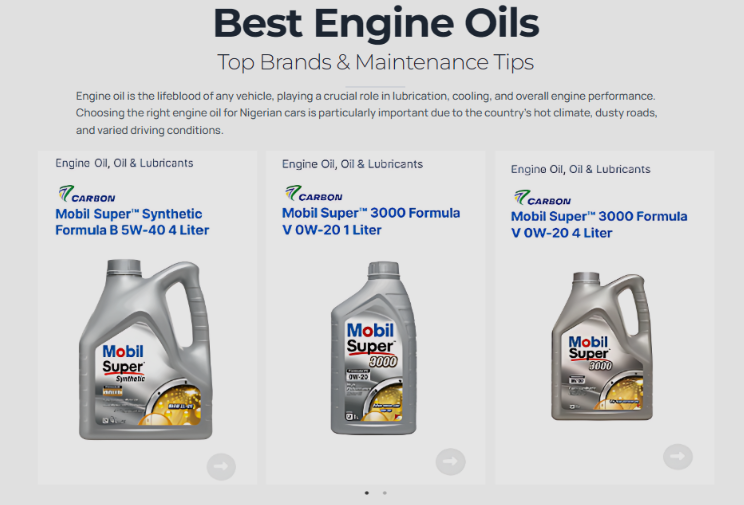
- Popular and trusted brands include Mobil 1, Total Quartz, Castrol, Shell Helix, and Liqui Moly.

Credit: 11plc.com
Understanding Engine Oil: Types And Key Functions
What Engine Oil Does For Your Car
Engine oil is the lifeblood of your vehicle’s engine. It lubricates moving parts, reduces friction, cleans, inhibits corrosion, improves sealing, and helps cool the engine. In Nigeria, where high ambient temperatures and stop-and-go traffic are common, the demands on engine oil are even greater.
Types Of Engine Oil
There are three main categories:
- Mineral Oil: Derived from refined crude oil, it’s cost-effective but less stable at high temperatures.
- Synthetic Oil: Chemically engineered for superior performance, it withstands heat and resists breakdown, making it ideal for Nigerian conditions.
- Semi-Synthetic Oil: A blend of mineral and synthetic, offering a balance of cost and performance.
Viscosity Ratings Explained
Viscosity refers to the oil’s thickness and flow characteristics. Ratings like 5W-30 or 20W-50 indicate how the oil performs in different temperatures. The “W” stands for winter; the first number is the oil’s flow at low temperatures, and the second is at high temperatures.
Example: In Nigeria’s climate, oils like 10W-40 or 20W-50 are common because they offer better protection at high temperatures.
Additives And Their Importance
Modern engine oils contain additives that:
- Prevent sludge buildup
- Reduce engine wear
- Neutralize acids
- Protect against rust and corrosion
Using oil with the right additive package is crucial, especially in areas with poor fuel quality or extreme heat.

Credit: 11plc.com
Factors To Consider When Choosing Engine Oil In Nigeria
Climate And Driving Conditions
Nigeria’s tropical climate, with temperatures often exceeding 35°C, puts extra stress on engine oils. High ambient temperatures demand oils that resist thinning and breaking down.
Pro Tip: Choose oil with a higher “hot” viscosity (e.g., 40 or 50) for better protection if you frequently drive in high heat or heavy traffic.
Vehicle Type, Age, And Manufacturer’s Recommendations
- Modern Cars: Often require low-viscosity synthetic oils for fuel efficiency and emission control.
- Older Vehicles: May perform better with higher-viscosity mineral or semi-synthetic oils due to engine wear.
- Manufacturer’s Manual: Always consult your owner’s manual for the recommended oil grade and specifications.
Prevalence Of Counterfeit Products
The Nigerian market is flooded with fake oils, which can severely damage your engine.
- Buy only from authorized distributors or well-known automotive shops.
- Look for authenticity seals and QR codes on packaging.
Cost Vs. Quality
While synthetic oils are more expensive, their longer change intervals and superior protection often make them more cost-effective in the long run.
Warning: Don’t compromise on quality to save money, using cheap, low-quality oil can lead to costly engine repairs.
Availability And After-sales Support
Choose brands and oil types that are widely available and supported in your region to avoid compatibility or supply issues.
Credit: 11plc.com
Top 7 Car Engine Oil Brands In Nigeria (2026)
Mobil 1
Mobil 1 is well-known for its advanced synthetic formulations, which provide excellent engine protection, particularly in Nigeria’s extreme heat. Their oils have high resistance to oxidation and breakdown, making them suitable for both modern and older engines.
- Popular Variants: Mobil 1 5W-30, Mobil 1 0W-40, Mobil Super 2000 X1 10W-40
- Strengths: Extended drain intervals, anti-wear additives, wide availability
Example: A Lagos taxi fleet reported reduced engine sludge and smoother performance after switching to Mobil 1 5W-30, even with frequent stop-and-go driving.
Total Quartz
Total Quartz products are favored by many Nigerian dealerships, including Peugeot and Toyota. Their oils are engineered with Age-Resistance Technology, offering robust protection against heat and oxidation.
- Popular Variants: Total Quartz 9000 5W-40, Total Quartz 7000 10W-40
- Strengths: Enhanced cleaning, suitable for petrol and diesel engines
Castrol
Castrol is a global leader known for its innovative lubrication solutions. Their Magnatec line uses “intelligent molecules” that cling to engine parts for optimal protection during startup.
- Popular Variants: Castrol Magnatec 10W-40, Castrol Edge 5W-30
- Strengths: Superior engine cleanliness, high-temperature stability
Shell Helix
Shell Helix oils are widely recommended for their adaptability to Nigerian fuel quality. Their synthetic blends help reduce engine noise and improve acceleration.
- Popular Variants: Shell Helix HX7 10W-40, Shell Helix Ultra 5W-40
- Strengths: Effective sludge control, fuel economy benefits
Liqui Moly
Liqui Moly is a German brand recognized for premium additives and specialized formulas. Their oils are especially popular among high-mileage and performance car owners.
- Popular Variants: Liqui Moly Molygen 5W-40, Liqui Moly Top Tec 4200 5W-30
- Strengths: Advanced wear protection, long drain intervals
Valvoline
Valvoline offers reliable engine oils tailored for both modern and older engines. Their MaxLife line is formulated specifically for vehicles with over 120,000 kilometers.
- Popular Variants: Valvoline MaxLife 10W-40, Valvoline SynPower 5W-30
- Strengths: Conditioning agents for seals, anti-wear technology
Oando
A homegrown Nigerian brand, Oando supplies mineral and semi-synthetic oils. Their products are affordable and suited for the local vehicle population, especially older models.
- Popular Variants: Oando Oleum Xtra 20W-50, Oando Oleum Syn 5W-30
- Strengths: Cost-effective, widely available in local markets
Comparison Table: Top Engine Oil Brands In Nigeria
| Brand | Popular Variant | Type | Viscosity | Recommended For | Approx. Change Interval (km) |
|---|---|---|---|---|---|
| Mobil 1 | 5W-30 | Synthetic | 5W-30 | Modern/All Vehicles | 10,000 |
| Total Quartz | 9000 5W-40 | Synthetic | 5W-40 | Sedans/SUVs | 10,000 |
| Castrol | Magnatec 10W-40 | Semi-Synthetic | 10W-40 | All Vehicles | 7,500 |
| Shell Helix | Ultra 5W-40 | Synthetic | 5W-40 | High-Performance | 10,000 |
| Liqui Moly | Molygen 5W-40 | Synthetic | 5W-40 | High-Mileage | 10,000 |
| Valvoline | MaxLife 10W-40 | Semi-Synthetic | 10W-40 | Older Vehicles | 7,500 |
| Oando | Oleum Xtra 20W-50 | Mineral | 20W-50 | Older/Local Cars | 5,000 |
Real-world Examples And Case Studies
Case Study 1: Fleet Management In Abuja
A prominent Abuja-based logistics company switched its entire fleet from mineral oil to Total Quartz 9000 5W-40 synthetic oil. Over six months, they observed:
- Reduced engine overheating incidents
- Extended oil change intervals (from every 5,000 km to 10,000 km)
- Lower maintenance costs
This resulted in a reported 20% reduction in overall fleet operating expenses, according to the company’s maintenance supervisor.
Case Study 2: Used Car Owner In Ibadan
A driver with a ten-year-old Toyota Camry in Ibadan faced persistent oil leaks and engine noise. After consulting a certified mechanic, he switched to Valvoline MaxLife 10W-40, designed for high-mileage engines. The oil’s seal conditioners reduced leaks, improved engine smoothness, and extended engine life.
Example: Counterfeit Oil Risk In Lagos
A mechanic in Lagos recounted how a customer’s engine failed prematurely due to counterfeit oil purchased at a roadside shop. After the incident, he began sourcing only from authorized dealers, emphasizing the importance of product authenticity to all his clients.
How To Identify Authentic Engine Oil In Nigeria
Check Packaging And Labels
Look for:
- Manufacturer’s hologram or QR code
- Batch number and manufacturing date
- Properly sealed caps and tamper-evident packaging
Buy From Authorized Dealers
Purchase only from:
- Major automotive parts retailers
- Authorized brand outlets
- Service centers affiliated with oil companies
Example: The official Mobil Nigeria website lists accredited distributors for genuine products.
Test The Oil (if In Doubt)
Some mechanics conduct basic checks:
- Smell: Genuine oils have a neutral scent, not a burnt or chemical odor.
- Color and Consistency: Should be uniform, not cloudy or separated.
Verify Product Online
Many reputable brands allow you to verify your oil’s authenticity by entering the batch code on their official website. For instance, Shell Nigeria provides resources for product verification.
Best Oil Grades For Common Vehicles In Nigeria
Sedans (toyota Corolla, Honda Accord)
- Recommended Oil: 5W-30 or 10W-40 synthetic or semi-synthetic
- Why: Balances fuel efficiency with adequate protection in both city and highway driving
Suvs (toyota Highlander, Ford Explorer)
- Recommended Oil: 5W-40 or 10W-40 synthetic
- Why: Handles heavier loads and higher temperatures typical of larger engines
Older Cars (10+ Years)
- Recommended Oil: 20W-50 mineral or 10W-40 semi-synthetic
- Why: Thicker oils can help compensate for engine wear and leaks
Commercial Vehicles (toyota Hiace, Nissan Urvan)
- Recommended Oil: 15W-40 or 20W-50 mineral or semi-synthetic
- Why: Designed for high-mileage, stop-and-go use, and frequent load carrying
Motorcycles And Tricycles (okada, Keke Napep)
- Recommended Oil: 20W-50 mineral motorcycle oil
- Why: Suits air-cooled engines and high-revving conditions
Quick Reference Table: Recommended Oil Grades By Vehicle Type
| Vehicle Type | Common Example | Recommended Oil Grade | Type |
|---|---|---|---|
| Sedan | Toyota Corolla | 5W-30 | Synthetic |
| SUV | Toyota Highlander | 10W-40 | Semi-Synthetic |
| Older Car | Toyota Camry (2005) | 20W-50 | Mineral |
| Commercial Van | Toyota Hiace | 15W-40 | Semi-Synthetic |
| Motorcycle | Honda CG125 | 20W-50 | Mineral |
Tips For Maximizing Engine Oil Performance
Change Oil At Recommended Intervals
- For synthetic oils: Every 10,000 km or as advised by the manufacturer
- For mineral oils: Every 5,000 km or sooner in harsh conditions
Always Replace The Oil Filter
A clogged oil filter reduces engine protection. Always change the filter with every oil change.
Monitor Oil Level And Color
Check the oil level monthly and look for signs of contamination (milky color, metallic particles, or strong odor).
Avoid Mixing Different Oil Types
Mixing oils can dilute additive effectiveness and may harm your engine. Stick to one brand and type per oil change.
Watch For Engine Warning Signs
Be alert for:
- Increased engine noise
- Low oil pressure light
- Excessive exhaust smoke
If you notice any of these, have your oil and engine checked immediately.
The Impact Of Engine Oil On Fuel Economy And Emissions
Improved Fuel Efficiency
Quality engine oil reduces friction and engine drag, which can improve fuel economy by up to 2%, according to the U.S. Department of Energy (source). While this may seem small, it adds up over thousands of kilometers.
Lower Emissions
Engine oil with the right detergents and dispersants helps reduce harmful deposits and emissions, supporting compliance with environmental standards.
Engine Longevity
Regular use of high-quality oil reduces wear and tear, extending the lifespan of critical engine parts.
Common Mistakes Nigerian Drivers Make With Engine Oil
Using The Wrong Viscosity
Choosing an oil that’s too thick or too thin can cause poor lubrication, engine noise, or increased fuel consumption. Always stick to the specifications in your vehicle manual.
Delaying Oil Changes
Long intervals between oil changes, especially with mineral oils, lead to sludge buildup and engine damage.
Buying Counterfeit Oil
Cheap, fake oils are rampant and usually lack essential additives, putting engines at risk.
Ignoring Manufacturer Updates
Some carmakers update their oil recommendations based on new engine technology or local conditions. Stay informed through authorized service centers.
Using Non-compatible Oil For Diesel Or Petrol Engines
Diesel engines often require oils with different additive packs compared to petrol engines. Check the label to ensure compatibility.
Frequently Asked Questions
What Is The Best Engine Oil For A Toyota Corolla In Nigeria?
For most Toyota Corolla models (especially from 2008 onward), a 5W-30 synthetic oil from a reputable brand such as Mobil 1, Total Quartz, or Shell Helix is ideal. This grade offers optimal lubrication for both city and highway driving, ensures good cold start protection, and handles Nigeria’s high temperatures well. Always consult your owner’s manual for the final recommendation.
How Can I Know If My Engine Oil Is Fake?
Signs of counterfeit engine oil include oddly low prices, missing or blurry holograms, improper seals, and unfamiliar packaging details. Some fakes have a burnt or chemical smell. To be sure, always buy from authorized dealers and verify the batch number on the manufacturer’s website if possible. Mechanics can often identify fakes by smell and consistency, but the safest approach is to source directly from reputable suppliers.
How Often Should I Change My Car Engine Oil In Nigeria?
Change intervals depend on oil type and driving conditions. For synthetic oils, every 10,000 km is typical; for mineral oils, every 5,000 km is safer. However, harsh conditions, such as frequent short trips, heavy traffic, or dusty roads, can necessitate more frequent changes. Always replace the oil filter at each change.
Can I Switch From Mineral Oil To Synthetic Oil?
Yes, most vehicles can switch from mineral to synthetic oil without issue. Synthetic oils offer better protection and longer drain intervals. However, for older, high-mileage engines, it’s wise to consult a trusted mechanic, as synthetics can sometimes reveal pre-existing leaks due to their cleaning properties and thinner consistency.
Is Engine Oil For Petrol And Diesel Cars The Same?
No. Diesel engine oils have different additive formulations (like higher detergency and anti-wear agents) to cope with soot and combustion byproducts. Never use diesel oil in a petrol engine or vice versa unless the oil is specifically rated for both. Always check the oil label and your vehicle’s requirements.
Nigerian roads test both cars and drivers. From my experience, choosing the right engine oil, one that suits the local climate, your driving habits, and your vehicle’s specifications, is a critical step in ensuring both engine reliability and peace of mind.
By prioritizing authentic products, adhering to manufacturer guidelines, and staying vigilant about routine maintenance, drivers can enjoy smooth, efficient journeys across the country.
Products related to this article
Sponsored / affiliate links. As an Amazon Associate I earn from qualifying purchases. I may earn additional commission from eligible campaigns.