How Much Does Car Engine Oil Cost in USA? Price Guide 2024
Every car owner in the United States eventually faces the question: How much does car engine oil cost? Whether you drive a compact sedan or a full-size pickup, engine oil is a recurring expense that keeps your car running smoothly. But prices can seem confusing with so many brands, types, and places to buy. If you want to understand what you’ll really pay for engine oil in the USA, this guide will give you clear, practical answers.
Choosing the right engine oil matters for your car’s health, fuel efficiency, and even your wallet. If you buy the wrong oil or overpay, you risk engine damage or spending more than necessary. In this article, you’ll learn the actual cost of engine oil, why prices vary, how to choose the right oil, and smart ways to save money.
You’ll see real-life examples, price comparisons, and tips that most drivers miss. Let’s break down what you need to know to make confident choices about engine oil in the US.
What Affects Car Engine Oil Prices?
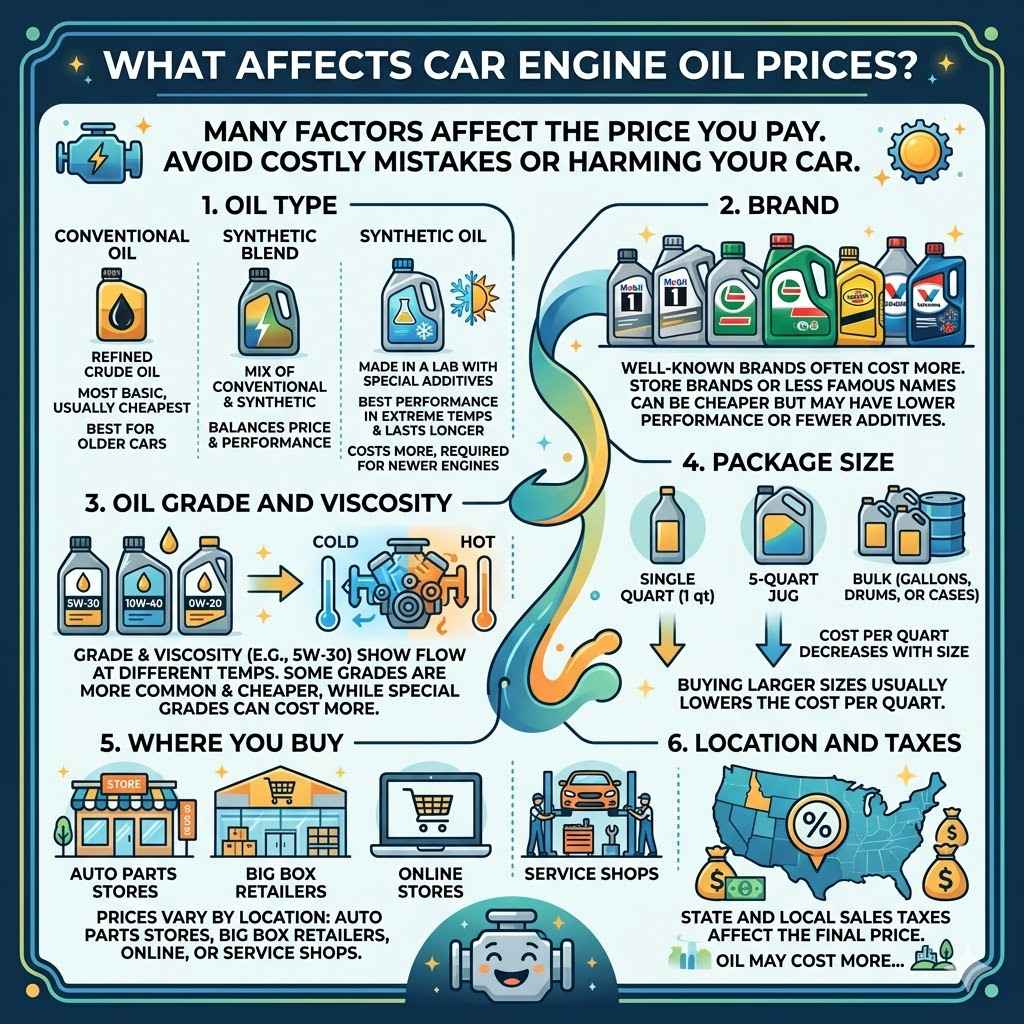
Many drivers think oil is oil, but several factors affect the price you pay. Understanding these details helps you avoid costly mistakes or cheap products that harm your car.
1. Oil Type
There are three main types of engine oil you’ll find in the US:
- Conventional oil: Made from refined crude oil. It’s the most basic and usually the cheapest.
- Synthetic oil: Made in a lab with special additives. Performs better in extreme temperatures and lasts longer, but costs more.
- Synthetic blend: A mix of conventional and synthetic oil. Balances price and performance.
Each type has its price range and best use. For example, older cars may run fine on conventional oil, but newer engines often need synthetic for best protection.
2. Brand
Well-known brands like Mobil 1, Castrol, Pennzoil, and Valvoline often cost more. Store brands or less famous names can be cheaper, but sometimes offer lower performance or fewer additives.
3. Oil Grade And Viscosity
You’ll see numbers like 5W-30 or 10W-40 on oil bottles. These show how the oil flows at different temperatures. Some grades are more common (and cheaper), while special grades can cost more.
4. Package Size
Engine oil is sold in:
- Single quarts (1 quart ≈ 0.95 liters)
- 5-quart jugs
- Bulk (gallons, drums, or cases)
Buying larger sizes usually lowers the cost per quart.
5. Where You Buy
Prices vary by location:
- Auto parts stores (AutoZone, Advance Auto Parts)
- Big box retailers (Walmart, Costco, Target)
- Online stores (Amazon, RockAuto)
- Service shops (oil change shops, dealerships)
Some shops include oil in their oil change service; others let you bring your own.
6. Location And Taxes
State and local sales taxes affect final price. Oil may cost more in rural areas or states with higher taxes.
Typical Engine Oil Prices In The Usa (2024)
To answer “How much does car engine oil cost in the USA?” we need to look at real numbers. Here’s what you can expect in 2024:
Conventional Oil
- Single quart: $4 – $7
- 5-quart jug: $18 – $28
Synthetic Blend
- Single quart: $6 – $9
- 5-quart jug: $22 – $35
Full Synthetic
- Single quart: $8 – $14
- 5-quart jug: $27 – $55
These prices are averages from major retailers and online stores. Premium brands or high-performance oils can be higher.
Example Price Comparison
Here’s a direct comparison of common brands and types at major US retailers (prices may change by location and time):
| Brand & Type | Viscosity | Size | Price (USD) | Price per Quart |
|---|---|---|---|---|
| Mobil 1 Full Synthetic | 5W-30 | 5-quart jug | $32 | $6.40 |
| Pennzoil Conventional | 10W-30 | 5-quart jug | $23 | $4.60 |
| Valvoline Synthetic Blend | 5W-20 | 5-quart jug | $28 | $5.60 |
| Walmart Super Tech | 5W-30 (Conventional) | 5-quart jug | $18 | $3.60 |
Non-obvious insight: Buying a 5-quart jug usually saves you 20–30% over buying single quarts, even for the same brand and oil type.
How Much Oil Does Your Car Need?
Not every car uses the same amount of engine oil. Knowing the right quantity helps you budget and avoid waste.
- Small 4-cylinder engines: 3.5 – 4.5 quarts
- Mid-size 6-cylinder engines: 4.5 – 5.5 quarts
- Large V6/V8 engines: 5.5 – 8 quarts
Always check your owner’s manual for the exact amount your car needs. Overfilling can damage your engine.
Example: A Honda Civic (4-cylinder) usually takes about 3.7 quarts, while a Ford F-150 V8 might need 7 quarts.
Total Cost For An Oil Change (diy Vs. Shop)
When you ask about the “cost of car engine oil,” do you mean just the oil, or the whole oil change? Here’s how costs break down:
Do-it-yourself (diy) Oil Change
- Engine oil: $18 – $55 (for 5 quarts, depending on type/brand)
- Oil filter: $5 – $15
- Other supplies: $0 – $5 (oil pan, funnel, gloves if you don’t have them)
Total typical DIY cost: $23 – $70
Shop Oil Change (service Included)
- Quick lube shops: $35 – $80 (conventional or synthetic blend)
- Dealerships: $45 – $120 (usually synthetic)
- Luxury/specialty shops: $80 – $150+
Shops include labor and usually a basic inspection. Some use bulk oil, which can be cheaper per quart.
Non-obvious insight: Many shops use “house blend” oil that meets standards but is not a brand you see on shelves. Always ask what oil they use and if you can bring your own.
Why Does Synthetic Oil Cost More?
Synthetic oil can be double or triple the price of conventional oil. The higher cost comes from:
- Advanced chemistry: Synthetic oil is designed for better protection, less sludge, and longer life.
- Performance in extremes: Handles high heat and cold starts better than conventional oil.
- Longer intervals: You can usually go farther between oil changes (sometimes 7,500–10,000 miles).
But if your car doesn’t require synthetic, you may not need to pay the extra cost.
The Hidden Costs: Taxes, Fees, And Disposal
When you buy engine oil in the USA, the price tag isn’t always the final price. Here’s what can add to your bill:
- State/local sales tax: 0–10% depending on your location
- Oil recycling/disposal fee: Some states add a small fee ($0.05–$1 per quart) to fund recycling
- Core charge: Rare, but some stores add this for bulk oil containers (refundable when you return the empty)
Pro tip: Most auto parts stores will take your used oil for free if you change your oil yourself. Never pour oil down the drain—it’s illegal and harms the environment.
Where To Buy Engine Oil In The Usa
Not all shops offer the same prices. Here’s where most drivers buy oil and what you can expect:
1. Auto Parts Stores
Popular chains include AutoZone, Advance Auto Parts, O’Reilly Auto Parts, and NAPA. They carry a wide range of brands and types. Prices are usually higher than big box stores, but you can get expert advice.
2. Big Box Retailers
Walmart, Costco, and Target sell popular brands, often at lower prices. Walmart’s store brand (Super Tech) is one of the cheapest options.
3. Online Retailers
Amazon and RockAuto offer a huge selection. Prices can be lower, especially for bulk orders or less common grades. Watch for shipping costs.
4. Dealerships And Service Shops
You can buy oil directly, but prices are usually the highest. Often, oil is included with their service.
5. Gas Stations And Convenience Stores
Usually only single quarts, at much higher prices—good for emergencies, not regular maintenance.
How To Choose The Right Engine Oil For Your Car
With so many options, how do you pick the right oil?
Check Your Owner’s Manual
The owner’s manual tells you the best oil type and grade for your engine. Using the wrong oil can hurt performance or void your warranty.
Consider Your Car’s Age And Mileage
- Older cars: May do fine with conventional oil or a blend.
- High-mileage engines: Some oils are designed for engines over 75,000 miles with additives to reduce leaks and burn-off.
- Newer cars: Many now require synthetic oil.
Match The Viscosity
Stick with the recommended viscosity (5W-20, 10W-30, etc. ) For your climate and engine.
Look For Certifications
Check for labels like API (American Petroleum Institute) or ILSAC. These show the oil meets industry standards.
Non-obvious insight: “High mileage” oils can cost 10–20% more, but in many cases, regular synthetic oil works just as well for most cars with over 75,000 miles.
Saving Money On Engine Oil
Engine oil doesn’t have to be expensive if you know where to look and how to shop smart.
Buy In Bulk
If you have multiple cars or change oil often, buying larger containers or cases can save you money per quart.
Use Store Brands
Walmart’s Super Tech or Costco’s Kirkland synthetic oils often meet the same standards as big brands but cost less.
Watch For Promotions
Auto parts stores and big retailers run sales, especially around holidays. A $28 5-quart jug might drop to $20.
Online Subscription
Some online retailers offer discounts for regular purchases (subscribe and save).
Do It Yourself
A DIY oil change can save $20–$80 per change compared to a shop. You also know exactly what oil goes into your car.
Cost Comparison: Popular Oil Types And Brands
To help you compare, here’s a breakdown of typical costs for well-known engine oil brands in 2024:
| Brand | Oil Type | Size | Typical Price (USD) | Notes |
|---|---|---|---|---|
| Mobil 1 | Full Synthetic | 5-quart | $30 – $38 | Top-tier, long interval |
| Castrol EDGE | Full Synthetic | 5-quart | $29 – $36 | Good for performance engines |
| Pennzoil Platinum | Full Synthetic | 5-quart | $28 – $37 | Popular OEM choice |
| Valvoline MaxLife | High Mileage Blend | 5-quart | $27 – $32 | For engines over 75,000 miles |
| Quaker State | Conventional | 5-quart | $19 – $23 | Entry-level price |
| Super Tech (Walmart) | Full Synthetic | 5-quart | $20 – $22 | Low cost, meets standards |
Note: Prices change with sales, oil price fluctuations, or supply chain issues.
Common Mistakes When Buying Engine Oil
Even experienced drivers make errors that cost money or damage engines. Avoid these common mistakes:
- Ignoring the owner’s manual: Using the wrong oil can reduce engine life.
- Buying only by price: Cheap oil might lack important additives.
- Confusing synthetic blend and full synthetic: Read the label carefully—full synthetic costs more but offers better protection.
- Not checking certifications: Look for API or ILSAC ratings.
- Overfilling the engine: Too much oil can cause leaks or damage.
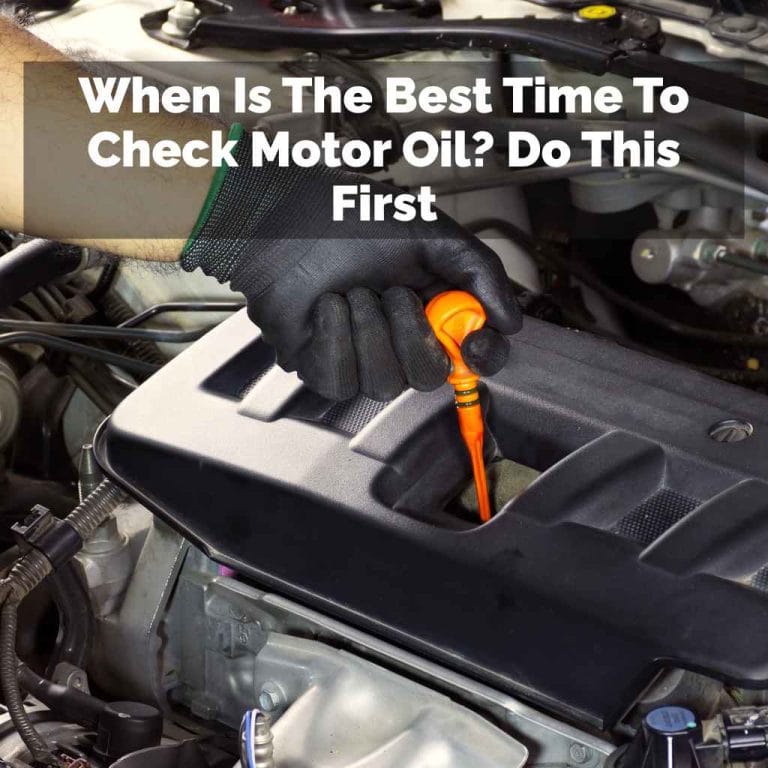
Pro tip: Always check the dipstick after an oil change—even at a shop—to confirm the right level.
How Often Should You Change Engine Oil?
This affects your yearly costs. In the past, drivers changed oil every 3,000 miles, but modern cars and synthetic oils last longer.
- Conventional oil: Change every 3,000 – 5,000 miles
- Synthetic blend: Every 5,000 – 7,500 miles
- Full synthetic: Up to 7,500 – 10,000 miles (sometimes more—check your manual)
A car driven 12,000 miles per year might need 1–4 oil changes, depending on oil type and engine.
The Real Cost Per Year
Let’s estimate the annual cost for a typical American driver:
- Miles per year: 12,000
- Oil changes needed: 2 (with full synthetic) to 4 (with conventional)
- Cost per oil change (DIY): $25 – $55 (includes oil and filter)
- Total annual oil cost: $50 – $220
If you use a shop, expect to pay $80 – $350 per year, depending on oil type and shop rates.
Is Expensive Oil Always Better?
Not always. What matters most is matching the oil type, grade, and certification to your car’s needs. Some store brands meet all industry standards and offer good protection at a lower price.
However, premium oils may be worth it if you drive in extreme conditions, tow heavy loads, or own a high-performance or turbocharged engine.
Environmental Impact And Used Oil Disposal
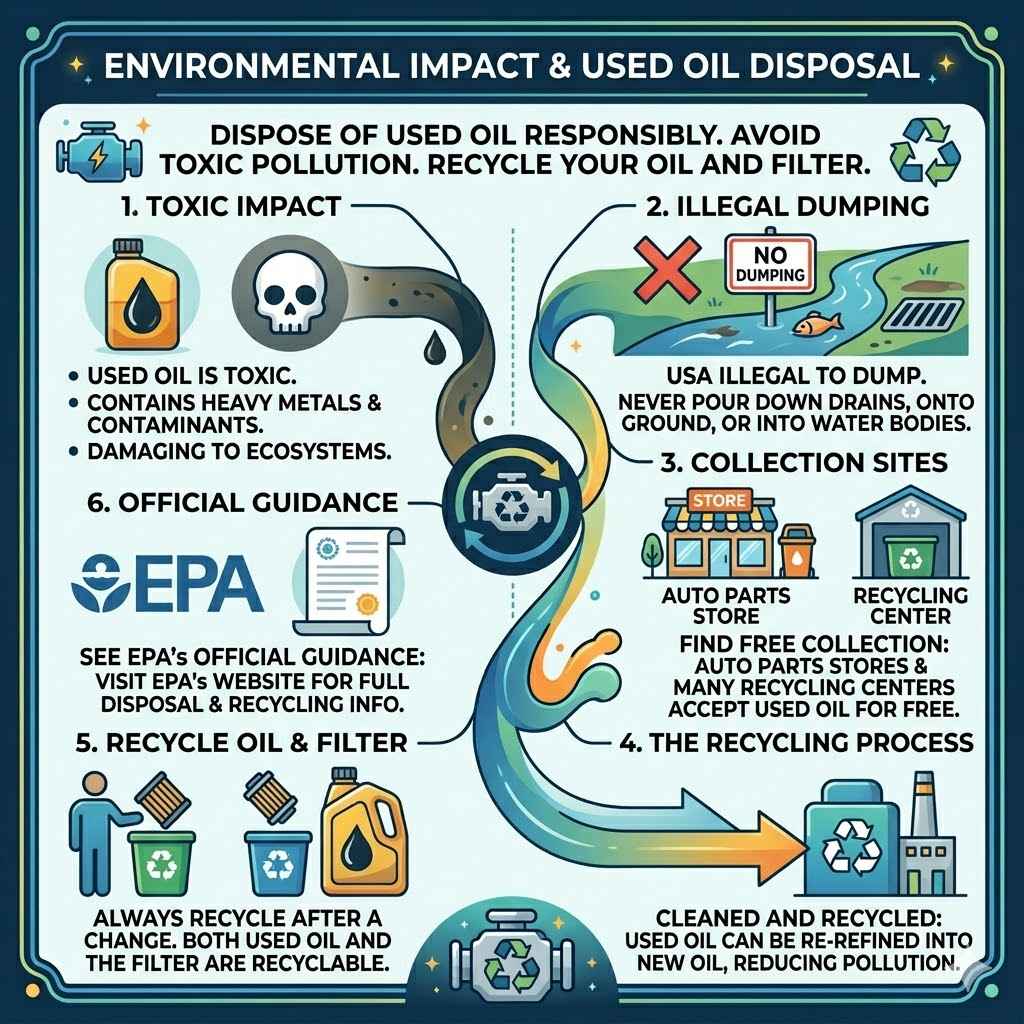
Engine oil is toxic if not disposed of properly. In the USA, it’s illegal to dump used oil. Auto parts stores and many recycling centers accept used oil for free.
Used oil can be cleaned and recycled into new oil, reducing pollution. Always recycle your oil and filter after a change.
For more on proper oil disposal and recycling, see the EPA’s official guidance.
Frequently Asked Questions
How Do I Know Which Engine Oil My Car Needs?
Check your car’s owner’s manual for the recommended oil type (conventional, synthetic, blend), viscosity (like 5W-30), and certifications (API, ILSAC). If you don’t have the manual, many auto parts stores can look this up for you using your car’s year, make, and model.
Is It Safe To Use Cheaper Store-brand Engine Oil?
Yes, as long as the oil meets the certifications and specifications for your car. Many store brands (like Super Tech or Kirkland) are made by major oil companies and meet all required standards.
Can I Switch From Conventional To Synthetic Oil?
In most cases, yes. Modern engines and oils are designed for this. However, always check your car’s manual or ask a mechanic if you have an older or high-mileage car.
Why Do Oil Prices Change So Much?
Engine oil prices depend on global crude oil prices, supply chains, brand marketing, and demand. Special sales, location, and package size also affect what you pay.
What Happens If I Use The Wrong Oil?
Using the wrong oil can reduce fuel economy, increase engine wear, and even void your warranty. Always match the viscosity and specifications in your manual.
Engine oil is a small but important investment in your car’s health. Now that you know the real costs, types, and buying tips, you can choose the best oil for your car and budget—without confusion or worry.