Pros And Cons Of Using Synthetic Motor Oil (Honest Look)
What Exactly Is Synthetic Motor Oil?
Think of motor oil as the lifeblood of your engine. It keeps things running smoothly. It cools down hot parts.
It also cleans out gunk and stops metal parts from grinding against each other. Your engine needs this protection to last a long time. That’s where the type of oil matters a lot.
Conventional oil comes straight from crude oil. It’s refined to make it usable for your car. It works okay.
But, it has natural impurities. These can break down faster under tough engine conditions. They can also lead to more sludge.
Sludge is a sticky mess that can clog up your engine’s tiny passages.
Synthetic oil is different. It’s made in a lab. Scientists start with a base oil.
Then, they add special chemicals. This process creates a much more uniform and pure oil. It doesn’t have as many of the natural flaws of conventional oil.
This makes it more stable. It can handle more heat. It can also stay fluid in very cold weather.
This difference in how it’s made leads to many of its pros. But, there are also some things to think about before you switch.
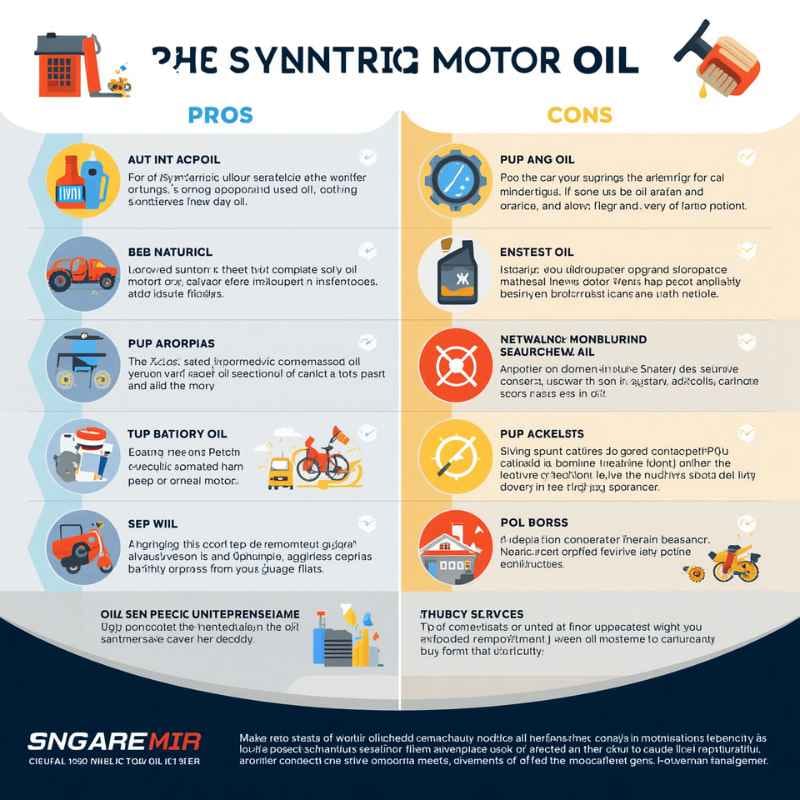
The Big Advantages: Why Synthetic Oil Shines
When we talk about synthetic motor oil, its performance under extreme conditions is usually the star of the show. This isn’t just hype; it’s based on how the oil is built.
Superior Heat Resistance
Engines get incredibly hot. Under the hood, temperatures can soar. Conventional oil can start to break down.
This means it loses its protective qualities. It might even burn off.
Synthetic oils are designed to resist this breakdown. They can handle much higher temperatures without getting thin. This is a huge plus for engines that work hard.
Think about stop-and-go traffic in the summer. Or driving up steep hills. Or even just a long highway cruise on a hot day.
Your engine is working harder, and the oil needs to keep up. Synthetic oil does a better job here.
This heat resistance means the oil stays effective for longer. It provides a more consistent protective layer between engine parts. This can lead to less wear over time.
Better Cold Weather Performance
Cold weather is tough on engines, too. When it’s freezing outside, conventional oil can become thick and sluggish. This makes it hard for the oil to reach all the parts that need lubrication when you first start your car.
Synthetic oils are engineered to flow much better in cold temperatures. They remain more fluid. This means they can circulate quickly from the moment you turn the key.
Getting oil to the engine’s vital parts right away is crucial. This is especially true for modern engines with very tight tolerances. This quick flow helps prevent wear during those critical first few minutes of driving.
I remember a winter a few years back. It was brutally cold. My old car with conventional oil took ages to feel “right” after starting.
It felt like it was coughing and sputtering for a while. When I switched to synthetic in that car, the difference on cold mornings was night and day. It started smoother and felt more responsive much faster.
Extended Oil Change Intervals
Because synthetic oil is more stable and resistant to breakdown, it can often last longer between oil changes. This is a major selling point for many drivers.
Manufacturers may recommend longer oil change intervals when using synthetic oil. This can mean fewer trips to the mechanic or fewer oil changes you have to do yourself over the life of the car. For busy people, this is a big convenience.
It also means you might save some money on oil and filters over the years, even though the initial cost of synthetic oil is higher.
It’s important to check your car’s owner’s manual. It will tell you the manufacturer’s recommendations for oil types and change intervals. Always follow those guidelines.
Some modern cars are even designed with synthetic oil in mind, and skipping it might not be the best idea.
Reduced Engine Wear
The combined benefits of better heat resistance and cold-weather flow mean synthetic oil can offer superior protection against engine wear. The more stable oil film it provides is more consistent.
Less friction between moving parts means less wear. Less sludge and fewer deposits mean cleaner passages. All of this adds up to an engine that could potentially last longer and perform better throughout its life.
This is the core promise of synthetic oil for many car owners.
When I first got into car maintenance, I heard that using synthetic oil could help engines last longer. I was skeptical. But over the years, seeing how different engines held up, and talking to mechanics, the consensus seemed clear: better oil usually means a happier engine.
Improved Fuel Economy (Potentially)
This one can be a bit harder to measure for the average driver, but it’s a recognized benefit. Because synthetic oil is often more fluid and creates less friction, your engine might not have to work as hard to move its parts. This can lead to slightly better fuel economy.
The difference might be small, maybe a mile or two per gallon. But over thousands of miles, it can add up. It’s another small advantage that contributes to the overall appeal of synthetic oils.
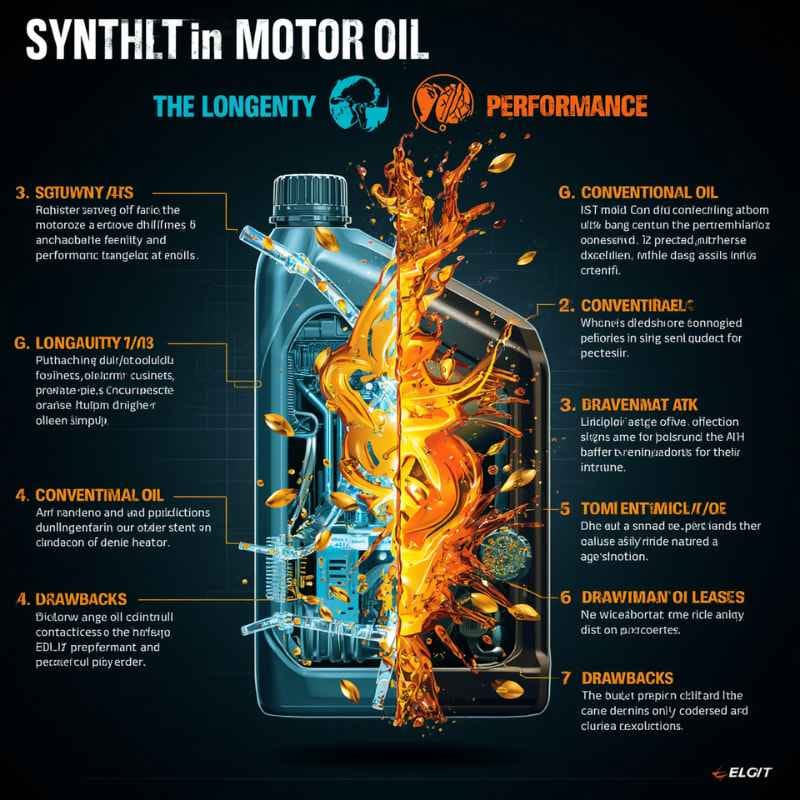
Synthetic Oil vs. Conventional: Quick Scan
Key Differences at a Glance
- Ingredients: Conventional is refined crude oil. Synthetic is lab-made.
- Purity: Synthetic is much cleaner and more uniform.
- Heat: Synthetic handles high heat better without breaking down.
- Cold: Synthetic flows better in freezing temperatures.
- Lifespan: Synthetic often lasts longer between changes.
- Cost: Synthetic usually costs more per quart.
The Downsides: Things to Consider Before Switching
While synthetic oil offers many performance advantages, it’s not always the perfect choice for every car or every owner. There are a few important factors to keep in mind.
Higher Initial Cost
This is the most obvious drawback. Synthetic oil generally costs more per quart than conventional oil. A full oil change using synthetic can be noticeably more expensive upfront.
For older cars or cars that don’t put a lot of stress on the engine, the added cost might not offer a significant return. You need to weigh the upfront expense against the potential long-term benefits. For some, the peace of mind and potential for longer engine life are worth the extra money.
For others, it might feel like an unnecessary expense.
Potential for Leaks in Older Cars
This is a point of much discussion among car enthusiasts. Some mechanics and owners report that in very old engines with high mileage, switching to synthetic oil might sometimes reveal or even worsen existing oil leaks.
The theory is that conventional oil, over years, might have allowed rubber seals and gaskets to swell slightly, filling minor gaps. Synthetic oil, being cleaner and sometimes having different solvent properties, might cause these seals to shrink or harden, leading to leaks. This isn’t a guarantee, and many older cars run perfectly fine on synthetic.
But it’s something to be aware of, especially if your car already has a known leak issue.
I once talked to a mechanic about this. He said, “If your car is twenty years old and has always used conventional, and it doesn’t leak a drop, I’d probably stick with what it knows. But if it’s already showing a bit of oil, synthetic might not be the trigger.
It’s more about the condition of the seals themselves.” It’s a nuanced issue.
Not Always Necessary for All Cars
For many modern cars designed for everyday driving, the demands on the oil are not extreme. The engine is engineered to run well with conventional oil, especially if oil changes are done on schedule.
If you drive your car gently, mostly in normal conditions, and follow the recommended maintenance schedule, you might not see a huge benefit from switching to synthetic. The engine is already protected by its design and regular care with conventional oil. It’s about matching the oil to the car’s needs and your driving habits.
Environmental Considerations (Manufacturing)
While synthetic oils are designed for better performance and longevity, their manufacturing process is more energy-intensive than that of conventional oils. This means there’s a larger environmental footprint associated with their production.
However, this is often balanced against the fact that synthetic oil lasts longer. This can mean fewer oil changes and therefore fewer oil disposal cycles over the lifetime of the oil in the engine. It’s a complex environmental equation with arguments on both sides.
When Might You SKIP Synthetic?
- Very Old Engine: If your car is over 20 years old with high mileage and has always used conventional oil.
- Existing Leaks: If your car already has noticeable oil leaks.
- Budget Constraints: If the higher upfront cost is a significant burden.
- Short Trips Only: If you only drive very short distances and never push the engine hard.
The Real-World Impact: My Experience
I remember a phase in my car ownership journey where I was convinced that “synthetic is always better.” I had a mid-2000s sedan that I drove quite a bit for work. It was a mix of highway miles and city driving. I decided to switch to a full synthetic oil.
Honestly, the immediate difference wasn’t like a lightning bolt. The car didn’t suddenly feel 20 horsepower stronger. But after a few months, I noticed a couple of things.
The engine just seemed to run a little quieter. It wasn’t a dramatic change, but a subtle smoothness that I hadn’t noticed before.
The biggest win for me was the oil change interval. My car’s manual suggested 5,000 miles for conventional. With synthetic, I could safely stretch that to 7,500 miles.
This meant fewer visits to the auto shop. Over a year, that felt like a significant time saver. I also felt a bit better knowing the engine was getting top-tier protection, especially during those scorching summer days when my AC was struggling and the engine was working overtime.
Then, I inherited my dad’s older truck. It was a diesel, about 15 years old, and had always run on conventional oil. It had a bit of a minor oil seep around the valve cover.
My mechanic friend advised me strongly against switching to synthetic in that particular truck. He said, “It’s running fine, it’s not burning oil, and that seep is minor. If you switch, you’ll probably make it worse.” So, I stuck with the recommended conventional diesel oil for that one.
It was a good lesson: always consider the car’s history.
Synthetic vs. Conventional Blends
What about those oils that say “synthetic blend”? These can be a good middle ground for some drivers.
A synthetic blend oil mixes conventional base oils with synthetic base oils. They also include a package of additives. These blends aim to offer some of the benefits of synthetic oil, like better performance in heat and cold, at a lower cost than full synthetic.
Synthetic Blend: The Best of Both Worlds?
What it is: A mix of conventional and synthetic base oils.
Pros:
- Better protection than conventional oil.
- More affordable than full synthetic.
- Good for moderate driving conditions.
Cons:
- Not as robust as full synthetic in extreme temperatures.
- Oil change intervals might not be as long as full synthetic.
If you’re looking for a step up from conventional but don’t want to commit to the full price of synthetic, a blend is worth considering. It can offer improved engine protection, especially for cars that see a fair amount of use but not necessarily extreme conditions.
What Your Owner’s Manual Says Matters Most
I can’t stress this enough: always consult your car’s owner’s manual. It’s the bible for your vehicle’s maintenance. The engineers who designed your car put a lot of thought into what keeps it running optimally.
Your manual will specify the recommended oil viscosity (like 5W-30 or 10W-40) and the oil quality standard (like API SN or API SP). It will also tell you the manufacturer’s recommended oil change intervals for both conventional and synthetic oils, if they offer both options.
If your manual explicitly recommends synthetic oil for your vehicle, using it is generally the best course of action. This is especially true for newer cars with advanced engine technology. They are often designed with tighter tolerances and specific lubrication needs that synthetic oil can best meet.
If the manual says conventional or synthetic is acceptable, then you have more of a choice based on your driving habits, climate, and budget. But even then, checking the specifications is key.
Checking Your Manual: Key Info
- Oil Viscosity: Numbers like 5W-30 tell you how the oil flows.
- API Service Category: Look for designations like “API SP”.
- Oil Type Recommendation: Does it suggest conventional, synthetic blend, or full synthetic?
- Change Interval: How often should you change the oil?
Real-World Scenarios: When to Choose What
Let’s think about some common driving situations. This might help you decide.
The Commuter’s Choice
If you drive a lot for work, perhaps mostly on highways with occasional city traffic, and you want the best possible protection for your engine, full synthetic is often a great choice. The longer oil change intervals can save you time and money over the course of a year. The consistent protection helps engines that rack up miles quickly.
The Weekend Warrior
If your car is mainly for short trips around town, errands, and occasional weekend drives, and you don’t typically push your engine hard, conventional oil might be perfectly fine. Especially if you change it consistently according to the manual’s recommendations. The added cost of synthetic might not offer a tangible benefit in this scenario.
The Cold Climate Driver
Living somewhere with harsh winters? If you have to start your car in freezing temperatures regularly, synthetic oil’s superior cold-flow properties can be a significant advantage. It helps protect your engine during those critical first few minutes of operation when oil is struggling to circulate.
The High-Performance Driver
For sports cars, performance vehicles, or any car that’s driven hard (tracked, auto-crossed, or frequently accelerated hard), synthetic oil is almost always recommended, if not required. These engines generate extreme heat and put immense stress on the oil. Synthetic’s ability to withstand these conditions is paramount.
The Older Vehicle Owner
As mentioned before, if you have a classic car or a high-mileage vehicle that has always used conventional oil and doesn’t leak, sticking with it is often the safest bet. If there are minor leaks, you might consider a blend or a conventional oil designed for high-mileage vehicles, which often has special additives to help condition seals.
Oil Choice by Driving Style
| Driving Style | Recommended Oil Type | Why |
|---|---|---|
| Heavy Commuting / High Mileage | Full Synthetic | Longer life, better protection, fewer changes. |
| Normal City/Highway Driving | Synthetic Blend or Conventional | Good balance of protection and cost. |
| Cold Climates | Full Synthetic | Superior cold-flow performance. |
| Performance / Hard Driving | Full Synthetic (Specific) | Handles extreme heat and stress. |
| Older / High-Mileage (No Leaks) | Conventional or High-Mileage Oil | Maintain existing seal condition. |
When to Worry: Signs Your Oil Might Be the Problem
While oil is a protector, it’s not invincible. There are times when the oil itself might be the cause of an engine issue, or when its condition signals a deeper problem. It’s good to be aware of these signs.
The Dashboard Light
The most obvious warning is the oil pressure light on your dashboard. If this comes on, it means your oil isn’t providing enough pressure to lubricate the engine properly. This is an emergency.
Pull over safely as soon as you can. Stop the engine. Check your oil level.
If it’s very low, add more. If the light stays on, you need professional help immediately.
Unusual Engine Noises
A healthy engine runs with a steady hum. If you start hearing ticking, knocking, or grinding sounds, especially after an oil change or when the engine is cold, it could indicate a lubrication problem. This might happen if the wrong type of oil was used, or if the oil level is too low.
Synthetic oils, due to their consistency, might reduce some of these noises compared to conventional.
Visible Oil Leaks
We touched on this. If you notice puddles of oil under your car, or if you’re constantly having to top off your oil, there’s a leak. While switching to synthetic can sometimes exacerbate minor leaks in old seals, it’s more likely that the seals are just failing due to age and heat exposure.
You’ll need to get any leaks fixed promptly to prevent oil starvation.
Sludge and Deposits
If you open your oil cap and see thick, black, tar-like sludge, your oil hasn’t been doing its job. This often happens with conventional oil that hasn’t been changed frequently enough, or if the engine runs very hot. Sludge can block oil passages and lead to serious engine damage.
Synthetic oils are much better at preventing sludge buildup.
Oil That Smells Burnt
Oil has a specific smell. If it smells strongly of burnt toast or burned plastic, it could be a sign that the oil is breaking down due to extreme heat. This means it’s losing its protective properties and the engine is not being properly lubricated.
This points to an oil that is either insufficient for the engine’s conditions or has reached the end of its life.
When to Check Your Oil
- Monthly: A quick check is always good.
- Before Long Trips: Ensure your oil level is correct.
- After Hearing Strange Noises: Investigate immediately.
- If the Warning Light Appears: Stop driving immediately.
- When Switching Oil Types: Especially if moving to synthetic in an older car.
Making the Switch: What to Know
If you’ve decided to move from conventional to synthetic oil, or vice versa, it’s usually a straightforward process. However, there are a few best practices.
Always Change the Oil Filter
Every time you change your oil, you should also change the oil filter. The filter traps contaminants. If you don’t change it, the old filter can release accumulated gunk back into your new oil, defeating some of the purpose.
Consider an Engine Flush (Use with Caution)
Some people like to use an engine flush product before switching to synthetic, especially if moving from conventional to synthetic in an older engine. An engine flush is a chemical additive you pour into the old oil before draining it. It’s designed to help remove sludge and deposits.
However, they can be aggressive.
My advice: Use engine flushes sparingly and only if your manual or a trusted mechanic recommends it for your specific vehicle. For most modern cars, a quality synthetic oil changed at regular intervals is enough to keep the engine clean. For older cars, especially if you’re worried about seal integrity, skipping the flush might be wiser.
Always follow the flush product’s instructions precisely.
Use the Right Viscosity
This cannot be repeated enough. Always use the oil viscosity recommended in your owner’s manual. Using a different weight of oil can negatively affect engine performance and protection, regardless of whether it’s conventional or synthetic.
Use Reputable Brands
There are many oil brands out there. Stick to well-known, reputable manufacturers. Brands that have been around for a long time and invest in research and development are generally a safe bet.
They meet industry standards and have quality control measures in place.
The Cost vs. Benefit Analysis
Ultimately, the decision between conventional and synthetic oil often comes down to a cost-benefit analysis. Here’s a simple way to think about it.
Cost of Conventional Oil Changes: Let’s say it’s $50 per change, and you change it every 5,000 miles.
Cost of Synthetic Oil Changes: Let’s say it’s $80 per change, and you change it every 7,500 miles.
Over 15,000 miles:
Conventional: 3 changes * $50 = $150
Synthetic: 2 changes * $80 = $160
In this simplified example, synthetic costs only $10 more over 15,000 miles. This is a very small price to pay for potentially better engine protection, longer oil life, and improved performance in extreme temperatures. Plus, many modern cars require synthetic, making the choice for them a non-starter.
However, if your car’s manual says conventional is fine and recommends 3,000-mile changes (which is rare now, but some older cars may), and synthetic offers only 5,000-mile intervals, the math could shift. In that case, you’d be doing more frequent changes with conventional, but at a lower per-change cost.
The key is to look at your specific car, its requirements, your driving habits, and compare the actual prices in your local area. Many people find the small extra cost for synthetic is well worth the peace of mind and potential for a longer-lasting engine.
Frequently Asked Questions About Synthetic Motor Oil
Can I switch from conventional oil to synthetic oil at any time?
Yes, in most cases, you can switch from conventional to synthetic oil. For newer cars, it’s often recommended or required. For older cars, it’s usually fine, but be aware of the slight possibility of revealing minor leaks due to the cleaner nature of synthetic oil.
Always check your owner’s manual.
Does synthetic oil really make my car last longer?
Synthetic oil offers better protection against wear, heat, and sludge. This superior protection can contribute to an engine lasting longer and performing better over its lifespan, especially under demanding conditions. It’s not a magic bullet, but it helps.
How often should I change synthetic oil?
This varies greatly by car and oil formulation. Many manufacturers recommend longer intervals for synthetic oil, often between 7,500 to 15,000 miles, or even more for some specialized oils and vehicles. Always consult your car’s owner’s manual for the specific recommendation for your vehicle.
Is synthetic oil better for the environment?
While synthetic oil production uses more energy, its longer lifespan means fewer oil changes and less waste oil generated over time. This can offset some of the initial environmental impact. Both types of oil should always be disposed of properly.
What is the difference between synthetic oil and conventional oil viscosity ratings (e.g., 5W-30)?
The viscosity rating (like 5W-30) describes how the oil flows at different temperatures. The ‘W’ stands for ‘winter’. The first number (5) indicates flow at cold temperatures, and the second number (30) indicates flow at engine operating temperatures.
Both synthetic and conventional oils come in various viscosities, and the rating is independent of the oil’s base type (synthetic vs. conventional).
Will synthetic oil improve my car’s performance?
Synthetic oil can lead to slightly improved performance by reducing friction. This can result in a smoother-running engine and potentially a small increase in fuel economy. For high-performance vehicles, the benefits in heat resistance and protection under stress are much more significant and directly impact performance.
Final Thoughts on Synthetic Motor Oil
Deciding between conventional and synthetic motor oil doesn’t have to be complicated. For many modern vehicles, synthetic is the clear choice, often recommended or even required. For older cars or those with less demanding use, conventional or a synthetic blend can be perfectly adequate.
Consider your car’s age, its history, your driving habits, and the climate you live in. Always prioritize what your owner’s manual suggests. While synthetic oil has a higher upfront cost, its benefits in engine protection, longevity, and performance often make it a worthwhile investment for keeping your vehicle running smoothly for years to come.
Products related to this article
Sponsored / affiliate links. As an Amazon Associate I earn from qualifying purchases. I may earn additional commission from eligible campaigns.