Can You Change Car Lights to LED? Yes, Here’s How
Changing car lights to LED is one of the most popular upgrades drivers make today. This guide walks you through the entire process, from choosing the right bulbs to installing them safely, plus legal rules you should know.
Simply put, yes, you can change car lights to LED in most vehicles. You need compatible bulbs, adapters or resistors in some cases, and basic hand tools. The upgrade improves visibility and looks modern, but you must check your vehicle’s compatibility and local regulations before you start.
Key Takeaways
- Changing car lights to LED is possible on most vehicles with the right bulb size and connectors.
- You may need canbus decoders or resistors to prevent error codes and hyper-flash.
- LED headlights are brighter and last longer than halogen, but they must be aimed properly to avoid blinding oncoming traffic.
- Always check local laws on LED headlight color and brightness before upgrading.
- If you are not comfortable with car wiring, a professional install costs around $100 to $200.
What to Know Before You Change Car Lights to LED

Govee
Govee Car LED Lights, RGB Smart Car…
- Creative DIY Mode: Choose from 16 million available colors or customize car led light effects to your liking in DIY mode via Govee…
- Dynamic Music Mode: Built-in mic helps interior car lights sync with any music type. Liven up your road trips, weekend getaways or…
- Smart App Control: Manage the colors and brightness of car lights or choose music mode by one simple tap with Govee Home app. Enjo…
As an Amazon Associate I earn from qualifying purchases.
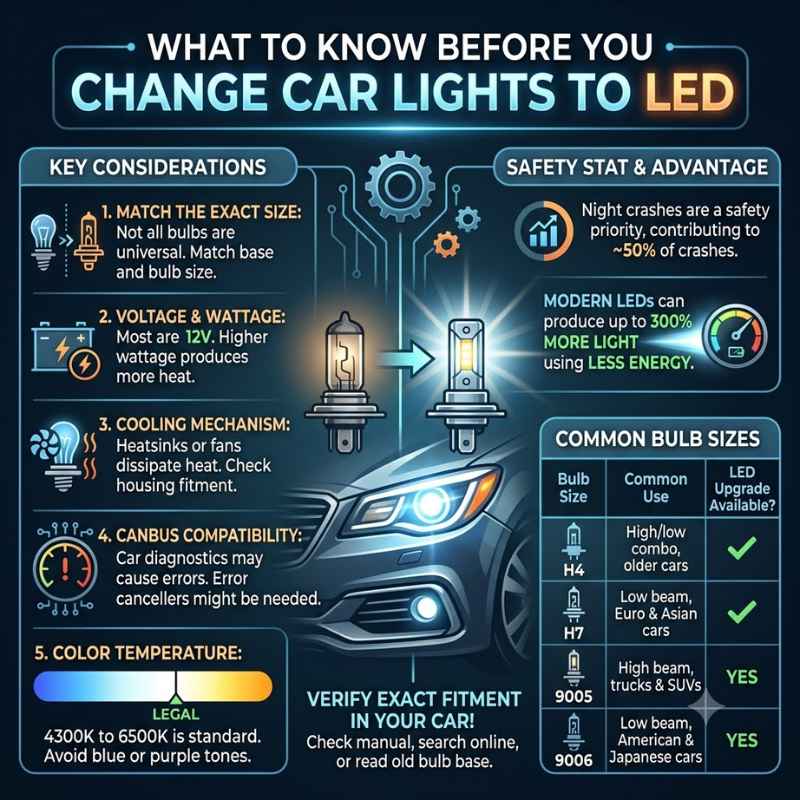
Before you order a set of LED bulbs, you need to know your car’s existing bulb type. LED bulbs are not universal. They come in different sizes, base types, and wattage ratings, and not every bulb fits every vehicle.
Start by checking your owner’s manual or looking up the bulb size online. You can also remove the old bulb and read the numbers printed on the base. Common sizes include H4, H7, 9005, and 9006.
- Bulb size: Match the exact size and base type of your original bulb.
- Voltage and wattage: Most LED bulbs run on 12V systems, but wattage can vary. Higher wattage means more heat.
- Cooling mechanism: LEDs need heatsinks or fans to dissipate heat. Make sure the bulb fits behind your headlight housing.
- Canbus compatibility: Some cars run diagnostics on bulbs. You may need error cancellers.
- Color temperature: Legal LED headlights are usually 4300K to 6500K. Avoid blue or purple tones.
According to the U.S. Department of Transportation, about 50% of all vehicle crashes occur at night, which makes good lighting a safety priority. Modern LED bulbs can produce up to 300% more light than halogen bulbs while using less energy.
| Bulb Size | Common Use | LED Upgrade Available? |
|---|---|---|
| H4 | High/low beam combo, many older cars | Yes |
| H7 | Low beam, many European and Asian cars | Yes |
| 9005 | High beam, trucks and SUVs | Yes |
| 9006 | Low beam, many American and Japanese cars | Yes |
This table shows that nearly every common halogen bulb size has an LED equivalent. But you still need to verify the exact fitment for your car model before making the switch.
How to Choose the Right LED Bulbs for Your Car
Once you know your bulb size, the next step is picking a quality LED bulb set. Not all LED bulbs perform the same. Cheap ones often have poor beam patterns, short lifespans, and cooling issues.
Look for bulbs from established brands like Philips, Osram, or Sylvania. These companies test their products against automotive standards and provide warranty coverage, which gives you more peace of mind.
- Check the lumen output: A good LED headlight bulb produces 3,000 to 6,000 lumens per pair.
- Look at the beam pattern: The best LEDs have a similar focal point to halogen to avoid blinding others.
- Consider the fan noise: Some LED bulbs have small fans that can be heard inside the cabin.
- Read reviews: See what other owners of your car model say about fitment and performance.
- Verify the color temperature: Stay in the 5000K-6500K range for a clean white light that is also legal.
Tip: Measure your headlight housing depth before buying. LED bulbs with thick heatsinks or fans may not fit near the weather seal.
To narrow down your options, follow this simple number sequence:
- Look up your car’s bulb size using an online fitment guide.
- Check if your vehicle uses a relay or is CANBUS-equipped.
- Compare LED bulb dimensions with your housing cavity.
- Buy from a seller that offers free returns for fitment issues.
Tools and Materials You’ll Need
Changing car lights to LED requires basic hand tools. Most installations are straightforward, but a few vehicles need extra adapters or brackets to secure the new bulbs.
Before you start, gather everything on the list below. This saves time and prevents you from touching the bulb glass with bare fingers, which can cause hot spots and early failure.
- Replacement LED bulbs that match your car’s size
- Rubber gloves or microfiber cloth
- Flathead and Phillips screwdrivers
- Socket wrench with extensions
- Plastic trim removal tool
- Canbus decoder or load resistors (if needed)
- Zip ties to secure wiring and drivers
| Material | Typical Price | Notes |
|---|---|---|
| LED bulbs (pair) | $30 – $150 | Brand and lumens affect price |
| Canbus decoder (pair) | $10 – $30 | For cars that check bulb status |
| Load resistors | $10 – $20 | Prevent hyper-flash on turn signals |
This setup covers almost every LED conversion. If your car has sealed headlight units, you may need professional help, because replacing the entire assembly costs more.
Warning: Disconnect the car battery before touching any electrical connectors. This prevents short circuits and unexpected airbag deployment if you are working near the steering column.
Step-by-Step: How to Change Car Lights to LED
Now comes the actual installation. While every car is different, the general process stays the same. Here is a reliable sequence for changing car lights to LED on most vehicles.
- Open the hood and locate the headlight assembly. In most cars, you can access bulbs from behind the housing.
- Remove the dust cover or retaining clip. Twist it counterclockwise or pull it straight out.
- Disconnect the old bulb from the wiring harness. Unplug it and set it aside.
- Remove the old halogen bulb. Press the retaining spring or unscrew the base.
- Install the LED bulb. Align the tabs with the slot and lock it in place. Do not touch the bulb with bare hands.
- Secure the wiring and driver box. Slide the driver into the housing and fit the dust cover on top. Most LED bulbs have slim drivers that fit inside.
- Connect the power harness. Plug the new bulb into the factory wiring. If you have a canbus decoder, connect it in between.
- Test the lights. Reconnect the battery and turn on the headlights. Check both low beam and high beam.
Important: LED bulbs produce a different beam pattern than halogen bulbs. After installation, have your headlight alignment checked to avoid glare for oncoming drivers.
If your car has projector headlights, you can use LED bulbs with a special adapter ring. Reflector housings may also work but can scatter light. In that case, choose bulbs with a shield designed to mimic the halogen filament position.
Tip: Take a photo of the wiring before disconnecting anything. This helps if you mix up the positive and negative connections.
Common Mistakes When Switching to LED Headlights
Many DIYers run into trouble during LED conversion. Most failures come from skipping compatibility steps or ignoring heat dissipation. Knowing these common mistakes helps you avoid them.
- Buying the wrong bulb size. This is the most frequent error. Always confirm your existing bulb’s base code.
- Not installing canbus decoders. Some cars show dashboard errors or flicker when they detect the lower power draw.
- Forgetting to check the dust cover depth. Large driver boxes can block the cover or leave gaps that let in moisture.
- Touching the LED chip with bare fingers. The oils from your skin can cause premature failure.
- Skipping the beam aim check. Improperly aimed LED headlights blind oncoming traffic.
- Using LED bulbs in high beam only without testing low beams. Always test both functions before sealing everything up.
| Symptom | Likely Fix |
|---|---|
| Flickering headlights | Add canbus decoder or adjust wiring |
| Error message on dash | Install LED error cancellers |
| Bulb turns off after a few minutes | Improve heat dissipation, remove obstructions |
| Uneven beam pattern | Check bulb orientation and re-aim headlights |
These fixes solve the vast majority of LED conversion problems. If you still have issues, consult your car model’s forum or a professional mechanic.
LED vs Halogen: Is the Upgrade Worth It?
The core question is whether changing car lights to LED is a real improvement over stock halogen bulbs. In terms of brightness, lifespan, and energy use, LED wins on paper. But there are trade-offs.
Halogen bulbs are cheap, simple, and widely available. LED bulbs cost more but last much longer and produce a cleaner color. The table below shows the main differences.
| Feature | Halogen | LED |
|---|---|---|
| Brightness | 1,000 – 1,500 lumens | 3,000 – 6,000 lumens |
| Lifespan | 500 – 1,000 hours | 20,000 – 50,000 hours |
| Color temperature | Yellowish (3000K-3500K) | White to cool white (5000K-6500K) |
| Energy draw | 55W | 15W – 35W |
| Cost per pair | $10 – $25 | $30 – $150 |
| Heat output | High | Low (heatsink needed) |
According to a study by AAA, LED headlights provide a 25% increment in visibility compared to halogen low beams. They also reach full brightness instantly, unlike HID lights that take seconds to warm up.
However, LED bulbs are not a direct drop-in for every car. Reflector housings designed for halogen bulbs may scatter LED light, creating glare. In that case, the upgrade might be illegal or unsafe.
Check the beam pattern after installation.
Legal Considerations and Brightness Regulations
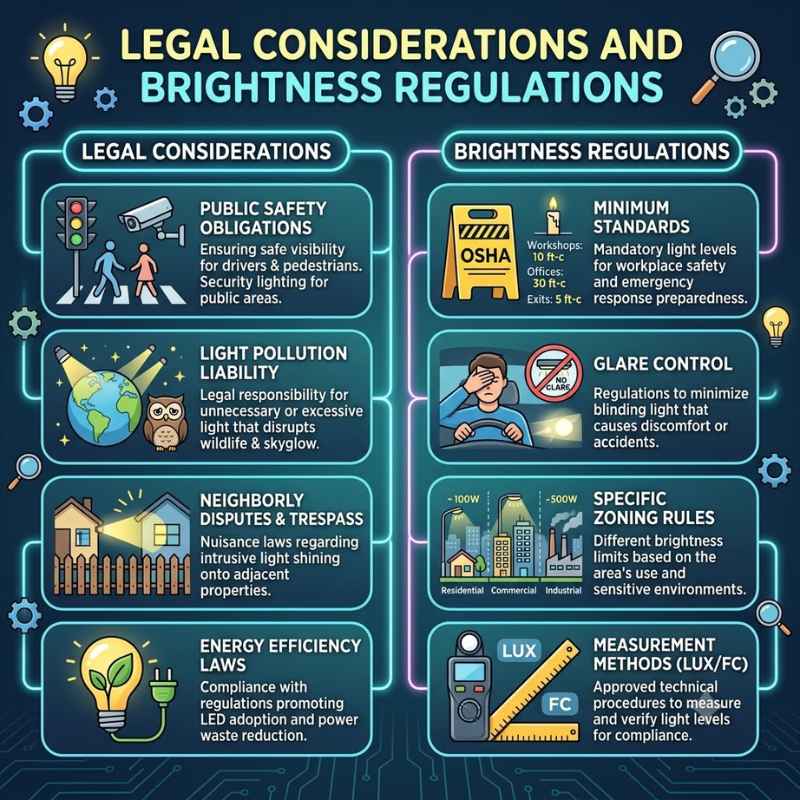
Before you change car lights to LED, check your local traffic laws. In the United States, the Department of Transportation (DOT) regulates headlamps. The Federal Motor Vehicle Safety Standard 108 outlines performance requirements, but it does not specifically approve retrofits.
State laws vary. Some states allow LED conversions as long as the beam pattern and color temperature are within legal limits. Others require the full headlight assembly to be replaced with a DOT-approved LED unit.
If you use bulbs marked “for off-road use only” on public roads, you could get a ticket or fail an inspection.
- Color limits: Many states restrict headlights to white or yellow. Blue or purple LEDs are illegal.
- Color temperature: Keep your bulbs between 5000K and 6000K for a legal white light.
- Brightness limits: Some states cap headlight brightness at 3,000 lumens per bulb. Check your state’s regulations.
- Headlight aim: Your low beams must not blind oncoming traffic. Have them aligned properly.
- Warranty considerations: Aftermarket LED bulbs may void certain lighting-related warranty claims.
Important: If your vehicle has automatic high-beam assist or adaptive headlights, LED retrofits can interfere with these systems. Look for bulbs marked as compatible with these features.
In Canada, Motor Vehicle Safety Regulations require high-beam and low-beam headlights to meet specific photometric standards. Many LED conversions fail because the beam pattern is not designed for the original housing. If you are in doubt, consult a local auto electrician.
Frequently Asked Questions
Can I just replace my halogen bulbs with LED bulbs?
Yes, in many cases you can. But you must choose the correct bulb size, check the base type, and make sure the LED bulb fits inside the headlight housing. Some cars need an adapter or decoder to avoid error messages.
Are LED headlights legal in my car?
LED headlights are legal in most places if they produce white light and a proper beam pattern. However, installing retrofit LED bulbs into halogen housings is not always legal. Check your state or country’s vehicle lighting regulations to be sure.
Will changing car lights to LED cause my car’s computer to throw an error?
Many modern cars monitor bulb power draw. LED bulbs draw less power than halogens, which can trigger a bulb failure warning. Installing canbus decoders or load resistors solves this issue.
Do I need to change my headlight housing to use LED bulbs?
Not always. If your original housing uses a common bulb size like H7 or 9005, a quality LED bulb may work. But if the beam pattern is poor or scattered, a full housing conversion might be required for safe and legal performance.
How long do LED headlight bulbs last?
Quality LED bulbs can last between 20,000 and 50,000 hours. That is 20 to 40 times longer than a halogen bulb. Actual lifespan depends on heat management, voltage stability, and the brand’s manufacturing quality.
Final Thoughts
Changing car lights to LED is a high-impact upgrade that improves visibility and modernizes your car’s look. With the right bulbs, a little patience, and attention to local rules, you can complete it in under an hour. Always verify compatibility and beam alignment before you head out on the road.
See also why is my car engine light on most common reasons.
Related pick: Check today's price on Amazon