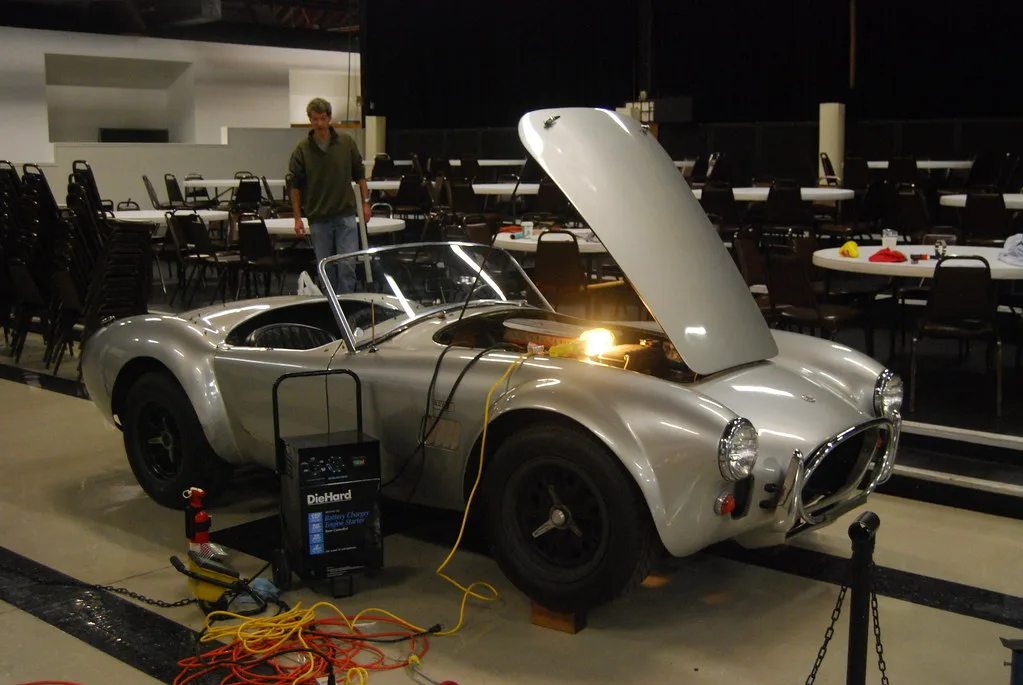
DOT 3 vs DOT 4 Brake Fluid: Which Should You Use Now?
Match the label first. If the cap or owner’s manual says DOT 3, use DOT 3. If it says DOT 4, use DOT 4. If it calls for DOT 4 LV, use that low-viscosity fluid only when specified. DOT 4 gives more heat reserve, and DOT 4 LV matters only when the brake system was built for it.
DOT 3 vs DOT 4 brake fluid: which should you use?
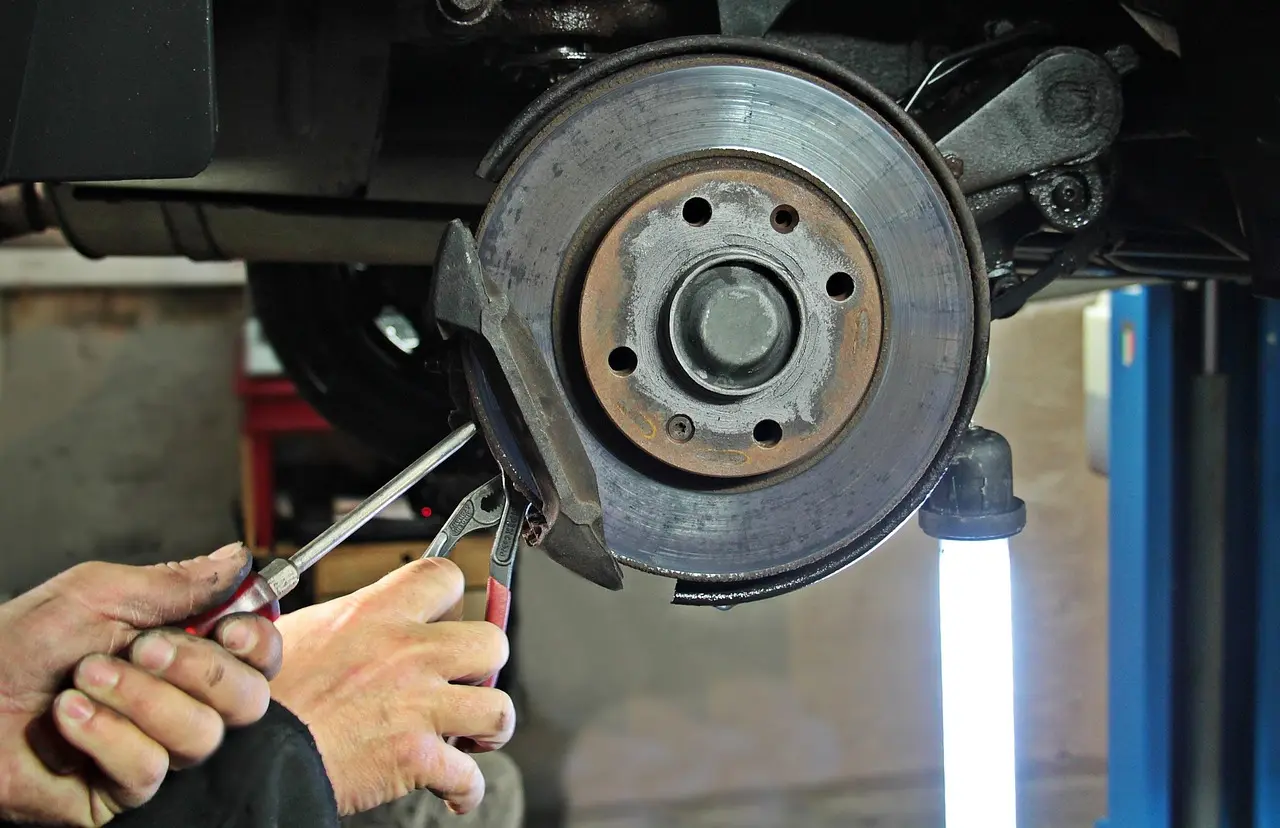
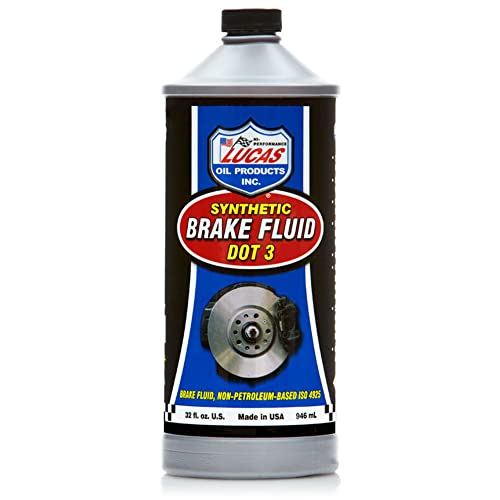
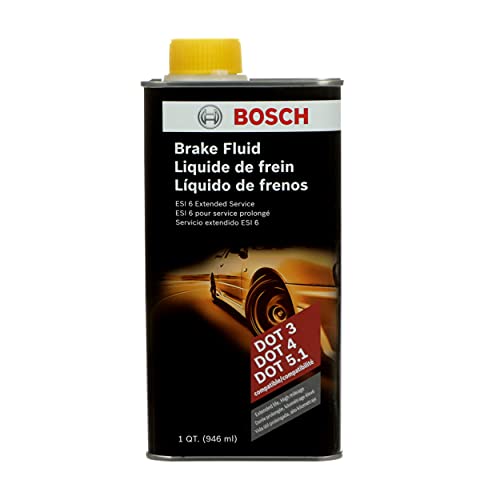
| Decision factor | DOT 3 | DOT 4 brake fluid: which should you use | Winner |
|---|---|---|---|
| Boiling margin | Lower heat reserve | Higher heat reserve | DOT 4 brake fluid: which should you use |
| Wet-use resilience | Minimum wet boiling point 284°F (140°C) | Minimum wet boiling point 311°F (155°C) | DOT 4 brake fluid: which should you use |
| ABS and stability-system fit | Works in many older systems | Often preferred in newer, ABS-equipped, heavier, or more demanding vehicles | DOT 4 brake fluid: which should you use |
| Maintenance tolerance | More forgiving if service discipline is loose | Better performance, but value falls if fluid is left in service too long | DOT 3 |
| Low-viscosity requirement | Not the answer | DOT 4 LV is the answer only when the car asks for it | DOT 4 brake fluid: which should you use |
Boiling margin is the main difference
DOT 3 is the base fluid. DOT 4 gives more heat reserve, which I care about in traffic, on grades, while towing, and during repeated stops. That extra margin helps only when the vehicle spec allows it and the fluid gets changed on time.
Wet performance matters more than dry ratings
Dry boiling point looks great on the bottle, but brake fluid pulls in moisture over time. The wet boiling point is the field number that matters because it reflects fluid after water exposure. For DOT 3, the minimum dry boiling point is 401°F (205°C) and the minimum wet boiling point is 284°F (140°C); for DOT 4, those figures are 446°F (230°C) and 311°F (155°C).
System fit matters as much as heat
Higher boiling point does not make a fluid the right pick by itself. Modern ABS systems use quick valve action, and some cars need lower viscosity and better cold flow, which is why DOT 4 LV exists. The manual and reservoir cap should usually be the first place to check before relying on parts-counter advice.
According to vehicleruns.com — DOT 3 is described as the more traditional, lower-boiling-point fluid.
What is the real difference between DOT 3 and DOT 4?
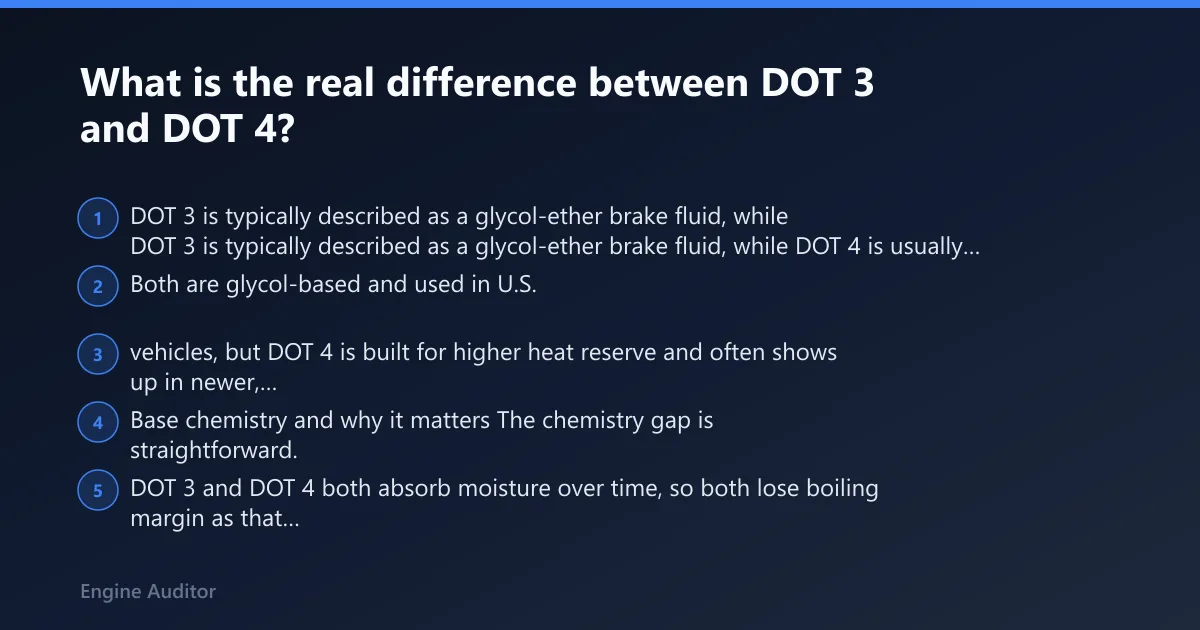
DOT 3 is typically described as a glycol-ether brake fluid, while DOT 4 is usually described as a glycol-based fluid with borate ester content. Both are glycol-based and used in U.S. vehicles, but DOT 4 is built for higher heat reserve and often shows up in newer, heavier, ABS-equipped, or harder-driven vehicles.
Base chemistry and why it matters
The chemistry gap is straightforward. DOT 3 and DOT 4 both absorb moisture over time, so both lose boiling margin as that happens. DOT 4 starts with the higher spec, which gives it more room before it reaches the same failure point.
Heat, fade, and vapor compressibility
When brake fluid gets hot enough, it can form vapor. Vapor compresses, fluid does not, so the pedal can go long and soft. That is brake fade territory, and it is why wet boiling point matters more than the dry number on a bottle in real driving.
Moisture absorption and service life
Moisture does two things at once: it lowers boiling point and raises corrosion risk inside calipers, lines, and master cylinders. A higher-spec fluid still loses value if it stays in the system too long. Shorter service intervals can erase some of DOT 4’s advantage if the fluid is neglected.
Can you use DOT 4 in a car that specifies DOT 3?
Often yes, as a top-off or as a full replacement when the vehicle maker allows it. DOT 4 can be acceptable in many DOT 3 systems because both are glycol-based, but the owner’s manual and reservoir cap still win. A top-off choice is not the same thing as a full-service choice.
Emergency top-off versus full flush
Mixing DOT 3 and DOT 4 is usually acceptable for topping off in a pinch. That does not mean a mixed bottle is the best long-term plan. If the fluid is being changed on purpose, a full flush is cleaner and easier to track than partial mixing.
When the manual ends the debate
If the cap says DOT 3, stick with that unless the manual gives permission for DOT 4. If the manual says DOT 4, do not step down without a reason. If the manual says DOT 4 LV, standard DOT 4 is not a casual substitute unless the maker approves it.
Can you mix DOT 3 and DOT 4 brake fluid?
Yes, in the narrow sense that an emergency top-off is usually acceptable because both are glycol-based fluids. No, in the sense that mixing should be a long-term maintenance plan. A full flush is better after any switch, especially if the old fluid’s age or contamination is unknown.
Why mixing is tolerated, but not preferred
Brake fluid compatibility here is broader than many owners expect. DOT 3 and DOT 4 are typically compatible enough for short-term topping off, but the final fluid in the system becomes a blend. That blend will not outperform a clean fill of the correct spec.
Why DOT 5 is different
DOT 5 is generally treated as a different fluid family from DOT 3 or DOT 4. It should not be treated as a substitute for DOT 3 or DOT 4. If the system calls for glycol-based fluid, adding silicone-based DOT 5 is the wrong move and can create service problems that are expensive to unwind.
What happens if you use the wrong brake fluid?
Using the wrong fluid can change pedal feel, cut boiling margin, and upset ABS behavior. In the best case, you end up with poor maintenance discipline. In the worse case, you create a compatibility problem, add corrosion risk, or introduce a fluid that the system was never designed to use.
Bad fill, bad mix, bad consequences
A wrong fill can hide the real reason the reservoir is low, which is a common mistake. Low fluid may point to worn pads, a leak, or a caliper issue rather than a simple top-off need. Pouring in fluid without checking the brake hardware can delay the real fix.
ABS systems can be picky about viscosity
Modern ABS and stability systems depend on rapid valve action. Fluid that is too thick for the design, especially in cold weather, can hurt response. That is where DOT 4 LV comes in, and why a generic “higher is better” rule is too crude.
What is DOT 4 LV and do I need it?
DOT 4 LV refers to a lower-viscosity DOT 4 fluid. It exists for modern ABS and stability systems that need brake fluid to move quickly through small passages, especially in cold conditions. Many European cars call for it, and it should be used only when the manual or cap calls for it or explicitly approves it.
Why low viscosity matters
In a modern brake unit, fluid must move fast when valves open and close in short bursts. If the fluid is too thick for the system’s design, response can suffer. DOT 4 LV is built to fit that requirement, not to act as a general upgrade for every car.
Who actually needs it
European cars often require DOT 4 or DOT 4 LV, and some modern vehicles with advanced ABS or stability control do as well. If the manual names DOT 4 LV, standard DOT 4 is not an automatic replacement. That is a spec question, not a preference question.
Should I follow the cap, the manual, or the parts-store recommendation?
Follow the owner’s manual first, then the reservoir cap if it matches, and treat parts-store advice as secondary. The manual is the primary source because it ties fluid type to the actual brake system. Cap markings are useful, but they should confirm, not override, the manual.
- Read the owner’s manual brake-fluid spec.
- Check the reservoir cap for the same marking.
- If the two agree, buy that fluid.
- If they conflict, trust the manual and inspect for a cap replacement or label issue.
- If the reservoir is low, check pads, hoses, calipers, and the floor for leaks before topping off.
Decision table: choose the right fluid for your car and driving
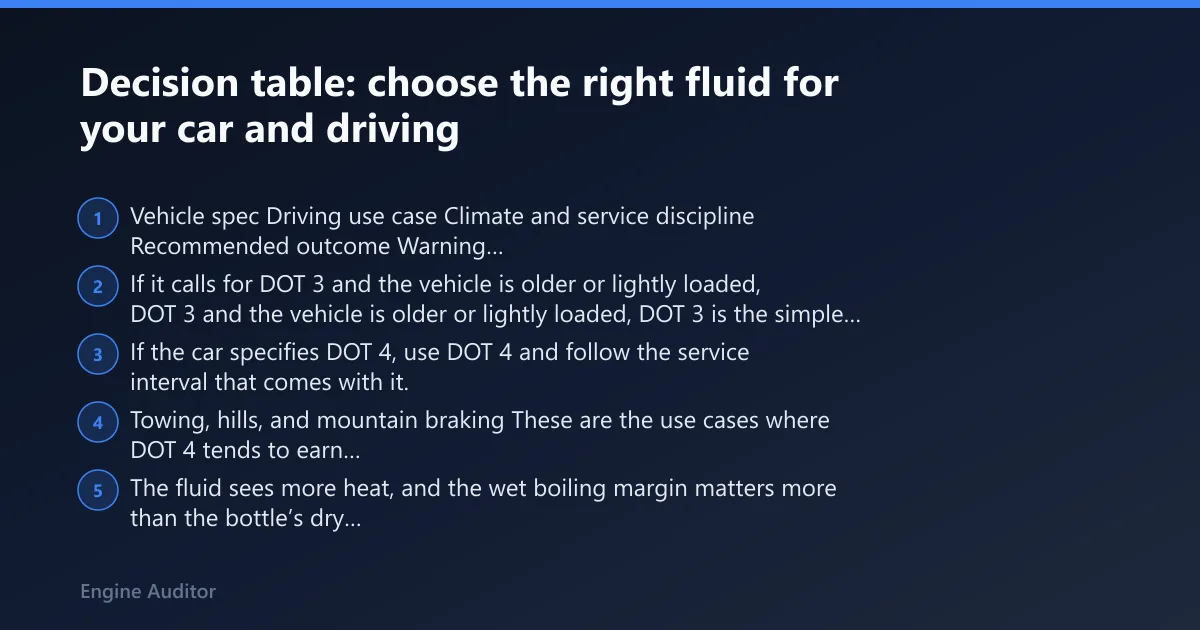
| Vehicle spec | Driving use case | Climate and service discipline | Recommended outcome | Warning if reservoir is low |
|---|---|---|---|---|
| Older economy car, manual says DOT 3 | Daily commuting, light load | Mild climate, regular service, low brake heat | DOT 3 | Low fluid can mean worn pads or a leak; do not top off blindly |
| Older car, manual allows DOT 4 | Stop-and-go traffic, hills, towing, long descents | Any climate, owner wants more heat margin | DOT 4 | Check pad wear and caliper slide condition before filling |
| Modern commuter with ABS, manual says DOT 4 | Daily driving, winter starts, mixed city and highway | Cold weather, normal service discipline | DOT 4 | Low reservoir may reflect pad wear, not just fluid loss |
| European model, manual says DOT 4 LV | ABS and stability control active often | Cold climate or fast valve response needed | DOT 4 LV | Do not assume any DOT 4 is fine; confirm the spec first |
| Performance-oriented platform, frequent hard braking | Mountain driving or track-adjacent use | Shorter flush interval accepted | DOT 4 | Low fluid may reveal pad wear or heat-related boil-off after a hard run |
| Any vehicle with unknown history | Owner wants a cheap top-off | Service record unclear | Mechanic review | Inspect for contamination, leaks, and brake wear before adding fluid |
Daily commuting
For plain commuting, the manual’s spec usually wins. If it calls for DOT 3 and the vehicle is older or lightly loaded, DOT 3 is the simple answer. If the car specifies DOT 4, use DOT 4 and follow the service interval that comes with it.
Towing, hills, and mountain braking
These are the use cases where DOT 4 tends to earn its keep. The fluid sees more heat, and the wet boiling margin matters more than the bottle’s dry number. A driver who sees long descents or repeated braking should care more about flush timing than about saving a small amount on fluid.
Track-adjacent or hard-use driving
Higher heat loads move the decision toward DOT 4, and sometimes toward more frequent fluid changes. That is not free performance. If the owner wants longer intervals and fewer flushes, the practical value of DOT 4 drops unless the car’s use case really needs it.
Choose DOT 3 if… / Choose DOT 4 brake fluid: which should you use if…
Choose DOT 3 if the manual calls for it, the car is older or lightly loaded, and you want the correct baseline fluid with the least complication. Choose DOT 4 if the manual allows it, the car works harder, or you want more heat margin and accept tighter service timing.
Choose DOT 3 if…
Use DOT 3 when the owner’s manual or cap calls for it, the vehicle is an older or economy model, and brake temperatures are usually modest. It is also the safer choice when you want to stay with the factory spec and keep maintenance simple.
Choose DOT 4 if…
Use DOT 4 when the manual allows it and the car sees higher heat, more load, ABS-heavy braking, or demanding driving. It also makes sense when the owner is disciplined about flush intervals and wants the added boiling margin to stay useful in real service.
Choose DOT 4 LV if…
Use DOT 4 LV only when the car specifically asks for low viscosity fluid. That usually means a modern brake system, often on a European model, where ABS and stability control need faster fluid movement in cold or fast cycling conditions.
Choose mechanic review if…
Choose a mechanic review if the reservoir is low and the reason is not obvious. A low level can mean worn pads, a leak, or caliper trouble. If the fluid looks dark, the history is unknown, or the spec conflicts between cap and manual, inspection comes before refilling.
Frequently asked questions
Which brake fluid should I use, DOT 3 or DOT 4?
Use the fluid listed on the cap or in the owner’s manual. DOT 3 is the baseline for cars that specify it, while DOT 4 is the better fit when the vehicle calls for it or when the manual allows it and the car sees higher heat or heavier use.
Can you use DOT 4 in a car that specifies DOT 3?
Often yes, especially for a top-off or when the manual allows it. DOT 4 can be an acceptable upgrade in many DOT 3 applications, but a full flush is better after switching fluids. The manual and reservoir cap still control the decision.
Can you mix DOT 3 and DOT 4 brake fluid?
Yes, for emergency topping off, because both are glycol-based and typically compatible. That said, mixing is not the best long-term plan. If the system is due for service, a full flush is cleaner than leaving a blended fill in place.
What is the difference between DOT 3 and DOT 4 brake fluid?
DOT 3 is a glycol-ether fluid with a lower boiling point, while DOT 4 is a glycol plus borate ester formulation with a higher boiling point. The practical difference is heat reserve, especially once moisture lowers the wet boiling point in real use.
What is DOT 4 LV and do I need it?
DOT 4 LV means low viscosity. It is for modern ABS and stability systems that need faster fluid movement, often in European cars. You need it only if the manual or reservoir cap specifies it; standard DOT 4 is not always an approved substitute.
Does DOT 4 need to be changed more often than DOT 3?
Often it does, because higher performance can come with tighter service discipline. Brake fluid absorbs moisture over time, so a better spec can lose value if it sits too long. If you want longer intervals with fewer flushes, that changes the real-world case for DOT 4.
Products related to this article
Sponsored / affiliate links. As an Amazon Associate I earn from qualifying purchases. I may earn additional commission from eligible campaigns.