Does Car Brake Fluid Need to Be Changed
Many car owners wonder, does car brake fluid need to be changed? It’s a common question, especially for those new to car maintenance. Thinking about brake fluid can seem a bit confusing.
You might not know why it’s important or how often it needs attention. But don’t worry! We’ll make it super simple.
We’ll walk you through everything you need to know, step-by-step. Let’s get your car’s brakes working their best. We’ll explain what brake fluid is and why it matters so much.
Why Your Car’s Brake Fluid Needs Regular Checks
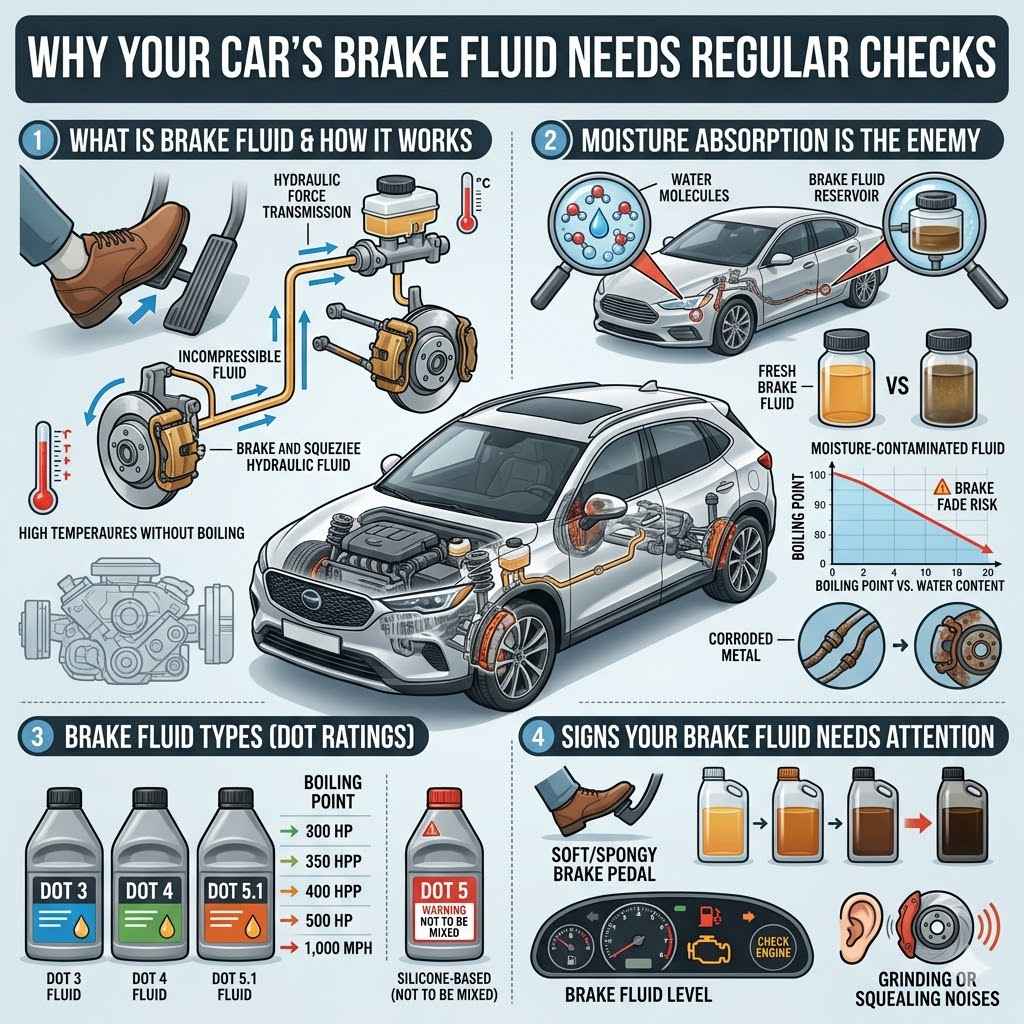
Brake fluid is a special liquid that helps your car stop. When you press the brake pedal, this fluid pushes the brake pads against the wheels. This friction makes your car slow down and stop.
Tzuoen
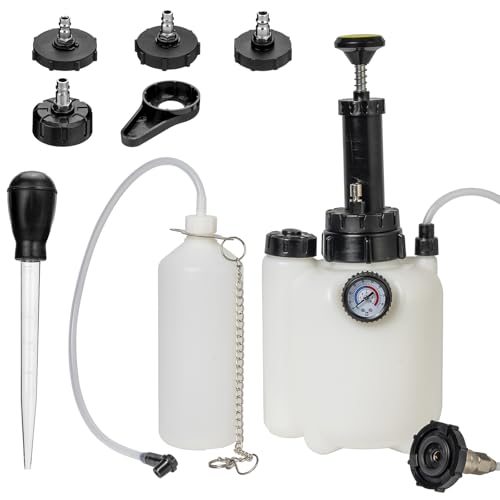
Tzuoen 3L Brake Bleeder Kit, Manual Brake…
- One Man Brake Bleeding: No more shouting instructions or messy oil spills! This one-man brake bleeder effortlessly flushes out old…
- Durable Material and Design: Constructed from high-strength, chemical-resistant polyethylene plastic, our reservoir and waste bott…
- Upgraded Pressure Relief Valve: Our enhanced 3L pressure pump now features a built-in push-button relief valve on the cap, allowin…
As an Amazon Associate I earn from qualifying purchases.
Over time, brake fluid can get dirty and absorb water. This can make your brakes less effective, which is not good for safety. Checking and changing your brake fluid regularly is key to keeping your car safe to drive.
We’ll explore why this fluid is so vital and what happens when it’s not looked after.
What is Brake Fluid and How Does It Work
Brake fluid is a type of hydraulic fluid. It’s designed to transmit pressure. In your car’s braking system, this means it takes the force you apply to the brake pedal and sends it to the brake calipers or wheel cylinders.
These components then squeeze the brake pads onto the rotors or drums, creating the friction needed to stop the car. It’s a closed system, meaning the fluid should ideally stay inside.
The fluid is incompressible. This is a very important property. It means that when pressure is applied, the fluid doesn’t squeeze smaller.
Instead, it efficiently transfers that force. Think of it like pushing on a solid object; the force travels through it. If the fluid were compressible, pressing the pedal would result in a spongy feeling, and braking would be weak.
Brake fluid also needs to withstand high temperatures. Braking creates a lot of heat, especially during hard stops. The fluid must be able to handle these temperatures without boiling.
If the brake fluid boils, it creates gas bubbles. Gas is compressible, unlike liquid. These bubbles would make the brake pedal feel soft and spongy, significantly reducing braking power.
This is a dangerous situation.
There are different types of brake fluid, mainly DOT 3, DOT 4, and DOT 5.1. These numbers indicate their boiling points and other properties. DOT 3 is the most common for older cars, while DOT 4 is used in many newer vehicles for better performance and higher boiling points.
DOT 5.1 is similar to DOT 4 but offers even higher performance. DOT 5 is different because it’s silicone-based, not glycol-based like the others, and should not be mixed with DOT 3, 4, or 5.1.
The Impact of Moisture Absorption
One of the biggest enemies of brake fluid is moisture. Brake fluid is hygroscopic, meaning it absorbs water from the atmosphere. This absorption happens slowly over time through tiny pores in rubber hoses and seals within the brake system.
Even in a sealed system, there are materials that allow a small amount of moisture to enter.
Why is water bad for brake fluid? First, it lowers the boiling point of the fluid. As we discussed, a lower boiling point means the fluid can reach its boiling point more easily during braking.
This can lead to dangerous brake fade. Imagine driving downhill; your brakes work hard and get hot. If your fluid has absorbed a lot of water, it might boil, and you could lose your brakes.
Second, water can cause corrosion within the brake system. The metal components of your brake system, like the brake lines, master cylinder, and calipers, can rust and corrode when exposed to water and air. This corrosion can damage these parts, leading to leaks or system failure.
Replacing these parts can be very expensive.
The amount of water in brake fluid can increase significantly over time. A study by the Federal Highway Administration found that brake fluid can absorb up to 3% of its volume in water within just two years. This is enough to noticeably lower its boiling point and start causing internal damage.
This is why regular replacement is essential, even if your brakes feel okay.
Signs Your Brake Fluid Might Need Attention
Sometimes, your car will give you clues that its brake fluid needs looking at. One common sign is if your brake pedal feels different. It might feel softer, spongier, or lower than usual when you press it.
This could mean there’s air in the brake lines or that the fluid has absorbed too much water and is boiling under pressure.
Another indicator is a change in the color of the brake fluid. Fresh brake fluid is usually clear or slightly amber. Over time, as it picks up contaminants and moisture, it can turn darker, becoming cloudy or even brownish-black.
While color isn’t the only factor, a very dark fluid is a strong signal that a change is overdue.
You might also notice warning lights on your dashboard. Some cars have a brake fluid level sensor. If the fluid is too low, this light will come on.
Low fluid can indicate a leak in the system or that the brake pads are so worn down that the caliper pistons have extended further, requiring more fluid in the reservoir.
Grinding or squealing noises when you brake can also be a sign of brake problems, though this is often due to worn brake pads. However, if the braking system isn’t working efficiently due to old fluid, it can contribute to other wear and tear issues. Always get any unusual braking noises checked out by a professional.
Does Car Brake Fluid Need to Be Changed Periodically
The short answer to “Does car brake fluid need to be changed?” is a resounding yes. It’s not something you can just ignore. Car manufacturers and mechanics generally recommend changing brake fluid every two to three years, or around every 30,000 to 45,000 miles.
This is a guideline, and the exact interval can depend on your car’s make and model, and your driving conditions.
This regular flushing and refilling of the brake fluid system is crucial for maintaining optimal braking performance and preventing costly damage. Ignoring this maintenance can lead to a gradual decline in stopping power, which is a serious safety concern. Think of it like changing the oil in your engine; it’s a vital part of keeping your vehicle running smoothly and safely.
The main reason for this periodic change is the hygroscopic nature of most brake fluids. Over time, they absorb moisture from the air. This absorbed water lowers the fluid’s boiling point.
When the brakes are used, especially during heavy braking or driving in hilly areas, the fluid heats up. If the boiling point is too low, the fluid can boil, creating vapor bubbles. These bubbles are compressible and will make your brake pedal feel soft and spongy, drastically reducing your ability to stop.
Additionally, contaminants can build up in the brake fluid. These can include small particles of rust from the brake lines, dirt, and debris from wear and tear on brake components. These contaminants can clog small passages in the brake system or cause wear on seals and other parts.
Replacing the fluid removes these impurities and helps prevent corrosion.
The Recommended Change Interval Explained
Most car manufacturers specify a recommended interval for changing the brake fluid in your owner’s manual. This is typically between 24 to 36 months or between 30,000 to 45,000 miles, whichever comes first. This interval is not arbitrary; it’s based on the fluid’s properties and how it degrades over time.
The two to three-year mark is significant because it relates to the rate at which brake fluid absorbs moisture. Even in a seemingly sealed system, small amounts of water ingress occur. After two years, the concentration of water in the fluid can reach levels that start to compromise its performance, particularly its boiling point.
Driving conditions also play a role. If you frequently drive in humid climates, mountainous areas where you brake often, or experience extreme temperatures, your brake fluid might degrade faster. In such cases, it might be wise to have it checked or changed more frequently than the standard recommendation.
Ignoring this recommendation can lead to more serious and expensive problems down the line. Corroded brake lines, failing brake calipers, or a damaged master cylinder can result from prolonged exposure to contaminated or moisture-laden brake fluid. These repairs are significantly more costly than a simple brake fluid flush.
Brake Fluid Types and Their Lifespans
The type of brake fluid in your vehicle can influence its lifespan and performance characteristics, though the need for regular replacement remains constant across common types. The most prevalent types are DOT 3, DOT 4, and DOT 5.1. These are all glycol-ether based fluids.
DOT 5 is a silicone-based fluid, which is different.
DOT 3 and DOT 4 fluids are both hygroscopic, meaning they absorb water. DOT 4 has a higher boiling point than DOT 3, offering better performance, especially in demanding driving situations. However, both will absorb moisture over time.
DOT 5.1 is also glycol-ether based but is formulated for even higher performance with a higher dry and wet boiling point compared to DOT 4. Like DOT 3 and DOT 4, it is hygroscopic and will absorb moisture.
DOT 5 fluid is silicone-based and is not hygroscopic. This means it does not absorb water in the same way. However, it has other considerations, such as being more prone to air entrapment and requiring specific bleeding procedures.
Importantly, DOT 5 fluid should NEVER be mixed with DOT 3, DOT 4, or DOT 5.1 fluids. Mixing them can cause seal damage and system failure. Even though DOT 5 doesn’t absorb water, moisture can still get into the system and condense, potentially causing corrosion in isolated pockets.
Therefore, while its degradation profile is different, regular system checks and flushing are still important for overall brake health.
When to Consider a Brake Fluid Flush
A brake fluid flush, also known as a brake fluid exchange, is the process of removing all the old fluid from the brake system and replacing it with new fluid. This is a maintenance procedure that directly addresses the issue of contaminated and moisture-laden brake fluid.
You should consider a brake fluid flush when you reach the recommended mileage or time interval (usually every 2-3 years or 30,000-45,000 miles). Your owner’s manual is the best place to check your car’s specific recommendation.
If your brake pedal feels spongy or sinks closer to the floor when you press it, a flush might be needed. This symptom often indicates air in the brake lines or that the fluid’s boiling point has been compromised.
Another indicator is the color of the brake fluid. If the fluid in the reservoir is dark or cloudy, it’s a sign that it’s contaminated and should be flushed. Fresh brake fluid is clear or has a light amber tint.
Finally, if you’ve recently had significant brake work done, such as replacing brake pads or rotors, it’s a good time to have the brake fluid checked and potentially flushed. This ensures the new components are operating with fresh, clean fluid.
How Brake Fluid Degradation Affects Stopping Power
The effectiveness of your car’s braking system relies heavily on the condition of the brake fluid. As brake fluid degrades, its ability to perform its primary function—transmitting hydraulic pressure efficiently—diminishes. This degradation primarily occurs due to moisture absorption and the accumulation of contaminants.
When brake fluid absorbs water, its boiling point decreases significantly. The process of braking generates substantial heat. If the fluid’s boiling point is too low, it can reach that point and begin to boil.
This boiling creates vapor bubbles within the brake lines. Unlike liquid, vapor is compressible. When you press the brake pedal, the force is used to compress these bubbles rather than pushing the brake pads against the rotors.
This compressibility leads to the common symptom of a “spongy” or “soft” brake pedal. The pedal will feel mushy and may sink closer to the floor before engaging the brakes. In extreme cases, this can result in a complete loss of braking power, a very dangerous situation for any driver.
Beyond the boiling point issue, contaminants in the fluid can also impair braking. Small particles of rust, dirt, and debris can accumulate over time. These particles can wear down seals within the brake system components, leading to leaks.
They can also clog small hydraulic passages, restricting fluid flow and reducing the responsiveness of the braking system.
The Science Behind Boiling Points and Water Content
Brake fluid is designed with high boiling points to withstand the extreme temperatures generated during braking. There are two main boiling points to consider: the “dry boiling point” and the “wet boiling point.” The dry boiling point is the temperature at which the fluid will boil when it is completely free of moisture. The wet boiling point is the temperature at which it will boil when it has absorbed a certain amount of water, typically 3.7% by volume for DOT 3 fluid.
For example, a typical DOT 3 fluid might have a dry boiling point of around 401°F (205°C) and a wet boiling point of around 284°F (140°C). As you can see, the difference is substantial. Even a small amount of water—say, 2%—can lower the boiling point considerably.
This means that fluid that was once perfectly safe and effective can become a hazard as it ages and absorbs moisture.
The absorption of water is an unavoidable consequence of using glycol-ether based brake fluids (DOT 3, DOT 4, DOT 5.1). These fluids are designed to be compatible with the rubber seals in the brake system, and this compatibility comes with the property of being hygroscopic. The rubber seals, while essential for preventing leaks, are also permeable to water vapor.
This constant, slow ingress of moisture is why the two to three-year replacement interval is so critical. It’s not about the fluid breaking down chemically in a way that immediately renders it useless, but rather about its performance characteristics degrading due to environmental factors.
Corrosion and Component Damage
Water in brake fluid doesn’t just lower its boiling point; it’s also a primary cause of corrosion within the brake system. The brake system is made up of various metal components, including steel brake lines, the master cylinder housing, caliper pistons, and anti-lock braking system (ABS) components. These metals are susceptible to rust and corrosion when exposed to moisture.
When water accumulates in low spots of the brake lines or within the master cylinder reservoir, it can lead to internal rust. This rust can then flake off, creating abrasive particles that circulate with the brake fluid. These particles can damage the seals in the master cylinder, wheel cylinders, and calipers, leading to leaks.
A leak means a loss of brake fluid and, consequently, a loss of braking pressure.
The ABS system, with its intricate valves and passages, is particularly sensitive to contamination and corrosion. Damage to ABS components due to degraded brake fluid can be extremely expensive to repair. The corrosion process can also weaken the brake lines themselves, increasing the risk of a rupture under pressure, which would cause an immediate and catastrophic loss of braking.
This is why replacing the brake fluid is not just about maintaining performance but also about protecting the expensive metal components of your braking system from long-term damage. It’s a preventative maintenance measure that saves money and ensures safety.
Real-World Impact on Braking Distance
The degradation of brake fluid has a direct and measurable impact on your car’s braking distance. When the fluid’s boiling point is compromised, the spongy pedal effect means the driver has to push the pedal further and harder to achieve the same stopping force. This delay and reduced efficiency directly translate to longer stopping distances.
Consider this scenario: A car with fresh brake fluid might stop from 60 mph in, say, 120 feet. However, a car with brake fluid that has absorbed a significant amount of water might require an extra 20, 30, or even more feet to stop under the same conditions. In a critical situation, those extra feet can be the difference between a near miss and a collision.
According to some automotive research, a loss of just 10-15% braking efficiency due to fluid issues can significantly increase stopping distances. While precise figures vary based on vehicle, speed, and conditions, the principle is clear: old, degraded brake fluid compromises your car’s ability to stop quickly and safely.
A study by the National Highway Traffic Safety Administration (NHTSA) has highlighted the importance of regular vehicle maintenance, including brake system checks, in preventing accidents. While not specific to brake fluid degradation alone, it emphasizes that maintaining all vehicle systems, including brakes, is paramount for road safety.
What Happens If You Don’t Change Your Brake Fluid
Ignoring the need to change your brake fluid can lead to a cascade of problems, ranging from minor inconveniences to major safety hazards and costly repairs. It’s a maintenance task that’s often overlooked because it doesn’t produce immediate, noticeable issues like a flat tire or a rattling engine. However, its absence has significant long-term consequences.
The most immediate concern is the gradual reduction in braking performance. As the fluid absorbs moisture, its boiling point drops. This means that during regular driving, especially on hills or after prolonged braking, the fluid can heat up and boil.
This boiling creates air bubbles in the brake lines. When you press the brake pedal, you’re not just pushing fluid; you’re compressing these air bubbles.
This leads to the familiar symptom of a spongy or soft brake pedal. You might have to press the pedal much further down than usual to get the car to slow down or stop. In severe cases, the pedal can go all the way to the floor with little to no braking effect.
This is extremely dangerous, especially in emergency situations where you need to stop quickly.
Beyond the safety aspect, not changing your brake fluid can cause damage to expensive components within your braking system. The moisture that contaminates the fluid can cause rust and corrosion inside the brake lines, master cylinder, and calipers. This corrosion can lead to leaks and component failure.
Repairing or replacing these parts is significantly more expensive than a routine brake fluid flush.
Potential Brake System Failures
The most critical consequence of neglecting brake fluid maintenance is the risk of complete brake system failure. This can manifest in several ways. As mentioned, the boiling of contaminated fluid can lead to vapor lock, where the brake pedal goes to the floor, rendering the brakes inoperable.
Corrosion is another major culprit. Rust particles can circulate through the brake system, damaging seals and causing leaks in brake lines, calipers, or the master cylinder. A leak means brake fluid escapes, and without fluid, hydraulic pressure cannot be generated to apply the brakes.
This is a catastrophic failure that can happen suddenly and without warning.
The ABS (Anti-lock Braking System) and ESC (Electronic Stability Control) systems rely on precise hydraulic pressure. Contaminated fluid or corrosion can cause these sophisticated systems to malfunction. This means your car might not be able to prevent wheel lock-up during hard braking or help you maintain control during a skid, significantly increasing the risk of an accident.
The master cylinder, the heart of the hydraulic braking system, can also be damaged by corrosion. If the seals within the master cylinder fail or the cylinder itself becomes compromised, it can lead to a complete loss of braking power. Replacing a master cylinder is a substantial repair job.
Increased Repair Costs Over Time
While a brake fluid flush might seem like an unnecessary expense to some, it’s a cost-effective preventative measure. The cost of a brake fluid flush typically ranges from $100 to $200, depending on your location and the shop. This is a small price to pay when compared to the potential repair costs of neglecting this maintenance.
If you don’t change your brake fluid, the moisture and contaminants will inevitably lead to internal corrosion. This corrosion can damage brake lines, which can cost several hundred dollars to replace. It can also damage calipers and wheel cylinders, which are also expensive parts.
The master cylinder is a particularly costly component. If it fails due to corrosion or seal damage from debris, its
Therefore, by investing in regular brake fluid changes, you are not only ensuring your safety but also protecting yourself from significantly higher repair costs down the road. It’s a classic case of “an ounce of prevention is worth a pound of cure.”
Example Scenario One No Fluid Change
Imagine Sarah drives her car for five years without ever changing the brake fluid. Her car is a few years old when she buys it, and the previous owner also likely neglected this maintenance. She notices her brake pedal feels a little softer than it used to, but she figures it’s just normal wear and tear.
One rainy afternoon, Sarah is driving on a winding road. She needs to brake firmly to navigate a turn. As she applies pressure, the pedal sinks alarmingly close to the floor.
The car takes much longer to slow down than it should. She manages to make it through the turn, heart pounding, but she’s shaken.
Later that week, she takes her car to a mechanic. The mechanic tells her the brake fluid is dark, full of water, and its boiling point is dangerously low. He shows her evidence of rust inside the brake lines and discovers that one of the caliper pistons is sticking due to corrosion.
He recommends a full brake fluid flush and replacement of the sticking caliper. The bill is over $400. If she had changed the fluid every two years, she might have avoided this costly repair and the frightening experience on the road.
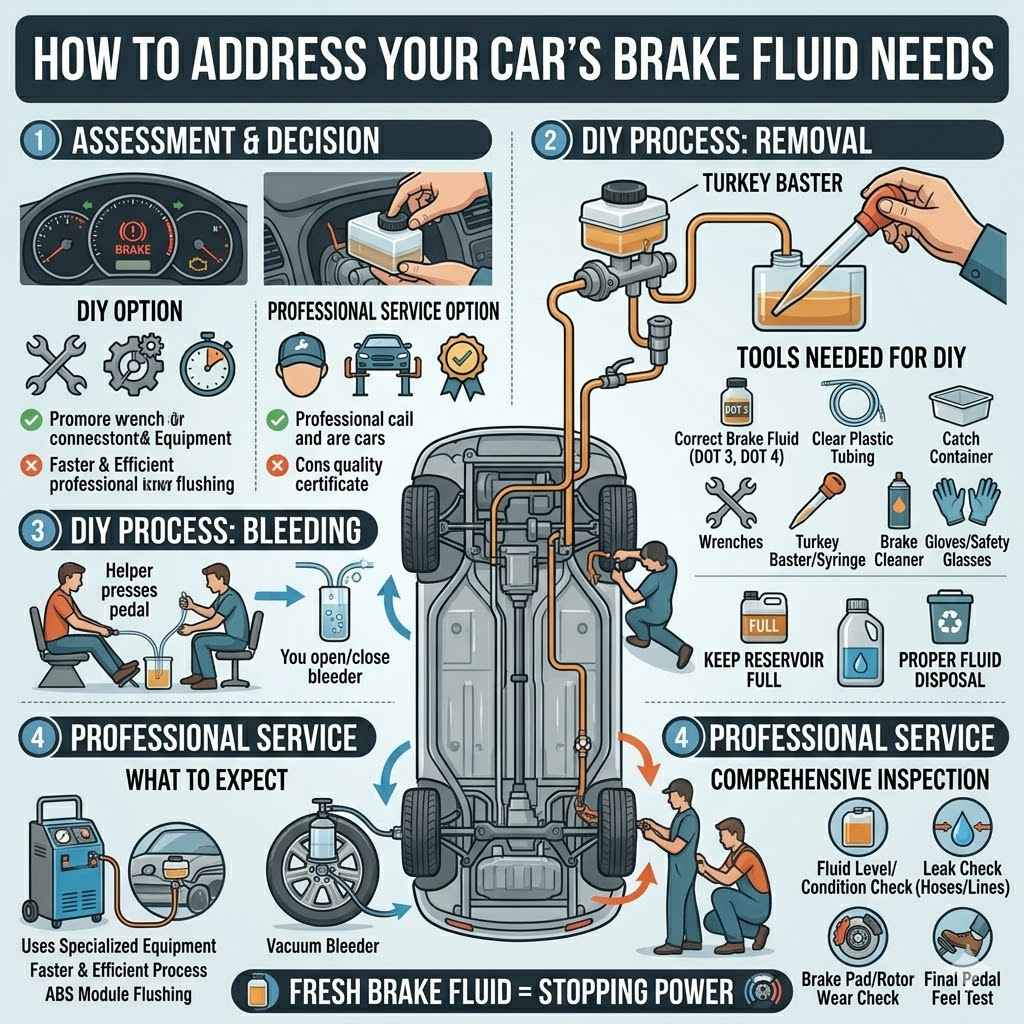
How To Address Your Car’s Brake Fluid Needs
Knowing that your brake fluid needs attention is the first step. The next is to figure out what to do about it. You have a couple of main options: you can do it yourself if you’re comfortable with car maintenance, or you can take it to a professional.
Both approaches have their pros and cons, and the best choice for you depends on your skills, tools, and available time.
Regardless of how you choose to proceed, the goal is the same: to remove the old, contaminated brake fluid and
DIY Brake Fluid Change Process
Changing your own brake fluid requires some basic tools and a bit of patience. The most common method is the “two-person method” or using a vacuum bleeder. You’ll need new brake fluid (check your owner’s manual for the correct type, usually DOT 3 or DOT 4), a clear hose, a container to catch old fluid, and wrenches.
You may also need a turkey baster or syringe to remove old fluid from the reservoir.
First, locate the brake fluid reservoir under the hood. Use a turkey baster or syringe to remove as much of the old fluid as possible. Fill the reservoir with new fluid.
Then, working with a helper, open the bleeder screw on one wheel’s brake caliper or wheel cylinder. Your helper will press the brake pedal down slowly and hold it. You will then close the bleeder screw before your helper releases the pedal.
Repeat this process for each wheel, starting with the wheel furthest from the master cylinder and working your way closer. You’ll see old fluid and air bubbles pass through the clear hose into your catch container. Keep topping up the reservoir to prevent it from running dry, which would introduce air into the system.
It’s important to work systematically and ensure the reservoir never runs empty. If air gets into the system, you’ll need to bleed it out, which can be a tedious process. Make sure to dispose of the old brake fluid responsibly, as it is toxic.
Tools needed for DIY brake fluid change:
- Correct type of new brake fluid (DOT 3, DOT 4, etc.)
- Clear plastic tubing that fits snugly over the bleeder screw
- A clean container to collect old brake fluid
- Wrenches to open and close bleeder screws
- A turkey baster or syringe to remove fluid from the reservoir
- Brake cleaner for spills
- Gloves and safety glasses
Professional Brake Fluid Service
Taking your car to a professional mechanic for a brake fluid service is often the easiest and most reliable option. Mechanics have specialized equipment, such as pressure bleeders and vacuum bleeders, that can make the process faster and more efficient. They also have the experience to diagnose any underlying issues that might be contributing to brake problems.
When you take your car in for a brake fluid service, the technician will typically connect a machine to your brake fluid reservoir or bleeders. This machine will either push new fluid through the system under pressure or pull old fluid out via vacuum. They will then bleed the system at each wheel to ensure all air is removed.
A professional service also includes a visual inspection of your brake components. They can check for leaks, worn brake pads or rotors, and any signs of corrosion or damage that you might miss. This comprehensive approach ensures not only that your brake fluid is fresh but also that your entire braking system is in good working order.
Most shops will recommend a brake fluid flush as part of routine maintenance, often around the same time you’d get an oil change or tire rotation. It’s a good idea to ask your mechanic about your car’s specific brake fluid service schedule.
What to Expect from a Brake Fluid Service
When you opt for a professional brake fluid service, you can expect a thorough process designed to optimize your braking system. The service typically involves several key steps. First, the technician will inspect the brake fluid level and condition in the master cylinder reservoir.
They’ll note its color and look for any visible contaminants.
Next, they will use specialized equipment to flush out the old brake fluid. This can be done using a pressure bleeder, which forces new fluid into the system, or a vacuum bleeder, which siphons old fluid out. This process is done at each wheel’s bleeder valve, ensuring that all the old, contaminated fluid is removed from the entire hydraulic circuit, including the ABS module.
After the old fluid is removed, the system is refilled with fresh brake fluid of the correct type specified for your vehicle. The technician will then bleed the brakes at each wheel to remove any air that may have entered the system during the process. This step is critical for ensuring a firm brake pedal.
Finally, they will perform a final check of the brake fluid level and test the brake pedal to ensure it feels firm and responsive. They may also check the condition of brake pads and rotors. The entire process usually takes about 30 minutes to an hour.
Steps in a professional brake fluid service:
- Initial inspection of fluid level and condition.
- Removal of old brake fluid using pressure or vacuum bleeding.
- Refilling the system with new, correct-type brake fluid.
- Bleeding the brake lines at each wheel to remove air.
- Final fluid level check and brake pedal feel test.
- Visual inspection of brake components for wear or damage.
Frequently Asked Questions
Question: How often should I change my car’s brake fluid?
Answer: It is generally recommended to change your car’s brake fluid every two to three years or approximately every 30,000 to 45,000 miles, whichever comes first. Check your owner’s manual for the specific recommendation for your vehicle.
Question: Can I use a different type of brake fluid if I run out?
Answer: No, it is critical to use only the type of brake fluid recommended in your owner’s manual. Mixing different types of brake fluids, especially DOT 5 with other DOT types, can damage your braking system and compromise safety.
Question: What are the signs that my brake fluid needs changing?
Answer: Signs include a spongy or soft brake pedal, a brake pedal that sinks closer to the floor, and very dark or cloudy brake fluid. A dashboard warning light for brake fluid level can also indicate a problem.
Question: Is changing brake fluid a difficult DIY job?
Answer: Changing brake fluid can be done DIY with the right tools and knowledge, often using a two-person method or a vacuum bleeder. However, it requires care to avoid introducing air into the system. If you are not comfortable, a professional service is recommended.
Question: Does brake fluid expire or go bad?
Answer: Brake fluid does not expire in the sense that it becomes unusable after a certain date if sealed. However, once exposed to the atmosphere and within the brake system, it degrades over time by absorbing moisture, which lowers its boiling point and causes corrosion.
Summary
Your car’s brake fluid is vital for safe stopping. It degrades over time by absorbing moisture, which lowers its boiling point and can cause corrosion. Ignoring this maintenance can lead to reduced braking power, spongy pedals, and expensive component damage.
Regularly changing your brake fluid, either yourself or by a professional, every two to three years is key to maintaining a safe and reliable braking system. See also stiff brake and car won’t start here’s what’s wrong.
Related pick: Check today's price on Amazon
Products related to this article
Sponsored / affiliate links. As an Amazon Associate I earn from qualifying purchases. I may earn additional commission from eligible campaigns.