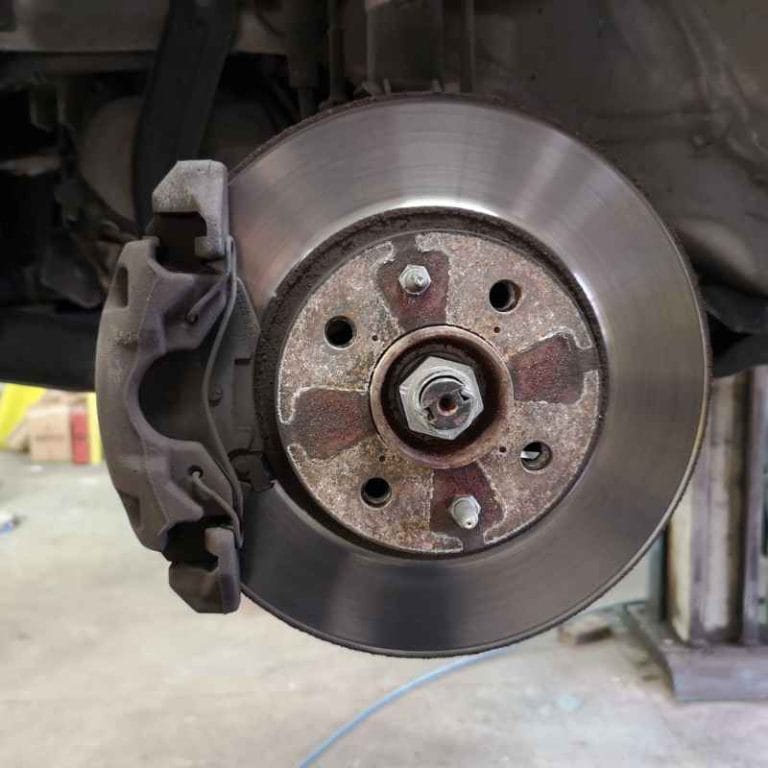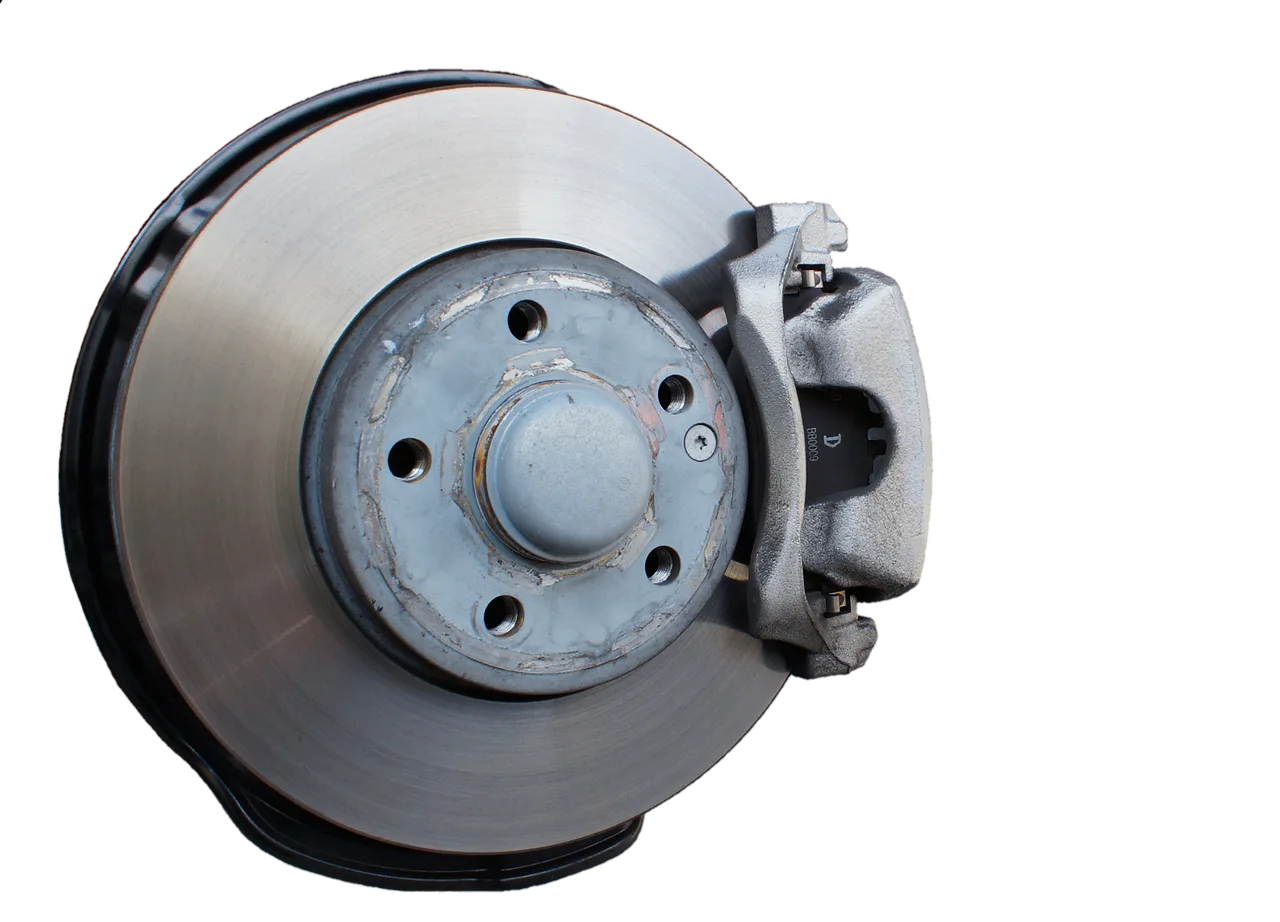
Are premium brake pads worth it for daily driving costs?
Premium brake pads are usually worth it for daily driving when the extra cost stays modest per mile, or when you specifically want less dust, less noise, or longer pad life. Buy the wrong set and you pay more for the same stopping power, then again when rotors wear early or labor has to be repeated. I treat this as a cost-per-mile problem, because that is where the real tradeoff shows up.
This guide is part of our Car brake maintenance guide series.
Are premium brake pads worth it for daily driving?


Yes, but only when the daily driver puts enough miles on the brakes to recover the higher purchase price, and when the driver cares about quieter stops, cleaner wheels, or fewer repeat brake jobs. If the car is low-mileage, near replacement, or sold soon, premium pads buy comfort more than value.
Daily driving means commute stops, highway stops, and normal operating temperatures. It does not mean repeated hard heat cycles, towing, or track use. That matters because the value of a premium pad depends on the real duty cycle, not the marketing copy on the box.
Premium brake pads vs standard brake pads
| Criterion | Premium brake pads | Standard brake pads |
|---|---|---|
| Price | Higher upfront cost | Lower upfront cost |
| Expected pad life | Often longer, but not guaranteed | Often shorter |
| Dust | Usually lower and lighter-colored | Usually more visible dust |
| Noise | Usually quieter when hardware and install are correct | More likely to squeak or click |
| Rotor wear risk | Can be lower, but not always | Can be higher, especially with harsher compounds |
| Hardware and coating | Often better shims, clips, and coated backing plates | Often simpler hardware and less corrosion protection |
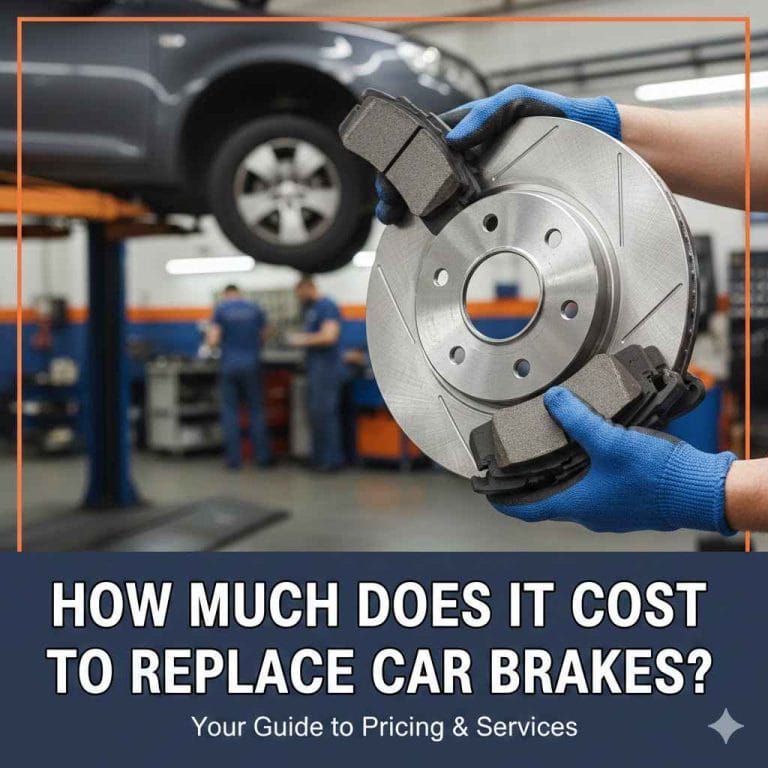
Premium brake pads often come with a coated steel backing plate, shims to help dampen vibration, and metal abutment clips. Those details matter because brake noise is often a hardware problem, not a friction-material problem. Standard pads can stop the car just fine, but usually with less refinement and shorter service life.
Where standard pads still make sense
Standard pads make sense when budget comes first, the car sees low annual miles, or the owner plans to sell or return it soon. They also make sense when the rest of the brake system is tired, because premium friction material cannot fully compensate for seized slide pins, rough rotors, or sloppy installation.
What makes a brake pad premium?
Premium pads are the higher-price option that often include better shims, backing plate coatings, and more consistent manufacturing. In daily-driver terms, they are built to reduce noise, dust, and repeat repairs, not to create more stopping power in normal street use.
Brake pad materials in daily-driver terms
Ceramic pads are generally the premium choice for most daily drivers. They are usually quiet, low-dusting, and resistant to wear in normal commuting. Semi-metallic pads are often durable and good at moving heat away, but they can be noisier and harder on rotors. Organic pads are often the standard, entry-level option: quiet, but usually the fastest to wear and the dustiest.
Brake pad hardware
Hardware changes the result more than many owners expect. Shims help dampen vibration. Abutment clips keep the pad ears moving smoothly in the bracket. Pins and related hardware help control fit and reduce chatter. When those pieces are missing, reused badly, or installed dry, even a good pad can squeal.
Backing plate coating and rust resistance
Backing plate coating matters because rust on the plate edges can swell and push the pad material out of alignment. That rust jacking creates noise, uneven pad release, and sometimes a stuck pad. A coated plate is not a luxury detail; it is one reason a premium pad tends to stay quiet and release cleanly longer.
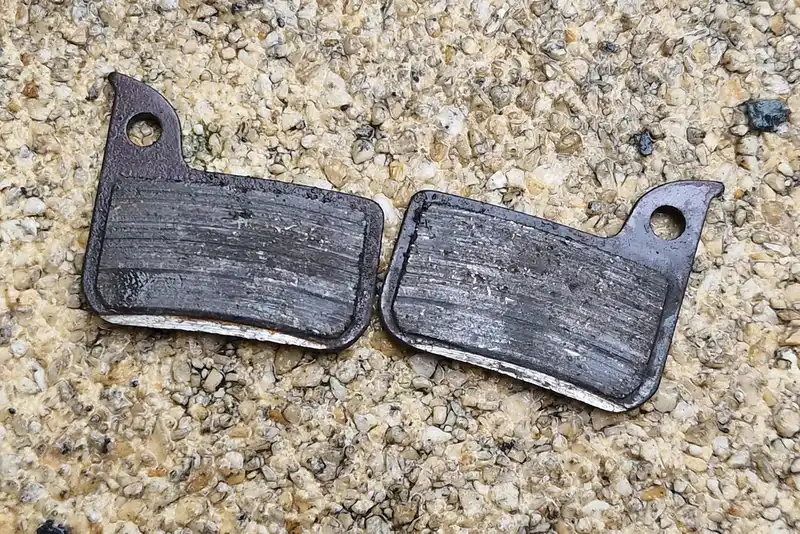
Do premium brake pads really last longer and cost less per mile?
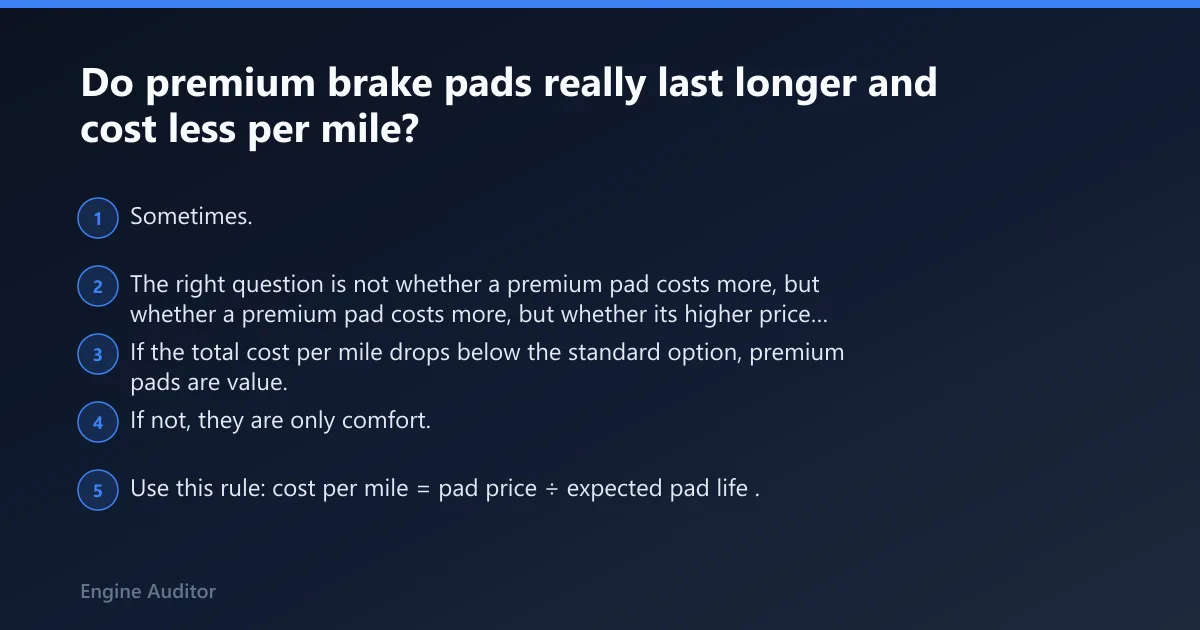
Sometimes. The right question is not whether a premium pad costs more, but whether its higher price divided by its life is lower than a cheaper pad plus the extra wear it causes elsewhere. If the total cost per mile drops below the standard option, premium pads are value. If not, they are only comfort.
Use this rule: cost per mile = pad price ÷ expected pad life. Then add a rotor wear allowance if the pad compound is harder on rotors or if the rotors are already thin, rough, or uneven. A pad that lasts longer but eats rotors faster can lose the math fast.
Vehicle age and annual miles change the math
A car driven a low number of miles per year may need a different brake strategy than one driven a much higher number of miles. A low-mileage car may never recover the premium price before the vehicle is sold. A higher-mileage commuter can recover it quickly, especially if the premium pad extends pad life and cuts repeat labor.
That is why a thicker brake pad does not guarantee longer life. Pad thickness at install says little about compound quality, rotor condition, caliper movement, or driving style. A thick but soft pad can disappear fast in city traffic.
Rotor wear belongs in the calculation
Rotor wear is part of the value equation, not a side note. Semi-metallic pads can be very durable and good at moving heat away, but they can also be more abrasive to rotors. Ceramic pads often aim for a better balance in daily use. Still, any pad can damage a rotor if the rotor is already rough or the caliper is hanging up.
Do premium brake pads make less dust and noise?
Usually, yes, but only when the pad design, hardware, and installation all cooperate. Ceramic pads are usually the cleanest, quietest daily-driver choice. Premium pads can help reduce squeaking and other brake noise, and they may produce lighter-colored, less visible dust. That said, a bad install can cancel the benefit.
Why ceramic pads are usually the cleanest choice
Ceramic compounds tend to produce less visible dust and stay quieter in normal commuting. That makes them a strong fit for drivers who care about wheel cleanliness or cabin noise. They are not magic, though. On a rough rotor or sticky caliper, even ceramic pads can squeal or leave uneven dust patterns.
Why semi-metallic pads can be louder
Semi-metallic pads often trade comfort for heat handling and durability. They are a good match for drivers who work brakes harder, but they can transmit more vibration and create more noise. They may also abrade rotors more quickly, especially in stop-heavy use.
How premium pads still fail
Missing shims, poor abutment clip fit, corroded pad brackets, or a weak bedding process can make an expensive pad sound cheap. That failure case is common enough to matter. If the caliper slides are sticky or the rotor faces are uneven, the pad material alone cannot rescue the job.
Proof asset: decision matrix for three daily-driver profiles
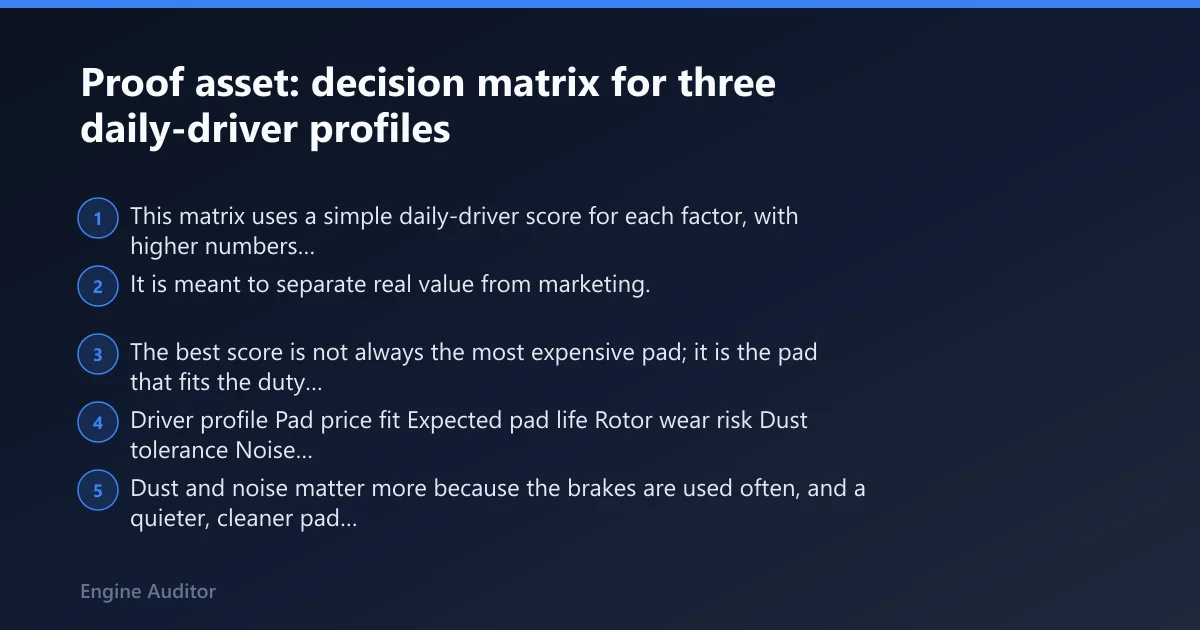
This matrix uses a simple daily-driver score for each factor, with higher numbers meaning a better fit. It is meant to separate real value from marketing. The best score is not always the most expensive pad; it is the pad that fits the duty cycle, the car’s remaining life, and the owner’s tolerance for noise, dust, and repeat service.
| Driver profile | Pad price fit | Expected pad life | Rotor wear risk | Dust tolerance | Noise tolerance | Premium pad score |
|---|---|---|---|---|---|---|
| City commute | 3/5 | 4/5 | 4/5 | 5/5 | 5/5 | 18/25 |
| Mixed commute | 4/5 | 4/5 | 3/5 | 4/5 | 4/5 | 19/25 |
| Highway commute | 2/5 | 3/5 | 3/5 | 2/5 | 2/5 | 12/25 |
City commute
Stop-and-go traffic is where premium pads tend to earn their keep. Dust and noise matter more because the brakes are used often, and a quieter, cleaner pad is easier to notice. If the car stays in service for years, premium ceramic pads often make sense here.
Mixed commute
This is the best value window for many daily drivers. The car sees enough braking to matter, but not so much that one issue dominates. Premium pads score well if the driver wants cleaner wheels and fewer squeaks, while standard pads still work if the budget is tight.
Highway commute
Highway drivers often do not need premium pads. Fewer stops mean slower wear, less dust concern, and less payoff from extra refinement. Standard pads are often good enough unless the car is sensitive to noise, the owner plans to keep it long term, or the existing brake setup is already quality-minded.
Choose premium brake pads if… / Choose standard brake pads if…
Choose premium brake pads if the car is staying in the family for years, the commute is stop-heavy, or noise and dust are a real complaint. Choose standard brake pads if annual mileage is low, the vehicle is near replacement, or the owner cares more about upfront price than brake refinement.
- Choose premium brake pads if the car is a long-term keeper.
- Choose premium brake pads if the daily route has many stoplights and short trips.
- Choose premium brake pads if brake noise and wheel dust are recurring complaints.
- Choose standard brake pads if the car is a lease return, sale candidate, or end-of-life commuter.
- Choose standard brake pads if the budget matters more than quiet operation.
- Choose standard brake pads if the vehicle sees mostly highway miles and light brake use.
What should I look for besides the pad material?
Look at caliper slide condition, rotor quality, hardware completeness, and bedding procedure before paying extra for a premium pad. A good pad on bad hardware still squeals. A premium pad on a thin, grooved rotor may wear poorly. Installation quality can erase the value you paid for.
- Check whether the caliper slides move freely and evenly.
- Inspect rotor thickness, surface condition, and runout.
- Confirm that shims, clips, and pins are included and installed correctly.
- Verify that the backing plate is coated or protected against rust.
- Bed the pads exactly as directed for the compound.
Frequently asked questions
Are premium brake pads worth it for daily driving?
They are worth it when quieter operation, lower dust, or longer service life saves more than the higher purchase price. For a car that stays in service and sees regular commuting, the extra cost can pay back. For a low-mileage or short-hold vehicle, the math often leans the other way.
What is the difference between premium and standard brake pads?
Premium pads usually cost more and often include better shims, coated backing plates, and more consistent fit. Standard pads are usually lower cost and often use simpler materials and hardware. In daily use, the main differences show up in dust, noise, wear rate, and repeat service frequency.
Do premium brake pads last longer than cheap ones?
Often, yes, but not always. Lifespan depends on compound, rotor condition, caliper movement, and driving style. A premium pad may last longer in the same car, yet a cheap pad can outlast it if the premium choice is too soft or the brakes are poorly maintained.
Are ceramic brake pads better for daily driving?
For many daily drivers, yes. Ceramic pads are generally the premium choice because they are quiet, low-dusting, and well suited to normal commuting temperatures. They are not automatically the best for every vehicle, though. Heavy use, poor rotors, or bad hardware can change the result.
Do premium brake pads make less dust and noise?
Usually they do, especially when the pad uses ceramic material and comes with proper shims and clips. Premium pads can also create lighter-colored dust that is less visible on the wheels. But poor installation, sticky calipers, or rough rotors can still cause squeaks and dirty wheels.
Can premium brake pads reduce rotor wear?
Sometimes, but that is not guaranteed. Some premium pads are kinder to rotors than semi-metallic or harsh entry-level compounds, yet rotor wear also depends on pad hardness, rotor quality, and caliper health. If the rotor is already damaged or thin, no pad choice fully resets the wear path.
Products related to this article
Sponsored / affiliate links. As an Amazon Associate I earn from qualifying purchases. I may earn additional commission from eligible campaigns.