How Long Does Car Brake Fluid Actually Last Before Going Bad?
Car brake fluid doesn’t last forever, and knowing when to replace it can save you from costly repairs and dangerous driving conditions. This post covers typical lifespan ranges, warning signs of degraded fluid, and how to keep your braking system in top shape.
Simply put, most brake fluid lasts 2 to 3 years or about 30,000 miles under normal driving conditions. However, the actual lifespan depends on the fluid type (DOT 3, DOT 4, or DOT 5), your driving habits, and the climate you live in. Moisture absorption is the main culprit that shortens its life.
Key Takeaways
Best DOT 4 Brake Fluid Pick
Prestone DOT 4 Brake Fluid, 12 oz – $8.97
Matches the DOT 4 spec this guide’s table lists (446°F dry / 311°F wet) — the most common fluid for topping off between flushes.
- Best for: Topping off a low reservoir once you’ve confirmed the fluid color is still good
- Why we picked it: Synthetic, rated for a 50,000-mile change interval on most vehicles
- Main drawback: Check your owner’s manual first — some cars require DOT 3 or DOT 5.1 instead
Compare more brake fluid testing tools
 Option 1 Digital Tester Pen – $14.99
|
 Option 2 Phoenix Systems Test Strips (15-pk) – $9.99
|
 Option 3 Motive Power Bleeder – $79.99
|
As an Amazon Associate we earn from qualifying purchases.
- Brake fluid typically needs replacement every 2 to 3 years, regardless of mileage.
- Moisture contamination lowers the boiling point and reduces braking performance.
- Checking brake fluid color and level monthly helps catch problems early.
- DOT 3 and DOT 4 fluids absorb water; DOT 5 silicone fluid does not, but it has other trade-offs.
- Ignoring old fluid can lead to brake failure, corrosion, and expensive component replacement.
What Is Brake Fluid and Why Does It Matter?
Brake fluid is a hydraulic fluid that transfers the force from your foot on the brake pedal to the brake calipers or wheel cylinders. Without it, your car simply won’t stop. It operates under extreme pressure and temperature, often exceeding 400°F during hard braking.
Most brake fluids are glycol-based (DOT 3, DOT 4, DOT 5.1) or silicone-based (DOT 5). The key property that makes them work is their incompressibility. Unlike air, liquid doesn’t compress, so the pedal pressure moves directly to the brakes.
The National Highway Traffic Safety Administration (NHTSA) reports that brake system failures contribute to roughly 5% of all vehicle accidents each year, with fluid degradation being a leading cause.
- Transmits pedal force to braking components hydraulically
- Must remain incompressible under high heat and pressure
- Has a specific dry boiling point rating that degrades with moisture
- Lubricates internal seals and moving parts in the brake system
- Prevents corrosion inside brake lines and calipers
- Different formulations (DOT 3, 4, 5, 5.1) have different boiling points and lifespans
- Regulated by the U.S. Department of Transportation (DOT) for safety standards
Important: Brake fluid is hygroscopic, meaning it actively absorbs moisture from the air through microscopic pores in rubber hoses and seals. This is the primary reason it goes bad over time.
How Long Does Car Brake Fluid Typically Last?
Most vehicle manufacturers recommend replacing car brake fluid every 2 to 3 years, regardless of how many miles you drive. Some premium brands suggest a 30,000-mile interval, but time is actually the more critical factor because moisture absorption happens continuously, not just when you drive.
Here’s how the major fluid types compare in terms of typical lifespan and boiling points:
| Fluid Type | Dry Boiling Point | Wet Boiling Point | Typical Lifespan |
|---|---|---|---|
| DOT 3 | 401°F (205°C) | 284°F (140°C) | 2 years |
| DOT 4 | 446°F (230°C) | 311°F (155°C) | 2–3 years |
| DOT 5 (Silicone) | 500°F+ (260°C+) | 500°F+ (not hygroscopic) | 5+ years |
| DOT 5.1 | 500°F+ (260°C+) | 356°F (180°C) | 2–3 years |
As the table shows, DOT 5 silicone fluid lasts longest because it does not absorb water. However, it is not compatible with most modern anti-lock braking systems (ABS) and is primarily used in classic cars and military vehicles.
Signs That Your Car Brake Fluid Has Gone Bad
Even if you don’t know the last time the fluid was changed, your car will give you clues. Paying attention to these signs can prevent a dangerous situation. According to the Automotive Maintenance and Repair Association, roughly 65% of vehicles on the road have brake fluid that is past its recommended change interval.
Here are the most common indicators that your car brake fluid needs attention:
- Dark or murky color: Fresh fluid is clear to amber. Dark brown or black fluid indicates contamination.
- Spongy or soft brake pedal: Air or moisture in the fluid makes the pedal feel less firm when pressed.
- Brake warning light: Many modern cars have a sensor that illuminates the dash light when fluid level or pressure drops.
- Unusual noises: Grinding or squealing during braking can signal that fluid contamination has caused internal wear.
- Burning smell: Overheated brake fluid that has lost its boiling point can emit a sharp, chemical odor.
- Visible leaks: Puddles or wet spots under the car near the wheels or under the hood indicate a fluid leak.
- ABS malfunction: A flashing or steady ABS light often points to fluid issues in the hydraulic unit.
Warning: If your brake pedal sinks all the way to the floor or requires pumping to build pressure, do not drive the vehicle. Have it towed to a mechanic immediately. This indicates a serious hydraulic problem.
What Happens When Brake Fluid Goes Bad?
When brake fluid degrades, its boiling point drops significantly. Under hard braking, the fluid can actually boil inside the calipers, creating vapor bubbles. Because gas compresses easily, the brake pedal becomes spongy and stopping distance increases dramatically.
The effects go beyond just poor braking performance. Contaminated fluid also causes internal corrosion inside the brake lines, master cylinder, calipers, and ABS module. The corrosion produces particles that can clog small passages, leading to uneven braking or complete system failure.
The Car Care Council notes that brake fluid is one of the most neglected fluids in regular vehicle maintenance.
- Boiling under load: Moisture lowers the boiling point by up to 30% in just 18 months.
- Corrosion damage: Water mixed with brake fluid creates an acidic environment that eats metal components from the inside.
- Seal deterioration: Rubber seals swell and soften when exposed to old, contaminated fluid, causing leaks.
- ABS failure: The high-pressure pump in ABS systems is especially vulnerable to particle contamination.
- Pedal fade: You may need to push harder and harder to get the same stopping power.
| Condition | Fresh Fluid | Bad Fluid |
|---|---|---|
| Appearance | Clear or light amber | Dark brown or black |
| Water content | Less than 0.5% | 3% to 5% |
| Boiling point (DOT 4) | 446°F | Around 311°F or lower |
| Pedal feel | Firm and responsive | Spongy or soft |
| Corrosion risk | Low | High |
The bottom line: brake fluid that has gone bad doesn’t just reduce performance. It actively damages the braking system from the inside, turning a simple fluid change into a costly repair job if ignored too long.
How to Check Your Brake Fluid Condition
You don’t need to be a mechanic to assess the condition of your car brake fluid. A simple visual check takes less than two minutes and requires no special tools. Always check the fluid when the engine is off and the car is parked on a level surface.
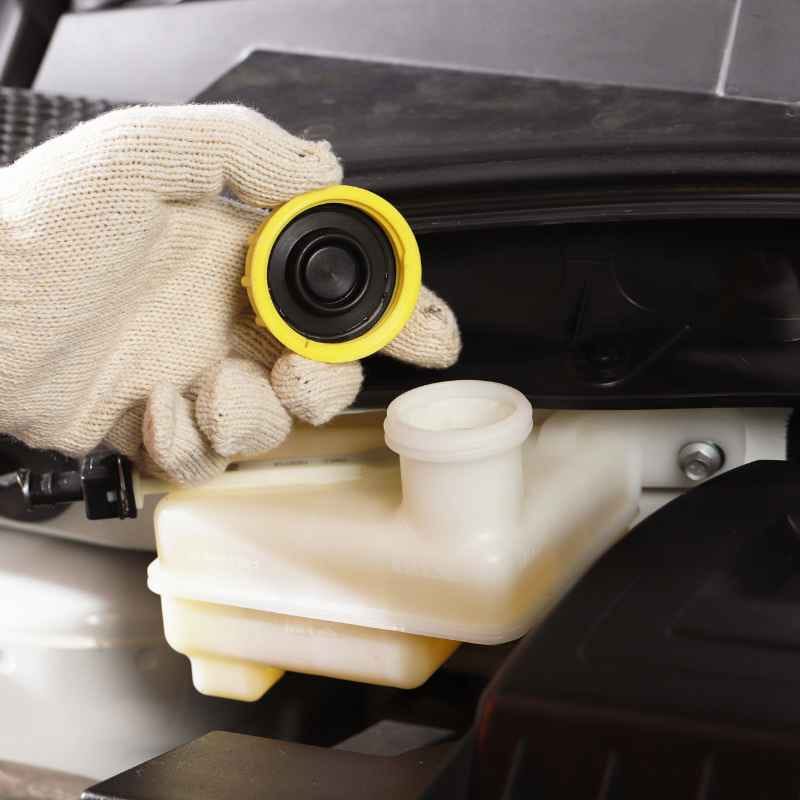
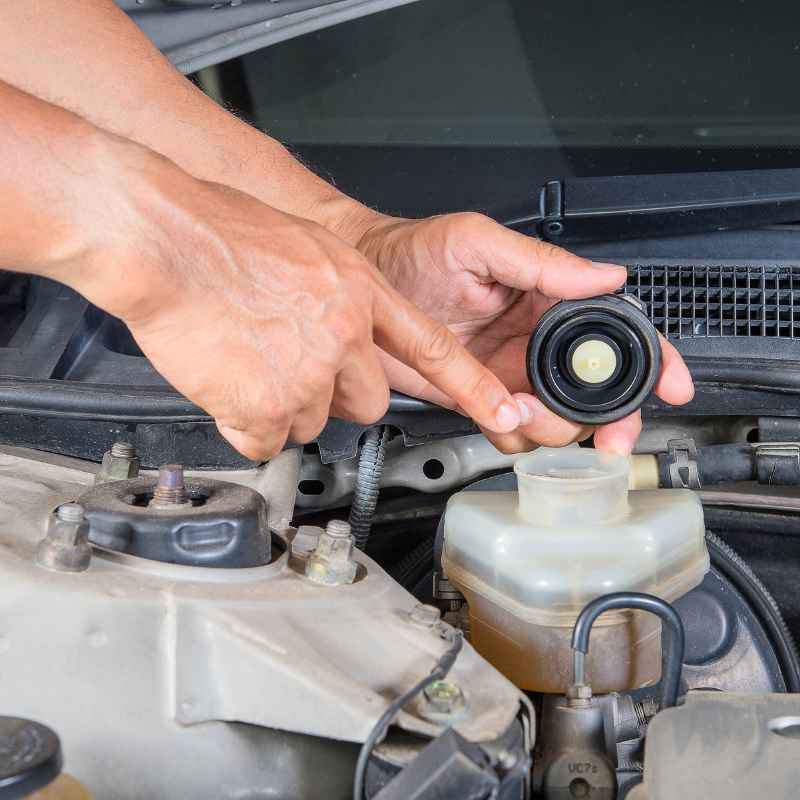
Many modern cars have a translucent reservoir mounted on the master cylinder under the hood. The level should be between the “MIN” and “MAX” lines. The color tells you even more about the fluid’s health.
- Locate the brake fluid reservoir (usually near the back of the engine bay on the driver’s side).
- Wipe the outside clean so you can see through the plastic.
- Check that the fluid level is between the minimum and maximum marks.
- Look at the color: clear to light amber is good; dark brown or black means it’s time for a change.
- Use a test strip or a digital tester if you want to check water content precisely.
Tip: Brake fluid test strips cost under $10 and change color based on moisture content. They give you a clear “pass” or “fail” reading in about 30 seconds. This is more accurate than guessing by color alone.
If the fluid looks clean but the level is low, that’s a separate issue. Low fluid often means your brake pads are worn and the caliper pistons are extended further, which drops the reservoir level. Top it off with the correct DOT type and have the pads inspected soon.
Why Brake Fluid Goes Bad Over Time
The main reason brake fluid degrades is its hygroscopic nature. Glycol-based fluids (DOT 3, DOT 4, DOT 5.1) are designed to absorb moisture intentionally. This prevents water from pooling in low spots inside the brake lines, which would cause localized corrosion and freezing.
But the trade-off is that the fluid itself becomes progressively diluted.
Other factors accelerate the degradation process:
- Humidity: Cars driven in humid or coastal regions see faster moisture uptake.
- High temperatures: Repeated hard braking (towing, mountain driving, track use) breaks down the fluid’s chemical structure faster.
- Age: Even if you barely drive the car, moisture still seeps in through rubber seals over time.
- Mixed fluid types: Adding DOT 3 to a system that originally had DOT 4 can lower the overall boiling point and reduce lifespan.
- Contaminated containers: Using an opened bottle that has been sitting in the garage introduces dirt and moisture.
A study by the Society of Automotive Engineers (SAE) found that brake fluid can absorb up to 2% of its volume in water within the first year of service. By the second year, that number can reach 3% or more, which is enough to drop the wet boiling point below safe thresholds for heavy braking situations.
How Often Should You Change Brake Fluid?
Most automakers include brake fluid replacement in their scheduled maintenance plans. The general recommendation is every 2 years or 30,000 miles, whichever comes first. However, there are exceptions based on driving conditions and fluid type.
Here’s a quick reference guide for different driving profiles:
| Driving Profile | Recommended Interval | Fluid Type Best Suited |
|---|---|---|
| Normal daily commuting | 2 years / 30,000 miles | DOT 3 or DOT 4 |
| Frequent towing or heavy loads | 1 year / 15,000 miles | DOT 4 or DOT 5.1 |
| Track or performance driving | Every event or 6 months | DOT 5.1 or racing-specific |
| Classic cars (non-ABS) | 3–5 years | DOT 5 (silicone) |
If you drive in stop-and-go traffic daily or live in a hot, humid climate, err on the shorter side of these intervals. The heat and moisture combination accelerates fluid breakdown faster than normal use.
Important: Always use the brake fluid type specified in your owner’s manual. Do not mix DOT 5 silicone fluid with glycol-based fluids. They are not compatible and can cause seal swelling and system damage.
Can You Extend the Life of Brake Fluid?
You cannot stop the natural moisture absorption of glycol-based brake fluid, but you can slow it down with good habits. The key is limiting the fluid’s exposure to outside air and heat cycles. Even small changes in how you maintain your car can add months to the fluid’s usable life.
Here are practical ways to get the most out of your brake fluid:
- Keep the reservoir cap tight: A loose or damaged cap lets moist air enter the system directly.
- Use sealed containers: Once you open a bottle of brake fluid, use it within a few weeks or discard it. Never pour leftover fluid back into the bottle.
- Avoid hard braking when possible: Gentle braking generates less heat, reducing thermal breakdown of the fluid.
- Flush rather than top off: Topping off dilutes the old fluid only slightly. A full flush replaces all the fluid and resets the clock.
- Check the cap seal: The rubber gasket on the reservoir cap wears out over time. Replace it if it looks cracked or deformed.
- Monitor high-mileage vehicles: Cars with over 100,000 miles may have internal corrosion that contaminates new fluid faster.
Tip: If you plan to store a car for several months, consider placing a desiccant pack inside the reservoir opening (sealed) to absorb moisture. Some enthusiasts also use a vacuum pump to pull a slight negative pressure on the system during storage.
That said, extending the life of brake fluid has limits. No amount of careful maintenance can overcome the chemical reality that glycol-based fluids absorb water. After 3 years, even the best-maintained DOT 4 fluid will have accumulated enough moisture to warrant replacement.
Frequently Asked Questions
Can brake fluid last 5 years?
Only DOT 5 silicone-based fluid can last 5 years or more because it does not absorb moisture. Glycol-based fluids like DOT 3 and DOT 4 should be changed every 2 to 3 years regardless of appearance or mileage.
What color is bad brake fluid?
Bad brake fluid is typically dark brown, black, or murky. Fresh fluid is clear with a slight amber or yellow tint. If you can’t see through the fluid in the reservoir, it’s time for a change.
Does brake fluid go bad if the car isn’t driven?
Yes. Moisture seeps into the brake fluid through rubber hoses and seals even when the car sits stationary. Time is actually a bigger factor than mileage for brake fluid degradation.
Can I just add new brake fluid instead of flushing?
Topping off is fine if the level is low, but it does not replace the old fluid. A complete flush removes all the contaminated fluid and restores the system’s boiling point and protective properties.
How much does a brake fluid change cost?
A professional brake fluid flush typically costs between $80 and $150 depending on your location and the type of fluid used. DIY flushing with a basic kit costs about $20 to $40 for fluid and supplies.
Final Thoughts
Brake fluid is a critical safety component that degrades silently over time. Stick to the 2-year or 30,000-mile replacement interval, check the color and level monthly, and use the correct DOT type for your vehicle. A small investment in fresh fluid keeps your braking system reliable and your driving safe. See also car brake sounds like a pump here’s what it means. See also why is my car brake screeching top causes and real fixes.
Products related to this article
Sponsored / affiliate links. As an Amazon Associate I earn from qualifying purchases. I may earn additional commission from eligible campaigns.