Car Brake Maintenance Schedule by Mileage and Style
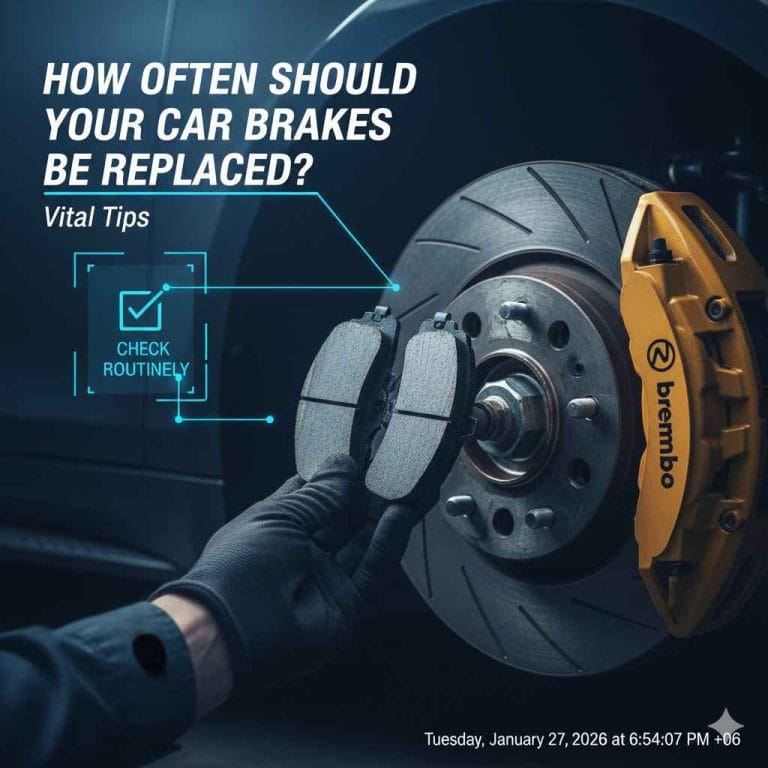
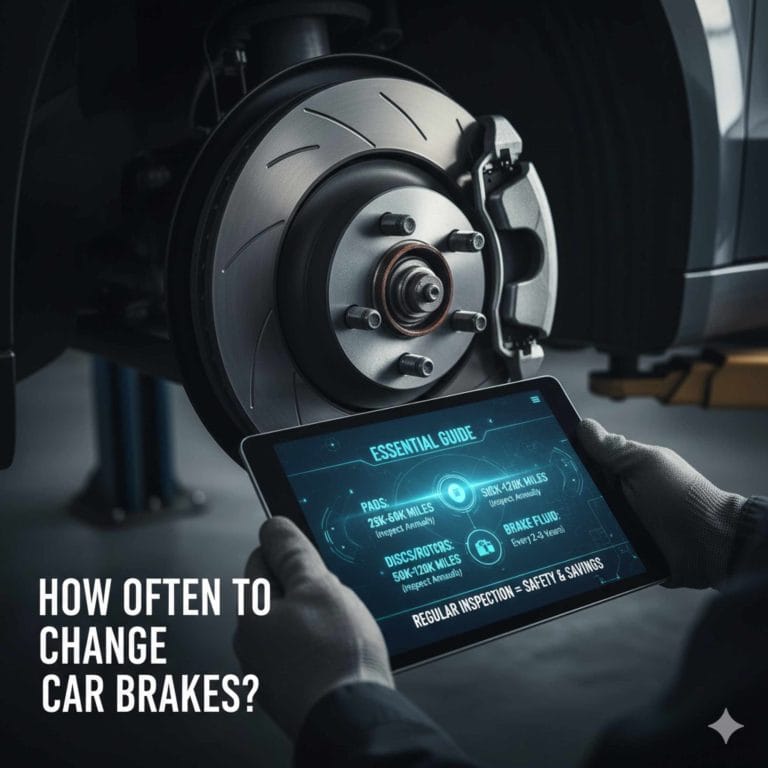
Brake inspections are often done every 10,000 to 15,000 miles for normal driving, more often for heavy city stop-and-go, towing, mountains, or aggressive driving, and sooner if pad friction material is near 3 mm or rotor thickness is at minimum. Ignoring wear can mean longer stopping distances, scored rotors, overheated fluid, and a repair bill that grows fast. This guide gives a mileage-and-driving-style brake schedule, plus the wear checks that tell you when mileage no longer matters.
How to read a brake maintenance schedule
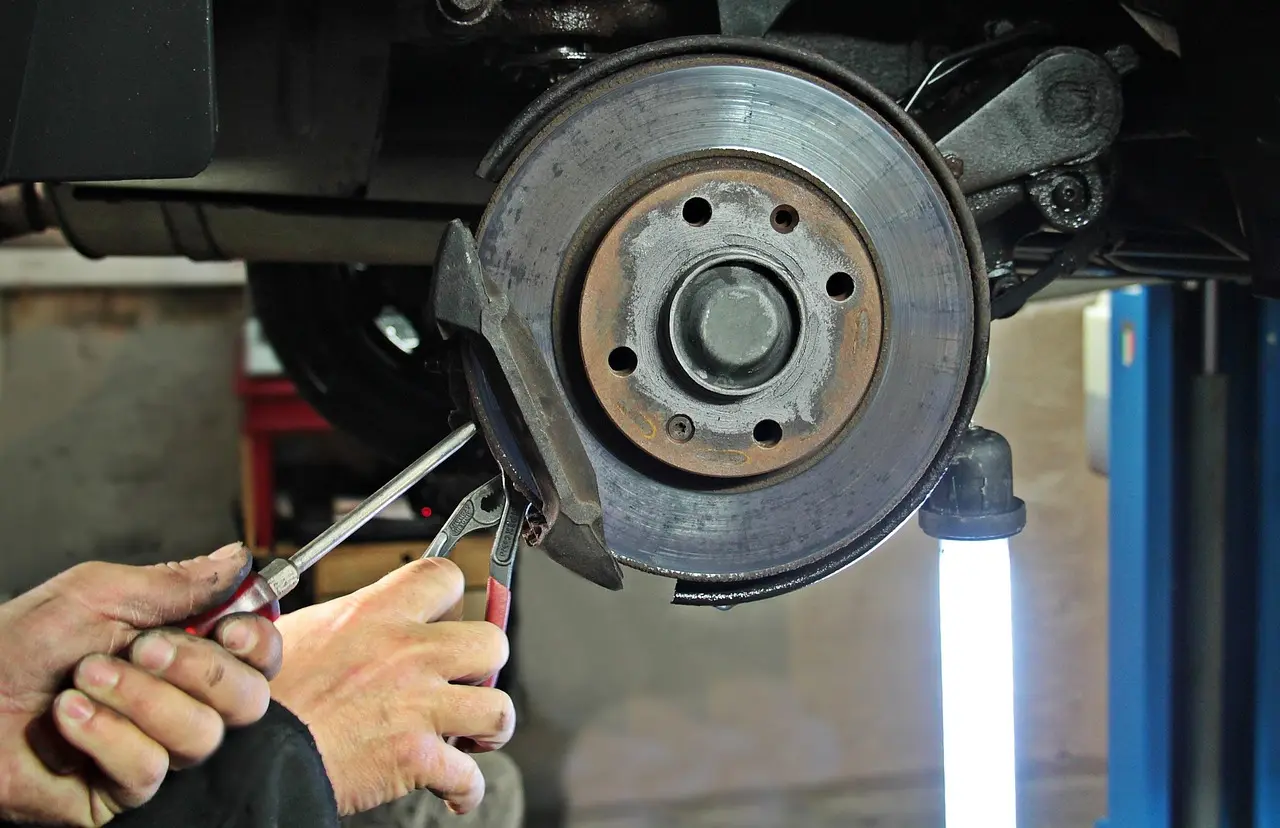


A brake schedule works best when mileage is the starting point and driving severity tells you to inspect earlier. Owner’s manual intervals come first. If the manual is vague, use a mileage chart to plan inspections, then let wear measurements decide whether you only clean and lubricate or need parts.
That split matters. Inspection frequency is one job. Replacement frequency is another. VehicleBar frames brake maintenance as a mileage-based plan for inspect, service, or replace decisions, and notes that driving habits, vehicle weight, and component quality change the interval. VehicleBar also groups pads, rotors, calipers, and brake fluid into the same schedule.
Mileage sets the baseline
For many passenger cars, a practical baseline is a brake inspection every 10,000 miles or so. Car Basics gives an estimated inspection interval of every 12,000 miles or 12 months. That is a floor for planning, not a promise that the brakes are fine until then.
Use the baseline to set calendar reminders. Then move earlier if the vehicle is heavy, the route is urban, or the brakes already show thin pads, rotor wear, noise, or heat discoloration.
Driving style decides when to move sooner
Stop-and-go city driving is severe service for brakes. So are towing, heavy loads, mountain grades, short trips, and track use. Car Basics specifically lists short trips and towing as severe service, and notes that EV and hybrid pads often last longer because regenerative braking does part of the work.
That does not mean city driving always wears brakes faster than highway use. It means the brake pedal gets used more often, heat builds faster, and pads and hardware cycle more frequently. The result is faster wear, especially on heavy vehicles.
Inspection timing is not the same as replacement timing
You can inspect often without replacing parts often. Pads may only need cleaning and lubrication at one visit, then replacement at the next. Rotors may still be serviceable if their surfaces are smooth and runout is within spec. Brake fluid may still need replacement on time even if the pads look fine.
That separation keeps the job budget-friendly. It also prevents over-replacing parts that still have useful life left.
Which driving styles shorten brake intervals?
Stop-and-go city driving, towing, heavy loads, mountain grades, short trips, heat, dust, and track use all shorten brake intervals. These conditions raise pad temperature, increase hardware movement, and speed up fluid aging. City commuting can be severe service even when the odometer climbs slowly.
Stop-and-go city driving
Frequent stops wear pads faster than steady cruising. They also increase dust, heat, and caliper work. On a commuter route with traffic lights every few blocks, the inspection interval should move toward the shorter end of the 5,000–7,500-mile severe-service range.
Towing, heavy loads, and mountain grades
Towing and heavy loads force the brakes to absorb more energy. Mountain driving adds long, hot descents that can glaze pads and stress fluid. This is where a 10,000-mile inspection can be too long if the vehicle is near its payload limit often.
Short trips, heat, dust, and track use
Short trips can be hard on fluid because moisture accumulation matters more than miles alone. Heat and dust speed pad and hardware wear. Track use is its own category; inspect before and after events, because rotor heat checking, pad taper, and fluid fade can happen quickly.
Brake maintenance interval matrix by mileage and wear
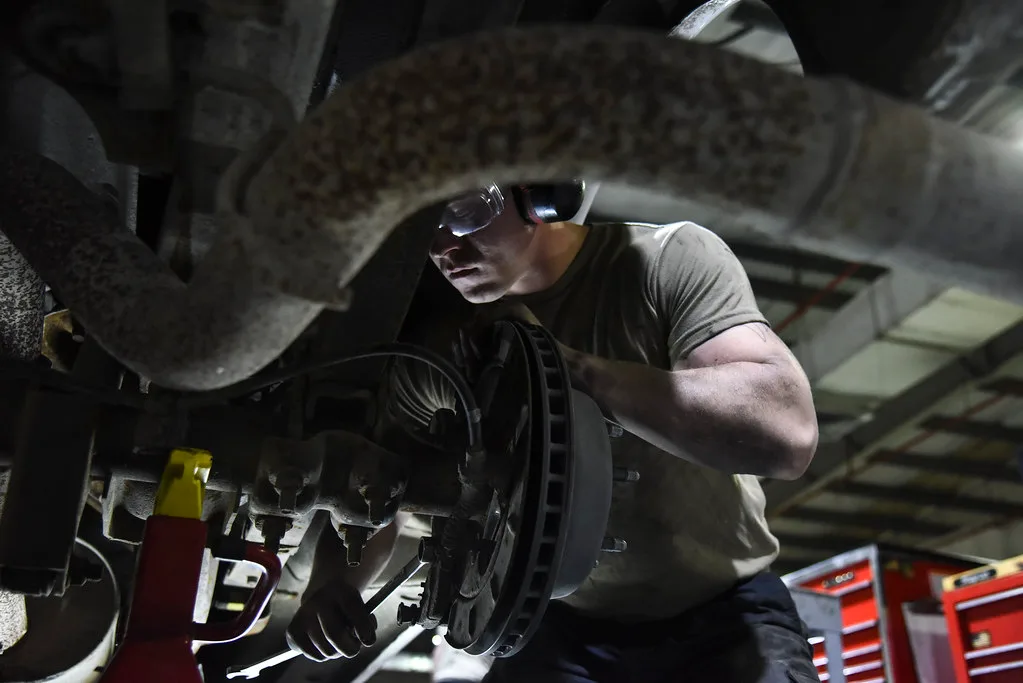
This matrix turns mileage, driving style, and inspection findings into the next action. It separates inspection from replacement and uses the faster trigger: mileage band or service severity. When one column points to a sooner visit, follow the sooner one.
| Driving style | Mileage band | What to check | Action if findings are normal | Action if wear is elevated |
|---|---|---|---|---|
| Normal highway or mixed use | 10,000 miles | Pad thickness, rotor surface, clips, shims, pins, caliper boots, hoses | Inspect, clean, lubricate slide points, document wear | If pads are near 4 mm, plan pads soon; if 2 mm or less, replace pads now |
| Normal highway or mixed use | 20,000-30,000 miles | Pad wear pattern, rotor scoring, runout, hardware corrosion, fluid condition | Inspect again and compare wear side to side | Replace pads if backing plate contact is near; replace rotors if scoring or runout is present |
| Normal highway or mixed use | 40,000-60,000 miles | Brake fluid age, moisture exposure, caliper movement, hose condition | Flush fluid if age is 2-3 years or mileage is in range | Replace fluid sooner if it is dark, contaminated, or the pedal feels soft |
| Heavy city stop-and-go | 5,000-7,500 miles | Pad thickness, dust load, hardware wear, caliper slide movement | Inspect sooner than a normal-use car | Service if pads are near 4 mm, if noise is present, or if one wheel wears faster |
| Towing, heavy loads, mountain grades | 5,000-7,500 miles | Rotor heat damage, pad taper, fluid condition, hose and line condition | Inspect and clean/lubricate as needed | Replace pads sooner, and inspect rotors carefully for scoring or heat spots |
| Low-mileage owner | Yearly | Rotor corrosion, fluid age, boot and hose condition | Inspect even if miles are low | Flush fluid by age and service rotors if corrosion affects friction surface |
VehicleBar’s 20,000-mile check lines up well with pad thickness, rotor runout, and fluid moisture content. That is a useful midpoint between a basic inspection and a deeper service visit.
What should you inspect at 10,000 miles?
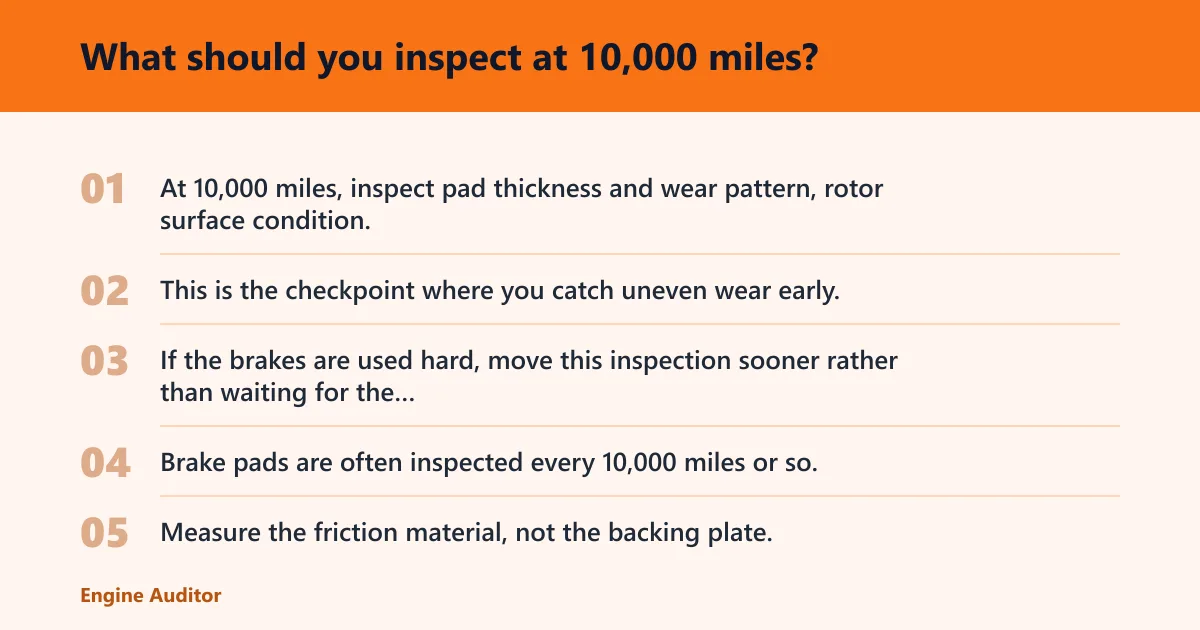
At 10,000 miles, inspect pad thickness and wear pattern, rotor surface condition, and brake hardware, boots, and hoses. This is the checkpoint where you catch uneven wear early. If the brakes are used hard, move this inspection sooner rather than waiting for the odometer.
Pad thickness and wear pattern
Brake pads are often inspected every 10,000 miles or so, with some schedules stretching a bit longer. Measure the friction material, not the backing plate. A common brake-pad action point is around 6 mm for a healthy midlife pad, around 4 mm when planning ahead, and around 2 mm or less when replacement may be due.
Replace before backing plate contact. Once the pad wears that far, the rotor can be damaged quickly and the brake noise changes from warning squeal to grinding.
Rotor surface condition
Check rotors for scoring, grooves, discoloration, rust on the friction face, and runout symptoms such as steering wheel shake or pedal pulsation. Rotors are often checked with pad service because worn pads can damage them. Car Basics notes that rotors can corrode from light use and should still be inspected yearly.
Hardware, boots, and hose condition
Inspect clips, shims, and pins for wear and corrosion. Check caliper boots for tears and look for brake hose cracks, leaks, or abrasion. This hardware controls pad movement and noise. Corroded or bent hardware can cause drag, uneven wear, or a pad that does not retract cleanly.
Say your compact sedan has 11,000 miles and one front pad measures 4 mm while the other side is 6 mm. That is not a “wait and see” result. Uneven wear points to a caliper, slide pin, hose, or hardware issue that should be corrected before the next interval.
When do brake pads, rotors, and fluid need replacement?
Brake pads are replaced on thickness, rotor condition on surface damage and runout, and fluid on age plus moisture exposure. The three parts do not follow the same schedule. Pads wear first. Rotors may survive one or more pad sets if they stay within spec. Fluid often follows the calendar, not the pad life.
Pad thickness thresholds and backing plate risk
Replace pads before backing plate contact. As a practical guide, pads around 6 mm are in the middle of their life, pads around 4 mm need planning, and pads around 2 mm are close to service. Heavy vehicles and stop-and-go use can move those numbers sooner than expected.
Rotor scoring, runout, and heat damage
Replace rotors when they are scored deeply, warped enough to cause pulsation, heat checked, or below the minimum thickness listed by the manufacturer. If pads have been worn too far, the rotor may already be damaged. In that case, replacing pads without correcting rotor condition can leave noise and vibration behind.
Fluid age, mileage, and moisture exposure
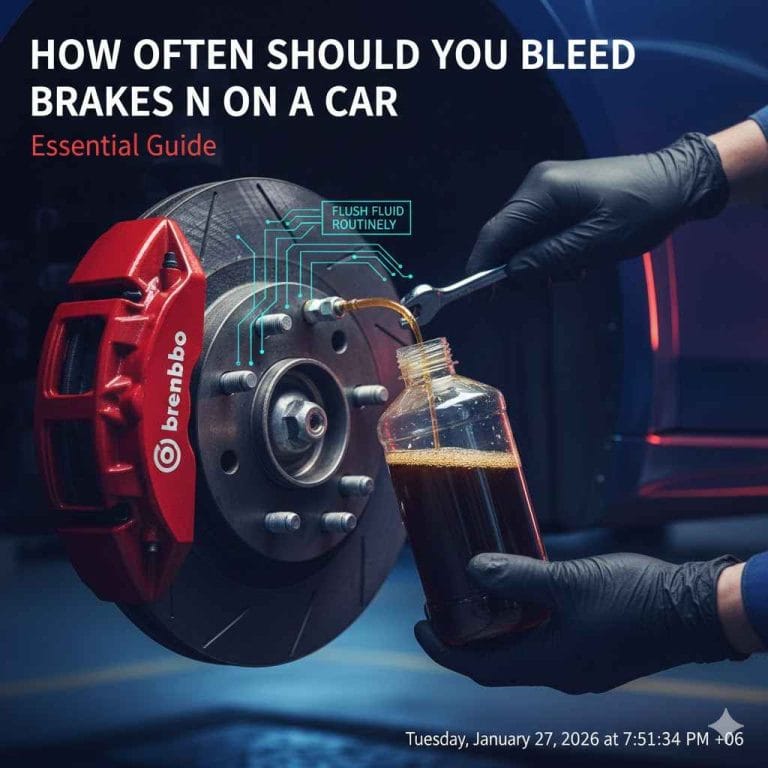
Brake fluid is usually age-based and mileage-based. Brake fluid replacement is often recommended somewhere in the 30,000 to 60,000 mile range, or roughly every 2 to 3 years. Car Basics estimates brake fluid replacement every 30,000 miles or 36 months, and notes that brake fluid absorbs moisture whether you drive or not. Moisture lowers boiling point and can soften pedal feel.
VehicleBar also ties fluid checks to moisture content at the 20,000-mile service point. That is a reminder that fluid condition is not visible from pad thickness alone.
How do I know if my brakes need service sooner than the schedule?
Noisy, pulling, pulsating, or soft brakes should move service ahead of mileage. So should a brake pedal that travels farther than usual, a wheel that gets hotter than the others, or a caliper that sticks. A brake schedule is a guide. Symptoms take priority.
Noise, pull, pulsation, or longer pedal travel
Squeal can mean wear indicators are contacting. Grinding often means the pad is gone and metal is touching metal. Pulling can point to a sticking caliper, uneven pad wear, or a hose problem. Pulsation usually points to rotor condition or runout. Longer pedal travel can mean wear, air, or fluid issues.
Sticking calipers and uneven pad wear
Inspect calipers for sticking and boot damage. Lubrication and cleaning can prevent seizure when the slides are dry or corroded. Extended piston travel increases failure risk because the seals and boot move farther than intended. If one pad wears far faster than the other on the same axle, treat it as a fault, not normal wear.
Cracks, leaks, and damaged hoses or lines
Brake hoses and lines should be part of routine brake inspection. Cracks, leaks, swelling, or abrasion can cause fluid loss. A line that seeps or a hose that balloons under pressure can create a soft pedal and reduce braking force. That is a repair-now condition.
Suppose a midsize SUV used for school runs starts squealing at low speed, then the pedal feels longer on downhill stops. The next step is not another few thousand miles. It is a full inspection of pads, rotor condition, caliper slides, and fluid condition because heat and drag may already be present.
How do you turn inspection findings into the next repair?
Use the inspection to choose the smallest correct fix. Clean and lubricate when wear is minor. Replace pads before they damage rotors. Replace rotors when the surface or thickness is no longer acceptable. Replace hardware when corrosion or fit is poor. Flush fluid when age or moisture has moved it past the service limit.
- Measure pad thickness on all four wheels, and note any side-to-side mismatch.
- Inspect rotors for scoring, heat spots, rust on the friction face, and pulsation symptoms.
- Check caliper boots, slide pins, clips, shims, hoses, and lines for cracks, leaks, corrosion, or binding.
- Compare fluid age to the 2-3 year or 30,000-60,000-mile window, then decide whether a flush is due.
- Choose the next action: inspect only, clean and lubricate, replace pads, replace rotors, or flush fluid.
Brake hardware matters more than many charts admit. Clips, shims, and pins control pad motion and noise, so worn or rusty hardware can create symptoms that look like bad pads. Replacing pads without fixing hardware can bring the noise back fast.
Frequently asked questions
How often should brake maintenance be done by mileage?
A practical brake maintenance schedule starts with inspection every 10,000 to 12,000 miles for normal driving. Severe use should move that earlier to about every 5,000 to 7,500 miles. Use the owner’s manual first, then shorten the interval if the vehicle sees stop-and-go traffic, towing, short trips, or heavy loads.
Does stop-and-go driving wear brakes faster?
Yes. Stop-and-go city driving is severe service for brakes because it creates more pedal applications, more heat, and more dust than steady highway use. Pads usually wear faster in that setting, and heavy vehicles feel the effect sooner because they need more brake force to slow down.
What brake parts should be inspected at 10,000 miles?
At 10,000 miles, inspect pad thickness and wear pattern, rotor surface condition, caliper boots, slide pins, clips, shims, and brake hoses or lines. Also look for corrosion, leaks, uneven wear, and signs of drag. This is the best point to catch a small caliper or hardware problem before it becomes rotor damage.
When do brake pads, rotors, and fluid need replacement?
Brake pads should be replaced before backing plate contact, often when friction material is near 2 mm. Rotors should be replaced when they are deeply scored, heat damaged, or below minimum thickness. Brake fluid is usually replaced around 30,000 to 60,000 miles or 2 to 3 years because moisture lowers boiling point.
Is city driving considered severe service for brakes?
Yes. City driving is often severe service because frequent stops increase pad wear and heat. That is especially true in traffic, on hilly streets, or when the vehicle carries passengers or cargo often. A city commuter should use the shorter inspection interval rather than a highway-based schedule.
How do I know if my brakes need service sooner than the schedule?
Move service sooner if you hear squeal or grinding, feel pulsation, notice pulling, see a longer pedal travel, or find one wheel much dirtier or hotter than the others. Uneven pad wear, sticking calipers, cracked hoses, and fluid leaks are all reasons to ignore the mileage chart and inspect now.
How often should brake fluid be changed on a mileage schedule?
A common mileage window is 30,000 to 60,000 miles, with many guides also using 2 to 3 years as the time limit. Car Basics estimates brake fluid replacement every 30,000 miles or 36 months. Because fluid absorbs moisture even when the vehicle sits, calendar time matters as much as miles.
What mileage intervals are best for brake inspections?
The most useful inspection checkpoints are 10,000 miles, 20,000 to 30,000 miles, and 40,000 to 60,000 miles. Use 10,000 to 12,000 miles for normal inspection planning, then shorten the interval for severe service. Low-mileage vehicles still need yearly checks because rotors can corrode and fluid ages with time.
Products related to this article
Sponsored / affiliate links. As an Amazon Associate I earn from qualifying purchases. I may earn additional commission from eligible campaigns.