How to Tell If Your Brake Fluid Is Dirty or Contaminated?
Brake fluid is dirty or contaminated if the reservoir fluid looks dark brown or black, has specks or sludge, or if the pedal feels spongy, sinks, or changes after a hot drive. If the fluid is low and the pedal is soft, stop driving. Ignoring it can cut braking performance and damage ABS parts. This guide shows a two-step check: reservoir inspection, then pedal and heat behavior, plus what to do next.
How can you tell if brake fluid is dirty?
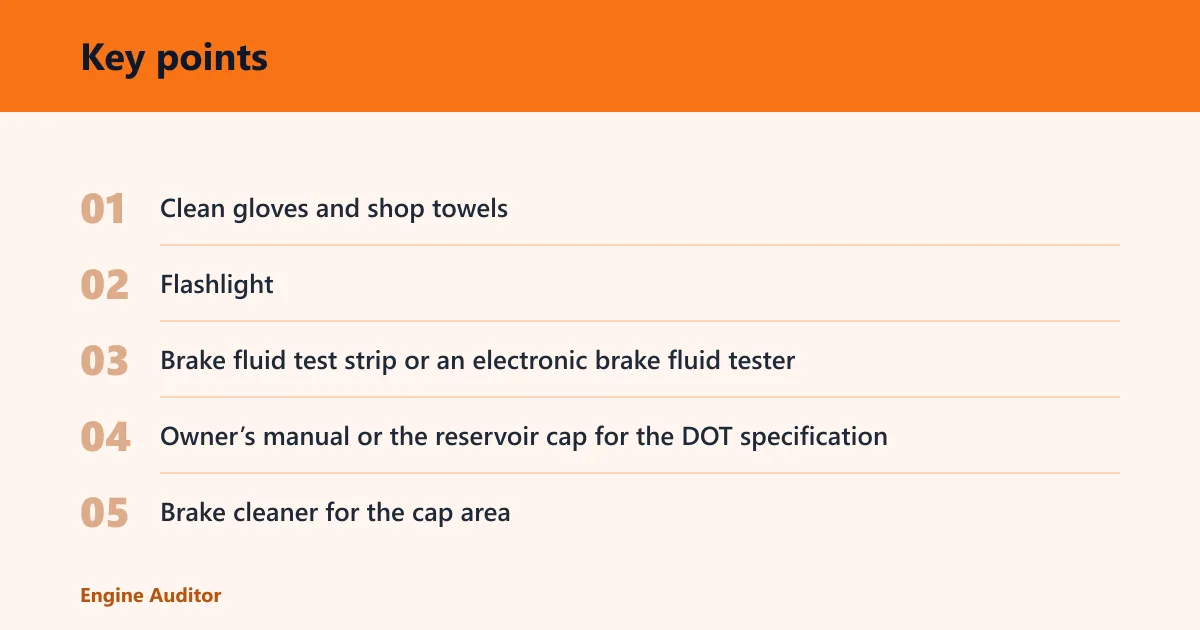


What you’ll need
- Clean gloves and shop towels
- Flashlight
- Brake fluid test strip or an electronic brake fluid tester
- Owner’s manual or the reservoir cap for the DOT specification
- Brake cleaner for the cap area
Inspect the reservoir first
- Park on level ground and switch the engine off.
- Open the hood and find the brake fluid reservoir on top of the master cylinder near the firewall.
- Wipe the cap area clean before opening it, so dirt does not fall in.
- Check the fluid level, then look for clear, light amber fluid or signs of dark tint, cloudiness, floating debris, or sludge.
- Close the cap securely and note anything unusual before moving to testing.
Fresh fluid is usually clear to light amber. Dark tint, floating particles, or a milky look can point to contamination. In most cars, glycol-based brake fluid pulls in moisture from air over time, which changes appearance and braking behavior. Corrosion particles and rubber debris can also darken or cloud the fluid. (Firestonecompleteautocare)
Test brake fluid moisture
- Dip a brake fluid test strip in the reservoir fluid exactly as the package directs.
- Wait the stated read time and compare the color change to the chart.
- Use an electronic brake fluid tester if you want a numeric moisture reading instead of a color match.
- Plan a flush if the strip or tester points to high moisture; many guides use above 3% as a service threshold, and some treat above 5% as urgent.
A moisture reading matters more than color alone because fluid can look fine and still hold too much water. That water lowers the boiling point, so hard stops can turn it into steam pockets. A clean reservoir is not proof of healthy fluid.
What does the pedal tell you?
A soft or spongy brake pedal, a pedal that sinks under steady pressure, or braking that weakens after repeated stops points beyond normal aging tint. Those symptoms fit moisture-related vapor pockets, air in the lines, leaks, or master-cylinder trouble, so the pedal test helps separate contamination from simple color change.
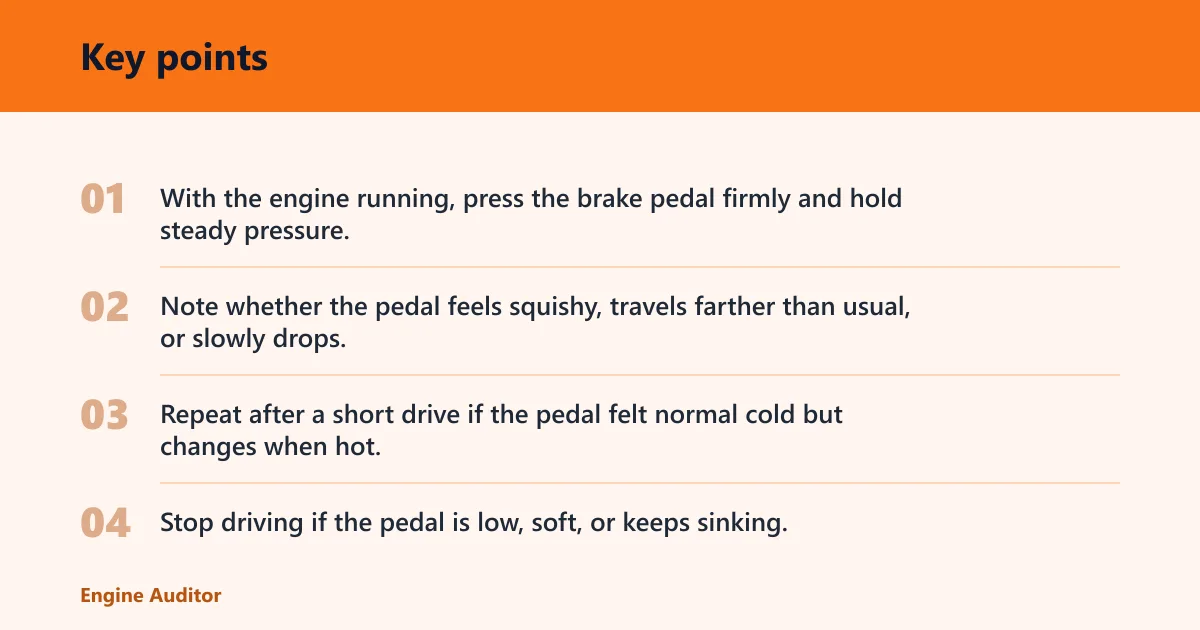
Spot a spongy or sinking pedal
- With the engine running, press the brake pedal firmly and hold steady pressure.
- Note whether the pedal feels squishy, travels farther than usual, or slowly drops.
- Repeat after a short drive if the pedal felt normal cold but changes when hot.
- Stop driving if the pedal is low, soft, or keeps sinking.
Suppose the reservoir fluid still looks light amber, but the pedal turns soft after three stop-and-go blocks on a steep street. That pattern points to heat-related vapor formation, not just old color. Brake fade after repeated stops is a warning that contaminated fluid may be boiling under load.
Picture a car that left a quick-lube shop with the correct fluid level but a pedal that sinks a little when held at a light. That is not a color-only problem. It can mean air in the lines, an internal master-cylinder leak, or a hydraulic issue that needs diagnosis before a flush is chosen.
Brake fluid decision table
| Symptom | Likely cause | How confident it is | Next action |
|---|---|---|---|
| Dark fluid | Aging fluid, heat tint, corrosion particles, or rubber debris | Medium | Test moisture and schedule a flush if the reading supports it |
| Cloudy fluid | Moisture contamination or emulsion | High | Test immediately and plan service if moisture is elevated |
| Clean but high-moisture fluid | Water content without strong color change | High | Flush the system; clean-looking fluid does not rule out contamination |
| Spongy pedal | Steam pockets, air in the lines, leak, or master-cylinder fault | High | Stop driving if the pedal is unsafe; inspect for leaks and test moisture |
| Sinking pedal | Internal hydraulic leak or master-cylinder problem | High | Stop driving and inspect the hydraulic system |
| Brake warning light | Low fluid or pressure loss from a leak or wear | Medium to high | Check level, inspect for leaks, and do not assume dirty fluid is the only issue |
| ABS light | ABS fault, not necessarily fluid contamination | Medium | Read fault codes and inspect the ABS system separately |
| Clean fluid with repeated-stop fade | Heat buildup, moisture-related vapor, pad or rotor issues, or braking system fault | Medium | Test moisture, inspect pads and rotors, and avoid hard driving until checked |
Is the brake warning light a fluid problem?
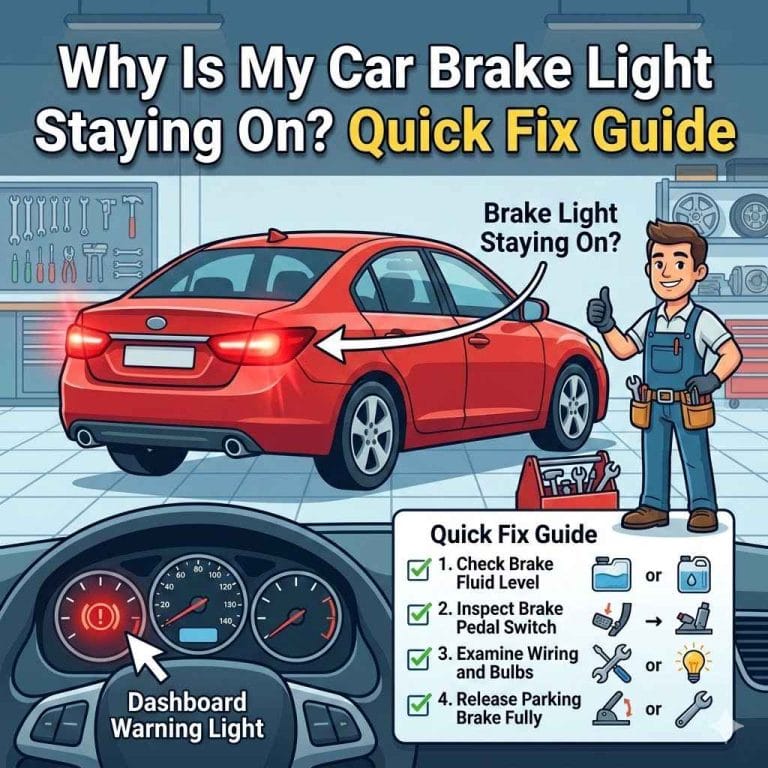
A red brake warning light can mean low fluid, pressure loss, or a leak, but it does not prove the fluid is dirty. The amber ABS light is a separate fault indicator. If the red light stays on with a soft pedal or low reservoir level, stop driving and inspect the hydraulic system.
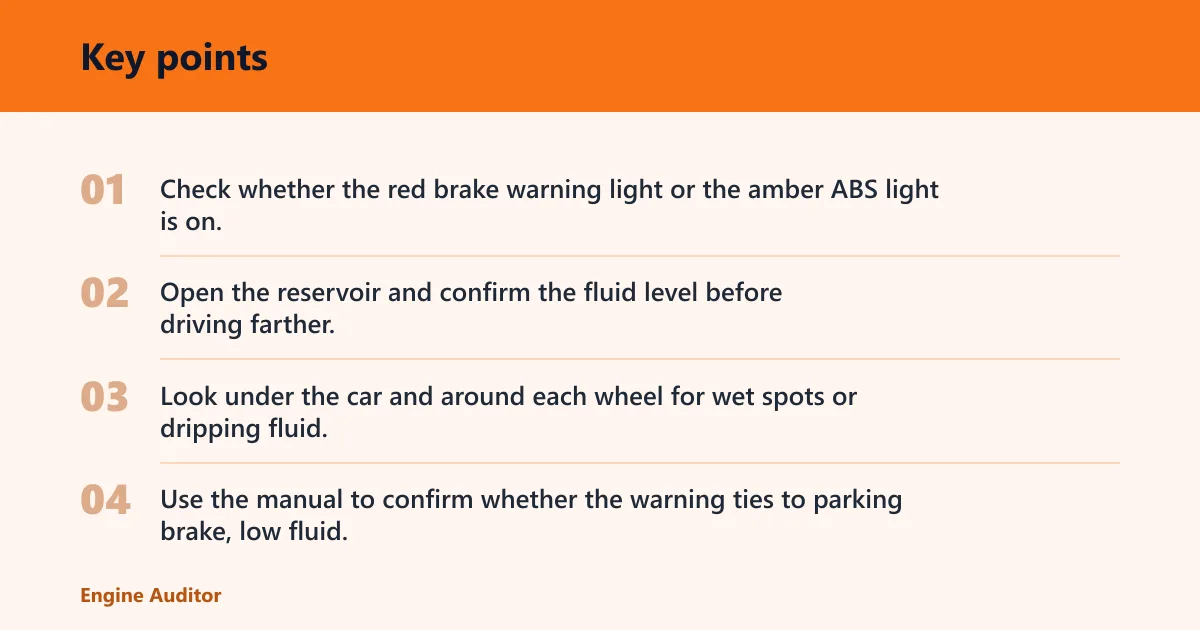
Read the dashboard clues
- Check whether the red brake warning light or the amber ABS light is on.
- Open the reservoir and confirm the fluid level before driving farther.
- Look under the car and around each wheel for wet spots or dripping fluid.
- Use the manual to confirm whether the warning ties to parking brake, low fluid, or a hydraulic fault.
Low fluid can come from pad wear, a leak, or recent brake work, so a warning light needs context. If the fluid is low and the pedal feels soft, treat it as a stop-drive problem rather than a routine flush. If only the ABS light is on, inspect the ABS fault separately.
What happens if the wrong brake fluid was added? Stop driving, confirm the DOT type on the reservoir cap or in the owner’s manual, and have the system drained and refilled with the exact specification called for by the vehicle. DOT 5 is silicone-based and is usually not interchangeable with DOT 3, DOT 4, or DOT 5.1 systems. (Wikipedia)
Common mistakes
Many brake-fluid checks go wrong because they lean on color alone, skip moisture testing, or confuse a low reservoir with contamination. The fix is to check fluid appearance, moisture content, pedal feel, and warning lights together. That combination separates normal aging from a leak, air in the lines, or a stop-drive fault.
What goes wrong and how to avoid it
- Do not call dark fluid “bad” without checking moisture and pedal behavior.
- Do not ignore clean fluid if the pedal is soft or the brakes fade when hot.
- Do not top off blindly; if the fluid is low, inspect for leaks or pad wear first.
- Do not mix DOT specifications unless the manual explicitly allows it.
- Do not open a dirty reservoir cap without cleaning the area first.
Older cars often show more tint and sediment because corrosion particles and rubber debris build up over time. Vehicles with ABS can also show a separate fault that has nothing to do with fluid color. After a quick-lube visit, a sudden pedal change deserves a leak check and a master-cylinder check before any flush decision.
Prevention: check the reservoir at routine service intervals and use the DOT type listed on the cap or in the manual. That keeps you from mixing fluids and makes moisture checks easier to compare over time.
Frequently asked questions
How can I tell if my brake fluid is dirty?
Check the reservoir first. Dirty fluid often looks dark brown or black, cloudy, or full of specks, sediment, or sludge. Then confirm with pedal feel and a moisture test strip or electronic tester. If the fluid is low and the pedal feels soft, stop driving and inspect for leaks.
What does contaminated brake fluid look like?
Contaminated fluid may look cloudy, darkened, or emulsified, and it may contain floating particles. Fresh fluid is usually clear to light amber. Color alone is not enough, because moisture can rise without dramatic discoloration. A numeric moisture reading is more reliable than visual inspection by itself.
Is dark brake fluid always bad?
No. Dark fluid can reflect age, heat tint, corrosion particles, or rubber debris, and some of that can happen before a hard failure shows up. Dark brown or black fluid is usually overdue for a flush, but the decision should also use test-strip results and pedal symptoms.
Can brake fluid be contaminated even if it looks clear?
Yes. Clean-looking fluid can still hold too much moisture, especially in a system that has been heat-soaked after repeated braking. That is why test strips and electronic testers matter. If the moisture reading is high, plan service even when the reservoir looks acceptable.
What symptoms does bad brake fluid cause while driving?
Expect a spongy pedal, a pedal that sinks under steady pressure, longer stopping distances, or brake fade after repeated stops. Those symptoms can also come from air in the lines, a leak, or a master-cylinder fault, so the fluid check should be part of a wider inspection.
How do I test brake fluid moisture at home?
Use a brake fluid test strip or an electronic brake fluid tester on fluid taken from the reservoir. Follow the package timing, then compare the result to its chart or numeric display. A reading around 3% or higher is commonly treated as a flush signal, and some sources treat levels above about 5% as urgent.
Products related to this article
Sponsored / affiliate links. As an Amazon Associate I earn from qualifying purchases. I may earn additional commission from eligible campaigns.
 Brake Fluid Liquid Tester Pen, Brake Fluid Tester with 5 LED Indicators, Brake Fluid Liquid Testing Pen for DOT 3 DOT 4 DOT 5.1 Vehicle, Auto Tester Tool, Diagnostic Testing Tool.
 KAIWEETS Brake Fluid Tester Pen with Corrosion Resistance Probe, High-Precision Brake Fluid Moisture Tester with Data Hold Function, Buzzer Alarm, 3 Colors Backlight, Calibrated for DOT3, DOT4, DOT5.1