Is Car Brake Fluid The Same As Motorcycle Ultimate Risk
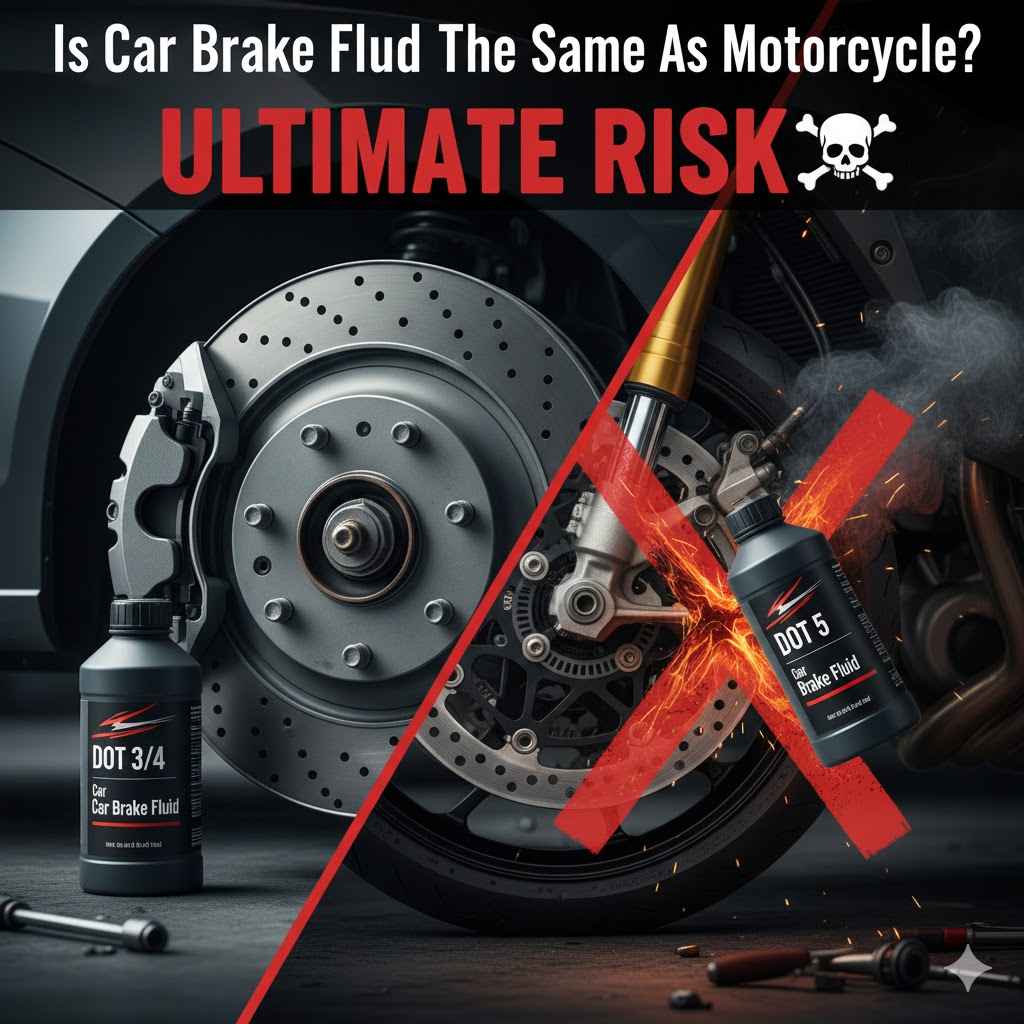
No, car and motorcycle brake fluid are not always the same. While some types like DOT 4 can be used in both, motorcycles often have unique requirements due to their high-performance, compact brake systems. Using the wrong fluid can lead to brake failure, which is an enormous safety risk. Always use the specific DOT rating recommended by your motorcycle’s manufacturer.
Have you ever stood in an auto parts store, looked at a bottle of car brake fluid, and wondered if you could use it in your motorcycle? It’s a common question. After all, using what you already have in the garage seems like a simple way to save time and money. Your brakes are the most important safety feature on your bike, and using the right fluid is a critical part of keeping them working perfectly.
Don’t worry, this isn’t as complicated as it sounds. We are going to break it all down in simple terms. This guide will walk you through the key differences, explain the risks in a clear way, and show you exactly how to choose the right brake fluid every single time. You’ll leave feeling confident and safe.
What is Brake Fluid and Why Does It Matter?
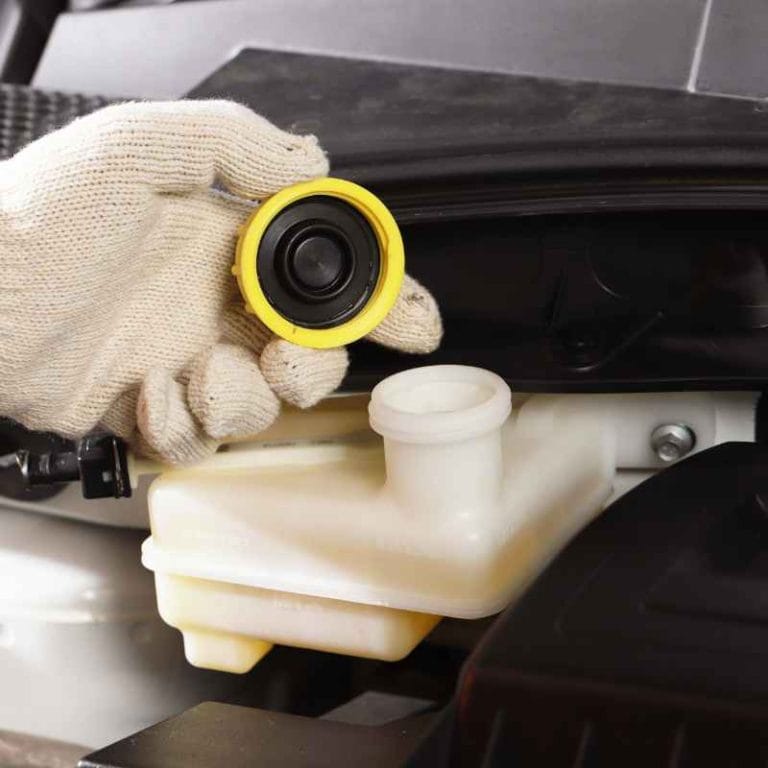
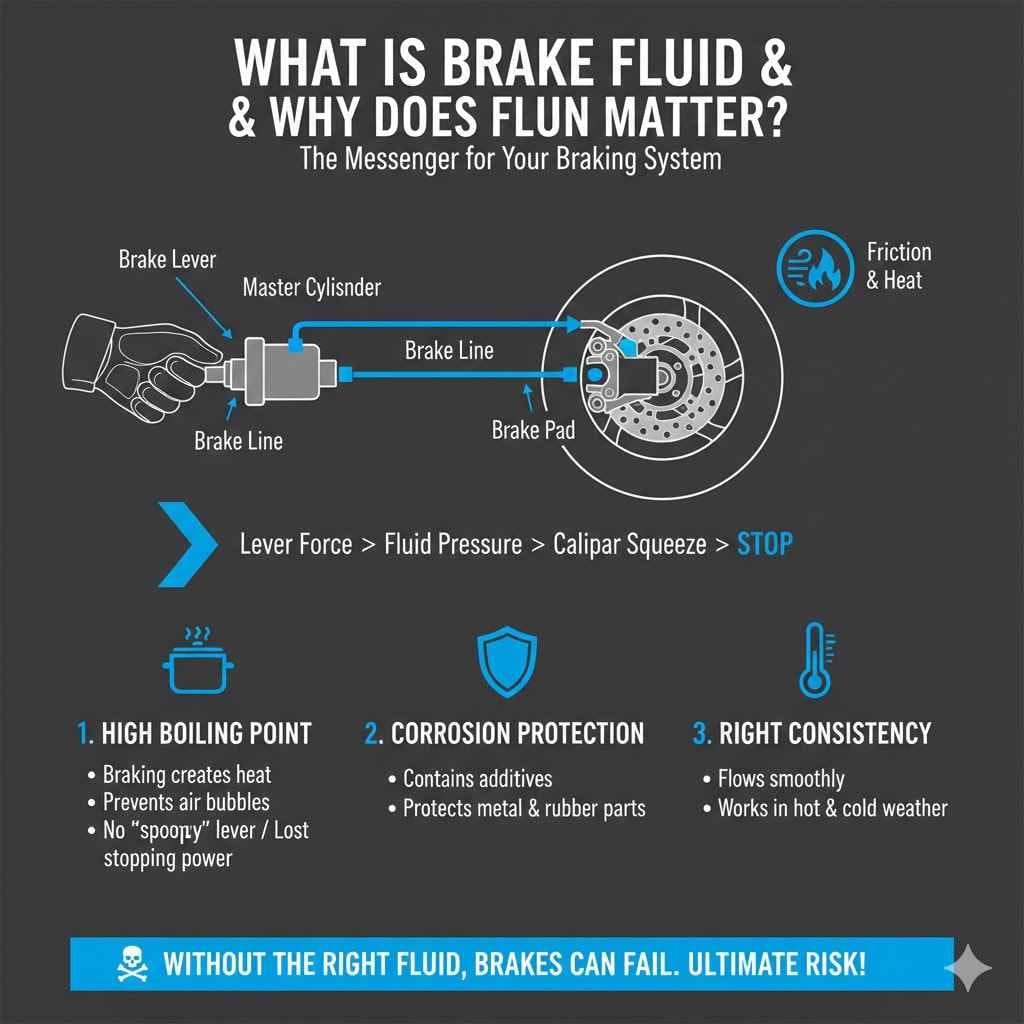
Think of brake fluid as the messenger for your braking system. When you squeeze your motorcycle’s brake lever, you aren’t physically squeezing the brakes on the wheel. Instead, you are pushing a tiny piston inside the master cylinder. This action puts pressure on the brake fluid inside the brake lines.

Audi
Audi Genuine DOT 4 High Performance Brake…
- GENUINE OEM: Official Audi DOT 4 brake fluid designed specifically for Volkswagen and Audi vehicles, ensuring optimal performance…
- HIGH PERFORMANCE: Features high wet and dry boiling points of 338°F (170°C) and 509°F (265°C) respectively for superior braking re…
- SAFETY STANDARDS: Meets or exceeds FMVSS No. 116, SAE J1704, and ISO 4925 specifications for guaranteed quality and performance
As an Amazon Associate I earn from qualifying purchases.
Brake fluid is a special type of hydraulic fluid, which means it’s great at transferring force without being squished or compressed. The force you apply at the lever travels through the fluid, all the way down to the brake calipers. The calipers then squeeze the brake pads against the brake rotor, creating the friction that slows you down.
For this to work flawlessly, brake fluid needs a few key things:
- A High Boiling Point: Braking creates a lot of heat. If the fluid boils, it creates air bubbles. Air can be compressed, which means your lever will feel spongy and you’ll lose stopping power.
- Corrosion Protection: It contains additives to protect the metal and rubber parts of your brake system from rusting or degrading.
- The Right Consistency: It needs to flow smoothly in both hot and cold weather to work correctly.
Without the right fluid in good condition, this whole process can fail. That’s why understanding what you’re putting in your bike is so important.
The DOT Rating System: A Simple Guide
When you look at a bottle of brake fluid, you’ll see a big “DOT” number on it. DOT stands for the Department of Transportation, which sets the standards for brake fluid performance. The number tells you about the fluid’s boiling point and its chemical makeup. Understanding these numbers is the key to getting it right.
The most common types you’ll see are DOT 3, DOT 4, DOT 5, and DOT 5.1.
Here’s a simple breakdown of what each one means:
| DOT Rating | Chemical Base | Minimum Dry Boiling Point | Minimum Wet Boiling Point | Good to Know |
|---|---|---|---|---|
| DOT 3 | Glycol Ether | 401°F (205°C) | 284°F (140°C) | Common in older cars. Absorbs water. |
| DOT 4 | Glycol Ether | 446°F (230°C) | 311°F (155°C) | Very common in both cars and motorcycles. Higher boiling point than DOT 3. |
| DOT 5 | Silicone | 500°F (260°C) | 356°F (180°C) | Purple color. Does NOT absorb water and is NOT compatible with other fluids. |
| DOT 5.1 | Glycol Ether | 500°F (260°C) | 356°F (180°C) | High-performance version of DOT 4. Compatible with DOT 3 and 4. |
What Are “Dry” and “Wet” Boiling Points?
This is simpler than it sounds. The “dry” boiling point is the temperature at which brand-new, perfectly sealed fluid will boil. The “wet” boiling point is for fluid that has been in your bike for a while and has absorbed some moisture from the air.
Most brake fluids (DOT 3, 4, and 5.1) are “hygroscopic,” a fancy word that means they naturally attract and absorb water. This is actually a good thing! It spreads the moisture throughout the fluid instead of letting it pool up and cause rust. However, this water absorption lowers the boiling point over time. That’s why you have to change your brake fluid every couple of years.
Car vs. Motorcycle Brakes: Why They Aren’t Identical
A brake system on a car and a motorcycle do the same job, but they are built very differently. These differences change what they need from their brake fluid.
Motorcycle Brake Systems
- Compact & Lightweight: Every part on a motorcycle is designed to be as small and light as possible. This includes the master cylinders, brake lines, and calipers.
- Exposed to the Elements: Brake lines and calipers are often out in the open, exposed to rain, dirt, and direct airflow.
- High Heat Generation: Motorcycle brakes work incredibly hard. Because the components are smaller, heat can build up quickly, especially during aggressive riding or on long downhill roads.
Car Brake Systems
- Larger & Heavier: Cars have much larger and heavier brake components, which can absorb and dissipate more heat.
- Enclosed & Protected: The system is mostly protected from the elements under the car.
- More Fluid: Car brake systems hold significantly more fluid, which helps manage heat.
Because motorcycle systems are smaller and can get hotter faster, they often demand a fluid with a higher boiling point and specific additives to protect their unique components. A standard, budget car brake fluid might not be up to the task.
The Big Question: Can You Use Car Brake Fluid in a Motorcycle?
The short answer is: sometimes, but only if it’s the exact right type. The risk of getting it wrong is just too high to guess.
When It Might Be Okay
If your car and your motorcycle both specify the exact same fluid—for example, both require standard DOT 4—then yes, you can technically use fluid from the same new, sealed bottle. Many modern cars and motorcycles use DOT 4 fluid, making it a common point of overlap.
When It Is NEVER Okay
You should absolutely never use car brake fluid in your motorcycle if:
- The DOT Ratings Don’t Match: If your bike requires DOT 4 and you only have a bottle of DOT 3, do not use it. Using a lower-spec fluid can lead to brake fade when you need your brakes the most.
- You Are Mixing Chemical Types: This is the most dangerous mistake. If your bike requires DOT 4 (glycol-based) and you add DOT 5 (silicone-based), the fluids will not mix. They can turn into a gel-like sludge, completely clogging your brake system and causing total failure.
- The Bottle is Old or Open: Brake fluid starts absorbing moisture the second you break the seal. That bottle of fluid that’s been sitting open in your garage for a year has a much lower boiling point than when it was new. For the small cost of a new bottle, it’s not worth the risk.
The golden rule is simple: Always check your owner’s manual or the cap on your brake fluid reservoir. Use what the manufacturer tells you to use.
The Ultimate Risks: What Happens If You Use the Wrong Fluid?
Using the wrong brake fluid isn’t like using the wrong brand of oil. The consequences can be immediate and severe. Here are the biggest risks you face.
1. Total Brake Failure from Fluid Boil
This is the most terrifying risk. If you use a fluid with a boiling point that’s too low (like using DOT 3 in a bike that needs DOT 4 and riding it hard), the fluid can boil. When it boils, it creates vapor bubbles in your brake lines. Unlike liquid, vapor can be compressed. When you squeeze the lever, you’ll just be squeezing bubbles instead of applying pressure to the brakes. The lever will feel soft or “spongy” and might go all the way to the handlebar with no stopping power at all. According to the National Highway Traffic Safety Administration (NHTSA), reliable brakes are a cornerstone of vehicle safety.
2. Internal Component Damage
Your brake system relies on a series of rubber seals and O-rings to hold pressure. Different types of brake fluid are designed to work with specific types of rubber. Using the wrong fluid, especially mixing silicone and glycol-based types, can cause these seals to swell, shrink, or break down. This leads to fluid leaks and a loss of brake pressure over time.
3. Corrosion and System Clogging
If you mistakenly mix DOT 5 (silicone) with a DOT 4 system, they won’t blend. The fluids can react and form a thick sludge. This sludge can clog the tiny passages in your master cylinder and calipers, preventing the system from working. Furthermore, if water gets into a DOT 5 system, it doesn’t get absorbed. Instead, it pools at the lowest point, often in the brake caliper, where it can cause corrosion or freeze in cold weather.
How to Choose the Right Brake Fluid for Your Motorcycle
Feeling confident about choosing the right fluid is easy. Just follow these simple steps, and you’ll never have to guess.
- Read Your Owner’s Manual: This is your best friend. The manufacturer of your motorcycle has tested and specified the exact type of fluid your brake system was designed for. This is the #1 most reliable source of information.
- Check the Master Cylinder Cap: Most motorcycles have the required fluid type stamped or printed directly on the cap of the brake fluid reservoir. It will usually say something like, “USE ONLY DOT 4 FLUID.”
- Consider Your Riding Style: If you stick to the manufacturer’s recommendation, you will always be safe. However, if you do track days or very aggressive riding, you might look into a high-performance fluid with a higher boiling point that is still the correct type (e.g., a “Racing” DOT 4 fluid instead of a standard one).
- Always Buy a Fresh, Sealed Bottle: Never use a bottle that has been open for months. The cost of a small bottle of brake fluid is tiny compared to the cost of a brake failure. Buy just enough for the job and get a new one next time.
A Special Note: The DOT 5 vs. DOT 5.1 Confusion
This is one of the most common and dangerous mix-ups. The names are so similar, but the fluids are completely different. Getting this wrong can ruin your brake system.
| Feature | DOT 5 | DOT 5.1 |
|---|---|---|
| Chemical Base | Silicone (does not mix with others) | Glycol Ether (mixes with DOT 3 & 4) |
| Color | Purple | Amber / Clear |
| Water Absorption | Does NOT absorb water (hydrophobic) | DOES absorb water (hygroscopic) |
| Common Use | Some older Harley-Davidsons, classic cars | High-performance and ABS-equipped motorcycles |
The key takeaway: Never mix DOT 5 with anything else. If your system requires DOT 5.1, you can use DOT 4 in a pinch (though with lower performance), but you can never use DOT 5.
Practical Tips for Handling Brake Fluid Safely
Working with brake fluid is a straightforward job, but you should always be careful. Here are a few tips to keep you and your bike safe.
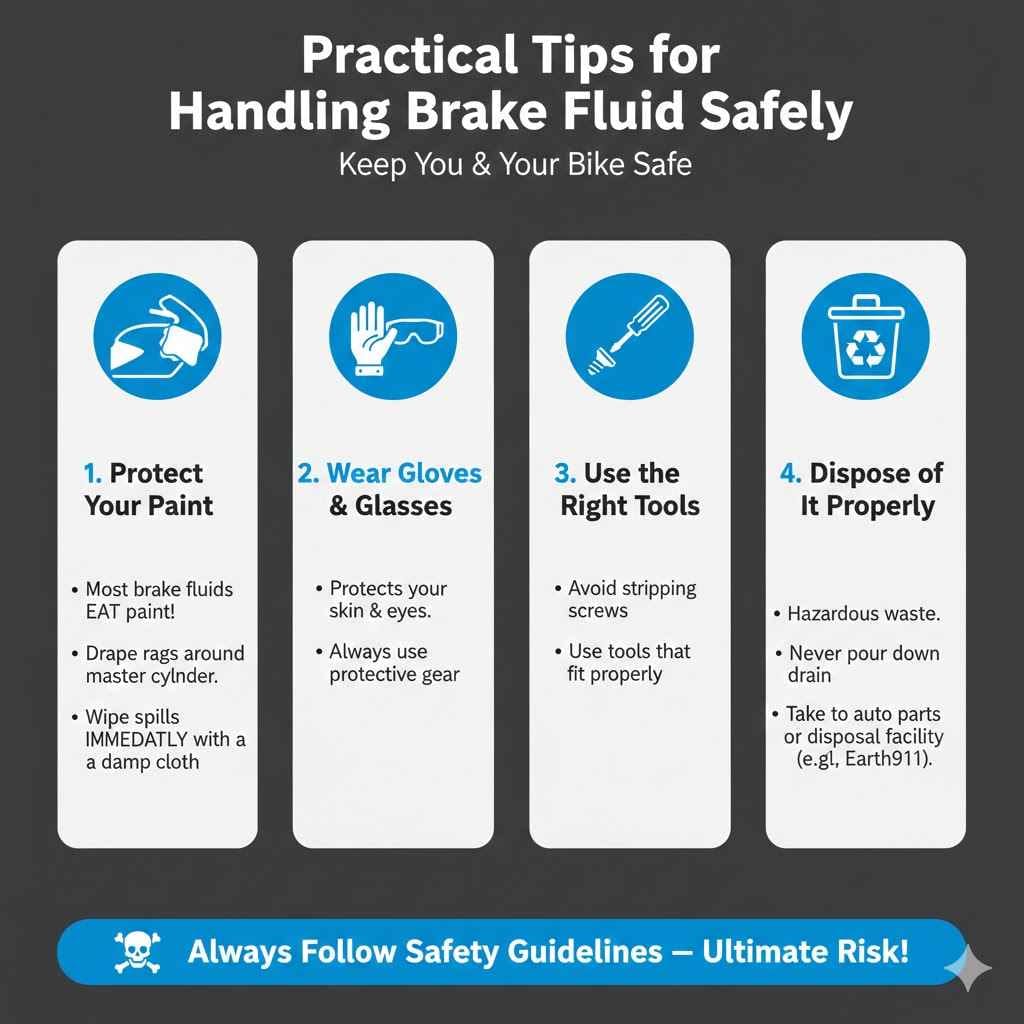
- Protect Your Paint: Most brake fluids (DOT 3, 4, and 5.1) will eat through paint quickly. Drape rags around the master cylinder before you open it. If you spill any, wipe it up immediately with a damp cloth.
- Wear Gloves and Glasses: Brake fluid is not good for your skin or eyes. Always wear protective gear.
- Use the Right Tools: Use tools that fit properly to avoid stripping the screws on your reservoir cap.
- Dispose of It Properly: Never pour old brake fluid down the drain or on the ground. It is hazardous waste. Put it in a sealed container and take it to your local auto parts store or hazardous waste disposal facility. You can find a location near you using resources like Earth911.
Frequently Asked Questions (FAQ)
1. What happens if I accidentally mix DOT 3 and DOT 4 brake fluid?
Mixing DOT 3 and DOT 4 is generally safe, as they are both glycol-based and compatible. However, the mixture will have the lower boiling point of the DOT 3 fluid, reducing your brake system’s performance. It’s always best to use the recommended fluid.
2. How often should I change my motorcycle’s brake fluid?
Most manufacturers recommend changing your brake fluid every one to two years, regardless of how many miles you’ve ridden. This is because the fluid absorbs moisture from the air over time, which lowers its boiling point and effectiveness.
3. Can I use car brake fluid in a pinch for my motorcycle?
Only if it is the exact DOT rating specified for your bike and it comes from a new, sealed bottle. For example, if both your car and bike need DOT 4, it’s okay. But if your bike needs DOT 5.1 and you only have DOT 3, do not use it.
4. Why is my motorcycle brake fluid dark?
Brake fluid is typically a light amber or clear color when new. Over time, it can turn dark brown or black as it absorbs moisture and microscopic debris from the brake system. Dark fluid is a clear sign that it’s old and needs to be replaced.
5. Is more expensive brake fluid better?
Not necessarily. “More expensive” often means a higher boiling point, which is designed for racing conditions. For everyday street riding, a quality fluid that meets your bike’s recommended DOT rating is all you need. You won’t see any benefit from a high-temp racing fluid in normal traffic.
6. What’s the main difference between DOT 5 and DOT 5.1 again?
The main difference is their chemical base. DOT 5 is silicone-based and does not absorb water. DOT 5.1 is glycol-based and does absorb water. They have similar high boiling points but are completely incompatible and should never be mixed.
7. How do I know for sure which brake fluid to buy?
Your owner’s manual is the best place to look. If you don’t have it, the information is almost always written on the cap of your brake fluid reservoir on the handlebar.
Conclusion: Better Safe Than Sorry
So, is car brake fluid the same as motorcycle brake fluid? The answer is no, not always. While there can be overlap, the systems are different, and the risks of getting it wrong are far too great. A potential brake failure on a motorcycle is a life-threatening situation, and it’s not worth gambling to save a few dollars on a bottle of fluid.
The solution is simple: trust your motorcycle’s manufacturer. Check your owner’s manual or the reservoir cap, buy a fresh, sealed bottle of the correct DOT-rated fluid, and you’ll be riding with confidence. Taking a few minutes to double-check is one of the easiest and most important things you can do to ensure your bike is safe, reliable, and ready for the road.
Related pick: Check today's price on Amazon
Products related to this article
Sponsored / affiliate links. As an Amazon Associate I earn from qualifying purchases. I may earn additional commission from eligible campaigns.