Do Car Brakes Work With the Engine Off? Here’s the Truth
Car brakes work with the engine off in most modern vehicles, but there are important limitations you need to understand. This post explains the mechanics behind brake operation when the engine is not running, what happens to power brakes, and why stopping with the engine off feels different.
Simply put, your car’s brakes will still physically work with the engine off, but the power assist from the vacuum booster disappears after a few pedal presses. The first application may feel normal, but subsequent stops require significantly more leg force to achieve the same braking power.
Key Takeaways
- Car brakes work with the engine off mechanically, but power assist is lost after 1-3 pedal presses.
- Hydraulic brakes rely on fluid pressure, not the engine, to clamp the pads — so the fundamental system still functions.
- Power brakes require engine vacuum to amplify pedal force; without it, you need to press much harder.
- Parking brakes (handbrake) are fully mechanical and work regardless of engine status.
- Stopping with the engine off is possible but requires anticipation and extra physical effort.
How Brake Systems Work: Hydraulic vs. Power Assist
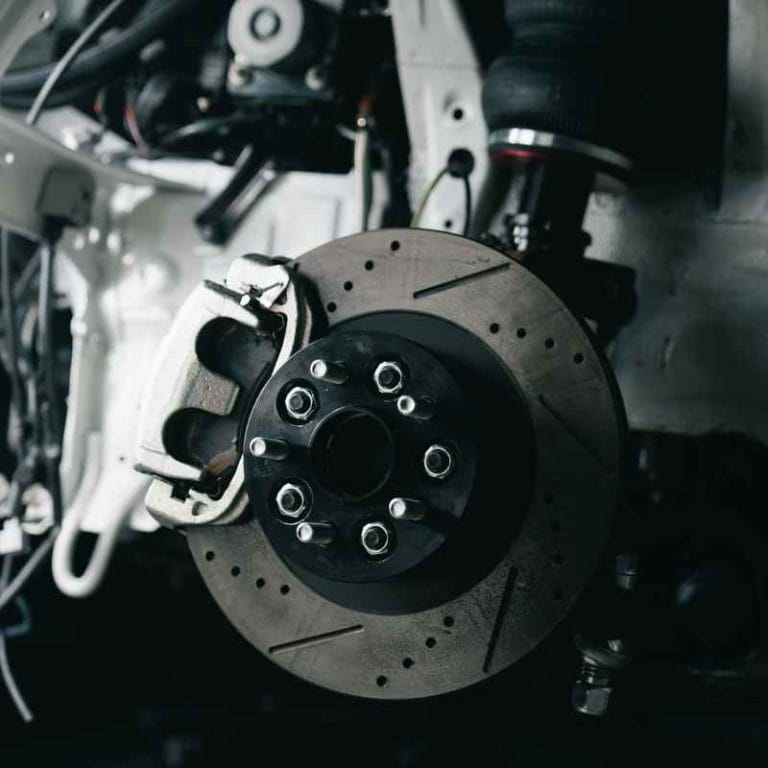
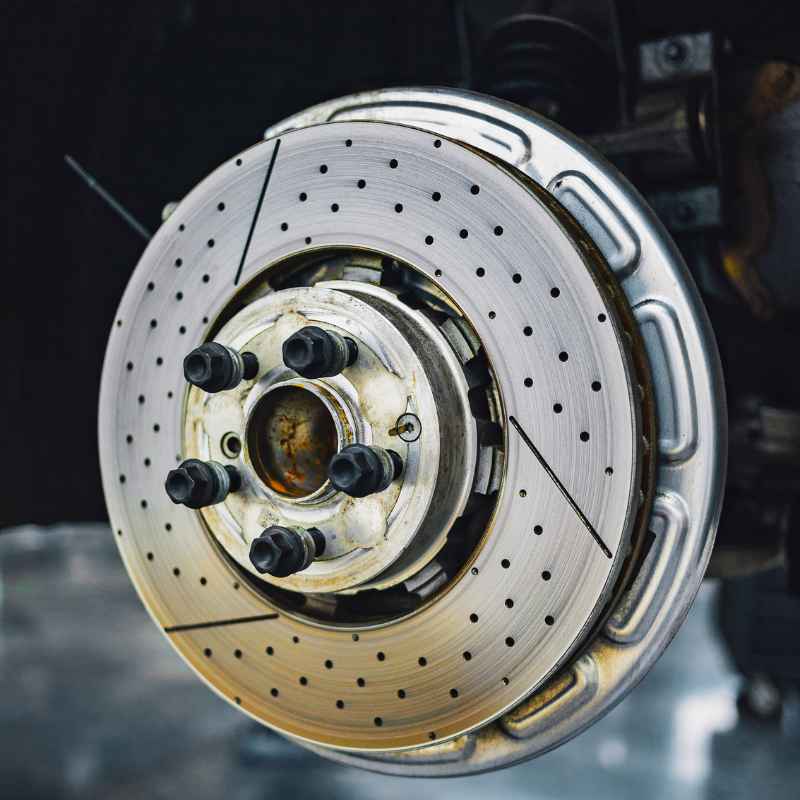
To answer whether car brakes work with the engine off, you first need to understand the two main subsystems: the hydraulic circuit and the power-assist mechanism. The hydraulic circuit uses brake fluid to transfer force from the pedal to the calipers. This circuit is purely mechanical and does not rely on the engine.

As an Amazon Associate I earn from qualifying purchases.
The power assist, commonly a vacuum booster, uses engine vacuum to multiply the force you apply to the pedal. When the engine is running, it creates suction that helps push a diaphragm inside the booster. With the engine off, that vacuum disappears after a few applications.
Hydraulic Brake System Basics
- Master cylinder pushes fluid through brake lines when you press the pedal
- Fluid pressure forces caliper pistons to clamp brake pads against rotors
- No electrical or engine power is needed for fluid pressure generation
- Sealed system: air bubbles or leaks can cause failure, not engine status
- Even with engine off, the hydraulic circuit remains full and ready
Power Brake Booster Function
The vacuum booster sits between the pedal and master cylinder. It uses a diaphragm and a vacuum reservoir. With the engine running, intake manifold vacuum fills the reservoir.
When you press the pedal, atmospheric pressure helps push the diaphragm, multiplying force by 2-3 times. With the engine off, the reservoir holds enough vacuum for only 1-3 pedal presses. After that, you lose the assist.
What Happens When You Press the Brake With the Engine Off?
If you turn off the engine and immediately press the brake pedal, you’ll feel normal resistance at first. The vacuum reservoir still contains enough suction for one or two applications. On the third press, the pedal becomes noticeably harder and requires much more leg force to move the master cylinder.
This is because each pedal press uses up a portion of the stored vacuum. Once the vacuum is depleted, the booster no longer assists. The hydraulic system still works — fluid still moves, calipers still clamp — but you must supply all the force yourself.
| Brake Press Number | Pedal Feel | Power Assist Available |
|---|---|---|
| 1st press (engine just shut off) | Normal, soft | Full vacuum remains |
| 2nd press | Slightly firmer | Reduced vacuum |
| 3rd press and beyond | Very hard, stiff | No vacuum left |
This table summarizes how quickly the vacuum assist depletes. After the third press, you are relying entirely on your leg strength to stop the vehicle. The brakes still work, but stopping distances increase dramatically.
Warning: Do not pump the brake pedal repeatedly with the engine off unless necessary. Each press uses up vacuum that you may need for an actual stop. In an emergency, one firm press is best.
Do Electronic Brake Systems (EBS) Make a Difference?
Modern cars with electronic brake systems — such as brake-by-wire or electronic stability control — often use electric pumps instead of engine vacuum. These systems can provide power assist even with the engine off, as long as the battery has charge. Vehicles like the Toyota Prius and many BMW models use electric brake boosters.
However, if the battery is dead or the electrical system fails, these brakes also become manual. The pedal may feel normal initially but can become hard if the system detects a fault. Always refer to your owner’s manual for specific behavior.
- Electric brake boosters maintain assist for several stops after engine shutdown
- Some hybrids and EVs use regenerative braking that works only with ignition on
- If battery voltage drops below 9V, electronic assist may shut off
- Modern ABS and ESC modules require power to modulate pressure
- Without power, the hydraulic system still works — but no ABS or stability control
Important: Electronic brake systems are not immune to losing assist. If the battery dies while driving, power-assisted braking will degrade. Know your car’s specific system — consult the manual for emergency procedures.
Can You Stop a Car Safely With the Engine Off?
Yes, you can stop a car safely with the engine off, but it requires technique. The first press is almost normal, so use that initial press firmly. After that, you must apply sustained, heavy pressure.
Do not pump the pedal — this wastes vacuum. Instead, press steadily and prepare for a longer stopping distance.
According to a study by the National Highway Traffic Safety Administration (NHTSA), panic stops without power assist can increase stopping distance by 20-40% depending on the driver’s strength. Drivers should practice this scenario in a safe, empty area to understand the pedal feel.
Step-by-Step Emergency Stop Without Power Assist
- Keep the steering wheel straight and look ahead for an open area.
- Press the brake pedal firmly on your first attempt — do not pump.
- If the pedal feels hard, increase leg pressure gradually.
- Downshift if you drive a manual transmission to use engine braking.
- Use the parking brake as a last resort, but be aware it only locks the rear wheels.
What About the Parking Brake (Handbrake)?
The parking brake, also called the handbrake or emergency brake, is a separate mechanical system. It works completely independently of the engine, brake fluid, and power assist. Most parking brakes use a cable to pull the rear brake shoes or clamp the rear calipers.
This system will work even if the engine is off and the battery is dead.
However, using the parking brake at high speed can cause the rear wheels to lock up, leading to a skid. It is best used only at low speeds or as a final resort. In some modern cars with electronic parking brakes, the motor may require battery power to release or engage, but the manual override usually works mechanically.
| Brake Type | Works With Engine Off? | Requires Battery? |
|---|---|---|
| Hydraulic foot brake | Yes (but harder) | No (mechanical) |
| Vacuum power assist | No (after 1-3 pumps) | No |
| Electric brake booster | Yes (limited) | Yes |
| Parking brake (cable) | Yes, fully | No |
| Electronic parking brake | Yes (manual override) | Often yes for auto release |
This table shows that the only part of the braking system that completely stops working is the vacuum power assist after a few presses. All other components remain operational, but with reduced performance in some cases.
Common Misconceptions About Brakes and Engine Status
Many drivers believe that if the engine stalls, the brakes will fail completely. This is not true. The hydraulic circuit still functions.
The misconception comes from the sudden increase in pedal effort, which feels like failure. Another myth is that pumping the pedal restores assist — it actually depletes vacuum faster.
Some think ABS and stability control will work without engine power. While the hydraulic brakes still work, the electronic modules that control ABS, traction control, and electronic stability control require battery power. If the engine dies, the alternator stops charging, and the battery may not have enough voltage to run these systems for long.
- Myth: Brakes fail completely when engine stalls. Fact: Brakes still work but require more force.
- Myth: Pumping the brake pedal helps. Fact: It uses up vacuum — press once firmly.
- Myth: Electric cars have no brake assist when off. Fact: Many have backup electric pumps.
- Myth: Parking brake can stop the car at any speed. Fact: It can cause a skid above 20 mph.
- Myth: Automatic transmission cars can’t be stopped without engine. Fact: Brakes still work, but no engine braking.
Tip: If your engine stalls while driving, steer to the shoulder, press the brake firmly ONCE, and hold it. Do not pump. Once stopped, restart the engine — the vacuum will return immediately.
How to Test Your Brakes With the Engine Off Safely
You can test how your car brakes work with the engine off in a controlled environment. Find a large, empty parking lot. Stop the car and turn off the engine.
Then press the brake pedal several times to feel the change in resistance. This will help you understand the required force without the stress of an emergency.
Always perform this test with the car stationary first. Do not attempt to drive with the engine off just to test brakes. Instead, practice the pedal feel while parked.
This knowledge can be lifesaving if your engine stalls while moving.
What to Do If Your Engine Dies While Driving
- Stay calm — you still have steering and brakes (with effort).
- Keep both hands on the wheel and look for a safe place to pull over.
- Press the brake pedal firmly — do not pump — to slow down.
- Shift into neutral if possible to reduce drag.
- Once at a safe stop, try restarting the engine. If it won’t restart, call for help.

Frequently Asked Questions
Will my brakes lock up if the engine turns off while driving?
No, brakes do not lock up automatically. You will still have hydraulic pressure. However, the loss of power assist means you need to push harder.
The system remains operational unless there is a separate mechanical failure.
Do car brakes work with the engine off if the battery is also dead?
Yes, the hydraulic brakes work without any electrical power. The pedal will feel hard after the first press because the vacuum assist is gone. The parking brake (cable type) also works.
Electronic brake boosters may not function without battery power, but the base hydraulic system still operates.
Is it bad to pump the brakes with the engine off?
Yes, pumping the brakes depletes the vacuum reserve quickly. In an emergency, one firm, steady press is more effective. Pumping also does not restore assist — it only wastes the remaining vacuum.
For routine testing, pumping a few times is fine, but avoid it during a real stop.
How many times can you press the brake with the engine off?
Most cars provide full power assist for 1-3 pedal presses after the engine is turned off. After that, the pedal becomes significantly harder. The exact number depends on the size of the vacuum reservoir and whether the engine was running at idle or high RPM before shutdown.
Do electric vehicles have brake assist when the car is off?
Many electric vehicles use electric brake boosters that can maintain assist for several stops even after the car is turned off, as long as the high-voltage battery has charge. However, if the main battery pack is depleted, the mechanical friction brakes still work but will require more pedal force.
Final Thoughts
Understanding that car brakes work with the engine off — though with reduced assistance — can help you stay safe in an emergency. The hydraulic system is reliable and failsafe by design. Know your vehicle’s specific brake system, practice the pedal feel in a safe area, and remember the rule: one firm press, not pumping.
With this knowledge, you can confidently handle unexpected engine stalls without panic.
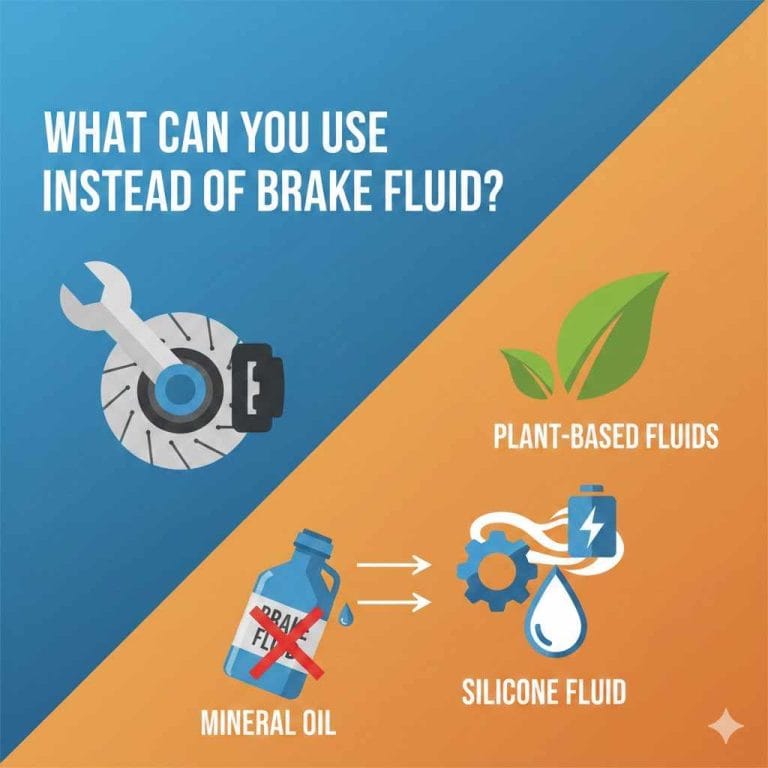
See also is car brake fluid mineral oil the answer may surprise you.
Related pick: Check today's price on Amazon
Products related to this article
Sponsored / affiliate links. As an Amazon Associate I earn from qualifying purchases. I may earn additional commission from eligible campaigns.