How To Tell If Car Headlight Bulb Is Bad: Essential Signs
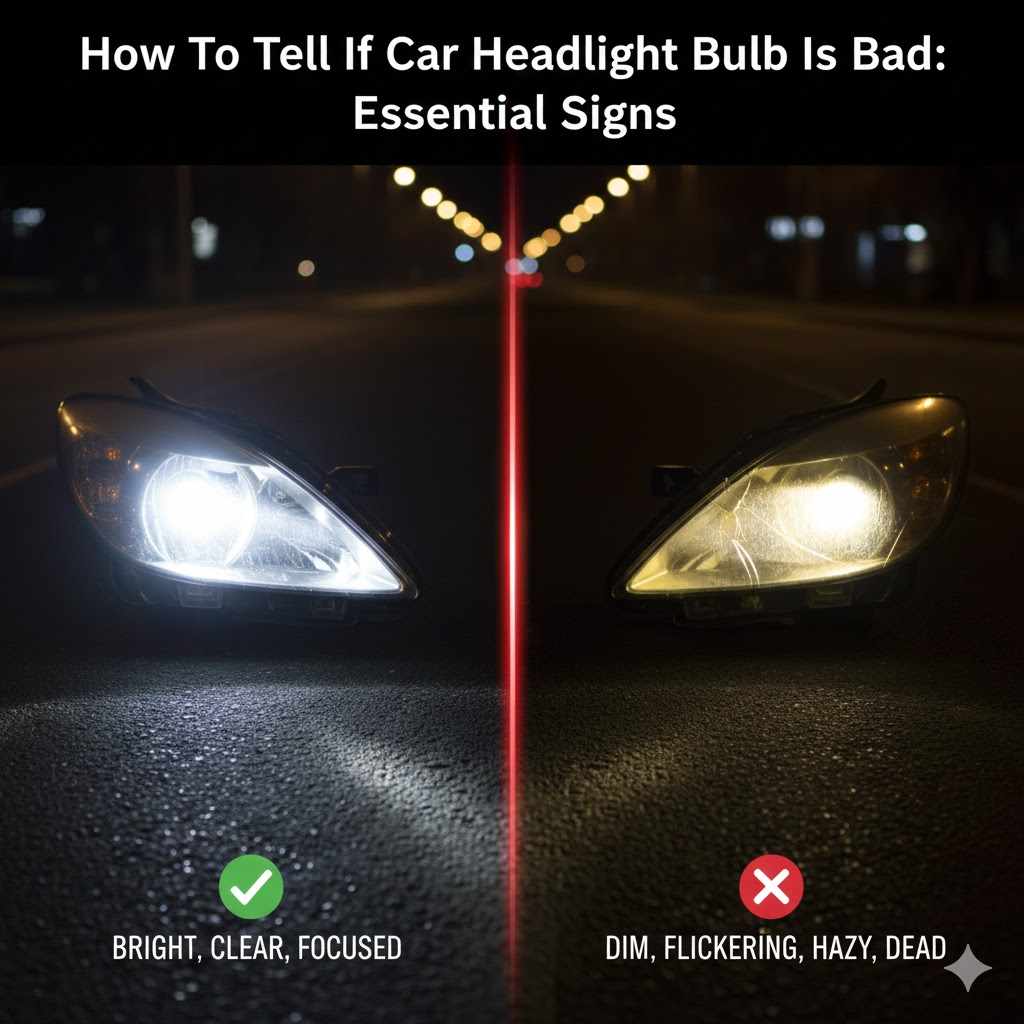
A bad headlight bulb often shows clear signs before it fails completely. The most common symptoms include a headlight that is completely out, visibly dimmer than the other, flickers intermittently, or has changed color to a yellow or bluish tint. A visual inspection may also reveal a broken filament or a dark spot inside the bulb.
Driving at night with a burnt-out headlight isn’t just frustrating—it’s a major safety risk. It cuts your visibility in half and makes it harder for other drivers to see you. You might worry that it’s a complicated electrical problem, but most of the time, the fix is simple: a bad bulb. The good news is that figuring this out is something anyone can do. You don’t need to be a mechanic or have fancy tools.
This guide will walk you through the essential signs, step-by-step, so you can diagnose the problem with confidence and get back on the road safely.
Why Headlight Bulbs Go Bad (and Why It Matters)
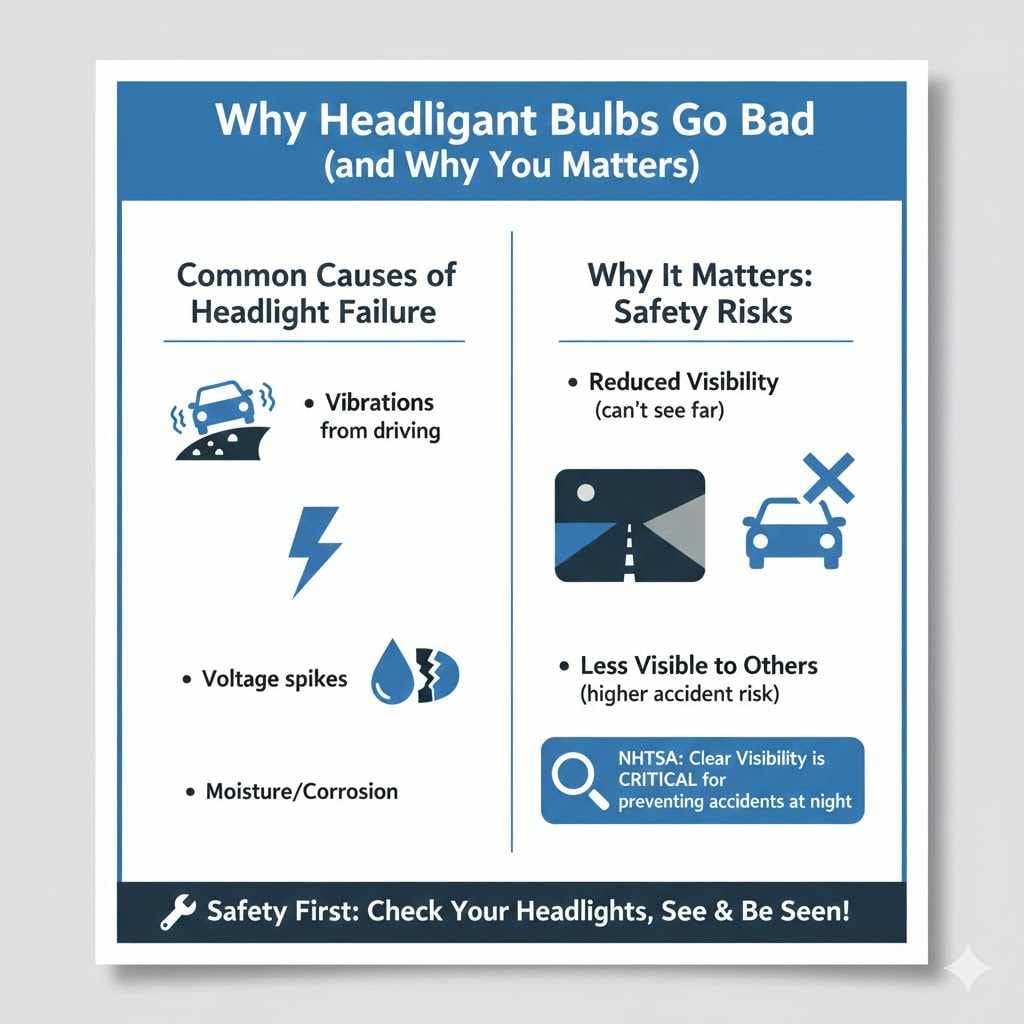
Think of your car’s headlight bulb like any lightbulb in your home—it has a limited lifespan and will eventually burn out. Several factors can speed up this process. The constant vibrations from driving, sudden voltage spikes from your car’s electrical system, and even moisture seeping into the headlight housing can cause the delicate filament inside the bulb to break.

SYLVANIA
SYLVANIA 9007 XtraVision Halogen Headlight Bulb, High…
- Lights Dim Over Time, Replace In Pairs: Your lights are a pair, one is never turned on without the other. If one bulb burns out, t…
- More Down Road Visibility: XtraVision bulbs have an enhanced down road visibility with no added glare.
- Reliable Design For Optimal Performance: XtraVision bulbs have a robust filament design and propriety gas mixture that can be driv…
As an Amazon Associate I earn from qualifying purchases.
Ignoring a failing headlight is more than just an inconvenience. According to the National Highway Traffic Safety Administration (NHTSA), clear visibility is critical for preventing accidents, especially at night when the risk of a fatal crash is highest. A dim or dead headlight dramatically reduces how far you can see down the road and makes your vehicle less visible to others. Taking a few minutes to check your bulbs is a simple step that keeps you, your passengers, and everyone else on the road much safer.
The 5 Most Common Signs of a Failing Headlight Bulb
Your car will usually give you a few warnings before a headlight bulb gives out completely. Learning to spot these signs can help you address the problem before you’re left in the dark. Here are the five most common symptoms of a bad headlight bulb.
1. The Headlight Is Completely Out
This is the most obvious sign of all. You turn on your lights, and one side remains dark. While it’s a clear indicator that something is wrong, it doesn’t automatically mean the bulb is the only possible cause. It could also be a blown fuse, a bad connection, or a wiring issue. However, a burnt-out bulb is the most frequent culprit and the easiest one to check first. It’s the best place to start your troubleshooting.
2. The Headlight Is Dim or Fading
Have you noticed one headlight looks weaker or more yellowish than the other? This is a classic symptom of a bulb that’s nearing the end of its life. Over time, the materials inside a halogen bulb degrade, causing it to produce less light. It won’t fail suddenly but will gradually fade away. If you park your car facing a garage door or wall and see that the two beams of light are uneven in brightness or color, the dimmer one is likely on its way out. This is also a good reminder to replace bulbs in pairs to ensure even lighting.
3. The Light Flickers or Works Intermittently
A flickering headlight can be very distracting and is a sure sign of a problem. If your headlight cuts in and out, especially when you hit a bump, it often points to a failing filament inside the bulb that is making an inconsistent connection. It could also be a loose electrical connector or a bad wire. Before rushing to buy a new bulb, it’s a good idea to check that the plug on the back of the bulb is secure. If the connection is tight and the light still flickers, the bulb itself is almost certainly the issue.
4. The Bulb’s Color Has Changed
Headlight bulbs are designed to produce a specific color of light, usually a bright, neutral white. If you notice one of your headlights has taken on a different hue—like a dull yellow, a pinkish tint, or even a bluish color—it’s a signal that the bulb is failing. This color change happens when the gases inside the bulb (for Halogen or HID types) start to break down or leak. It’s a clear visual cue that the bulb’s chemistry is off and it’s time for a replacement.
5. You See a Burnt or Dark Spot on the Bulb
Sometimes, the best way to know if a bulb is bad is to look at it directly. To do this safely, make sure your car is off, the lights are switched off, and the bulb has had time to cool down completely. Once you remove the bulb from the headlight housing, inspect it closely. Look for a dark, smoky film on the inside of the glass or a visibly broken or disconnected filament wire. If you see either of these, you’ve found your problem. The bulb is burnt out and needs to be replaced.
Is It the Bulb or Something Else? A Simple Checklist
Before you spend money on new bulbs, it’s smart to run through a quick diagnostic checklist. This helps you confirm that the bulb is the real problem and not something more complex. Follow these simple steps.
- Check Both Headlights: Turn on your lights and observe them. If only one headlight is out, the problem is most likely the bulb or its direct connection. If both headlights go out at the same time, the issue is more likely a blown fuse, a faulty relay, or a problem with the headlight switch.
- Perform the “Tap Test”: With the flickering headlight turned on, gently but firmly tap the headlight housing with the palm of your hand. If the light flickers or goes out, it confirms a loose connection, which is often a broken filament inside the bulb. If it stays on, the problem might be a loose electrical plug.
- Inspect the Fuse Box: Your owner’s manual will show you where your car’s fuse boxes are located (there are often two—one in the engine bay and one inside the cabin). Find the fuses for the low-beam and high-beam headlights. Pull the correct fuse out and hold it up to the light. A good fuse has an intact, S-shaped wire inside. A blown fuse will have a broken or melted wire. If the fuse is blown, replacing it might solve the problem.
- Swap the Bulbs: If you’re comfortable doing so, this is a foolproof way to test the bulb. Remove the suspected bad bulb from one headlight and swap it with the known good bulb from the other side. If the problem moves to the other side with the bulb, you can be 100% certain that the bulb is faulty. If the same side remains dark even with the good bulb, you have a bigger issue, likely with the wiring or socket.
Understanding Different Types of Headlight Bulbs
Not all headlight bulbs are created equal. Knowing which type your car uses can help you understand why it failed and what to look for in a replacement. Here’s a quick breakdown of the three main types.
| Bulb Type | How It Works | Average Lifespan | Common Failure Signs |
|---|---|---|---|
| Halogen | A tungsten filament is heated inside a capsule filled with halogen gas. This is the most common and affordable type. | 500 – 1,000 hours | Dimming over time, yellow color, broken filament, flickering. |
| HID (Xenon) | An electric arc is created between two electrodes in a capsule filled with xenon gas. They are much brighter than halogens. | 2,000 – 3,000 hours | Color shifting (turning pink or blue), flickering on startup, taking longer to reach full brightness. |
| LED | Light is produced by passing electricity through a light-emitting diode. They are energy-efficient, bright, and long-lasting. | 20,000 – 30,000+ hours | Individual diodes may fail, causing a patchy or dim light pattern. Complete failure is rare. |
How to Safely Replace a Headlight Bulb (A Beginner’s Guide)
Replacing a headlight bulb is one of the easiest DIY car maintenance tasks you can do. It saves you a trip to the mechanic and can be done in just a few minutes with basic tools. Here’s how to do it safely.
Tools You’ll Need
- Your new replacement headlight bulb (check your owner’s manual for the correct type)
- Clean gloves (latex, nitrile, or cotton)
- A flathead or Phillips screwdriver (sometimes needed to remove clips)
- Your car’s owner’s manual
Step-by-Step Replacement Process
- Prepare Your Vehicle: Park your car on a level surface, turn off the engine, and engage the parking brake. Make sure the headlight switch is in the “Off” position. Let the old bulbs cool for at least 15-20 minutes if they were recently on.
- Open the Hood and Locate the Bulb: Securely prop open your hood. The back of the headlight assembly will be visible in the engine bay. You will see a round plastic cap or a wiring harness connected to the back of the bulb.
- Disconnect the Electrical Connector: Firmly grasp the plastic electrical connector attached to the bulb and pull it straight off. There might be a small tab you need to press to release it. Be careful not to pull on the wires themselves.
- Remove the Old Bulb: There may be a dust cover you need to twist off first. The bulb itself is usually held in by a wire clip or by twisting it counter-clockwise. Unlatch the clip or twist the bulb and gently pull it straight out of the housing.
- Handle the New Bulb with Care: This is the most important step! Put on your clean gloves before touching the new bulb. The oils from your skin can create hot spots on the glass of a halogen bulb, causing it to overheat and burn out very quickly. If you accidentally touch the glass, wipe it clean with a soft cloth and rubbing alcohol.
- Insert the New Bulb: Carefully insert the new bulb into the socket, making sure it is aligned correctly. Do not force it. Once it’s seated properly, twist it clockwise or secure the wire clip to lock it in place.
- Reconnect and Test: Reattach the electrical connector, ensuring it clicks securely into place. Turn on your headlights to make sure the new bulb is working. It’s also a good time to check your high beams and turn signals.
- Finish Up: If everything works, turn off the lights and replace any dust covers you removed. Close the hood, and you’re done!
When to Call a Professional Mechanic
While replacing a headlight bulb is often a simple task, there are times when it’s best to let a professional handle it. It’s always better to be safe than sorry when it comes to your car’s electrical system.
You should consider calling a mechanic if:
- You’ve tried everything else: If you replaced the bulb and checked the fuse, and the light still doesn’t work, there may be a deeper issue with the wiring, the socket, or the vehicle’s computer.
- Both headlights fail simultaneously: This rarely happens due to two bulbs burning out at the exact same time. It usually points to a shared component like a fuse, relay, or the main headlight switch.
- Access to the bulb is difficult: On some modern vehicles, you may have to remove the battery, air filter box, or even the front bumper to access the headlight bulb. If the job looks too complex, a mechanic can do it quickly and safely.
- You have HID or LED systems: HID (Xenon) systems use high-voltage ballasts that can be dangerous to work with if you’re not trained. Factory-installed LED systems are often integrated into the entire headlight assembly and are not designed to be serviced by owners.
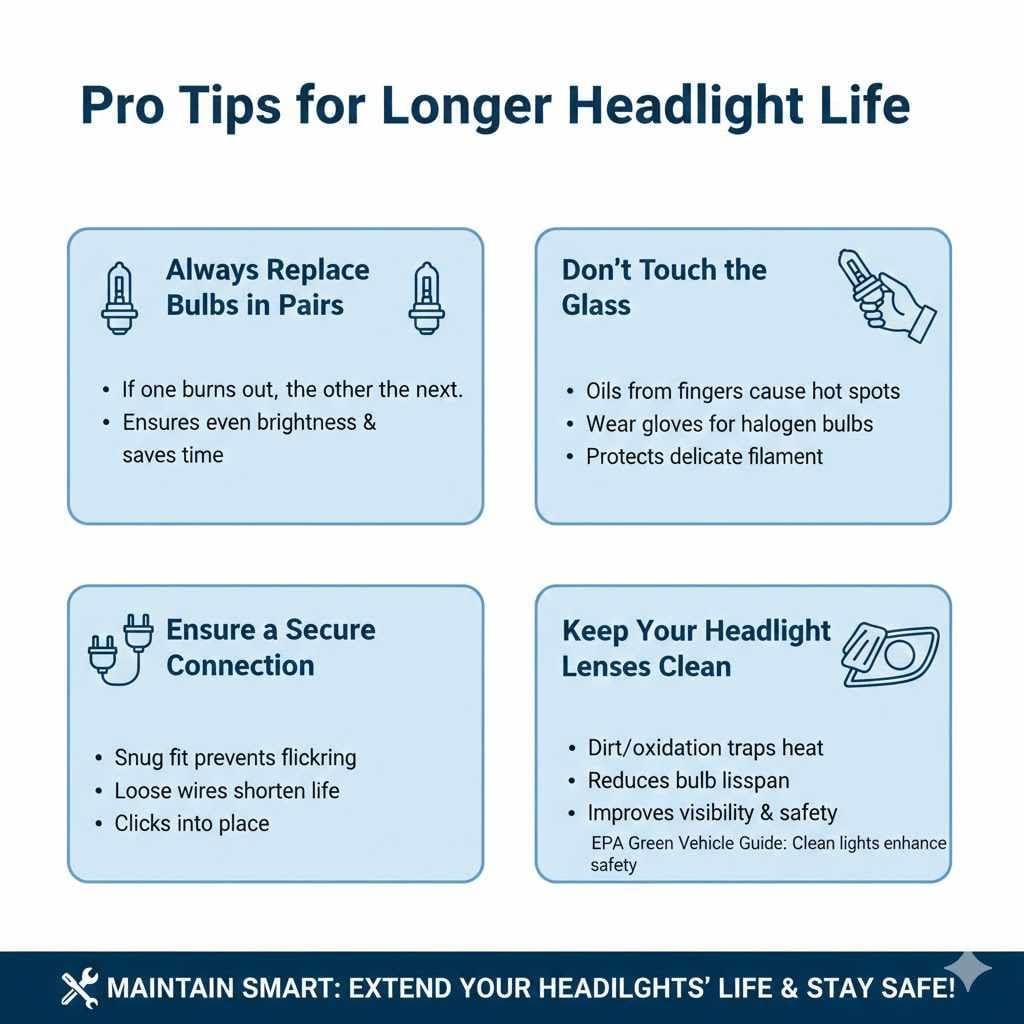
Pro Tips for Longer Headlight Life
You can help your headlight bulbs last longer with a few simple habits. Following these tips will save you time and money in the long run.
- Always Replace Bulbs in Pairs: Headlight bulbs are manufactured to have a similar lifespan. If one burns out, the other is likely not far behind. Replacing both at the same time ensures even brightness and saves you from having to do the job again in a few weeks.
- Don’t Touch the Glass: As mentioned before, the oils on your fingers can cause halogen bulbs to fail prematurely. Always wear gloves.
- Ensure a Secure Connection: When you plug the electrical connector back on, make sure it’s snug and clicks into place. A loose connection can cause flickering and shorten the bulb’s life.
- Keep Your Headlight Lenses Clean: Dirty or oxidized headlight lenses can trap heat, which can cause bulbs to burn out faster. Keeping them clean not only helps your bulbs last longer but also improves your visibility. The EPA’s Green Vehicle Guide notes that proper maintenance, including clean lights, contributes to overall vehicle safety and efficiency.
FAQ: Your Headlight Questions Answered
How much does it cost to replace a headlight bulb?
A standard halogen bulb typically costs between $15 and $30. If you replace it yourself, that’s your only cost. If you take it to a mechanic, labor costs can add another $20 to $50, depending on how easy the bulb is to access. HID and LED bulbs are more expensive, sometimes costing over $100 per bulb.
Should I replace both headlight bulbs at the same time?
Yes, it’s highly recommended. Headlight bulbs have a similar lifespan, so if one has failed, the other is likely to fail soon. Replacing them in pairs ensures that you have even, consistent lighting on both sides of your vehicle, which is crucial for safety.
Why did my new headlight bulb burn out so fast?
The most common reason for a new bulb failing quickly is touching the glass during installation. The oils from your skin create a hot spot that causes the bulb to break. Other causes could be a loose connection, moisture in the headlight housing, or an underlying electrical issue like high voltage from the alternator.
Can I drive with one headlight out?
Legally, no. Driving with a burnt-out headlight is a traffic violation in every state and can get you a ticket. More importantly, it’s a major safety hazard that significantly reduces your visibility at night and makes your car harder for other drivers to see.
What’s the difference between high beams and low beams? Do they use the same bulb?
Low beams are aimed downward to illuminate the road ahead without blinding other drivers. High beams are aimed straight ahead for maximum visibility on empty roads. Some cars use a single “dual-filament” bulb for both functions, while others have separate, dedicated bulbs for low and high beams. Your owner’s manual will specify which type your car uses.
How do I know which bulb my car needs?
The easiest way is to check your owner’s manual. It will list the exact bulb number for your headlights, taillights, and other lights. You can also use online bulb finders on automotive parts websites, where you enter your car’s year, make, and model to find the correct fit.
Is it normal for one headlight to be brighter than the other?
No, this usually indicates a problem. If one headlight is noticeably dimmer, it’s likely an old bulb that’s about to fail. It could also be caused by a poor electrical connection or a foggy, oxidized headlight lens on the dimmer side. Replacing bulbs in pairs usually solves this.
Conclusion: Stay Safe by Staying Lit
Knowing how to tell if your car headlight bulb is bad is a valuable skill for any driver. By recognizing the key signs—a dimming light, flickering, color changes, or a completely dead bulb—you can diagnose the issue quickly and confidently. For most car owners, changing a headlight bulb is a simple, straightforward task that builds confidence and saves money.
Don’t overlook the importance of your headlights. They are one of your vehicle’s most critical safety features. Taking a moment to check them regularly and replacing a failing bulb promptly ensures that you can see clearly and be seen by others, keeping you and everyone else safe on the road. Now you have the knowledge to tackle this common issue head-on and keep your path brightly lit. See also when to put car headlights on rules every driver needs.
Related pick: Check today's price on Amazon
Products related to this article
Sponsored / affiliate links. As an Amazon Associate I earn from qualifying purchases. I may earn additional commission from eligible campaigns.