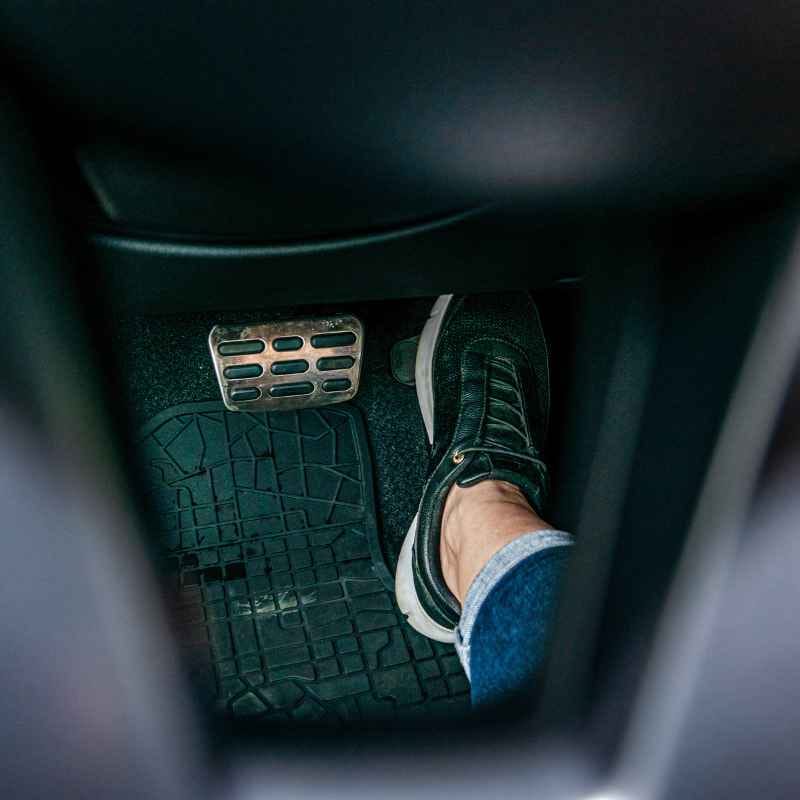
Why Do People Like One Pedal Driving? Drivers Explain
One-pedal driving is a mode in some electric vehicles that allows drivers to accelerate and slow down using only the accelerator pedal. Lifting off the pedal engages regenerative braking, which slows the car and recharges the battery. This can make driving smoother and more efficient, though it requires an adjustment period for new users.
What is One-Pedal Driving?
So, what exactly is one-pedal driving? It’s a way some cars, mostly electric ones, are set up. You use the gas pedal, or accelerator pedal, for both going and stopping.

Sunny Health & Fitness
Sunny Health & Fitness Smart 2-in-1 Motorized…
- 【LOW IMPACT & DUAL FUNCTION】Our mini bike offers low-impact assisted exercise, minimizing stress on knees, ankles, and hips. With…
- 【IDEAL FOR ELDERLY】Motorized minibike machine, perfect for leg / arms sessions, offers various mobility options that are senior-fr…
- 【FREE CONNECTED APP】 Enjoy FREE access to the SunnyFit App with every Sunny Health & Fitness product—no membership fees! Dive into…
As an Amazon Associate I earn from qualifying purchases.
When you press down on it, the car speeds up. But here’s the cool part: when you lift your foot off the pedal, the car starts to slow down all by itself. It feels like you’re lightly tapping the brake.
This slowing down uses something called regenerative braking. It’s a smart system that uses the car’s motor to help slow it down. As it slows, it also sends some power back to the battery.
This makes the car more efficient. It means you can drive a lot without needing to use the brake pedal much at all.
This system is also called “strong regenerative braking.” It’s different from cars where lifting off the gas only lets the car coast. In one-pedal mode, the car actively slows down. The strength of this braking can often be changed by the driver.
Some cars let you pick how strong it is. Others have a setting you can just turn on or off. For many drivers, once they get used to it, they find they rarely need to touch the brake pedal in normal driving.
It feels very natural after a short time.
The key idea behind one-pedal driving is to make driving simpler and more efficient. By using the accelerator pedal for both actions, your foot is doing less work. It’s also better for the car’s battery.
Getting that energy back is a big plus. It means you can go further on a single charge. For a lot of people, this feels like a natural evolution of how cars work.
It’s less about just driving from point A to point B and more about enjoying the ride. It makes the car feel more responsive and connected.
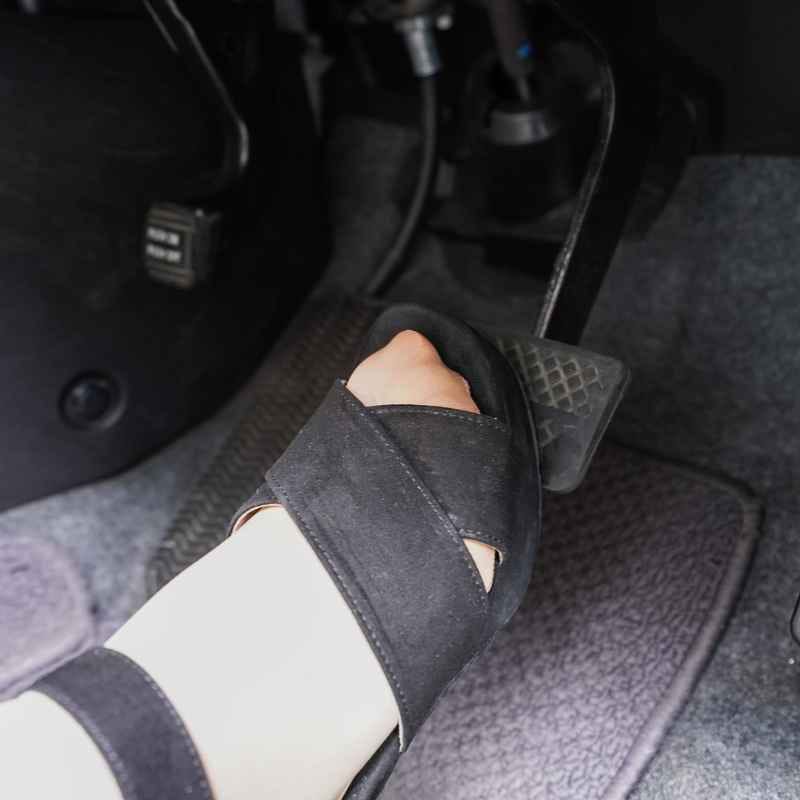
My First Time Trying One-Pedal Driving
I remember the first time I heard about one-pedal driving. I was looking at a new electric car with my neighbor, Dave. He’s a total car guy and loves trying new tech.
He was showing me the settings on the dashboard. “You’ve got to try this ‘one-pedal’ mode,” he said, with a big grin. I was a bit skeptical.
My foot naturally goes to the brake pedal when I want to slow down. The idea of relying only on the gas pedal felt odd. It felt like it might be dangerous.
Dave suggested we take it for a spin. We went to a quiet road first. He showed me how to press the accelerator to go.
Then, he told me to gently lift my foot. Whoa! The car slowed down much faster than I expected.
It felt like I had lightly pushed the brake. I was so surprised, I almost instinctively slammed my foot down on the brake pedal. Dave chuckled.
“Takes a bit to get used to,” he said. “Your brain is wired for separate pedals.”
We drove around for a while. I started to get the hang of it. It was like learning to ride a bike again.
At first, I was jerky. I’d lift my foot too fast, and the car would slow down quickly. Or I’d lift it too slowly, and I’d roll too far forward.
But then, something clicked. I found that by making tiny adjustments with my foot, I could control the speed perfectly. I could creep along in traffic or slow down smoothly for lights.
It was actually pretty relaxing once I got the rhythm. By the end of the drive, I was seeing what Dave meant. It was a different, almost more intuitive, way to drive.
One-Pedal Driving vs. Traditional Driving
Myth: One-pedal driving replaces your brakes entirely.
Reality: You still have a brake pedal! It’s there for strong stops or emergencies. One-pedal driving just means you use it much less in daily driving.
How Does One-Pedal Driving Work?
The magic behind one-pedal driving is a technology called regenerative braking. Think of it like this: electric car motors can work in two ways. They can use electricity to spin the wheels and make the car move.
Or, they can be spun by the wheels when the car is moving downhill or slowing down. When the motor is spun by the wheels, it acts like a generator.
This generator action creates resistance. This resistance is what slows the car down. It’s the same feeling you get when you put a fan on its lowest setting and then try to spin the blades by hand.
It’s harder to spin them than if the fan were off. That extra effort is the resistance. In an electric car, this resistance is the braking effect.
At the same time, this generator is creating electricity. This electricity is sent back to the car’s battery. So, you’re slowing down the car and topping up the battery at the same time.
The car’s computer controls how much braking happens when you lift your foot. It takes into account how much you lift off the pedal. A small lift might mean a gentle slow-down, like letting off the gas in a regular car.
A big lift means a stronger slow-down, more like pressing the brake pedal. Many modern systems are very smart. They can adjust the regenerative braking based on what the car sensors see.
For example, if the car in front slows down, the system might automatically apply a bit more regen braking to help you match their speed. This is all done without you touching the brake pedal.
The goal is to capture as much energy as possible. Every bit of energy sent back to the battery is energy you don’t have to get from plugging in later. This makes electric cars more efficient.
It also means less wear and tear on your actual brake pads and rotors. Since you’re using the motor to slow down most of the time, your physical brakes get used a lot less. This can save you money on maintenance over the life of the car.
Quick Scan: Benefits of One-Pedal Driving
- Smoother Driving: Less jerky acceleration and braking.
- Increased Efficiency: Recaptures energy for longer range.
- Reduced Brake Wear: Physical brakes last longer.
- Simplified Control: Less pedal work for your foot.
- More Engaging Drive: Can feel more connected to the car.
Why Drivers Love One-Pedal Driving: The Experience
People who switch to one-pedal driving often become big fans. It’s not just about the technology; it’s about how it makes driving feel. Many describe it as a more relaxed and intuitive way to drive.
Imagine being in city traffic. Stop-and-go is the norm. With a traditional car, you’re constantly shifting your foot from the gas to the brake.
It can be a bit tiring and jerky.
With one-pedal driving, you can ease off the accelerator to slow down for the car ahead. Then, you can gently press it again to move forward. This constant back-and-forth becomes much smoother.
Your foot is doing subtle movements, not big shifts. This can make your commute feel less stressful. Drivers often report feeling more in control because they can make very fine adjustments to their speed.
The feeling of the car slowing down on its own is also something people get used to and then enjoy. It feels less like you’re fighting the car’s momentum and more like you’re guiding it. It’s like gliding.
For some, it makes driving more fun. They feel more connected to the car’s power and how it responds to their input. It’s a small change that can have a big impact on the daily driving experience.
Many owners say they wouldn’t go back to driving a car without it.
Beyond the smooth feeling, there’s a sense of smart efficiency. Knowing that you’re recapturing energy every time you slow down is satisfying. It feels like you’re getting more out of your car.
For long drives, this can translate to fewer stops to charge. It adds a layer of practicality to the driving pleasure. It’s the combination of a more relaxed, engaging drive and the smart use of energy that makes it so appealing.
Personal Anecdote: The Highway Merge
Observation: I was merging onto a busy highway in my electric car with one-pedal driving enabled. Traffic was moving fast.
Action: Instead of just flooring the accelerator and then having to brake hard, I used the accelerator to match the speed of the traffic flow. As cars ahead slowed, I eased off the pedal. The regenerative braking helped me slow smoothly without needing to touch the brake pedal.
This allowed me to focus on finding the right gap in the traffic. It felt much safer and less stressful than I expected.
Real-World Context: Using One-Pedal Driving in Different Situations
One-pedal driving is fantastic in many everyday scenarios. Think about driving in a school zone. You need to go slow and be ready to stop quickly if a child runs out.
With one-pedal driving, you can maintain a very low speed by just resting your foot. If you need to stop, a slight lift of your foot brings you to a halt smoothly and quickly. This is safer and less jarring than constant braking and accelerating.
Another common situation is navigating parking lots. They often have tight turns, pedestrians, and other cars moving slowly. One-pedal driving allows for very precise control at low speeds.
You can creep along, slow down for obstacles, and even stop completely without needing to switch feet. This makes maneuvering in tight spaces much easier and less stressful. It feels more like you’re guiding the car with a joystick than driving a car with pedals.
Even on the highway, it has its uses. While you’re mostly cruising at a steady speed, traffic can slow down unexpectedly. Instead of slamming on the brakes, you can lift your foot.
The regenerative braking will help you slow down to match the traffic flow. This makes for a smoother ride for everyone in the car. It also means less chance of a sudden, hard stop.
This can prevent rear-end collisions in some cases.
The key is that one-pedal driving makes the car more responsive to your foot. Small movements have a bigger effect, which can take some getting used to. But once you understand that subtle control, you can use it in almost any driving situation.
It’s not just for city driving. It’s a system that enhances control and efficiency everywhere you go. It adapts to your driving style.
Contrast: Normal vs. Concerning Regen Feel
Normal Feel:
- Car slows smoothly when foot is lifted.
- Adjustable strength feels intuitive after practice.
- No unexpected jolts or grabs.
Concerning Feel:
- Sudden, jerky braking without clear reason.
- Car fails to slow down as expected.
- Inconsistent braking force.
What This Means for You: When to Worry and When Not To
So, is one-pedal driving for everyone? Mostly, yes, once you get used to it. The learning curve is usually quite short.
Most people adapt within a day or two of consistent driving. The first few minutes or hours might feel strange. You might over-brake or under-brake.
But your brain is smart and learns quickly. It re-wires itself to understand the new control method.
When should you pay attention? If the car feels inconsistent, that’s worth looking into. For example, if some days the braking feels strong, and other days it feels weak, even with the same pedal pressure.
Or if you get into a situation where you expect the car to slow down, and it doesn’t slow as much as it should. These are rare, but if you notice them, it’s a good idea to have your car checked. It could be a minor software glitch or something that needs a mechanic’s attention.
Also, consider your personal comfort. Some drivers might prefer a less aggressive regen setting. Most cars allow you to adjust this.
You can often turn it off completely if you prefer. It’s about finding what feels best for you. If you’re someone who likes the traditional feel of coasting, you can usually have that.
The beauty of these systems is their flexibility. They are designed to cater to different driver preferences.
The main thing to remember is that one-pedal driving is a feature, not a replacement for safe driving. You still need to be aware of your surroundings. You still need to judge speeds and distances.
The brake pedal is always there. It’s your backup for strong stops. It’s also your safety net if the regenerative braking isn’t enough or if something unexpected happens.
Don’t forget it’s there. Many people find they use it so rarely they almost forget it exists, but it’s crucial it works perfectly.
Simple Checks for Peace of Mind
What to Check:
- Consistency: Does the car slow down predictably every time?
- Smoothness: Is the braking smooth, or is it jerky and uncomfortable?
- Responsiveness: Does the car react well to small adjustments of your foot?
When to Consult a Pro: If you notice any major inconsistencies or a lack of expected braking power.
Quick Fixes & Tips for Mastering One-Pedal Driving
Getting good at one-pedal driving is mostly about practice. But there are a few tips that can help speed up the process. First, when you first try it, find an empty parking lot or a quiet, safe road.
This way, you can experiment without worrying about other traffic.
Start by lifting your foot off the accelerator very slowly. Feel how the car reacts. Then try lifting it a bit faster.
See the difference in how quickly the car slows. You’ll start to develop a feel for how much lift equals how much slowing. It’s like learning the weight of a new tool.
Think of your accelerator foot as being very delicate. You’re not mashing the pedal down; you’re making tiny, precise movements. Imagine you have a raw egg under your foot, and you don’t want to break it.
This mindset helps you become more sensitive to the pedal’s response. It’s about micro-adjustments.
If your car has adjustable regen levels, start with a medium setting. As you get more comfortable, you can try a stronger setting if you like. A weaker setting might feel more like coasting, which can be a good starting point if you’re very hesitant.
Find the level that feels most natural for you.
Don’t be afraid to use the brake pedal when you need it. If you feel unsure or if you need to stop more suddenly than the regenerative braking allows, just use the brake. It’s always there.
The goal is to use it less, not to eliminate it. Over time, you’ll find yourself reaching for the brake pedal less and less.
Finally, be patient with yourself. It’s a new way of controlling a car. Like any new skill, it takes a little time.
Most people find they are fully comfortable within a few hours of driving. Some might take a couple of days. The rewards of smoother, more efficient driving are worth that small initial effort.
Enjoy the process of learning. It’s a fun new skill.
Tips for Smooth Driving
Start Slow: Practice in a safe, empty area.
Gentle Foot: Think of tiny movements on the accelerator.
Adjust Settings: Use different regen levels to find your fit.
Use the Brake: Don’t hesitate to use the brake pedal when needed.
Be Patient: It takes a little time to master.

Frequent Questions About One-Pedal Driving
Is one-pedal driving safe?
Yes, one-pedal driving is generally considered safe. Electric cars equipped with this feature are designed with safety in mind. The regenerative braking is programmed to be smooth and predictable.
You always have a physical brake pedal for stronger stops or emergencies. Many drivers find it enhances safety by allowing for smoother deceleration and quicker reactions in traffic.
Can I get used to one-pedal driving if I have driven for many years?
Absolutely! Many experienced drivers have successfully adapted to one-pedal driving. While it takes a short adjustment period, your brain is very capable of learning new motor skills.
Most drivers report feeling comfortable within a few hours or days of practice. The benefits of smoother driving and increased efficiency often make the learning process worthwhile.
Does one-pedal driving wear out the car faster?
No, quite the opposite. One-pedal driving actually reduces wear on your car’s physical brake components. This is because the regenerative braking system does most of the slowing down.
The brake pads and rotors are used much less often. This can lead to longer brake life and lower maintenance costs over time. The system also helps recharge the battery, which is good for overall efficiency.
What happens if the battery is full and I try one-pedal driving?
If the battery is completely full, the car might not be able to accept more charge through regenerative braking. In this situation, the car will behave more like a regular car when you lift off the accelerator. It will coast more, and the regenerative braking effect will be significantly reduced or absent.
The car may then rely more on friction brakes for slowing down. Most cars will indicate when regenerative braking is limited.
Does one-pedal driving work in all electric cars?
No, not all electric cars have a dedicated one-pedal driving mode. It is a feature that depends on the car’s design and programming. However, it is becoming increasingly common in newer electric vehicles.
Many manufacturers offer it as a selectable driving mode. You can usually turn it on or off, or adjust its strength, through the car’s settings menu.
Will I always need to use the brake pedal for sudden stops?
For very sudden or emergency stops, you will likely need to use the brake pedal. While strong regenerative braking can slow the car down quickly, the physical brakes are designed for maximum stopping power. Think of the brake pedal as your safety net.
It’s there to complement the regenerative braking and ensure you can stop as quickly and safely as needed in any situation.
Conclusion: The Joy of a Simpler Drive
One-pedal driving is more than just a technical feature; it’s a new way to experience driving. It offers a smoother, more relaxing, and more efficient journey. By using just one pedal for both acceleration and braking, you can navigate traffic with greater ease and feel more connected to your vehicle.
The ability to recapture energy as you slow down adds a smart, eco-friendly dimension.
While it takes a short time to adapt, the rewards of this simpler control method are significant. Many drivers find they wouldn’t go back. It truly changes the daily commute from a chore to a more enjoyable experience.
Embrace the change and discover the simple joy of a one-pedal drive.
See also how to pedal fast in gta 5 simple tricks that work .
Related pick: Check today's price on Amazon See also can you pedal backwards on a bike what you should know.
Products related to this article
Sponsored / affiliate links. As an Amazon Associate I earn from qualifying purchases. I may earn additional commission from eligible campaigns.