What to Do If Brake Pedal is Stuck (Complete Guide)
A stuck brake pedal can be a terrifying experience, especially if it happens while you’re driving. Many drivers never think about this problem until it happens, but knowing what to do can make a huge difference in your safety and the safety of others. In this guide, you’ll learn step-by-step what actions to take if your brake pedal gets stuck, what might cause it, and how to prevent it from happening again. Even if you’re not a car expert, you’ll find clear advice, practical tips, and real-world examples to help you stay calm and in control during an emergency.
Understanding Why Brake Pedals Get Stuck
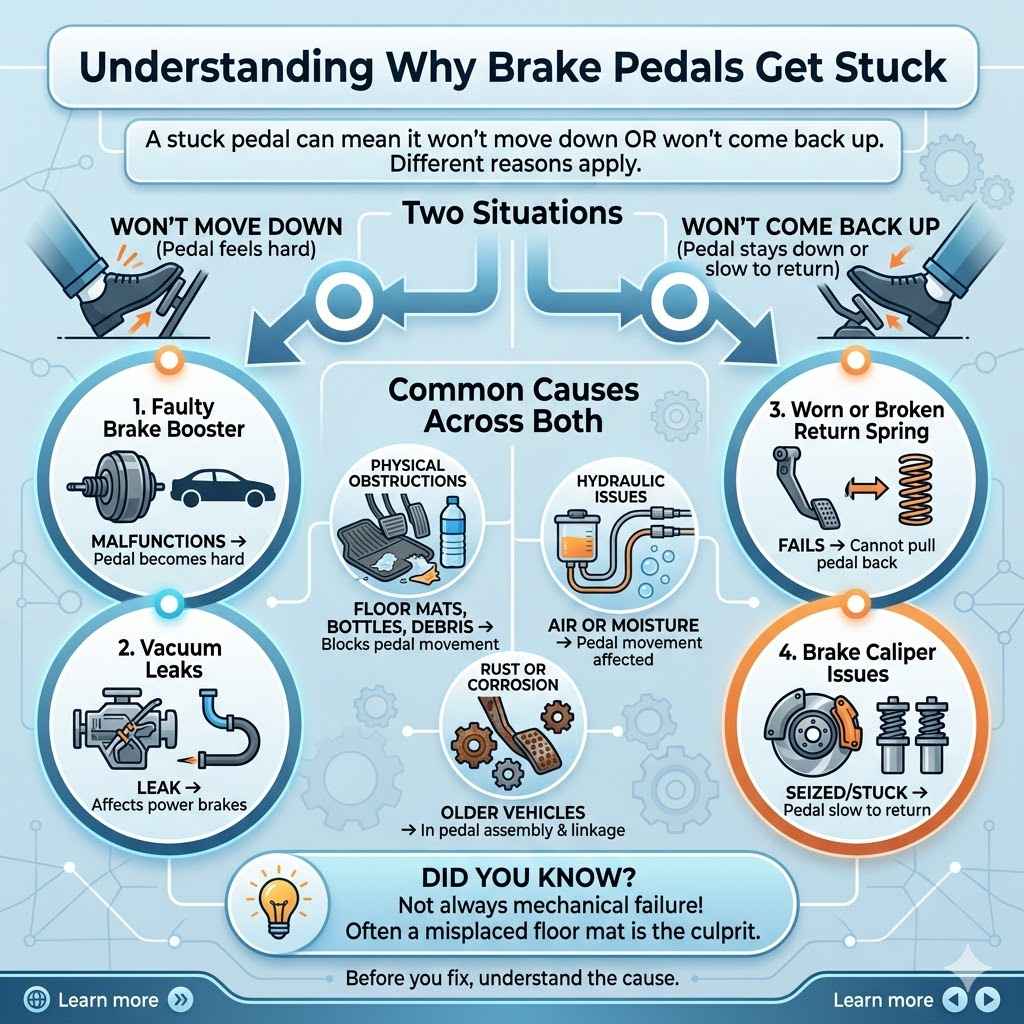
Before you can fix a problem, you need to know what causes it. A stuck brake pedal means that the pedal either won’t move down when you press it or won’t come back up after you release it. These two situations can happen for different reasons.

CLLOMAGY
Brake Pedal Depressor Tool Gas Pedal Depressor…
- A must maintenance tool: Brake pedal depressor tool keeps car/vehicle/truck engine speed at a desired RPM/checking brake lights/ba…
- Extra foot one hand operation: No more waiting for someone to show up to push and hold down on the brake pedal/accelerator pedal/g…
- Secure rubberized foot: Bottom rubberized foot is more non-slip than plastic surface, effectively preventing the shaft from slidin…
As an Amazon Associate I earn from qualifying purchases.
Common causes include:
- Faulty brake booster: If the brake booster malfunctions, the pedal may become hard and won’t depress.
- Worn or broken return spring: This spring helps the pedal return to its normal position after you press it.
- Hydraulic issues: Problems like air or moisture in the brake lines can affect pedal movement.
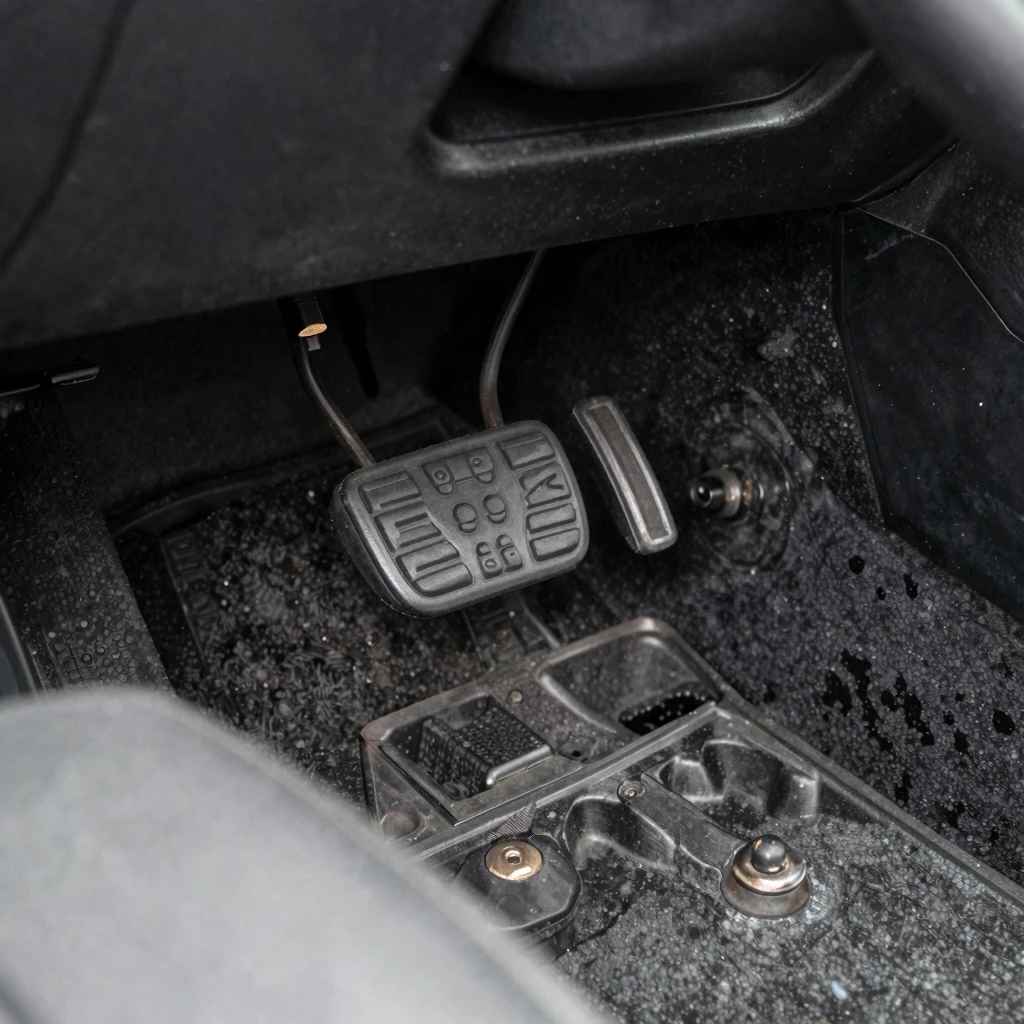
- Physical obstructions: Floor mats, trash, or even water bottles can slide under the pedal.
- Brake caliper issues: Stuck or seized calipers can make the pedal feel stuck or slow to return.
- Rust or corrosion: Older vehicles may have rust around the pedal assembly or linkage.
- Vacuum leaks: Especially in cars with power brakes, a vacuum leak can cause pedal problems.
Most drivers think a stuck pedal always means a mechanical failure, but often, something as simple as a misplaced floor mat is the culprit. Checking for small obstacles can sometimes solve the problem immediately.
What To Do If Your Brake Pedal Is Stuck While Driving
Few things are more frightening than losing control of your brakes while driving. Staying calm and acting quickly is essential. Here’s what you should do, step-by-step:
1. Stay Calm And Focused
Take a deep breath. Panicking can make the situation worse. Focus on controlling the car.
2. Try Lifting The Pedal With Your Foot
Sometimes, a stuck pedal can be freed by gently hooking your toe under the pedal and lifting it. Do this only if you can do it safely and without looking down for too long.
3. Check For Obstructions
Look quickly to see if anything is blocking the pedal, like a floor mat or bottle. If you see something, try to move it out of the way with your foot.
4. Shift To Neutral
If the car keeps moving and the brakes are not working, shift your gear lever into neutral. This will stop the engine from pushing the car forward. In automatic cars, just move the lever to “N”. In manual cars, push the clutch and move to neutral.
5. Apply The Handbrake (parking Brake) Slowly
The parking brake works separately from the main brakes. Pull it up or push it slowly, not suddenly, to help slow the car down. Do not yank it hard, or the car could skid.
6. Look For A Safe Place To Stop
Signal and steer to the side of the road, away from traffic. If you can, aim for a flat, open area.
7. Turn Off The Engine (if Necessary)
If the car won’t stop and you’re out of options, turn off the ignition. But do not remove the key from the ignition, as this can lock the steering wheel in most cars. Just turn the key to “off”, or press and hold the start/stop button if your car has one.
8. Use The Horn And Hazard Lights
Warn other drivers by turning on your hazard lights and honking the horn if you’re unable to stop.
Real Example
In 2022, a driver in California experienced a stuck brake pedal on a busy highway. The cause was a water bottle wedged under the pedal. The driver quickly shifted into neutral, applied the handbrake gently, and guided the car to the shoulder, preventing a serious accident.
What To Do If Brake Pedal Is Stuck When Parked
Sometimes, you notice the brake pedal is stuck before you start driving. This situation is less dangerous, but still needs attention.
- Check for visible obstructions under and around the pedal.
- Pump the pedal gently to see if it frees up.
- Start the car (if it’s not running). Sometimes, the brake booster only works with the engine running.
- Look for warning lights on your dashboard. If you see the brake or ABS light, there may be a system problem.
- Call for help if the pedal won’t move or stays stuck.
Immediate Actions: Do’s And Don’ts
Knowing what not to do is just as important as knowing what to do.
Do’s
- Stay calm
- Signal and steer safely
- Try to free the pedal with your foot
- Use neutral and handbrake as needed
Don’ts
- Don’t stomp the brake pedal repeatedly. This can worsen hydraulic issues.
- Don’t turn off the engine before stopping. If you do, you may lose power steering and brakes.
- Don’t pull the handbrake suddenly. This can cause your wheels to lock and the car to skid.
- Don’t keep driving. Even if the car seems okay, get it checked immediately.
Diagnosing The Cause Of A Stuck Brake Pedal
After you’re safe, it’s important to find out why the brake pedal got stuck. Some problems you can check yourself, while others need a mechanic.
Visual Inspection
- Look for loose floor mats, trash, or objects under the pedal.
- Check the pedal assembly for dirt, rust, or visible damage.
- Inspect brake fluid level in the reservoir. Low fluid may indicate leaks or air in the system.
Testing The Brake System
- Pump the pedal with the engine off, then start the engine. If the pedal sinks, the booster is working.
- Listen for hissing sounds when pressing the brake. This may mean a vacuum leak.
- Look for warning lights on the dashboard.
When To Call A Mechanic
If you find:
- Leaking brake fluid
- Dashboard warning lights
- Pedal remains stuck after removing obstructions
- Strange noises or burning smell
Call a professional immediately.
Most Common Causes Of A Stuck Brake Pedal
To better understand the problem, here’s a breakdown of the most frequent reasons for a stuck brake pedal:
| Cause | How It Feels | Quick Fix |
|---|---|---|
| Obstruction under pedal | Pedal won’t move or springs back slowly | Remove object |
| Brake booster failure | Hard pedal, hard to press down | Check vacuum hose, call mechanic |
| Broken return spring | Pedal stays down after pressing | Needs repair |
| Sticking brake caliper | Pedal slow to return, car pulls to one side | Service required |
| Hydraulic problems | Spongy pedal, poor braking | Bleed brakes, refill fluid |
| Rust/corrosion | Pedal stiff or squeaky | Lubricate, repair if needed |
How To Prevent A Stuck Brake Pedal
Prevention is much easier and safer than dealing with a stuck pedal on the road. Here are some key habits that can help you avoid this problem:
1. Keep Your Car Clean
Remove loose objects and trash from the driver’s side floor area. Heavy floor mats can also slide and block the pedal, so use mats that fit securely.
2. Regular Maintenance
Get your brakes checked every 12,000 miles or once a year, whichever comes first. Ask your mechanic to inspect the pedal assembly, brake lines, and booster.
3. Replace Worn Parts
If you notice the pedal feels different, squeaky, or slow to return, have the return spring or related parts checked.
4. Use The Right Brake Fluid
Always use the type recommended by your car’s manual. Mixing fluids can damage seals and cause pedal problems.
5. Drive Smoothly
Avoid sudden stops and aggressive braking, which can put extra stress on the system.
6. Watch For Warning Signs
Pay attention to changes in pedal feel, noises, or warning lights. Early action can prevent bigger problems.
Data On Brake Pedal Issues
According to the National Highway Traffic Safety Administration (NHTSA), brake problems account for about 22% of all vehicle defects reported each year. Of those, stuck or unresponsive brake pedals make up nearly 8%.
What Happens If You Ignore A Stuck Brake Pedal
It’s tempting to hope the problem will go away, but ignoring a stuck pedal can be dangerous and expensive. Here’s what can happen:
- Increased accident risk: You may not be able to stop in time.
- Damage to other brake parts: Forcing the pedal can damage the master cylinder, booster, or ABS module.
- Legal consequences: Driving a car with known brake issues can lead to fines or legal problems if you cause an accident.
- Higher repair bills: Small problems get worse if left unfixed, leading to more expensive repairs.
When To Call For Roadside Assistance
Sometimes, the safest choice is to get help. Call for roadside assistance if:
- The pedal is still stuck after you stop the car.
- You see leaking fluid under your car.
- The brake warning light is on.
- You feel unsafe driving, even at low speeds.
Roadside professionals can often free a stuck pedal, move your car safely, or tow you to a repair shop.
What To Expect At The Mechanic
If you take your car to a mechanic for a stuck brake pedal, here’s what usually happens:
- Initial Inspection: The mechanic will look at the pedal assembly, floor area, and under the hood.
- Brake System Test: They’ll check the booster, lines, calipers, and master cylinder.
- Fluid Check: Brake fluid level and quality are inspected.
- Test Drive: If safe, the mechanic may drive the car to feel the problem.
- Repair Estimate: You’ll get a list of recommended repairs and costs.
Typical Repair Costs
Here’s a rough comparison of what you might pay for common fixes:
| Repair Needed | Average Cost (USD) | Repair Time |
|---|---|---|
| Remove obstruction | $0–$50 | 5–15 minutes |
| Replace return spring | $80–$200 | 30–60 minutes |
| Fix brake booster | $300–$800 | 2–4 hours |
| Bleed brakes/refill fluid | $60–$150 | 30–60 minutes |
| Replace brake caliper | $250–$500 per wheel | 1–2 hours |
Prices vary by car type and where you live, but knowing the range can help you avoid surprises.
Special Advice For Drivers Of Older Cars
Older vehicles are more likely to have rust, worn springs, or corroded hydraulic lines. If your car is more than 10 years old, check these areas regularly:
- Lubricate the pedal assembly every oil change.
- Check for rust under the dash and along the brake lines.
- Replace rubber brake lines every 5–7 years.
It’s common for older cars to have minor pedal stiffness, but a pedal that won’t move or return is a sign of a bigger problem.
Special Cases: Abs And Electronic Brakes
Modern cars often have ABS (anti-lock braking systems) or electronic brake controls. These systems can sometimes cause the pedal to feel stuck or pulse.
- ABS Activation: If the pedal vibrates or pulses during hard braking, this is normal ABS operation.
- Electronic Brake Hold: Some cars have a feature that holds the brakes automatically. If the pedal stays down after stopping, check if this feature is on.
- System Faults: If warning lights flash, or the pedal stays down for no reason, get the car checked immediately.
Always read your car’s manual to understand special brake features.
Two Non-obvious Insights Most People Miss
1. Moisture In Brake Fluid Can Cause Sticking
Brake fluid absorbs water over time. Even a small amount of moisture can cause corrosion inside the brake lines, leading to a sticky pedal. Most drivers don’t realize they should change brake fluid every 2–3 years, even if there’s no leak.
2. Aftermarket Floor Mats Are A Common Hidden Risk
Many stuck brake pedal cases happen after drivers install new floor mats that don’t fit well. These mats can slide under the pedal, especially if not clipped in place. Always use mats designed for your car model.
What You Should Tell The Mechanic
When you go to a repair shop, clear information helps the mechanic fix your problem faster. Be ready to explain:
- When the pedal got stuck (driving, parked, after rain, etc.)
- What you were doing just before (braking hard, normal driving)
- Any warning lights or noises
- How the pedal feels (hard, soft, won’t move, stays down)
This information can save time and help avoid unnecessary repairs.
How To Test Your Brake Pedal For Problems
You can check your brake pedal at home with these steps:
- With the car off, press the pedal several times. It should get harder each time.
- Start the car while holding the pedal. It should sink a little as the booster kicks in.
- Release and press again. The pedal should move smoothly without sticking or squeaking.
If anything feels wrong, get it checked before driving.
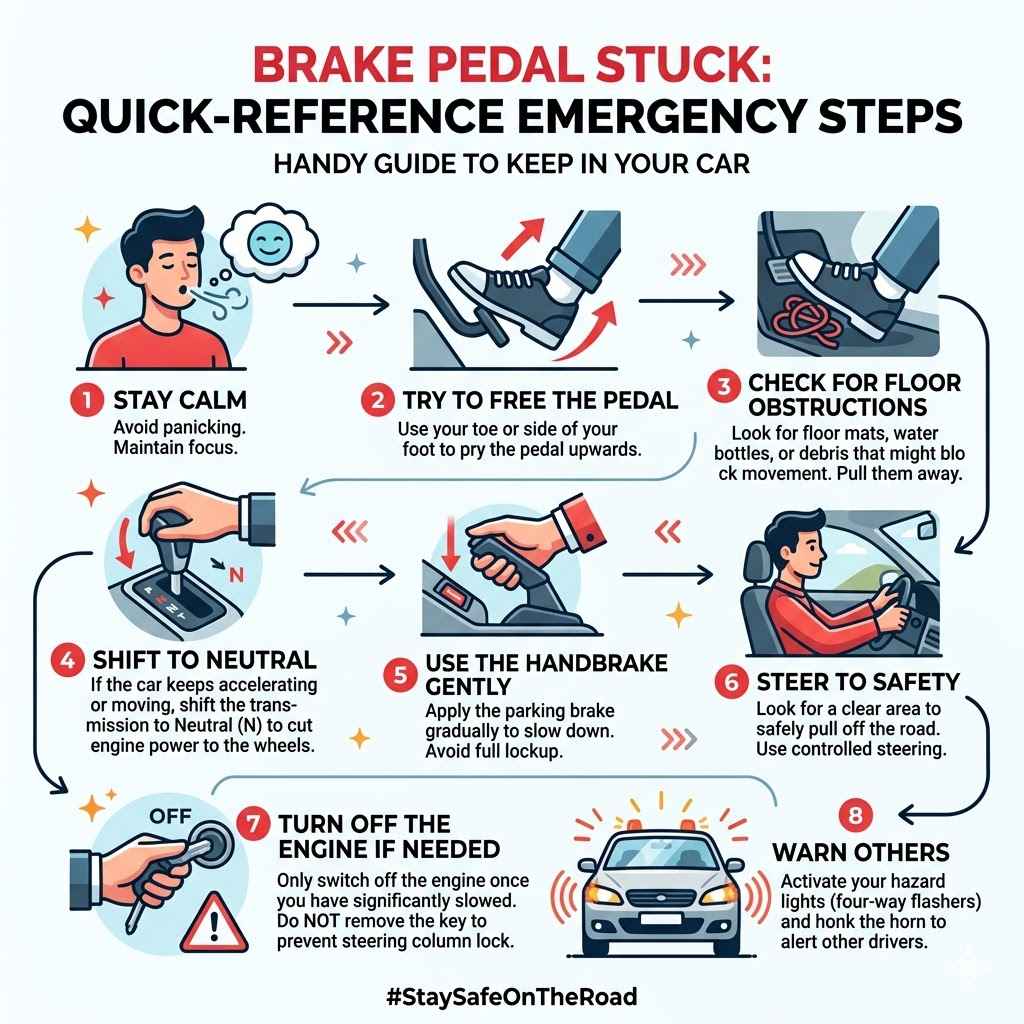
Brake Pedal Stuck: Quick-reference Emergency Steps
Here’s a handy list you can remember or keep in your glove box:
- Stay calm
- Try to free the pedal with your foot
- Check for floor obstructions
- Shift to neutral if the car keeps moving
- Use the handbrake gently
- Steer to safety
- Turn off the engine if needed (but don’t remove the key)
- Warn others with hazards and horn
Frequently Asked Questions
What Is The Most Common Reason For A Brake Pedal To Get Stuck?
The most common cause is something blocking the pedal, like a floor mat or bottle. Other frequent causes include a faulty return spring or brake booster problems.
Is It Safe To Keep Driving If The Brake Pedal Feels Strange But Works?
No. Any change in how your brakes feel means something may be wrong. Stop and get your brakes checked as soon as possible, even if they still work.
How Can I Prevent My Brake Pedal From Getting Stuck In The Future?
Keep the driver’s floor area clear, use only approved floor mats, and get regular brake checks. Change your brake fluid every 2–3 years to avoid moisture build-up.
What If The Pedal Is Stuck And I Can’t Stop The Car?
Shift to neutral, use the handbrake gently, steer off the road, and turn on your hazard lights. If nothing works, turn off the engine (but don’t remove the key). Get help immediately.
Will Insurance Cover Repairs For A Stuck Brake Pedal?
Insurance may cover repairs if the stuck pedal caused an accident, but not usually for normal wear or maintenance. Check your policy and ask your provider for details. For more information on brake system safety, you can visit the NHTSA brake safety page.
A stuck brake pedal can be scary, but with the right steps, you can keep yourself and others safe. Remember, early action and regular maintenance are the best ways to avoid brake problems. If you’re ever unsure, don’t risk it—get your car checked by a professional.
Stay safe on the road! See also can pedal commander cause limp mode what you should know.
Related pick: Check today's price on Amazon
Products related to this article
Sponsored / affiliate links. As an Amazon Associate I earn from qualifying purchases. I may earn additional commission from eligible campaigns.