How Long Do Car Brake Pads Last? Real Mileage Revealed
Car brake pads last between 25,000 and 65,000 miles on most vehicles, but real-world mileage depends heavily on driving habits, vehicle type, and pad material. This guide breaks down the exact factors that determine brake pad wear, gives you specific mileage ranges by pad type, and helps you recognize when it’s time for a replacement.
Simply put, most brake pads need replacement between 25,000 and 65,000 miles. However, your driving style, vehicle weight, and pad compound can shift that range significantly. Check your pads every 10,000 miles for the safest results.
Key Takeaways
Hapleby
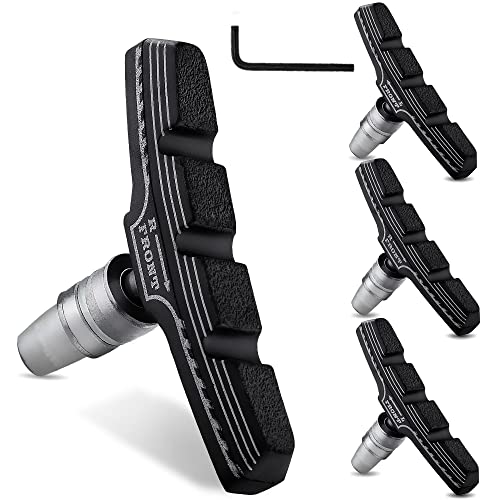
Hapleby 4PCS Premium Bike Brake Pads, Professional…
- 【HARD-WEARING MATERIAL】 The brake pads are made of hyathetic fiber and nitrile rubber, they have supreme durable and long-lasting…
- 【EXPERIMENTAL DATA】 After many experiments we have obtained data, when the vehicle speed is 12.5km/h, it can be used continuously…
- 【HUMANIZE DESIGN】 This brake pads have three while lines. the first line is remind to replace the brake pads, the second line is b…
As an Amazon Associate I earn from qualifying purchases.
- Brake pad lifespan ranges from 25,000 to 65,000 miles depending on material and driving conditions.
- Ceramic pads offer the longest life but cost the most, while organic pads wear fastest.
- How long brake pads last is directly controlled by your driving habits — aggressive braking cuts life in half.
- You should inspect your pads every oil change or roughly every 5,000 to 10,000 miles.
What Factors Determine Brake Pad Lifespan?
The real answer to how long car brake pads last is tied directly to four primary variables. Each one can extend or shorten pad life by thousands of miles.
1. Driving Style and Environment
Your personal driving habits are the #1 factor. According to the National Highway Traffic Safety Administration (NHTSA), drivers who brake aggressively can wear out their pads in as little as 15,000 miles. City driving with stop-and-go traffic generates far more heat and friction than highway cruising.
- Highway commuters: 40,000–65,000 miles
- City drivers (moderate traffic): 25,000–40,000 miles
- Urban delivery vehicles: 15,000–25,000 miles
- Aggressive or hard brakers: 15,000–25,000 miles
- Gentle coasting drivers: 50,000–70,000 miles
Important: The American Automobile Association (AAA) reports that nearly 1 in 5 vehicles on the road have brakes that are worn below safe levels.
2. Vehicle Weight and Size
Heavier vehicles put more stress on the braking system. A 5,000-pound SUV requires the brakes to convert far more kinetic energy into heat than a 2,800-pound sedan. That extra heat accelerates pad wear.
| Vehicle Type | Average Curb Weight | Expected Pad Life |
|---|---|---|
| Compact car (Honda Civic) | 2,800 lbs | 40,000–65,000 miles |
| Midsize SUV (Toyota RAV4) | 3,700 lbs | 30,000–50,000 miles |
| Full-size truck (Ford F-150) | 5,000 lbs | 25,000–40,000 miles |
| Heavy-duty truck (Ram 3500) | 7,500+ lbs | 20,000–35,000 miles |
Heavier vehicles also generate more brake dust, which is a visible sign of wear. The extra mass means you need to plan for more frequent replacements.
3. Brake Pad Material
Not all brake pads wear at the same rate. The material compound is the second-biggest determinant of longevity after driving style.
- Organic pads (made from glass, rubber, and resin): Soft, quiet, but wear fastest. Life: 20,000–40,000 miles.
- Semi-metallic pads (steel fibers and iron powder): Durable and heat-resistant. Life: 30,000–60,000 miles.
- Ceramic pads (ceramic fibers and copper): Longest lasting, low dust, but expensive. Life: 50,000–70,000 miles.
How Do Brake Pads Wear Down Over Time?
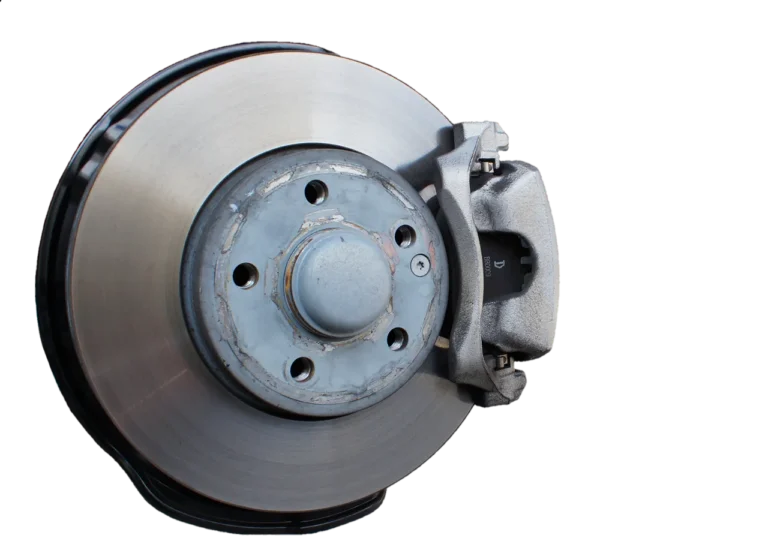
Brake pads operate on a simple friction principle. When you press the pedal, the caliper clamps the pad against the rotor. The resulting friction converts your car’s kinetic energy into heat, which slows the vehicle.
Each application wears away a microscopic layer of pad material. Over thousands of stops, the friction material thins until the pad is unsafe.
Warning: Once the pad wears down to 3mm or less, metal-to-metal contact can occur. This damages your brake rotors and requires a far more expensive repair. Replace pads before they hit 3mm.
The wear pattern is not perfectly linear. Early in a pad’s life, material is thick and wear is relatively slow. As the pad gets thinner, heat transfers more easily to the backing plate, accelerating wear.
This is why pads often seem fine for 30,000 miles and then need replacement within the next 5,000 miles.
- Pad thickness at new: 10–12mm
- 50% worn: 5–6mm (still safe, but plan for replacement)
- Replace soon: 3–4mm
- Immediate replacement: 2mm or less
What Are the Best Types of Brake Pads for Longevity?
If you want the absolute longest life from your car brake pads, ceramic pads are your best choice. However, there are trade-offs with each type that go beyond simple mileage.
Ceramic Pads: The Longest Lasting Option
Ceramic pads use dense ceramic fibers mixed with copper to create a pad that is hard, stable, and far more resistant to wear than organic compounds. They also produce very little dust, keeping your wheels cleaner. The downside is cost — ceramic pads typically run 30–50% more than semi-metallic.
- Average life: 50,000–70,000 miles
- Best for: Daily drivers, luxury vehicles, commuters
- Drawback: Higher cost, can feel less responsive when cold
Semi-Metallic Pads: The Balanced Workhorse
Semi-metallic pads are the most common OEM choice for a reason. They combine steel fibers, iron powder, and graphite to handle higher heat loads without fading. They are cheaper than ceramic and still deliver decent longevity.
- Average life: 30,000–60,000 miles
- Best for: SUVs, trucks, performance cars, heavy use
- Drawback: More noise, more dust, can wear rotors faster
Organic Pads: Affordable but Short-Lived
Organic pads are made from natural fibers like glass, Kevlar, and rubber bonded with resin. They are soft, quiet, and cheap, but they wear down the fastest of any type.
- Average life: 20,000–40,000 miles
- Best for: Economy cars, light use, short commutes
- Drawback: Rapid wear, poor heat dissipation
| Pad Type | Average Life | Noise Level | Cost per Axle |
|---|---|---|---|
| Organic | 20k–40k miles | Low | $20–$40 |
| Semi-Metallic | 30k–60k miles | Medium | $30–$60 |
| Ceramic | 50k–70k miles | Low | $50–$100 |
For most drivers, ceramic pads offer the best long-term value despite the higher upfront cost. The extra 20,000–30,000 miles of life often more than makes up for the price difference.
How to Extend the Life of Your Brake Pads
You don’t have to settle for the shortest possible lifespan. Simple changes to your driving habits and maintenance routine can push your brake pads past the 60,000-mile mark.
- Anticipate stops — Look ahead and coast to a stop rather than braking hard at the last second. Coasting reduces brake pad contact time by 20–30%.
- Use engine braking — On long downhill stretches, downshift to let the engine slow the car. This takes the load off your pads entirely.
- Reduce overall vehicle weight — Remove unnecessary cargo. Every extra 100 pounds increases braking energy requirements by roughly 2%.
- Check brake fluid regularly — Contaminated or low brake fluid can cause drag, where pads remain slightly pressed against the rotor. This accelerates wear even when you aren’t braking.
- Rotor resurfacing during replacement — An uneven rotor surface causes localized hotspots that wear pads faster. Always resurface or replace rotors when you swap pads.
Tip: According to the Brake Manufacturers Council (BMC), drivers who use gentle, progressive braking can extend pad life by up to 50% compared to those who brake hard and late.
How Do You Know When Brake Pads Need Replacing?
Knowing how long car brake pads last is only part of the equation. You also need to recognize the warning signs that your pads are at the end of their service life.
Visual Inspection
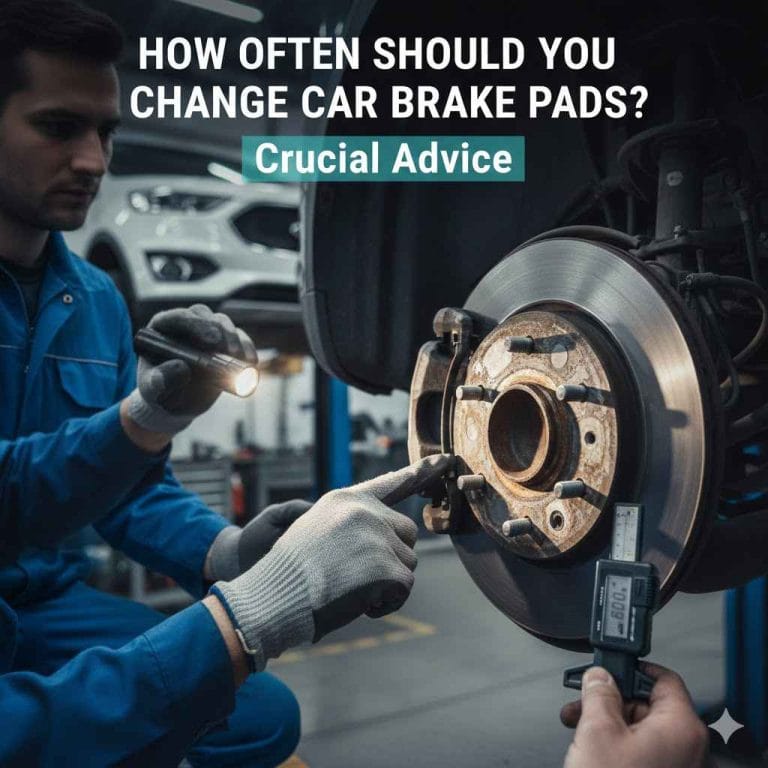
Look through your wheel spokes at the brake caliper. You should see the outer pad pressed against the rotor. If the friction material is 3mm or thinner (about the thickness of a penny), replace the pads immediately.
Audible Warnings: Squealing and Grinding
Most quality brake pads come with a built-in wear indicator — a small metal tab that contacts the rotor when the pad is low. This produces a high-pitched squeal. If you hear grinding or a deep metal-on-metal sound, your pads have already worn through and are damaging the rotors.
- Squealing: Pad material is 3mm or less. Replace soon.
- Grinding: Pad is completely gone. Rotor damage has begun.
- No sound but pedal feels soft: Possible brake fluid issue or glazed pads.
- Vibration in pedal: Warped rotor or uneven pad deposit.
- Pulling to one side: Sticking caliper or uneven pad wear.
| Symptom | Meaning | Urgency |
|---|---|---|
| Squeal | Wear indicator active | Replace within 500 miles |
| Grinding | Pad material gone | Immediate repair |
| Soft pedal | Fluid or air issue | Inspect within 100 miles |
| Vibration | Warped rotor or glazed pads | Moderate urgency |
What Does a Brake Pad Replacement Cost?
Replacement costs vary based on your vehicle type, the pad material you choose, and whether you do the work yourself. According to RepairPal, the average cost for a professional brake pad replacement on a typical sedan ranges from $150 to $300 per axle. Luxury vehicles and trucks can cost $350 to $600 per axle.
- Parts (ceramic pads): $50–$100 per axle
- Labor: $100–$200 per axle at a shop
- DIY cost: $30–$80 per axle
- Total with rotor replacement: $300–$800 per axle
Tip: Replacing pads early (at 3mm) costs far less than waiting until you need new rotors too. Rotor replacement can triple your total bill.
Frequently Asked Questions
How many miles do brake pads last on average?
On average, most car brake pads last between 25,000 and 65,000 miles. The wide range depends primarily on driving conditions, pad material, and vehicle weight. Highway drivers tend to see the longest life.
Do front brake pads wear out faster than rear?
Yes. Front brakes handle 60–70% of the braking force because weight transfers forward during stops. Front pads typically wear out 1.5 to 2 times faster than rear pads.
Expect to replace front pads twice for every one rear replacement.
Can brake pads last 100,000 miles?
In very rare cases, yes. Some drivers with light highway usage and ceramic pads have reported reaching 80,000 to 90,000 miles. However, 100,000 miles is extremely uncommon for any pad type.
Most auto manufacturers recommend inspection well before that point.
How often should I check my brake pads?
Check your brake pads every 10,000 miles or during every oil change. A visual inspection through the wheel spokes only takes a few seconds. If the pad material looks thinner than 3mm, schedule a replacement. For the full breakdown of warning signs and a step-by-step at-home check, see how often your car brakes should be changed.
What happens if I don’t replace worn brake pads?
Driving with worn pads leads to metal-on-metal contact between the caliper and rotor. This damages the rotor and often the caliper itself. The repair cost can jump from $200–$300 for pads alone to $800–$1,200 for pads, rotors, and potentially a caliper replacement.
Final Thoughts
How long car brake pads last is not a fixed number — it is a range shaped by your choices. Stick with ceramic pads for maximum longevity, inspect them every oil change, and adopt gentle braking habits to extend their life. Catching worn pads early saves you money and keeps you safe.
Related pick: Check today's price on Amazon
Products related to this article
Sponsored / affiliate links. As an Amazon Associate I earn from qualifying purchases. I may earn additional commission from eligible campaigns.