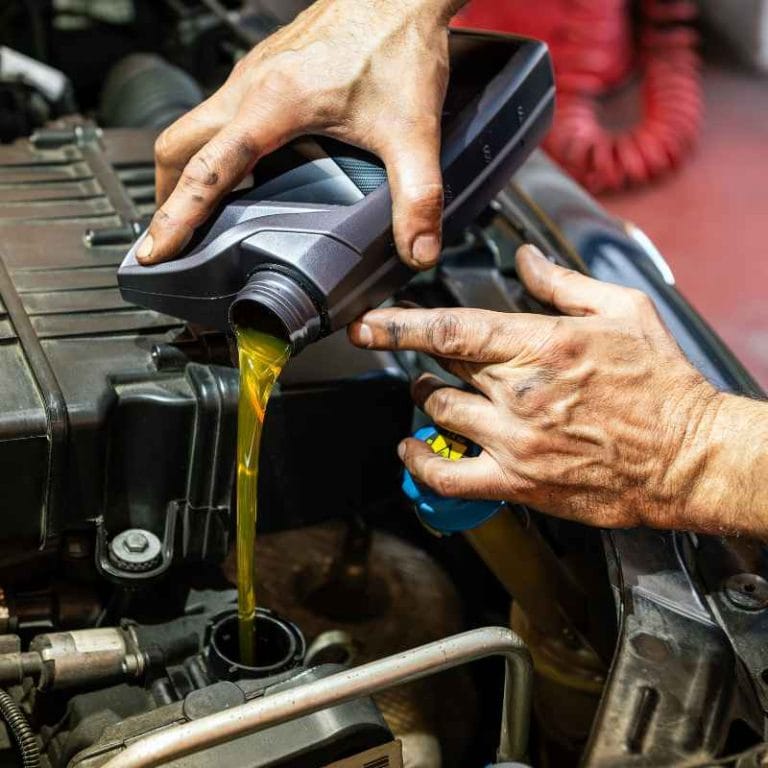
What Car Engine Oil Do I Need? Find the Right Type Fast
Finding what car engine oil you need can feel overwhelming with so many viscosity grades, synthetic blends, and certification labels on store shelves. This guide cuts through the confusion so you can pick the exact oil your engine requires and avoid costly damage.
In short, the right car engine oil for your vehicle is determined by your owner’s manual — specifically the recommended SAE viscosity grade (like 5W-30 or 0W-20) and the API/ILSAC certification. Use that spec, and you can’t go wrong.
Key Takeaways
- Your owner’s manual is the only reliable source for the correct car engine oil viscosity, specification, and capacity.
- Viscosity grades like 5W-30 or 0W-20 indicate how the oil flows in cold vs. hot temperatures — always follow your manufacturer’s recommendation.
- Synthetic oil is better for modern engines and extreme temperatures, but conventional oil works fine for older, low-mileage vehicles.
- API “S” and “C” service ratings ensure the oil meets current industry standards for gasoline and diesel engines respectively.
- Using the wrong oil can reduce fuel economy, increase wear, and void your warranty — always double-check before pouring.
Why Choosing the Right Car Engine Oil Matters
Choosing the wrong car engine oil is one of the most common DIY maintenance mistakes. It can lead to reduced lubrication, increased friction, overheating, and even premature engine failure.
Engine oil does more than lubricate. It cleans internal components, reduces heat buildup, prevents corrosion, and seals gaps between piston rings and cylinder walls. Each engine is designed around a specific oil type, and using the wrong one throws off that balance.
Here are the key consequences of using the wrong oil:
- Increased engine wear: Too thin and oil won’t protect bearing surfaces. Too thick and it won’t flow to critical parts at startup.
- Reduced fuel economy: The wrong viscosity creates extra drag, forcing the engine to work harder and burn more fuel.
- Sludge buildup: Incorrect oil may lack proper detergents to keep deposits suspended and removed during changes.
- Overheating: Oil that can’t handle your engine’s operating temperature will break down and lose its cooling ability.
- Voided warranty: Modern manufacturers require specific oil standards — using unapproved oil can void your powertrain warranty.
- Failed emissions tests: Wrong oil can cause increased oil consumption and incomplete combustion, hurting emissions.
- Clogged oil passages: Thick or degraded oil can block narrow oil galleries, starving critical components of lubrication.
According to the American Petroleum Institute (API), using oil that doesn’t meet your engine’s service category can reduce engine life by up to 50% in severe cases. That’s why getting it right matters more than most drivers realize.
Warning: Never rely on what the previous owner used or what a friend recommends. Always verify with your owner’s manual or the manufacturer’s official website. One wrong oil change can cost thousands in repairs.
What Do the Numbers on Oil Mean? Viscosity Explained
The numbers on an oil bottle — like 5W-30 or 10W-40 — represent the oil’s viscosity grade, defined by the Society of Automotive Engineers (SAE). Viscosity is how thick or thin the oil is, and it changes with temperature.
The first number, followed by a “W” (winter), indicates the oil’s flow at low temperature. The lower this number, the better the oil flows in cold weather. The second number (after the dash) shows how the oil flows at engine operating temperature (100°C / 212°F).
A higher second number means thicker oil at high temperatures.
Here’s what common viscosity grades mean in plain terms:
| Viscosity Grade | Cold Flow (Winter) | Hot Protection | Typical Use |
|---|---|---|---|
| 0W-20 | Excellent | Moderate | Modern gas engines, hybrids, fuel-economy focused |
| 5W-30 | Very good | Good | Most common for cars & trucks, moderate climates |
| 10W-30 | Good | Good | Older engines, warmer climates |
| 5W-40 | Very good | Very good | European cars, turbo engines, high-performance |
| 15W-40 | Fair | Excellent | Diesel engines, heavy-duty, hot climates |
Most modern passenger vehicles use 0W-20, 5W-30, or 0W-16. If you live in a very cold region, a lower winter rating (0W) helps with cold starts. In hot climates, a higher hot rating ensures protection at high temperatures.
Tip: If you live in an area with extreme seasonal temperature swings, consider a multi-grade oil like 0W-40 or 5W-40. These offer wide temperature range and year-round performance without needing seasonal changes.
How to Check Your Owner’s Manual for the Correct Oil
The fastest way to find the right car engine oil is to open your glove box and pull out the owner’s manual. Every manufacturer prints the exact viscosity grade, API certification, and capacity for your specific engine.
If you don’t have the physical manual, most automakers offer free digital copies on their websites. You can also use the oil selector tool on brands like Mobil 1, Valvoline, or Castrol — just enter your vehicle’s year, make, model, and engine size.
Here’s what to look for in your manual:
- Look for the “Lubrication” or “Engine Oil” section — it’s usually under maintenance or specifications.
- Find the SAE viscosity grade — something like “SAE 5W-30 is recommended.” This is the most important number.
- Check the API certification — look for “API SN,” “API SP,” or “ILSAC GF-6” for modern gasoline engines.
- Note the oil capacity — this tells you how many quarts or liters to buy (usually 4-6 quarts for most cars).
- Check if synthetic oil is required — many modern turbo engines mandate full synthetic, not conventional.
According to a 2023 survey by the Car Care Council, nearly 40% of drivers never consult their owner’s manual for oil specifications. That’s a mistake that leads to thousands of preventable engine repairs each year.
Important: If you drive a hybrid or turbocharged vehicle, pay extra attention. Hybrids often require low-viscosity oil (0W-16 or 0W-20) for fuel economy, and turbo engines need synthetic oil to handle higher heat and prevent carbon buildup.
What Are the Different Types of Engine Oil?
Not all car engine oil is created equal. There are four main types, each formulated for different engine designs, driving conditions, and budgets. Choosing the right type matters just as much as choosing the right viscosity.
Here’s a breakdown of each oil type and when to use it:
- Conventional (mineral) oil: Refined from crude oil, this is the cheapest option. Works well for older engines with simple designs and low mileage. Needs more frequent changes (every 3,000-5,000 miles).
- Synthetic oil: Chemically engineered for superior performance. Flows better in cold weather, resists breakdown at high temperatures, and lasts longer (up to 10,000-15,000 miles). Recommended for most modern engines, especially turbocharged ones.
- Synthetic blend: A mix of conventional and synthetic oils. Offers better protection than conventional at a lower price than full synthetic. Good for light trucks and SUVs under moderate use.
- High-mileage oil: Designed for engines with over 75,000 miles. Contains seal conditioners to reduce leaks, detergents to clean sludge, and higher viscosity to protect worn bearings and rings.
| Feature | Conventional | Synthetic | Synthetic Blend | High-Mileage |
|---|---|---|---|---|
| Cost per quart | $4-$8 | $8-$15 | $6-$11 | $7-$14 |
| Change interval | 3k-5k miles | 7.5k-15k miles | 5k-7.5k miles | 5k-7.5k miles |
| Cold start protection | Fair | Excellent | Good | Good |
| High-temp stability | Moderate | Excellent | Good | Good |
| Best for engines | Older, low-mileage | Modern, turbo, performance | Light trucks, daily drivers | Over 75k miles |
Most automakers now recommend synthetic or synthetic blend for cars built after 2010. If your manual says “synthetic recommended,” don’t substitute conventional oil — your turbo or direct-injection engine needs the extra protection.
What Does API and ILSAC Certification Mean?
When you buy car engine oil, you’ll see a donut-shaped symbol on the back of the bottle. That’s the API Service Symbol, and it tells you the oil meets current industry standards for your engine type.
API stands for the American Petroleum Institute, which sets minimum performance standards for engine oil. ILSAC (International Lubricant Standardization and Approval Committee) is a joint standard between American and Japanese automakers. Both ensure the oil provides adequate wear protection, deposit control, and fuel economy.
Here’s what the API letters mean:
- API “S” (Service): For gasoline engines. Current standards are API SP (2020+) and API SN (2010+). SP offers better protection against low-speed pre-ignition (LSPI) and timing chain wear — critical for modern turbo engines.
- API “C” (Commercial): For diesel engines. Current standards include CK-4 and FA-4 for heavy-duty diesels, and CJ-4 for older models.
- ILSAC GF-6: The latest standard for passenger cars, replacing GF-5. Focuses on fuel economy, emission system protection, and compatibility with ethanol-blended fuels.
According to API, using oil that meets the correct service category can improve fuel economy by up to 2% compared to older, non-compliant oils. That might not sound huge, but over the life of your vehicle, it adds up.
Tip: Always look for the API “Starburst” certification mark (donut shape) on the bottle. If the oil doesn’t have it, don’t buy it — even if the viscosity grade matches. The certification guarantees it meets modern engine protection standards.
How to Choose Between Synthetic vs Conventional Oil
The decision between synthetic and conventional car engine oil comes down to three factors: your engine’s requirements, your driving conditions, and your budget. For most modern cars, synthetic oil is the better choice, but there are exceptions.
Synthetic oil is engineered with uniform molecular chains, making it more stable than conventional oil. It resists oxidation, handles extreme temperatures better, and maintains its viscosity longer. Conventional oil, while cheaper, breaks down faster and leaves more deposits behind.
Here’s a side-by-side comparison to help you decide:
| Factor | Synthetic Oil | Conventional Oil |
|---|---|---|
| Engine type | Modern, turbo, performance, luxury | Older, low-compression, non-turbo |
| Driving conditions | Extreme cold or heat, heavy traffic, towing | Mild climates, short trips, low load |
| Change interval | 7,500-15,000 miles | 3,000-5,000 miles |
| Cost per change | $50-$90 (DIY) | $25-$45 (DIY) |
| Fuel economy benefit | 1-3% improvement | Baseline |
| Warranty requirements | Often required for new cars | Rarely sufficient for modern engines |
Consumer Reports tested synthetic vs. conventional oil in identical engines over 50,000 miles. Synthetic oil reduced engine wear by up to 40% and maintained better viscosity stability throughout the change interval.
For most drivers, the extra cost of synthetic is offset by longer oil change intervals and better engine longevity.
If you drive an older car with 100,000+ miles that has always used conventional oil, switching to synthetic isn’t dangerous — but use a high-mileage synthetic blend to avoid potential seal shrinkage and leaks.
What Happens If You Use the Wrong Oil?
Using the wrong car engine oil isn’t always catastrophic — but it can be. The severity depends on how far off you are from the recommended viscosity and certification. Minor variations cause reduced performance; major errors can destroy your engine.
Here are the most common problems caused by incorrect oil choice:
- Too thin (e.g., 0W-20 instead of 5W-30): Oil film breaks down under high heat, causing metal-on-metal contact. You’ll hear ticking, knocking, and see low oil pressure warnings.
- Too thick (e.g., 10W-40 instead of 5W-30): Oil doesn’t flow well at startup, causing dry starts and accelerated wear. Fuel economy drops by 2-5%.
- Wrong certification (e.g., API SL instead of API SP): Older oils lack detergents to handle modern direct-injection soot, leading to sludge and carbon buildup on intake valves.
- Diesel oil in a gas engine: Diesel oil contains higher levels of ash and additives that can foul catalytic converters and oxygen sensors in gasoline engines.
- Conventional oil in a turbo engine: Turbochargers run extremely hot. Conventional oil breaks down faster, leading to coked oil passages and turbo bearing failure.
Warning: If you accidentally put the wrong oil in your engine, don’t drive it. Have the oil drained and replaced with the correct type immediately. Even one heat cycle with the wrong oil can cause lasting damage to bearings and seals.
A study from the Society of Automotive Engineers (SAE) found that using 10W-40 in an engine designed for 5W-30 increased engine wear by 35% over 50,000 miles. The thicker oil caused slow circulation at cold starts, which is when most engine wear occurs.
How Often Should You Change Your Oil?
The old rule of “every 3,000 miles” is outdated for most modern cars. Thanks to better oil formulations and advanced engine designs, many vehicles can go 7,500 to 15,000 miles between changes. But the right interval depends on your oil type and driving habits.
Here’s how to determine your change interval:
- Check your owner’s manual — look for the “severe service” schedule vs. “normal service.” Severe service includes short trips, extreme temperatures, towing, dusty roads, and frequent stop-and-go driving.
- Use the manufacturer’s oil life monitor — many modern cars have an oil life indicator that calculates remaining life based on engine temperature, RPM, and driving patterns. Don’t reset it until it tells you to.
- Match interval to oil type: Conventional oil: 3,000-5,000 miles. Synthetic blend: 5,000-7,500 miles. Full synthetic: 7,500-15,000 miles.
According to the Automotive Oil Change Association, the average oil change interval in the U.S. is now 7,500 miles for vehicles using synthetic oil. That’s a significant shift from the 3,000-mile standard of the 1990s.
If you mostly drive short trips (under 10 miles) or live in extreme climates, stick to the severe service schedule — usually 5,000 miles for synthetic. If you do mostly highway cruising, you can safely extend intervals to the maximum recommended.
Tip: Keep a log of your oil changes, including date, mileage, oil type, viscosity, and brand. This helps you track intervals and provides documentation if you ever sell the vehicle — buyers love seeing a detailed maintenance history.
Frequently Asked Questions
Can I switch from conventional to synthetic oil?
Yes, you can switch from conventional to synthetic oil at any mileage. For engines over 75,000 miles, consider a high-mileage synthetic blend first to avoid leaks from seal shrinkage. Full synthetic offers better protection and longer intervals.
What happens if I put 5W-30 instead of 5W-20?
Using 5W-30 instead of 5W-20 will reduce fuel economy slightly (1-3%) and may cause slightly slower oil flow at cold startup. In most engines, it won’t cause immediate damage, but long-term use can increase wear on tight-clearance components like variable valve timing actuators.
Is synthetic oil worth the extra cost?
Yes, for most modern engines. Synthetic oil provides superior protection, longer change intervals, better cold-start performance, and improved fuel economy. Over 100,000 miles, the extra cost is typically offset by fewer oil changes and reduced engine wear.
How do I know if my car needs high-mileage oil?
Switch to high-mileage oil once your engine passes 75,000 miles, especially if you notice oil leaks, smoking, or increased oil consumption. High-mileage oils contain seal conditioners, detergents, and viscosity boosters that address the common issues of aging engines.
Can I mix different brands of engine oil?
Yes, you can mix brands as long as both meet the same viscosity grade and API certification. Mixing brands won’t harm your engine, but it’s best to use the same oil for a full change interval. Topping off with a different brand is perfectly fine for emergencies.
Final Thoughts
Choosing the right car engine oil doesn’t have to be complicated — your owner’s manual holds all the answers. Stick to the recommended viscosity grade, API certification, and oil type, and your engine will stay protected for hundreds of thousands of miles. Whether you choose synthetic or conventional, always buy from a reputable brand and stick to a consistent change schedule.
A little attention to oil selection saves big money on repairs down the road.
Products related to this article
Sponsored / affiliate links. As an Amazon Associate I earn from qualifying purchases. I may earn additional commission from eligible campaigns.