Why Can’t I Pedal Forward on My Bike? Top Causes Explained
Riding a bike should feel smooth and natural, but sometimes, you hop on and find that you simply can’t pedal forward. This is both confusing and frustrating, especially if you’re not sure what’s going wrong. You push on the pedals, but the bike doesn’t move, or you feel resistance, a grinding sensation, or even a total lock-up. Understanding why this happens will not only help you fix your bike, but also prevent further damage and keep you safe on the road.
In this article, you’ll discover all the main reasons why you might not be able to pedal forward, how to diagnose the issue, and what you can do about it. We’ll look at both simple and complex causes, from chain issues to problems inside your bike’s transmission.
You’ll also learn some tips that even experienced cyclists sometimes overlook. By the end, you’ll be able to identify what’s wrong with your bike and know how to fix it—or whether it’s time to visit a professional.
How A Bike’s Pedaling System Works
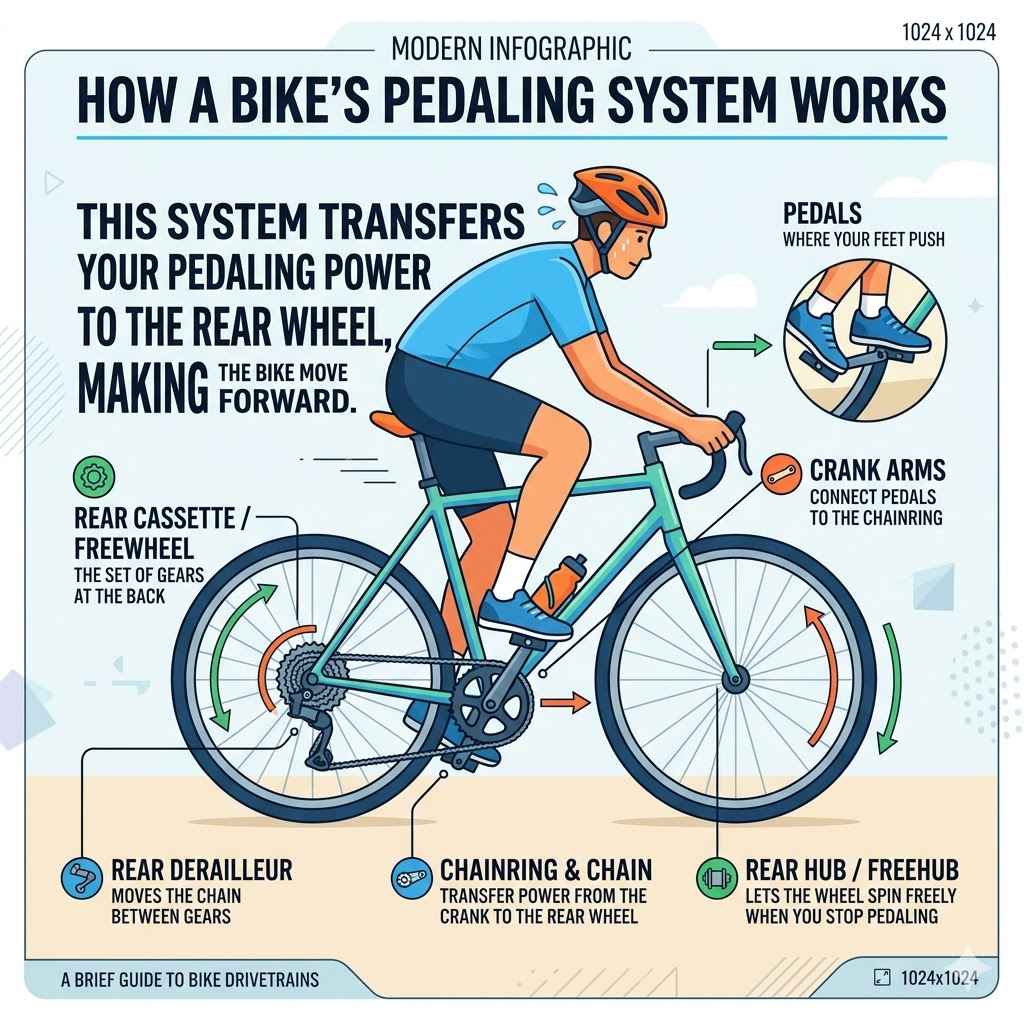
Before you can solve the problem, it’s important to know how the bike’s drivetrain works. This system transfers your pedaling power to the rear wheel, making the bike move forward. The main parts involved are:
- Pedals: Where your feet push.
- Crank arms: Connect pedals to the chainring.
- Chainring and chain: Transfer power from the crank to the rear wheel.
- Rear cassette/freewheel: The set of gears at the back.
- Derailleur: Moves the chain between gears.
- Rear hub/freehub: Lets the wheel spin freely when you stop pedaling.
If any part here fails, the pedals might stop turning, feel stuck, or spin without engaging the wheel. Let’s look at what might go wrong.
Common Causes: Why You Can’t Pedal Forward
Many different things can make it impossible or very hard to pedal forward. Below are the most common causes, what they feel like, and how to check for them.
1. Chain Problems
The chain is the link between your pedaling and the wheel. If there’s a problem with the chain, you might not be able to pedal at all.
- Chain is off the chainring or cassette: The chain has slipped off. When you press the pedal, nothing happens.
- Chain is jammed: The chain gets stuck between gears or other parts, locking the pedals.
- Broken chain: The chain has snapped and can’t transfer power.
Tip: Sometimes a chain looks fine but is actually twisted or bent, making it hard to pedal smoothly.
2. Rear Derailleur Issues
The rear derailleur is responsible for moving the chain across different gears. Problems here can stop the pedals.
- Derailleur bent into the wheel: This can physically block the chain from moving.
- Derailleur cage jammed: Sticks or debris can get trapped, stopping movement.
- Derailleur misaligned: Shifting might not work, causing chain jams.
A less obvious issue: a bent derailleur hanger can cause the derailleur to sit too close or too far from the cassette, causing unpredictable jams.
3. Cassette Or Freewheel Malfunction
The cassette or freewheel contains the gears at the back. Inside, small parts called “pawls” allow the wheel to turn freely when you stop pedaling, but lock when you pedal forward.
- Freewheel/freehub seized: The mechanism is stuck. Pedals can’t move or are extremely hard to turn.
- Pawls stuck or broken: Pedals spin but don’t move the wheel (“ghost pedaling”).
A sign of this problem: the bike rolls backward, but the pedals also turn backward with the wheel.
4. Bottom Bracket Problems
The bottom bracket is the bearing system that lets your crank arms spin smoothly. If it fails:
- Seized bearings: Pedals won’t move or are extremely stiff.
- Loose or broken bearings: Pedals feel wobbly or make grinding noises.
5. Crankset Issues
The crankset includes the crank arms and chainring. Problems here are less common, but possible.
- Crank arm loose or stripped: The pedal arm rotates without turning the chainring.
- Chainring bent or broken: The chain can’t stay on, causing jams.
6. Rear Wheel Or Hub Problems
The rear hub contains the freehub/freewheel. If the hub has internal damage:
- Axle is bent or broken: Wheel can’t turn, stopping the drivetrain.
- Hub bearings seized: Rear wheel won’t spin, so you can’t pedal.
7. Foreign Objects Or Debris
Small rocks, sticks, or even clothing can get caught in the drivetrain. These can jam the chain, derailleur, or gears.
- Objects caught in chain/cassette: Pedals won’t move.
- Debris in derailleur: Can cause sudden lock-up.
Unexpected: Sometimes, a rear light strap or a shoelace gets tangled in the cassette, causing immediate stoppage.
8. Gear Shifting Mistakes
If you try to shift gears under heavy load or at the wrong moment, the chain can slip, get stuck, or even snap.
- Cross-chaining: Using big ring front and big ring back (or small-small) stresses the chain.
- Shifting while standing still: Chain can jam between gears.
9. Internal Gear Hub Failure
Some bikes use an internal gear hub (like Shimano Nexus or Rohloff). If these systems fail:
- Hub stuck in gear: Pedals won’t move or are extremely stiff.
- Internal mechanism broken: Pedals spin, but bike doesn’t move.
10. Brake-related Problems
If a brake pad, cable, or rotor is stuck against the wheel, it can make pedaling very hard or impossible.
- Brake caliper jammed: Wheel doesn’t turn, so pedals can’t move.
- Disc brake rotor bent: Stays pressed against the pad, causing lock-up.
11. Frame Or Dropout Damage
Rare, but if the frame is bent or a dropout (where the wheel attaches) is damaged, the wheel may not sit correctly, causing jams.
- Bent dropout: Rear wheel presses against the frame, causing stoppage.
- Frame crack near bottom bracket: Can misalign drivetrain.
12. Pedal Or Crank Arm Damage
A damaged pedal or crank arm can sometimes stop movement, especially if a pedal bearing seizes or the crank threads strip.
13. Internal Rust And Corrosion
Water and dirt can get inside your bike’s parts. Over time, rust forms, which can seize the chain, bottom bracket, or other moving parts.
- Rusty chain or gears: Stiff links, hard to pedal.
- Rust inside hub or bottom bracket: Complete lock-up.
14. Manufacturer Or Assembly Defect
Especially for new bikes or recent repairs, an incorrectly assembled part can prevent pedaling.
- Incorrect chain length: Too short or too long causes jams.
- Improper derailleur adjustment: Chain can’t move through all gears.
Diagnosing The Problem: Step-by-step Guide
Fixing the issue starts with finding the real cause. Here’s how to diagnose why you can’t pedal forward.
Step 1: Visually Inspect The Drivetrain
Start by looking at the chain, cassette, derailleur, and crankset. Is the chain on the gears or has it fallen off? Are there any obvious bends, breaks, or objects stuck?
Step 2: Try Rotating The Pedals Backward
Does the chain move smoothly when you turn the pedals backward? If not, there may be a chain jam, derailleur problem, or seized freewheel.
Step 3: Lift The Rear Wheel And Spin
Lift the bike so the rear wheel is off the ground. Try spinning the pedals forward.
- If the pedals move but the wheel doesn’t, suspect a freehub or internal gear hub problem.
- If the wheel is hard to spin, check for brake or hub issues.
Step 4: Check The Gears And Shifters
Shift through all the gears. Do you hear grinding, skipping, or does the chain get stuck? If so, the derailleur or cassette may be at fault.
Step 5: Inspect For Foreign Objects
Look for small rocks, sticks, or clothing caught in the drivetrain. Don’t forget to check between the cassette and the spokes.
Step 6: Examine The Frame And Dropouts
Look for cracks, bends, or damage where the rear wheel attaches. A misaligned frame can cause drivetrain lock-up.
Step 7: Feel For Resistance
If the pedals are very hard to move, suspect bearing or bottom bracket issues. If they spin freely but don’t engage, suspect a freewheel/freehub problem.
Step 8: Listen For Unusual Noises
Grinding, clicking, or crunching sounds can help locate the problem. Each part has a unique sound when it fails.
How To Fix Common Pedaling Problems
Once you’ve found the cause, here’s how to fix each problem. Some are DIY-friendly; others need a bike shop.
Fixing Chain Issues
- Chain off: Put the chain back on the chainring and cassette. Use gloves to avoid grease.
- Chain jammed: Remove jammed debris. Gently wiggle the chain free.
- Broken chain: Replace with a new chain or use a quick-link.
Pro tip: Always carry a spare quick-link and a small chain tool when riding.
Fixing Derailleur Problems
- Bent derailleur: Straighten gently by hand, or visit a shop for precise alignment.
- Debris: Clear any sticks, leaves, or mud.
- Misaligned hanger: Use a derailleur hanger alignment tool.
Fixing Cassette Or Freewheel Problems
- Seized freewheel: Try spraying a small amount of lubricant into the freewheel and rotate. If it doesn’t free up, replacement is needed.
- Ghost pedaling: Replace the freehub body or cassette.
Fixing Bottom Bracket And Crankset Issues
- Seized bottom bracket: Replace the bottom bracket.
- Loose crank arm: Tighten bolts with the correct tool.
- Bent chainring: Straighten with a chainring tool or replace.
Fixing Rear Hub Or Wheel Issues
- Bent axle: Replace the axle or entire wheel.
- Seized hub bearings: Clean and repack with grease, or replace bearings.
Fixing Brake-related Problems
- Jammed caliper or rotor: Realign caliper or replace bent parts.
- Brake cable stuck: Lubricate or replace cable.
Fixing Internal Gear Hub Problems
- Stuck hub: Sometimes can be freed with lubrication, but often needs expert repair.
Fixing Frame Or Dropout Damage
Frame and dropout repairs usually require a professional. Riding with a damaged frame is dangerous.
Fixing Pedal Or Crank Arm Damage
Replace damaged pedals or crank arms. Don’t ignore a wobbly pedal; it can damage the crank further.
Fixing Rust And Corrosion
- Light rust: Clean with a wire brush and apply lubricant.
- Heavy rust: Replace affected parts.
Fixing Assembly Or Manufacturer Defects
Bring the bike to the shop where you bought it, or to a trusted mechanic. Do not ride until the defect is fixed.
Preventing Future Pedal Problems
Regular maintenance and a few simple habits can prevent most pedaling issues. Here’s what you can do:
- Clean and lubricate your chain every 100-200 miles, or after riding in wet conditions.
- Inspect your drivetrain for wear, rust, or damage once a month.
- Check gear shifting before each ride. Adjust if necessary.
- Keep your bike clean. Mud and debris cause most jams.
- Avoid cross-chaining to reduce stress on the chain.
- Get your bike serviced by a professional at least once a year.
- Check for loose bolts on the crankset and pedals.
- Replace parts at the first sign of serious wear.
Data Comparison: Common Causes And Diy Fix Difficulty
To help you understand which problems are easy to fix and which require a shop, here’s a comparison.
| Cause | DIY Fix Difficulty | Tools Needed |
|---|---|---|
| Chain off or jammed | Easy | Gloves, sometimes pliers |
| Derailleur problem | Medium | Hex keys, screwdriver |
| Seized freehub/freewheel | Hard | Special puller, lubricant |
| Bottom bracket failure | Hard | Bottom bracket tool |
| Brake jam | Easy to Medium | Hex keys, alignment tool |
Data Comparison: Signs And Symptoms By Problem
Understanding what each problem feels like can save you time. Here’s a table of symptoms and likely causes.
| Symptom | Likely Cause |
|---|---|
| Pedals spin but wheel doesn’t move | Freehub/freewheel failure |
| Pedals won’t move at all | Chain jam, seized bottom bracket, brake jam |
| Grinding or crunching noise | Bearing failure, derailleur issue |
| Chain keeps falling off | Misaligned derailleur, bent chainring |
| Pedals wobbly or loose | Loose crank arm, pedal damage |
What Beginners Often Miss
Many new riders look only at the chain and pedals, missing less obvious causes like freehub problems or derailleur hanger alignment. Another common mistake is assuming a stiff pedal means a chain issue, when it’s often a bearing or brake problem.
Non-obvious insight: If your pedals are spinning but not engaging the wheel, the freewheel mechanism inside the rear hub is likely at fault—a part many riders don’t even know exists.
Another tip: Don’t ignore small noises or slight resistance changes. These are early signs that something is wearing out, and fixing them early is much cheaper than waiting for a complete failure.
When To Visit A Bike Shop
While some problems are easy to fix at home, others need special tools or experience. Visit a bike shop if:
- You hear grinding from the bottom bracket or hub.
- The chain keeps slipping despite adjustments.
- You suspect a frame or dropout issue.
- The pedals or crank arms are loose and you can’t tighten them.
- The problem returns after a simple fix.
Bike shops can diagnose and repair complex internal hub, freehub, or frame issues. This not only saves you time, but also prevents more expensive damage.
Real-world Example: Freehub Failure
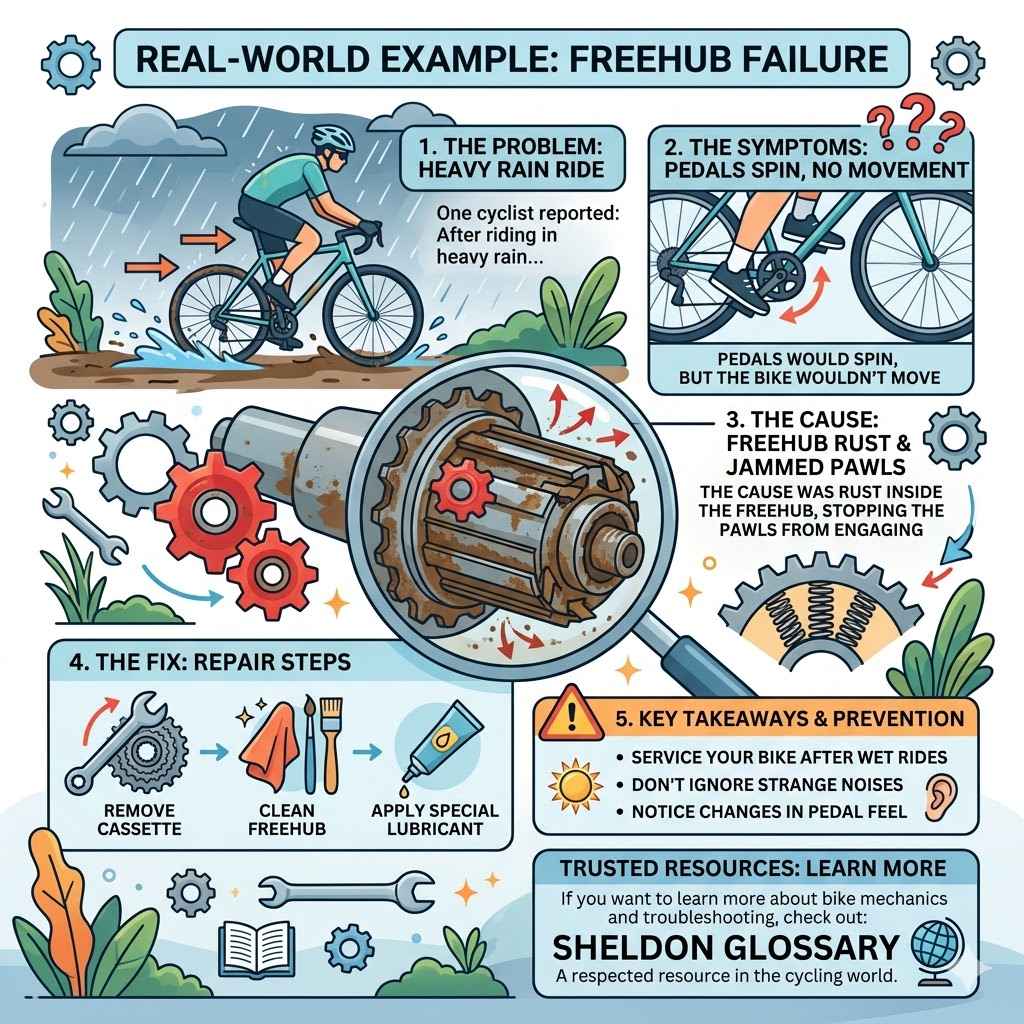
One cyclist reported that after riding in heavy rain, their pedals would spin, but the bike wouldn’t move. The cause was rust inside the freehub, stopping the pawls from engaging. The fix required removing the cassette, cleaning the freehub, and applying special lubricant. This is a good reminder to service your bike after wet rides and not ignore strange noises or changes in how your pedals feel.
Trusted Resources
If you want to learn more about bike mechanics and troubleshooting, check out this Sheldon Brown Glossary, a respected resource in the cycling world.
Frequently Asked Questions
Why Do My Pedals Spin But The Bike Doesn’t Move?
This usually means the freehub or freewheel is not engaging. The internal pawls may be stuck, broken, or clogged with dirt, so pedaling does not turn the wheel.
Can A Stuck Brake Make It Impossible To Pedal?
Yes. If a brake caliper or disc rotor is jammed against the wheel, it can create so much friction that pedaling becomes extremely difficult or impossible.
How Can I Tell If My Bottom Bracket Is Broken?
Signs of a broken bottom bracket include grinding noises, very stiff pedals, or the crank arms wobbling side to side. If you feel strong resistance or hear crunching, the bearings may be seized.
What Should I Do If My Chain Keeps Falling Off?
Check for a bent derailleur hanger, misaligned derailleur, or worn chainring teeth. Replace any bent or damaged parts, and make sure the derailleur moves smoothly through all gears.
Is It Safe To Ride If My Pedals Feel Stiff But Still Turn?
No. Stiff pedals often mean a bearing or bottom bracket problem. Riding can cause more damage or even a sudden lock-up, which is dangerous. Fix the issue before riding again.
A bike that won’t pedal forward is more than just an inconvenience—it’s a safety issue and can signal bigger problems underneath. Most causes are easy to identify with careful inspection, and many can be fixed with basic tools. Regular maintenance is the best prevention, but don’t hesitate to get help from a professional mechanic for anything you’re unsure about.
Your bike should feel smooth, safe, and ready to ride whenever you are. See also how to stop clutch pedal squeak for good easy diy fix .
Products related to this article
Sponsored / affiliate links. As an Amazon Associate I earn from qualifying purchases. I may earn additional commission from eligible campaigns.