Can Brakes Cause a Car Not to Start? Find Out Now
Can brakes cause a car not to start is a common question among drivers facing a sudden no-start situation. The answer is yes — a faulty brake system, specifically the brake pedal position switch, can absolutely prevent your engine from cranking.
This post explains exactly how your brakes interact with the starting system, what to look for when diagnosing the problem, and how to get your car running again quickly.
Simply put, a faulty brake light switch or brake pedal position sensor can interrupt the signal your car needs to start. Most modern vehicles require the brake pedal to be depressed before the starter will engage. If that switch fails, the car won’t crank.
Key Takeaways
- Brakes can cause a car not to start when the brake pedal position switch fails or is out of adjustment.
- The brake light switch sends a signal to the engine control module that you are pressing the pedal — without it, the starter stays inactive.
- A simple visual inspection of your brake lights can confirm whether the switch is likely the culprit.
- Other brake-related components like a stuck pedal or blown fuse can also prevent starting.
- Most brake switch repairs are quick and inexpensive, often taking less than 30 minutes.
How Brakes Can Affect Your Car’s Starting System
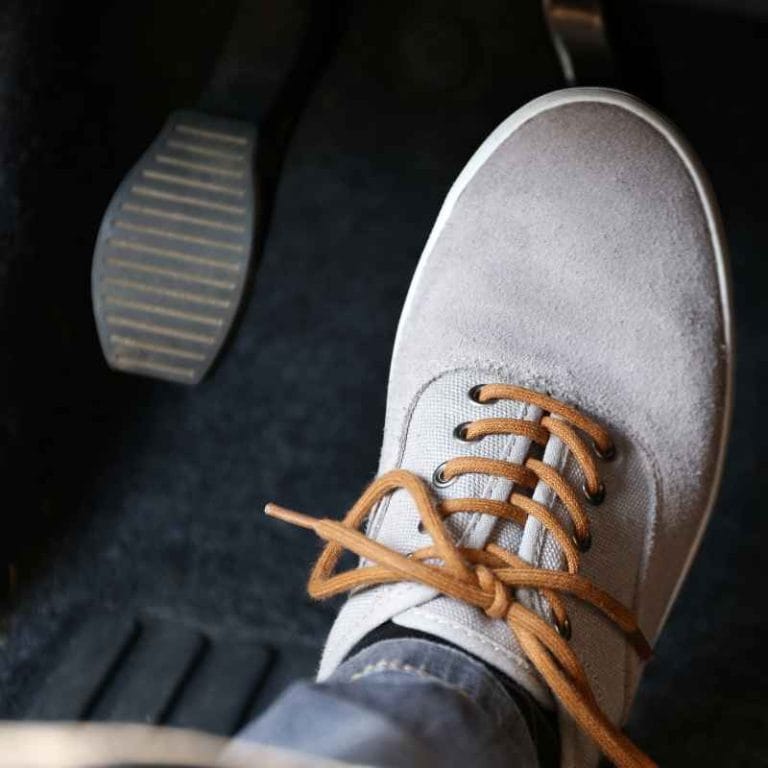
The connection between your brakes and the starting system might not be obvious, but it is deliberate and safety-critical. In modern vehicles, the brake pedal acts as a confirmation switch — pressing it tells the car’s computer that you are ready to start.
This safety feature prevents the car from starting in gear or without driver awareness. If the brake pedal switch fails, the computer never receives that confirmation signal, so it keeps the starter disabled.
- The brake pedal switch is usually mounted above the pedal arm inside the cabin.
- When you press the pedal, the switch closes and sends a 12-volt signal to the ECU.
- The ECU then activates the starter relay and allows the engine to crank.
- If the switch is broken, misaligned, or stuck, the signal never arrives.
- Some vehicles also require the brake to be pressed for push-button start systems.
- A faulty switch can also cause your brake lights to stay on or not work at all.
Warning: If your brake lights stay on constantly, the switch may be stuck in the closed position. This can drain your battery overnight and cause a no-start condition the next morning.
What Is the Brake Safety Switch and How Does It Work?
The brake safety switch — also called the brake light switch or brake pedal position sensor — is a small electrical component located near the top of the brake pedal arm. Its primary job is to detect when you press the brake pedal and send that information to the car’s computer.
On most vehicles, this switch has two internal circuits: one for the brake lights and one for the start signal. If either circuit fails, the car may not start even though the brake lights still appear to work.
| Component | Function | Failure Symptom |
|---|---|---|
| Brake Light Switch | Activates brake lights when pedal is pressed | Brake lights stay off or stuck on |
| Brake Pedal Position Sensor | Sends pedal position data to the ECU | No start, check engine light |
| Starter Relay | Delivers power to the starter motor | Clicking sound but no crank |
| ECU | Processes brake signal and enables start | No crank, no error codes |
This table shows the chain of components involved. If any one of them fails, the starting sequence stops. The brake switch is the most common failure point in this chain.
Common Brake-Related Problems That Prevent Starting
Several brake-related issues can stop your car from starting. While the brake switch is the most frequent cause, other problems can also create a no-start condition. Knowing which one you are dealing with saves time and money.
Below are the most common brake-related problems that mechanics see in the shop every week.
- Failed brake light switch — The most common cause. The internal contact wears out or the plastic housing cracks.
- Misaligned brake pedal switch — The switch gets pushed out of position and no longer makes contact when you press the pedal.
- Blown brake light fuse — A blown fuse in the brake light circuit can also cut the start signal in some vehicles.
- Stuck brake pedal — Debris or a stiff pedal linkage can prevent the pedal from fully returning, keeping the switch activated.
- Wiring issue — Corroded or broken wires at the switch connector interrupt the signal.
- Faulty ECU or starter relay — Less common but possible if the switch tests good and the brake lights work.
Tip: Before buying any parts, check your brake lights. If they don’t light up when you press the pedal, the switch is almost certainly the problem. Replacement switches typically cost between $15 and $50.
How to Diagnose a Brake Safety Switch Issue
Diagnosing a brake switch problem is one of the easiest car repairs you can do yourself. You do not need a scan tool or any special equipment. A simple visual check followed by a multimeter test will confirm whether the switch is the issue.
Follow these diagnostic steps in order. They cover the most likely problem areas without wasting time on unrelated components.
- Step 1: Turn the ignition to the ON position and check if the dashboard lights come on normally.
- Step 2: Press the brake pedal firmly and look at the rear brake lights. Have a helper watch or use a reflection.
- Step 3: If the brake lights do not come on, inspect the brake light fuse in the interior fuse box first.
- Step 4: If the fuse is good, locate the brake switch above the pedal and check if it clicks when pressed.
- Step 5: Use a multimeter to test for continuity across the switch terminals when the pedal is pressed.
- Step 6: Check the switch alignment — the plunger should be fully released when the pedal is at rest.
- Step 7: If the switch tests good but the car still won’t start, check the starter relay and related wiring.
Important: On some vehicles, the brake switch has two separate circuits. One may fail while the other still works. Always test both circuits with a multimeter — do not rely solely on the brake lights.
According to the National Institute for Automotive Service Excellence (ASE), brake switch failures account for approximately 12% of all no-start diagnostic calls in vehicles built after 2010. That makes it one of the top ten most common no-start causes.
Other Brake Issues That Could Stop Your Car From Starting
While the brake switch is the primary link between the brakes and the starting system, other brake-related problems can indirectly prevent your car from starting. These are less common but worth knowing about, especially if the switch checks out fine.
Understanding these indirect causes helps you avoid misdiagnosis and unnecessary part replacements.
| Issue | How It Affects Starting | Fix |
|---|---|---|
| Brake fluid leak | Low fluid triggers warning light, some cars disable start | Top off fluid and repair leak |
| Stuck parking brake | Some cars require parking brake off to start | Release parking brake fully |
| Corroded battery terminal | Poor connection mimics dead battery | Clean terminals and tighten |
| ABS module fault | Rare — can interfere with start signal on some models | Scan and reprogram or replace |
As you can see, most indirect issues involve safety interlocks or electrical problems that happen to overlap with the brake system. Always rule out the simple things — battery, fuses, and fluid levels — before diving deeper.
How to Fix a Brake-Starting Problem Yourself
Fixing a brake-related no-start problem is often straightforward. In most cases, you can resolve it in under an hour with basic hand tools. The specific fix depends on the root cause you identified during diagnosis.
Below are the most common repairs you can perform at home without professional training.
Replacing a Faulty Brake Light Switch
The brake light switch is usually held in place by a simple clip or a quarter-turn lock. No special tools are required beyond a flathead screwdriver or a trim tool.
- Disconnect the negative battery terminal to avoid short circuits.
- Locate the switch above the brake pedal arm — it is usually a small black or white plastic block.
- Press the release tab and slide the switch out of its bracket.
- Unplug the electrical connector from the old switch.
- Plug the new switch in and push it into the bracket until it clicks.
- Reconnect the battery and test by pressing the brake pedal — the lights should come on.
- Start the car to confirm the fix.
Adjusting a Misaligned Switch
Sometimes the switch is not broken — it has simply moved out of position. This happens when the pedal is pressed hard or the plastic bracket wears slightly.
- Locate the switch and check if the plunger (small button) is fully extended when the pedal is at rest.
- If the plunger is partially compressed, pull the switch toward you to reset its position.
- On adjustable switches, push the switch in until the plunger contacts the pedal arm, then pull it back one click.
- Test the brake lights and starting function.
Tip: On many Japanese and Korean vehicles, you can adjust the switch without removing it. Simply rotate the switch body slightly — it acts like a threaded adjuster.
When to See a Mechanic for Brake-Related Starting Issues
Not every brake-start problem is a simple switch replacement. Some issues require professional diagnostic equipment or specialized knowledge. If you have replaced the switch and checked the basics but the car still will not start, it is time to get help.
Here are the situations where a mechanic is the smarter choice.
- No power at the switch connector — This points to a wiring fault or ECU problem that requires a wiring diagram and a multimeter.
- Multiple warning lights on the dashboard — A failed ECU or CAN bus issue can disable both brakes and starting.
- Intermittent starting problems — Loose connections or failing relays are hard to find without professional testing.
- ABS or traction control lights on — These systems may share sensors with the brake pedal circuit.
- Burnt smell or melted wiring — Short circuits can damage the wiring harness, requiring replacement.
According to a 2023 report from the Car Care Council, nearly 30% of vehicles brought in for no-start diagnosis have underlying electrical issues that go beyond a simple switch replacement. A professional scan tool can read manufacturer-specific codes that generic scanners miss.
Frequently Asked Questions
Can a bad brake switch drain the battery?
Yes. If the brake switch stays stuck in the closed position, the brake lights stay on even when the car is off. This drains the battery overnight and can cause a no-start condition the next morning.
Will a car start if the brake lights are burned out?
No. Burned-out brake light bulbs do not affect the starting system. The switch still sends the signal to the ECU even if the bulbs themselves are dead.
However, a blown brake light fuse can prevent starting on some vehicles.
Can ABS cause a car not to start?
Very rarely. On most vehicles, the ABS system is separate from the starting circuit. However, some newer cars with integrated chassis control systems may disable the start if the ABS module reports a critical fault.
How much does it cost to replace a brake light switch?
The part costs between $15 and $50 depending on the make and model. Labor at a shop adds $50 to $100 for about 30 minutes of work. It is one of the cheapest no-start fixes you can make.
Can a brake pedal sensor fail without warning?
Yes. Brake pedal sensors can fail suddenly with no prior symptoms. One moment the car starts fine, the next it does not.
This is especially common in older vehicles where the plastic switch housing becomes brittle from heat cycles.
Final Thoughts
A brake-related no-start problem is surprisingly common and usually easy to fix. The brake pedal switch is the most likely culprit, and diagnosing it takes less than five minutes. Start by checking your brake lights, then test the switch with a multimeter if needed.
In most cases, a simple replacement gets your car running again without a trip to the mechanic. See also best place to buy car brakes online vs local shops. See also how to stop car brakes sticking causes and simple fix.
Products related to this article
Sponsored / affiliate links. As an Amazon Associate I earn from qualifying purchases. I may earn additional commission from eligible campaigns.
 Mighty Max Battery MM-G24 Start and Stop Car BCI Group Size 24 12V 70Ah, 120RC, 710 CCA Rechargeable AGM Car battery
 Brake Bleeder Kit Automotive,Brake Fluid Bleeder Exchanger Machines,Brake Oil Fluid Extractor Pump,Professional Pulsating Brake Oil Fluid Bleeding Tool,Automatic Vacuum Brake Bleeder One Person