Why Is My Coolant Milky or Foamy?
Milky or foamy coolant usually means air in the system, oil contamination, or combustion gases; if the foam returns after bleeding or the level keeps dropping, stop driving and have the cooling system checked for a head-gasket leak. Leave it alone, and you can overheat the engine, contaminate bearings, or turn a small fix into a major repair. This guide shows how to separate air, contamination, and gasket failure in a simple order of checks.
Reading coolant appearance for warning signs

Coolant should look like the type you poured in: usually clear and dyed, with color that varies by formulation. A little film at the neck after years of service can happen, but milky residue, sludge, foam, oil sheen, or repeated bubbling points to a problem. Appearance alone is a clue, not a diagnosis.
Normal coolant appearance by type
Engine coolant is normally uniform in color and free of floating debris. A reservoir that looks cloudy because of staining is different from coolant that looks like a milkshake, has tan sludge, or shows oily streaks. If you also see a low level in the reservoir, check whether the radiator itself is actually full before assuming the system is empty.
What residue, foam, and sludge can signal
Foam often points to air entrainment or aeration. Milky residue can point to coolant mixing with oil. Sludge can come from old coolant, mixed coolant chemistries, rust, or contamination. Head gasket failure is a common cause of coolant and oil cross-contamination, but it is not the only one.
Say your reservoir looks foamy after a coolant top-off, yet the radiator was refilled only two days ago. That pattern fits trapped air far better than a failed head gasket, especially if the foam fades after proper bleeding and does not return on a cold start.
Why appearance alone is not a final diagnosis
A radiator can be full while the reservoir looks empty, bubbly, or foamy. The cap, return hose, and pressure balance govern where coolant sits at rest. A bad cap can also let the system aerate or push coolant into the overflow bottle and never pull it back as the engine cools.
Why is my coolant foamy?
Foamy coolant usually comes from air entering the system, not from oil contamination. Start with the simplest causes first: recent service that left air pockets, a low fill level, a weak radiator cap, or a pump problem that stirs air into the coolant. If the foam keeps returning, move to pressure and gas-intrusion tests.
Trapped air after service or a low-level refill
Air left after a drain, hose replacement, thermostat job, or top-off can circulate and create foam. A low coolant level can do the same because the pump may draw air into the stream. Pennine notes low sump levels can increase air entrainment and cause foaming, and blocked filters can restrict flow to the pump and do the same.
Radiator cap faults and aeration
The radiator cap does more than seal the neck. It holds pressure, controls overflow, and helps the system draw coolant back from the reservoir. If the spring, seal, or pressure valve is weak, the system can vent early, pull in air, or leave the reservoir oddly full or empty. A cap that looks tired is worth replacing on schedule.
A common first-timer mistake is to see foam in the bottle, top off the reservoir, and stop there. If the cap cannot hold pressure, the foam may return even after a refill because the system still breathes air instead of maintaining stable pressure.
Water pump cavitation and seal problems
A water pump with impeller wear, cavitation, or a failing seal can whip air into coolant and create foam. Look for seepage at the weep hole, bearing noise, wobble at the pulley, or coolant streaks around the pump housing. If circulation is poor, the engine may overheat even when the reservoir looks normal.
Why is my coolant white and milky?
White or milky coolant usually means contamination, not a normal coolant state. The most concerning path is oil entering the cooling system or coolant entering the oil. Head gasket failure is a common route because the gasket separates oil and coolant passages, but cracked parts and other internal leaks can do the same.
Coolant and oil cross-contamination
Oil contamination often shows up as a tan or milky residue on the dipstick or on the underside of the oil filler cap. UTI describes milky oil as typically milky white or light brown and says it forms when motor oil reacts with moisture; it also lists faulty head gaskets as a primary cause. Humidity can also create milky oil in engine components. (UTI)
Head gasket failure and other internal leaks
When a head gasket fails, it can let combustion gases into the cooling system or allow coolant and oil to mix. That can create persistent bubbles, overheating, low coolant, or a pressure system that acts wrong from the first cold start. It is a common failure path, but the diagnosis should still be confirmed with pressure and gas tests.
Moisture or contamination in the system
Can condensation make coolant look milky? It can make oil appear milky in some cases, especially in short-trip engines that never fully warm up, but it does not make coolant itself a healthy-looking fluid. Contaminated coolant still needs inspection for oil sheen, sludge, rust, or debris. Do not treat moisture as a harmless explanation if the coolant itself looks wrong.
What to check first
Start with the easiest checks in this order: reservoir level, radiator cap condition, visible leaks, then oil signs on the dipstick and filler cap. If the engine is hot, do not remove a hot radiator cap. Let it cool fully before opening the system, because pressurized coolant can spray scalding fluid.
- Check the coolant reservoir against the cold mark, then confirm whether the radiator is actually full when the engine is cool.
- Inspect the radiator cap seal, spring, and neck for crust, cracks, or a torn gasket.
- Look for wet hoses, dried coolant trails, pump seepage, and stains under the vehicle.
- Pull the dipstick and inspect the oil filler cap for milky residue or a light-brown emulsion.
- Note whether the engine overheats, bubbles from cold start, or loses coolant without an obvious leak.
UTI recommends looking for milky residue on the dipstick or oil filler cap, including residue on the underside of the oil filler cap. That check matters because cross-contamination can show up there before the engine runs badly enough to fail completely.
Coolant diagnosis table
This table separates what you can inspect at home from the next test to ask for. Use it as a triage tool, not a final verdict.
| Observed symptom | Most likely cause | Quick at-home check | Next professional test | Do not drive |
|---|---|---|---|---|
| Milky coolant | Oil contamination or internal leakage, often from a head gasket | Check the dipstick and oil filler cap for milky residue; inspect for oily sheen in the reservoir | Cooling system pressure test, then block test if pressure loss or gas intrusion is suspected | Yes |
| Foamy coolant | Air entrainment, low fill, cap fault, or pump cavitation | Check reservoir level cold, inspect the cap, and note whether foam fades after proper bleeding | Cap test and cooling system pressure test with the correct adapter | No, unless the engine overheats or the level drops fast |
| Reservoir bubbling | Combustion-gas intrusion, cap fault, or return-line aeration | Watch for bubbles only after startup and note whether the radiator is full when cold | Chemical block test for exhaust gases, plus pressure decay test | Yes if bubbling starts cold and persists |
| Coolant/oil cross-contamination | Head gasket failure, cracked component, or oil cooler fault | Inspect dipstick, filler cap, and reservoir for tan residue or oil film | Pressure test and inspection of related oil cooler or internal passages | Yes |
| Overheating with no visible leak | Coolant loss into a cylinder, poor circulation, cap fault, or air pocket | Check for coolant smell, low reservoir, weak heater output, and cap condition | Pressure test, block test, and circulation check after model-specific bleed procedure | Yes |
| Cold-start bubbles | Combustion-gas intrusion more than simple trapped air if they continue | Observe whether bubbles stop after warm-up or continue from the first start | Chemical block test and pressure test | Yes if bubbles continue on a cold start |
Which test comes next?
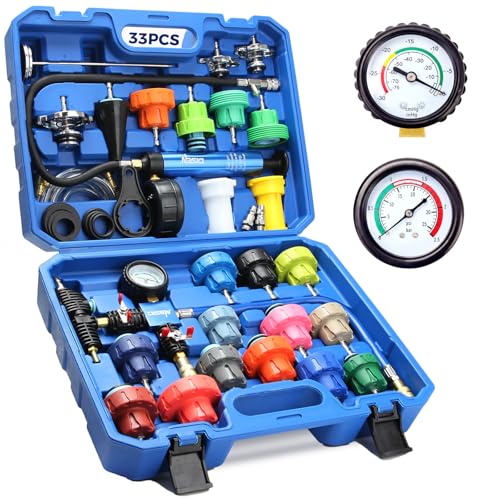
After the visual check, a cooling system pressure test is usually one of the most useful first tests. If that test points to pressure loss or internal leakage, the next step is often a chemical block test for combustion gases. A cap test and a model-specific bleed procedure come before guessing at a head gasket.
Cooling system pressure test
A cooling system pressure test is used to find leaks and pressure decay. It should be done cold with the proper adapter so the cap and neck seal correctly. If pressure drops without an external leak, that points toward an internal leak, including combustion-gas intrusion or coolant loss into the engine.
Chemical block test for combustion gas
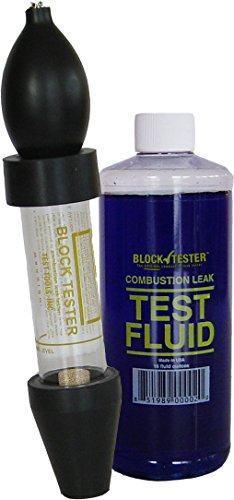
A block test checks for exhaust gases in the cooling system. It is especially useful when you see reservoir bubbling, repeated foam after startup, or unexplained coolant loss. Continuous bubbling from a cold start is more concerning than a few bubbles after a bleed.
Cap test and model-specific bleed procedure
Radiator cap faults can create symptoms that look like deeper engine trouble. A cap test helps separate a bad seal from an internal failure. If the system was opened recently, use the vehicle’s specified fill and bleed method. Some vehicles require vacuum filling, and others need a strict sequence in the manual.
Suppose a 2016 sedan comes back with a full reservoir, a half-full radiator, and light foam after a hose replacement. The better next step is not another top-off. It is a pressure test and a proper bleed using the manufacturer’s method, because the system may still contain air or a cap problem.
Can you drive with milky or foamy coolant?
Do not drive if the coolant is milky and the oil looks contaminated, if the engine overheats, if bubbles continue from a cold start, or if the reservoir keeps dropping. Short, cautious movement to a nearby shop may be acceptable only when the manual allows it and the engine stays at a stable temperature. If the temperature climbs, stop.
Signs that mean stop driving
Stop driving if you see repeated overheating, persistent white or milky residue, fast coolant loss, rough running with foam in the reservoir, or oil that looks like light-brown emulsion. Head gasket failure can worsen quickly, and overheating raises the damage risk for bearings, heads, and seals.
When short movement may be safer than a long trip
A short move may be reasonable if the problem is a known low-level refill, a replaced cap, or trapped air that was already bled and the engine stays cool. Keep the trip brief, watch the gauge, and do not push the car if the temperature rises. If the manual says the system requires a special bleed sequence, follow that first.
Why overheating makes the damage risk worse
Overheating can warp aluminum heads, push coolant into the oil, and damage bearings quickly. That is why milky coolant is treated as a diagnosis problem, not a cosmetic issue. If the engine is already hot and pressurized, let it cool before any cap is touched.
Frequently asked questions
Why is my coolant white and foamy?
White, foamy coolant usually points to air in the system, oil contamination, or combustion gas getting into the coolant. Start with the simple checks first: reservoir level, radiator cap, visible leaks, dipstick, and oil filler cap. If the foam returns after bleeding, have the system pressure-tested.
What does it mean when your coolant is foamy?
Foamy coolant usually means aeration. That can come from trapped air after service, a low coolant level, a weak cap, or pump cavitation. If the foam is persistent or the reservoir bubbles from a cold start, ask for a pressure test and a combustion-gas block test.
Is milky coolant the same as a blown head gasket?
No. A blown head gasket is a common cause, but not the only one. Milky coolant can also come from oil cooler faults, cracked components, or other internal leaks. The best next step is to confirm with a pressure test and, if needed, a block test.
Can condensation make coolant look milky?
Condensation can make engine oil look milky in some cases, especially in short-trip use, but it should not be treated as a normal coolant condition. If the coolant itself is cloudy, sludgy, or oily, the system needs inspection. Do not assume moisture means the problem is harmless.
How can I tell if oil is mixing with coolant?
Look for a tan or milky residue on the dipstick, the oil filler cap, or the underside of the cap. UTI notes that milky oil can be milky white or light brown and that faulty head gaskets are a primary cause. Also check the reservoir for oil film and the radiator for sludge.
What should I check first when coolant looks milky?
Check the reservoir level, confirm the radiator is full only when the engine is cold, inspect the cap, and look for leaks. Then inspect the dipstick and oil filler cap for milky residue. If those checks point to cross-contamination or the engine overheats, arrange a pressure test and do not keep driving it.
Products related to this article
Sponsored / affiliate links. As an Amazon Associate I earn from qualifying purchases. I may earn additional commission from eligible campaigns.