Can I Drive with a Broken Radiator Fan?
Yes, but only for a short, low-speed trip if the engine stays at normal operating temperature and you avoid idling, traffic, and steep grades; otherwise, tow it. Keep driving a failing fan too long and you can overheat, warp the head, blow a gasket, or destroy the engine. This guide gives the fast yes/no call, the conditions that change the risk, and what to do next.
Broken radiator fan decision table

Use this table as a fast triage tool. Fan type matters, because an electric fan failure and a mechanical fan clutch failure do not change the risk in the same way. The temperature gauge is the main warning signal. If it rises above normal, a warning light comes on, or steam appears, stop driving.
| Fan type | Traffic level | Ambient temperature | Gauge behavior | A/C status | Route distance | Recommended action |
|---|---|---|---|---|---|---|
| Single electric fan failed | Light traffic, no stops | Mild | Stays at normal once moving | Off | Very short, local streets only | Limp to a nearby shop |
| Single electric fan failed | Any stop-and-go traffic | Warm or hot | Rising or already above normal | On or needed for defogging | Any length | Tow |
| One fan in a dual-fan setup failed | Light traffic | Mild | Normal at speed, no climbing at idle | Off | Short route | Drive only if needed, then repair soon |
| Both fans failed in a dual-fan setup | Any traffic | Any warm day | Gauge rises quickly, especially at idle | Any | Any | Tow |
| Mechanical fan clutch failed | Low-speed or traffic | Hot | Temperature climbs at idle or slow crawl | Off | Short only, if at all | Tow unless the weather is very mild |
| Mechanical fan clutch failed after an overheat or coolant loss | Any | Any | Already above normal or unstable | Any | Any | Tow |
Can you drive with a broken radiator fan?
Yes, sometimes for a brief, low-speed limp to a shop, but only if the engine is still at a normal reading and the route avoids traffic, long idling, and hills. That is not normal driving. If the gauge is already above normal, or steam is visible, do not keep moving the car.
When a short limp may be reasonable
A short limp can make sense when the failure is limited, the weather is mild, and the route is short enough that the engine will not sit still for long. A radiator fan pulls air through the radiator, so it matters most at stoplights, in parking lots, and in traffic congestion. Once the car is moving steadily, airflow helps, but that does not make the fan failure harmless.
Suppose your car is about one mile from home, the gauge is steady below normal, and the roads are open. A careful, direct trip can be the least bad option. Keep the speed steady and watch the gauge every few seconds.
When you should not drive at all
Do not drive if the temperature gauge is already above normal, the hood is steaming, the engine recently overheated, or you also lost coolant. In summer conditions or with the air conditioning running, the engine can overheat very quickly. That is why a warm day, traffic, and idling can turn a fan failure into a tow case fast.
Driving on can push the engine into serious damage. A failed fan can cause warped cylinder heads, a blown head gasket, cracked engine block damage, or seized pistons. If the car is idling without a working fan, the temperature can climb toward the danger zone very quickly.
What changes after an overheat or coolant loss
Recent overheating makes the decision far more conservative. If the engine already got hot, or coolant level dropped, the remaining margin is small even if the gauge looks normal for a moment. A fan failure on top of that history can turn a short trip into a second overheat before you reach the next block.
That is especially true with a damped gauge. Some gauges stay near the middle until the engine is already too hot, so a middle reading is not proof that the engine is safe. If there was a recent overheat, treat any further driving as tow territory unless a repair shop is truly one block away and the gauge stays rock steady.
Why the cooling fan matters
The cooling fan helps keep engine temperature in a safe range by pulling air through the radiator when road speed is too low for natural airflow. Electric fans are usually commanded by the ECU or a coolant temperature sensor, and they often run when the A/C is on. Mechanical fans use a clutch, and a failed clutch can act differently from an electric motor fault.
Electric fan failure points
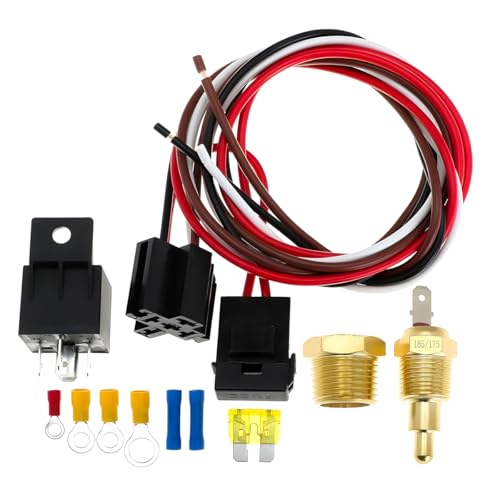
An electric cooling fan can fail from the fan motor, relay, fuse, wiring, resistor pack, coolant temperature sensor, or ECU command issue. Electrical problems or a blown fuse are common causes of fan failure. That makes the simple checks worth doing before any move.
A failed electric fan motor may seize or wear brushes. Common signs include grinding, wobble, or no movement at all. A blown fan fuse can stop the fan completely, and it must be replaced with the correct amperage. A bad electric fan relay can do the same job without any obvious warning until the fan is needed, though many modern vehicles use integrated relay modules rather than a simple swap part.
Mechanical fan clutch failure
A mechanical fan with a weak or failed clutch can still spin, but not move enough air when the engine is hot or idling. That failure pattern matters because the car may seem fine at speed and still overheat in traffic. The risk rises most when the car is asked to idle after a long pull or a hot shutdown.
The distinction matters for the drive decision. An electric fan problem often causes sharp idle and low-speed risk, while a mechanical clutch fault can also fail to keep up after heat soak. If the car already ran hot once, be more conservative regardless of fan type.
What the temperature gauge is telling you
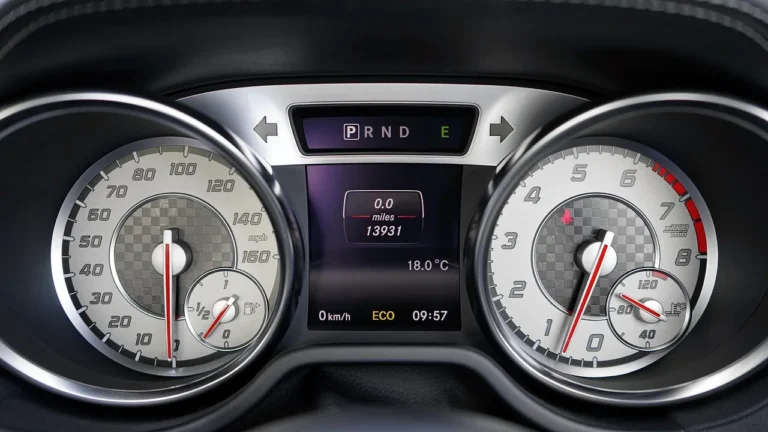
The gauge is the main warning signal to watch continuously. A normal reading means little if the needle begins to climb, and a rising gauge means pull over. If steam appears, stop now. If the gauge is already above normal, do not keep driving.
Normal reading versus a rising gauge
A stable gauge at highway speed can be misleading on a broken fan because airflow is doing part of the fan’s job. The risk shows up at idle, in parking lots, and in traffic congestion. If the gauge creeps upward after you stop, that points toward fan trouble rather than a simple sensor quirk.
Warm A/C at idle can also point to fan trouble. On many cars, the A/C system adds heat load and may command the fan on. If the A/C stays warm while the car idles, the fan may not be responding when the system asks for it.
Steam, warning lights, and stop-now signs
Steam from under the hood means the engine is already beyond a safe zone. The safer option is to tow when there is steam from under the hood. Warning lights, rapid gauge climb, or a sweet coolant smell are also reasons to shut it down and let it cool before any next step.
A common first-timer mistake is to watch the gauge only after the car starts moving again. That misses the moment the engine overheats at idle. Check the gauge before the trip, after every stop, and immediately after any traffic delay.
How far can you drive with a bad radiator fan?
Distance is the wrong first question. Route type matters more. A bad radiator fan does not have a universal safe mileage, because traffic, heat, and prior overheating matter more than distance alone. A short, open route is one thing. Stop-and-go traffic is another.
Short local route versus highway driving
A short local route may be manageable if the car stays cool, the roads stay open, and the drive avoids long idle time. Highway driving is often less stressful than city crawling because air moves through the radiator. But a highway exit, construction slowdown, or long signal cycle can erase that advantage fast.
Picture a 12-mile highway trip with a broken electric fan and a normal gauge. That may still be a tow-worthy risk if the route includes several minutes of stop-and-go at the end. The fan matters most at low speed, so the last mile can be riskier than the first ten.
How dual-fan setups change the risk
If only one fan fails on a dual-fan setup, the car may have some backup airflow, but the margin is smaller. If both fans fail, the vehicle can climb toward overheating much faster at idle and in traffic. That is the point where a short local drive often becomes a tow decision, even on a mild day.
Dual-fan systems still depend on correct commands from the ECU and sensor inputs. If one fan is dead because of a fuse or relay, the other may still run. If the control issue affects both fans, or if coolant temperature sensor data is wrong, the risk rises quickly.
What to check before moving the car
Use a short roadside checklist before deciding to move the car. If any step raises doubt, choose the tow. This is a triage check, not a repair job.
- Check the coolant level only when the engine is cool.
- Look for fresh leaks under the car or around the radiator.
- Inspect the fan fuse for a visible break or obvious damage.
- Check the electric fan relay if a known-good swap is possible, and remember that many modern vehicles use integrated modules instead of a simple swap relay.
- Look at the wiring and connectors for corrosion, heat damage, or looseness.
- With the engine cool and off, inspect the fan blades for wobble, broken edges, or signs of seizure.
- Start the engine and watch the temperature gauge continuously.
- Note whether the A/C changes fan behavior or makes warm air at idle.
If the fan motor makes grinding noise or does not spin freely, plan on repair rather than a drive. If the problem started after a blown fuse, there may still be a deeper fault, so do not replace the fuse and assume the system is fixed without checking why it blew.
How much does it cost to fix a broken radiator fan?
Cost varies by model and region, but the cause usually points to a different repair tier. Fuse, relay, and simple wiring issues are usually on the lower end. Fan motor replacement or full fan assembly replacement usually costs more. Sensor or control faults can sit anywhere in the middle because diagnosis time varies.
Common repair buckets
| Failure cause | Typical repair type | Cost note |
|---|---|---|
| Fan fuse | Replace fuse with correct amperage and check for the cause | Lowest-cost bucket, but only if no deeper fault is found |
| Electric fan relay | Relay replacement or known-good swap test | Usually modest, depending on access |
| Wiring or connector fault | Repair corroded, broken, or heat-damaged circuits | Varies widely with diagnosis time |
| Fan motor failure | Motor replacement or complete fan assembly | Often higher than fuse or relay repair |
| Coolant temperature sensor or control fault | Sensor diagnosis, wiring check, or control repair | Depends on whether the fault is sensor, wiring, or command related |
| Mechanical fan clutch failure | Clutch replacement | Varies by engine layout and access |
Because labor access differs so much by vehicle, any exact quote without the model is shaky. For that reason, the useful answer is not a single number but a repair path: fuse or relay first, then wiring, then motor, then control or clutch parts if the fault remains.
Frequently asked questions
Can I drive with a broken cooling fan?
Maybe for a short, low-speed trip, but a broken cooling fan is most dangerous at idle and in stop-and-go traffic. Turn the A/C off for the trip if possible, since some cars command the fan with A/C on. If the gauge climbs, do not keep driving.
How long can I drive with a broken radiator fan?
There is no safe universal time. A broken fan can send the engine toward the danger zone very quickly, especially at idle and in hot weather. A short move to a nearby shop is the outer limit, not a target.
Can you drive with a broken radiator fan blade?
A broken blade can mean the fan is unbalanced, noisy, or close to seizing, and that is not a good sign. If the blade damage is minor but the fan still spins smoothly, a short limp may be possible. If it wobbles, grinds, or hits the shroud, tow it.
Products related to this article
Sponsored / affiliate links. As an Amazon Associate I earn from qualifying purchases. I may earn additional commission from eligible campaigns.