Why Does My Car Smell Like Coolant but There Is No Leak?
A coolant smell with no puddle usually comes from a small heater-core, hose, cap, reservoir, or hidden external leak that evaporates before it drips; if the odor is strongest inside the cabin, inspect the heater core first. Ignoring it can overheat the engine, fog the glass, and turn a minor seal or hose fault into a larger repair. This guide separates cabin, under-hood, and after-shutdown coolant odors, then points you to the first parts to inspect and when to book a diagnosis.
What does a coolant smell with no visible leak mean?

A coolant odor without a puddle usually means the leak is tiny, intermittent, or evaporating on a hot part before it reaches the ground. Coolant can also vent from the cap or reservoir under pressure, which is why odor can appear before any drip. Because overheating risk rises quickly, treat a repeating smell as an active warning rather than a harmless scent.
Sweet odor versus chemical odor
A sweet smell is the classic clue for coolant. A sharper chemical smell can still be coolant, but it can also come from residue on a hot surface, a failing cap, or a contaminated HVAC intake path. The strongest clue is where you smell it and when it appears.
Why a leak may not leave a puddle
Coolant can flash off on a hot manifold or exhaust shield before it drips. It can also seep only after the system builds pressure. That is why a car may smell like coolant and still leave a dry driveway.
Where is the coolant smell strongest?
The location of the odor tells you where to start. Under-hood smell points to an external leak or hot-surface vapor. Odor through the vents points to the HVAC system or heater core. Smell after shutdown often points to heat soak, a weak cap, or a small seep that opens as pressure drops. Cooling-system pressure test, heater core symptoms, and overheating while idling are the most useful related checks when the pattern is not obvious.
Under the hood only
If the smell is strongest with the hood open and weak or absent inside the cabin, start with the reservoir, radiator cap, hose joints, radiator tanks, and water pump. Hot metal can turn a pinhole seep into vapor, which makes the odor easier to smell than to see. Water pump failure signs can help narrow the source if residue gathers near the pump.
Through the vents
If the smell comes through the HVAC vents, that points toward the cabin-side air path first. The heater core is a small radiator inside the dashboard, and a leak there can smell sweet inside the cabin. Fogged windows and damp passenger carpet make that pattern much more convincing. Heater core symptoms is the best next reference when the odor tracks with the blower.
After shutdown or hot soak
If the smell appears after parking, heat soak is a common trigger. A weak radiator cap can allow coolant to boil over or vent as pressure drops. Small leaks at a hose clamp, pump seal, or reservoir seam can also show up only when the engine is hot and then fade as it cools. Cap behavior is a key clue because pressure relief can create odor before any drip becomes visible.
Which coolant odor clues matter most?
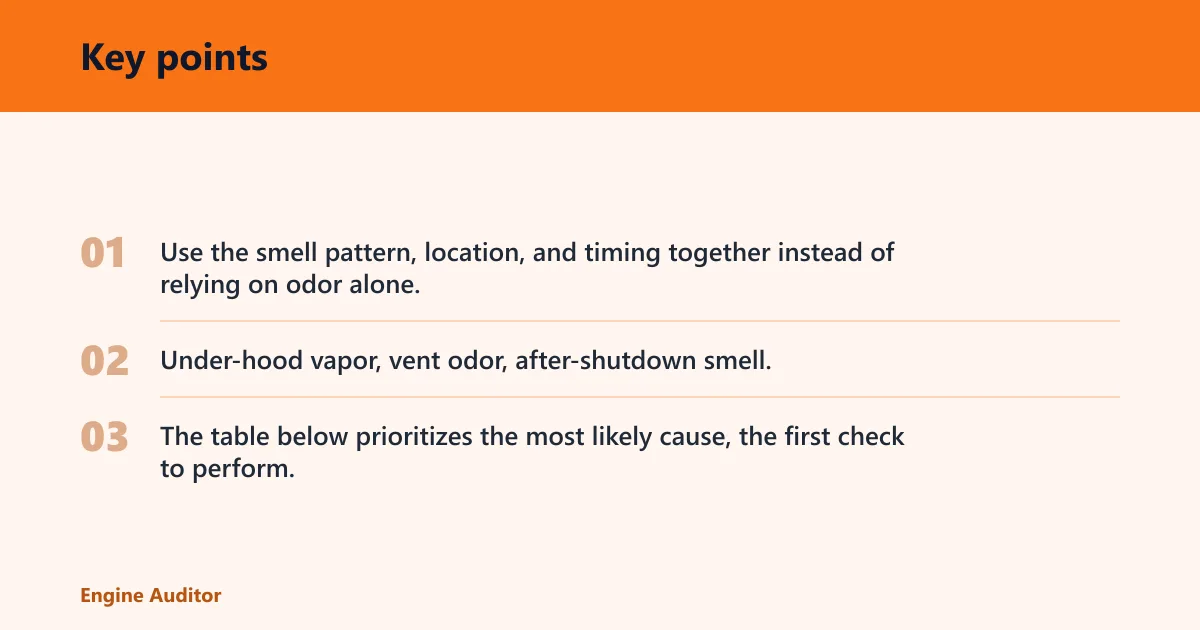
Use the smell pattern, location, and timing together instead of relying on odor alone. Under-hood vapor, vent odor, after-shutdown smell, and recurring reservoir loss each point to different failure paths. The table below prioritizes the most likely cause, the first check to perform, and how strongly the pattern supports a given diagnosis.
Coolant odor diagnostic table
| Where the smell is strongest | When it appears | Likely hidden cause | First test to perform | Confidence / escalation threshold |
|---|---|---|---|---|
| Under the hood | Engine running, hood open | Small external leak hitting a hot surface | Inspect the reservoir, hoses, clamps, radiator tanks, and pump area for wetness or residue | Moderate confidence; escalate to pressure test if no wet spot is found |
| Through the vents | Blower on, especially heat selected | Heater core leak inside the dash | Check for fogged glass, sweet odor at the vents, and damp passenger carpet | High confidence; prioritize heater-core diagnosis if two or more signs are present |
| After shutdown | 5 to 20 minutes after parking | Heat soak opens a tiny seep | Look for residue near hose connections, radiator seams, and the water pump | Moderate confidence; if repeated, move to pressure testing |
| Uphill parking | After parking on an incline | Fluid shifts toward a weak cap or upper hose joint | Inspect the radiator cap seal and overflow bottle for traces of dried coolant | Moderate confidence; cap inspection is a first-order check |
| With A/C on | Blower running during cooling | Cabin air path pulls odor from a hidden heater-core leak | Smell the vents with recirculation on and compare with fresh-air mode | Moderate to high confidence if the smell increases in recirculation |
| With defrost on | Front glass clearing mode | Heater core leak or damp HVAC case | Check for window fogging and moisture at the passenger footwell | High confidence when fogging and sweet odor happen together |
| Cold start | First minute after startup | Residual coolant on a warm part or old residue reactivated by airflow | Inspect for crusty dried residue around the engine bay and under the vehicle | Low to moderate confidence; revisit after warm-up if the smell changes |
| Hot soak | Right after a drive and shutdown | Cap weakness or a small seep that opens with heat | Check the cap condition and the overflow bottle for trace overflow | Moderate confidence; cap testing is warranted if it repeats |
| Near the tailpipe | Engine running or just after restart | Coolant entering the combustion chamber | Watch for white exhaust vapor and check coolant level again when cold | High confidence; escalate immediately if coolant loss repeats |
| Passenger carpet | Any time the heater is used | Heater core leak | Lift the carpet edge and feel for dampness near the center tunnel and footwell | High confidence; cabin-side leak should be diagnosed promptly |
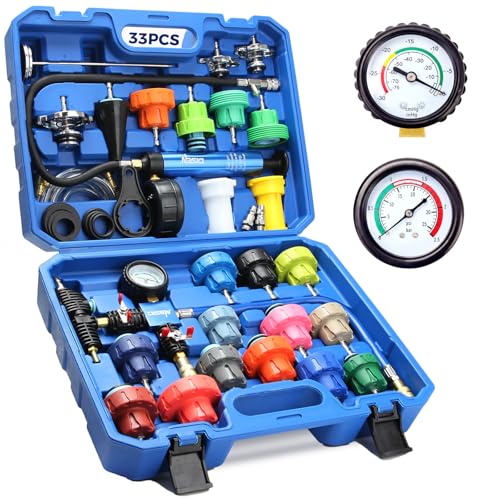
| No visible drip | Intermittent odor only | Very small seepage or evaporation on hot parts | Use a cooling-system pressure test and then add UV dye if needed | Moderate confidence; pressure test is the next escalation step |
| Reservoir level keeps dropping | Repeated top-offs needed | Internal loss, cap venting, or a slow external leak | Check the cap, then pressure test and inspect for combustion-related loss | High confidence; recurring level loss should not be ignored |
| One corner of the engine bay | After recent service | Coolant residue from a spill or overfill | Check for dried film on caps, hoses, and splash shields | Low to moderate confidence; service residue is a common false positive |
| Front of engine, near intake area | Smell appears with rough idle or warm-up | Intake manifold gasket seep or crossover leak | Inspect for crusty residue at manifold joints and coolant loss without an external drip | Moderate confidence; escalate if idle issues or coolant loss coexist |
| Rear or side of engine bay | Odor changes when driving over bumps | Overflow hose cracks or loose bottle connection | Flex and inspect the overflow hose and bottle neck for splits or wetness | Moderate confidence; hose cracks can be intermittent and easy to miss |
What should you check first under the hood?
Start with the most visible parts first. A cooling-system pressure test is useful, but a careful visual check can find the obvious fault before you reach for tools. Look for dried crust, wetness, and stains around the cap, reservoir, hose ends, radiator corners, and water pump. If the leak stays hidden, cooling-system pressure test is the right next step.
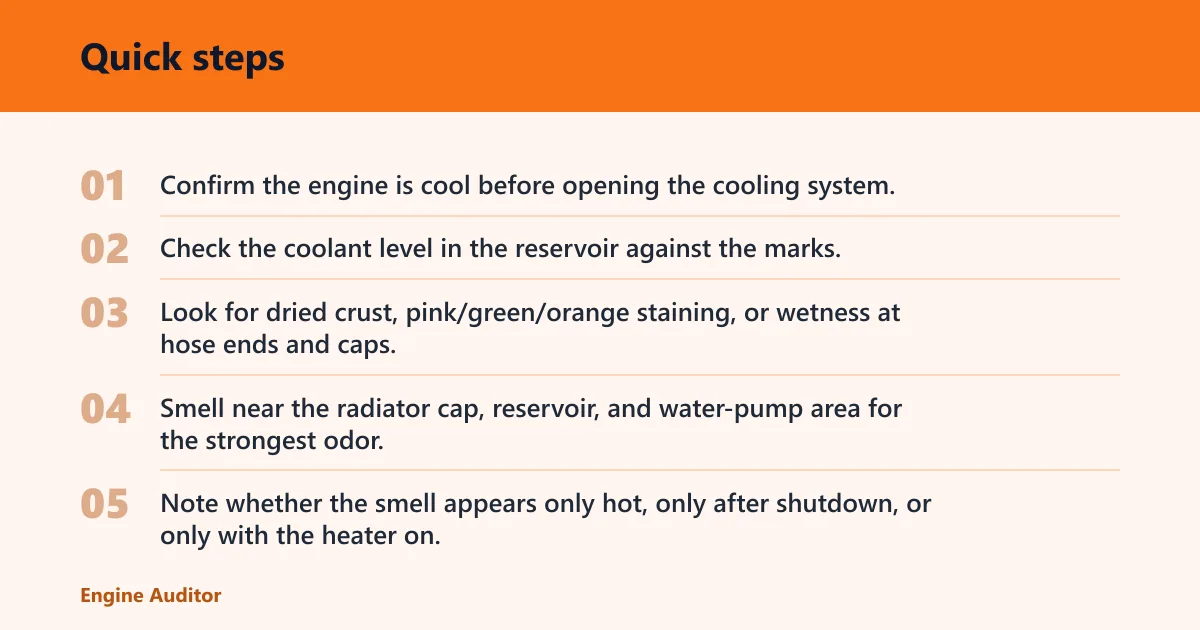
First checks before any tools
- Confirm the engine is cool before opening the cooling system.
- Check the coolant level in the reservoir against the marks.
- Look for dried crust, pink/green/orange staining, or wetness at hose ends and caps.
- Smell near the radiator cap, reservoir, and water-pump area for the strongest odor.
- Note whether the smell appears only hot, only after shutdown, or only with the heater on.
Radiator cap and reservoir level
A weak radiator cap can allow boil-over and create coolant odor without a clear drip. The cap is a pressure valve, so a failed seal can vent vapor or push coolant into the overflow bottle. If you replace it, check the pressure rating on the new cap so it matches the system spec. Pressure behavior is important because cap venting can mimic a larger leak long before the system empties.
Hoses, clamps, radiator, and water pump
Inspect the upper and lower hoses where they meet the necks, then follow the radiator side tanks and seams. A water-pump seep can come from the weep hole, a designed opening that drips when the seal fails. That seepage may leave residue below or behind the pump before it leaves a puddle. For pattern matching, water pump failure signs can help separate seepage from other hot-side leaks.
Crystallized residue and hot surfaces
Old coolant can dry into crusty residue on aluminum, plastic, or painted parts. When heat returns, the residue can smell again even if the leak is no longer active. A common first-timer mistake is to smell the engine after a drive, see no fresh drip, and assume the odor is imaginary.
Say your sedan smells sweet only after a 20-minute highway run, and the odor fades by morning. That pattern fits a tiny seep that only opens when hot, or residue on a shield that reactivates with heat. The first pass should focus on cap condition, hose joints, and the pump area.
Can a heater core smell like coolant?
Yes. A heater core can smell like coolant with no visible leak because it sits inside the dashboard and can leak into places you cannot see. The clue set is cabin-centered: sweet odor from the vents, fogged windshield, and damp passenger carpet or footwell trim. Heater core symptoms is the clearest match when the odor lives inside the cabin.
Fogged windshield and wet carpet
When the heater core leaks, the windshield may fog in a way that does not match normal humidity. The passenger carpet can feel damp, especially near the center dash or under the glove box. That combination is more convincing than smell alone.
Why the leak may stay hidden inside the dash
The heater core is a small radiator inside the dashboard, so a leak can spread inside the HVAC case rather than onto the floor. That is why cabin odor matters. A true heater-core repair can be expensive because dashboard removal is often part of the job.
Could the radiator cap or a hidden external leak be the cause?
Yes. A cap fault or a hidden seep can mimic a larger failure. If the smell is strongest under the hood and appears after shutdown, pressure loss is a prime suspect. A cap test should happen early, not after random part replacement. Hidden leaks often show up only after pressure rises, so a static visual inspection is rarely enough on its own.
Pressure loss and boil-off
A weak radiator cap can let coolant boil, vent, or overflow when the system gets hot. That can create a sweet odor without a steady drip. If the reservoir is overfull or crusted around the neck, suspect pressure control before assuming a radiator crack. This is one reason a pressure-cap fault can look like a much bigger cooling-system problem than it really is.
Water pump weep hole clues
A water-pump seep can come from the weep hole. That leak is often intermittent, so you may see residue below or behind the pump before you see a drip. A pulley area with crusty stains deserves close inspection. A cooling-system pressure test can force the seep to show up at the pump seal if the leak is still active.
Leaks that show up only hot
Some leaks open only when hoses expand and pressure rises. A cooling-system pressure test helps confirm that kind of fault. If the leak path is still unclear, UV dye inspection can show where the coolant traveled after it escaped. UV dye use is especially helpful when the residue is faint, scattered, or hidden behind splash shields.
Could it be head gasket trouble?
It could. Head gasket problems can cause internal coolant loss, and they do not always leave an external puddle. White exhaust vapor is a major clue, especially when coolant keeps dropping and no external wet spot appears. A recurring smell plus unexplained coolant loss deserves immediate attention because internal leakage can quickly lead to overheating.
White exhaust vapor
A white exhaust cloud can mean coolant is entering the combustion chamber. That is different from normal condensation on a cold morning. If the vapor is persistent, sweet-smelling, and paired with coolant loss, the engine needs combustion-related diagnosis. White exhaust causes is the right reference when tailpipe vapor is part of the pattern.
Recurrence of low coolant without a drip
Repeated reservoir loss without visible leakage can point to internal loss or to a cap that vents under pressure. Rough running on startup, bubbling in the reservoir, or unexplained overheating strengthens the case for a pressure check plus combustion test. When coolant disappears without a floor stain, internal loss deserves more attention than a random hose guess.
Why pressure and combustion checks matter
Coolant leaking into a cylinder or exhaust passage may never form a puddle. That is why a pressure test alone is not the full answer when white vapor or recurring reservoir loss is part of the pattern. The system needs both leak-path and combustion-side diagnosis.
Picture a compact car that smells sweet only at idle, loses a little coolant every week, and sends a thin white plume from the tailpipe for the first few minutes on startup. That pattern is not a guessing game. It calls for pressure testing and a check for combustion gas in the cooling system.
When should you stop driving?
Stop driving if the engine is overheating, the temperature warning comes on, the cabin fills with coolant odor, or the windshield fogs in a way you cannot clear. Coolant exposure is toxic, and overheating can turn a small fault into a major repair fast. If the smell is accompanied by steam, a rising gauge, or a sudden level drop, the safest move is to shut the engine down.
Stop-driving signs
- Temperature warning light or rising gauge.
- Steam from the hood or a sudden sweet smell that intensifies quickly.
- Cabin fogging that returns immediately after clearing.
- Coolant level dropping rapidly or the reservoir emptying again soon after top-off.
- White exhaust vapor plus rough running or overheating.
- Check the temperature gauge and warning lights first.
- Look at the coolant level only when the engine is cool.
- Inspect for wet carpet, fogging, or fresh residue near the cap and hoses.
- Book a pressure test if the smell repeats with no obvious source.
- Add UV dye inspection when the leak stays hidden after the first test.
If the smell is cabin-only, treat it as a heater-core warning until proven otherwise. If the smell is under the hood and the cap, reservoir, and hoses look dry, the next step is still a pressure test, not a parts lottery. If the odor appears with white exhaust vapor, move straight to combustion-side diagnosis. A hidden leak test is most useful when the first inspection is inconclusive.
Frequently asked questions
Why does my car smell like coolant but no leak?
A coolant smell without a puddle usually means the leak is tiny, intermittent, or evaporating on a hot part before it drips. It can also be residue from an old repair. Start with the cap, reservoir, hoses, and pump area, then move to a pressure test if nothing obvious shows up.
What does a coolant leak smell like?
Coolant often smells sweet or slightly syrupy. It can also seem chemical when it hits a hot surface or mixes with dust and residue. The smell matters less than the location: under the hood points outside the cabin, while a vent smell points toward the HVAC path or heater core.
Why does the inside of my car smell like coolant?
A cabin odor usually points to the heater core or the HVAC air path. The strongest clues are fogged glass, a sweet smell from the vents, and damp passenger carpet. If those signs line up, the heater core moves to the top of the list before radiator or hose faults.
Can a heater core smell like coolant with no visible leak?
Yes. The heater core sits inside the dashboard, so a leak may stay hidden in the HVAC case instead of showing on the ground. You may notice a sweet smell through the vents, greasy fog on the windshield, or dampness in the passenger footwell before you ever see a drip.
Is it safe to drive if my car smells like coolant but there is no leak?
It is safer to limit driving until you know whether the smell is from a small external seep or a more serious internal loss. Do not keep driving if the engine is overheating, the reservoir keeps dropping, or the windshield fogs with a sweet odor. Those signs justify immediate diagnosis.
What should I check first if I smell coolant in my car?
Check where the smell is strongest, then start with the radiator cap, coolant level, hose joints, and reservoir. If the smell is in the cabin, inspect the heater core signs first. If nothing is visible, a cooling-system pressure test is the next practical step, with UV dye if the leak stays hidden.
Products related to this article
Sponsored / affiliate links. As an Amazon Associate I earn from qualifying purchases. I may earn additional commission from eligible campaigns.