Serpentine Belt or Alternator Squeal: How Do I Know?
A squeal that changes with rain, startup, or sudden electrical load usually points to the serpentine belt; a growl or whine that tracks engine speed with no belt-slip signs points to the alternator. Guess wrong, and you can waste money on the wrong part while a failing belt or alternator can leave you stranded. This guide shows a symptom comparison table, quick checks, and the simplest way to separate belt slip from alternator bearing noise.
Quick symptom check
Start by noting when the sound happens. That timing usually separates a slipping belt from a noisy alternator faster than guesswork. A belt squeal often appears at start-up, in cold weather, or when load changes suddenly. Alternator noise more often follows engine speed, even if the electrical load stays steady.
Sound timing, RPM change, and load
If the squeal appears only for a few seconds after start-up and fades as the engine warms, look first at belt condition, tension, and contamination. If the noise rises and falls with RPM whether the car is parked or moving, the alternator pulley or bearings move higher on the list. If the sound gets worse when you turn on the A/C, rear defrost, or headlights, belt slip is more likely than an internal alternator bearing fault.
Cold weather can make a belt noise show up only at start-up and then disappear after warm-up. That pattern is common with a worn, loose, or contaminated belt. It can also point to a weak tensioner that does not hold tension well when the belt is cold and stiff.
Belt vs alternator matrix
This table gives you a text-only diagnosis path based on timing, RPM change, electrical load, and cold-start behavior. Use it before replacing parts. The goal is to separate belt slip from alternator resistance, then decide whether to inspect the belt, the tensioner, an idler pulley, or the alternator itself.
| Sound timing | RPM change | Electrical load change | Cold-start behavior | Likely source | Next check |
|---|---|---|---|---|---|
| Only at start-up or for a few seconds after startup | May fade as RPM settles | Often gets louder when headlights, blower, or rear defrost come on | Common when cold; may stop after warm-up | Serpentine belt, tensioner, or contamination | Inspect the belt ribs and back side for cracks, slack, glazing, or coolant residue |
| At idle, then worse with acceleration | Often changes with throttle input | May worsen if the belt is already slipping | Can appear cold or warm | Bad tensioner or a stuck accessory pulley | Watch the tensioner movement and check pulley spin |
| At a steady RPM, even with minimal load change | Tracks engine speed closely | Little change when accessories switch on or off | May stay present after warm-up | Alternator bearing or pulley resistance | Listen near the alternator housing with the engine running and compare with belt slip clues |
| Only when turning steering at idle or turning on A/C | May spike briefly under added drag | Yes, especially steering or A/C load | Often worse cold | Accessory pulley drag, including alternator, power steering, or A/C compressor | Check for a stuck pulley or weak belt tension |
Yes/no decision path
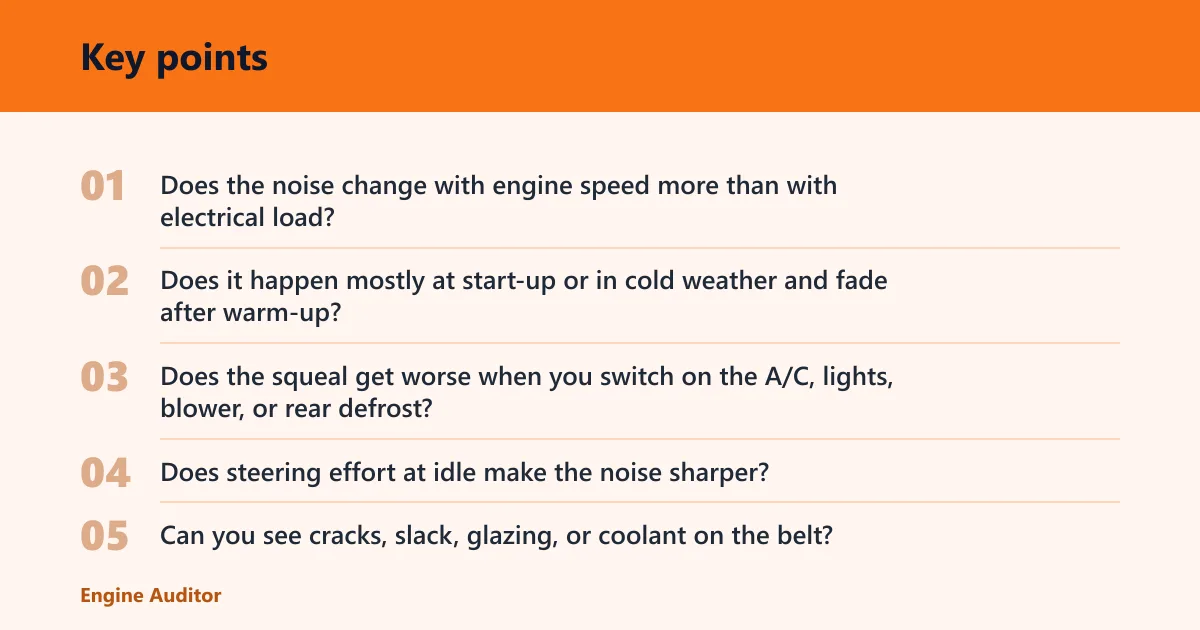
- Does the noise change with engine speed more than with electrical load? If yes, move toward the alternator. If no, keep looking at belt slip.
- Does it happen mostly at start-up or in cold weather and fade after warm-up? If yes, inspect the serpentine belt, tensioner, and contamination first.
- Does the squeal get worse when you switch on the A/C, lights, blower, or rear defrost? If yes, a belt that is slipping under added load is likely.
- Does steering effort at idle make the noise sharper? If yes, an accessory pulley or tension issue may be adding drag.
- Can you see cracks, slack, glazing, or coolant on the belt? If yes, replacement or cleanup is needed before you look deeper.
- If the belt looks normal and the noise still follows RPM without load changes, inspect the alternator bearings and pulley.
Say your sedan squeals for three seconds on a 28-degree morning, then goes quiet once the engine reaches normal temperature. That pattern leans toward belt material or tension, not an alternator bearing. If the same car later squeals again only when the headlights and rear defrost are on, that adds more support for belt slip under load.
Does the squeal change with engine load?
Yes, and that clue is one of the best separators. A squeal that grows with A/C load, steering load, or extra electrical load usually means the belt is slipping because one part of the drive system cannot turn freely or stay tight enough. A bad alternator can still be involved, but load-based changes usually point first to the belt path.
A/C, steering, and electrical load
Turn the A/C on and off at idle. If the squeal starts or gets louder with A/C engaged, the compressor load may be exposing a weak belt, a tired tensioner, or a pulley with drag. Do the same with the steering wheel turned at idle. If the noise sharpens when steering load rises, the accessory drive is reacting to extra resistance.
Electrical load matters too. Headlights, rear defrost, and the blower all increase demand on the alternator, which also adds mechanical load to the belt. If the noise appears when those loads come on, that does not mean the alternator is bad by default. It may mean the belt cannot grip well enough under added resistance.
What a bad alternator sounds like
A bad alternator can sound more like a growl, whine, or rough bearing noise than a classic belt squeal. It may track engine RPM closely and stay present even when the belt itself shows no obvious slip signs. If the alternator pulley or bearings add resistance, the belt can still squeal, so separate the alternator from belt slip before you replace parts.
Bearing noise versus belt slip
Bearing noise usually sounds deeper and less sharp than a belt squeal. It often rises smoothly with RPM. Belt slip tends to sound higher-pitched and may start or stop abruptly as load changes. That difference matters. A squeal that changes the instant you switch on the A/C points more toward slip, while a steady whine that follows engine speed points more toward the alternator.
The alternator is driven by the serpentine belt, so resistance there affects the whole system. A pulley or bearing that drags can make the belt slip and squeal, but the source of the drag is still the alternator. If the belt is in good shape and the sound stays with the alternator area, inspect the alternator pulley and bearings next.
What a belt, tensioner, or idler sounds like
A worn serpentine belt can squeal when it is loose, worn, or contaminated. A belt in this condition may last anywhere from 50,000 to 100,000 miles, but mileage alone is not enough. A bad tensioner can let the belt go slack, and a damaged or misaligned idler pulley can make the belt slip or chirp. Those faults often sound louder on acceleration.
Worn or loose belt noise
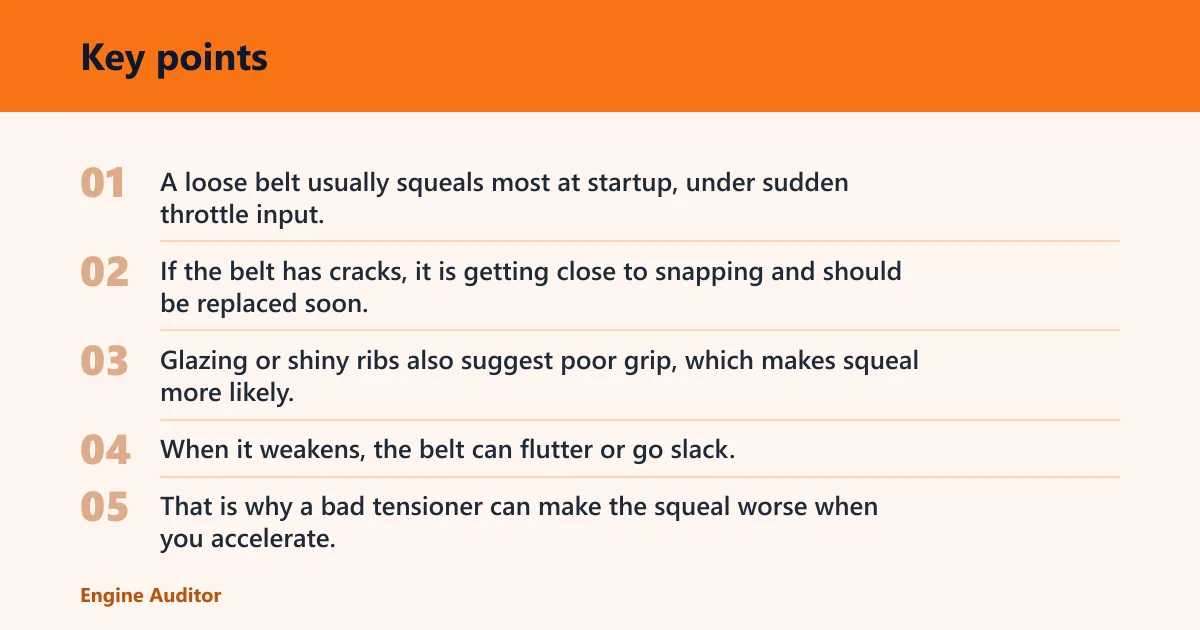
A loose belt usually squeals most at startup, under sudden throttle input, or when accessories come on. The pitch is often sharp and brief. If the belt has cracks, it is getting close to snapping and should be replaced soon. Glazing or shiny ribs also suggest poor grip, which makes squeal more likely.
Tensioner clues
The tensioner keeps the belt tight. When it weakens, the belt can flutter or go slack, especially when you step on the gas pedal. That is why a bad tensioner can make the squeal worse when you accelerate. If the noise changes with throttle more than with electrical load, the tensioner deserves close attention.
Idler pulley clues
An idler pulley keeps the belt aligned. If it is damaged or misaligned, the belt can slip and make a squeal or chirp. A rough bearing can also add resistance. If the sound seems to come from one pulley area and the belt path looks off-line, the idler pulley may need replacement.
Picture a compact car that only squeals when pulling away from a stop with the A/C on. If the noise fades on the highway, that does not rule out the belt. It may mean the tensioner or an idler pulley is failing only when the system is loaded hard at low RPM.
Belt inspection checklist
Check the belt before you replace the alternator. Start with the simple items: cracks, slack, contamination, and alignment. A quick visual check can save time and prevent an unnecessary part swap. If the belt looks damaged, contaminated, or loose, focus on the drive path before suspecting a deeper electrical problem.
What to inspect first
- Look for cracks across the belt ribs or backing.
- Check for slack by observing whether the belt looks loose on the pulleys.
- Inspect for shiny glazing, fraying, or missing chunks.
- Look for coolant or antifreeze on the belt and nearby pulleys.
- Check pulley alignment along the belt path.
- Listen for rough spin or obvious drag from the alternator, idler, A/C compressor, or power steering pulley.
Contamination and pulley alignment
Coolant or antifreeze on the belt can cause squealing noise. That contamination may come from a hose leak or spillover during service. It often keeps coming back until the source leak is fixed and the belt is replaced. Cleaning alone may not solve it if the belt has soaked up the fluid.
Modern pulleys are usually automatic in the sense that the belt system is designed to maintain tension with a tensioner rather than manual adjustment. That means pulley condition matters a lot. A stuck pulley can cause the belt to squeal or chirp from extra resistance, so each pulley in the path should turn smoothly and line up correctly.
Could coolant be the cause?
Yes. Coolant or antifreeze on the serpentine belt can cause persistent squealing, and the noise may return even after it seems to fade. If the belt has been contaminated, the problem is often the belt plus the leak or spill that keeps wetting it again. That is why cleanup alone is often temporary.
Where leaks and spillover usually come
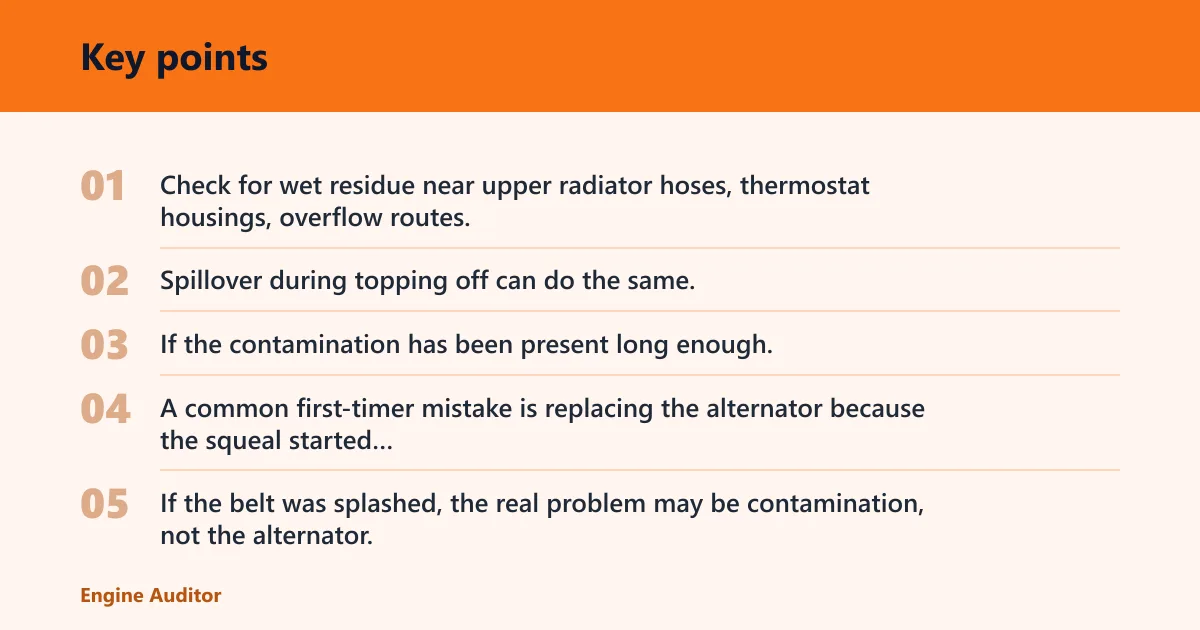
Check for wet residue near upper radiator hoses, thermostat housings, overflow routes, and any area above the belt path. A small hose leak can drip onto the belt. Spillover during topping off can do the same. If the contamination has been present long enough, belt replacement is often the safer move because the rubber may keep slipping even after the surface is dry.
A common first-timer mistake is replacing the alternator because the squeal started after a coolant top-off. If the belt was splashed, the real problem may be contamination, not the alternator. The right fix is to stop the leak, clean the area, and replace the belt if the contamination has soaked in.
Frequently asked questions
How do I know if a squeal is the serpentine belt or the alternator?
Start with timing and load. A belt squeal usually changes with cold starts, rain, added electrical load, or sudden throttle. Alternator noise more often follows RPM and sounds like a whine or growl. If the sound persists with no load change and seems to come from the alternator area, inspect the alternator pulley and bearings.
Does a bad alternator squeal all the time or only when accelerating?
Not all the time. A bad alternator may squeal or whine when engine speed rises, but some alternator problems are steady at idle or most obvious under load. If the noise changes more with acceleration than with lights or A/C, the belt tensioner or pulley drag may still be part of the problem.
Will a loose serpentine belt squeal more when the engine is cold?
Yes. Cold weather can trigger squealing that stops after the engine warms up. A loose belt can be more likely to slip when it is cold, stiff, or slightly damp. If the noise fades after warm-up, inspect the belt for slack, cracks, glazing, and tensioner weakness before assuming the alternator is at fault.
Can coolant on the serpentine belt cause squealing?
Yes. Coolant or antifreeze on the belt can cause squealing noise and may keep doing it until the contamination is removed and the source leak is fixed. If the belt was soaked, replacement is often needed. Look for hose leaks, spillover, or dried residue on the belt and nearby pulleys.
What does a bad tensioner sound like?
A bad tensioner often sounds like a belt squeal that gets worse when you step on the gas pedal. It may also let the belt flutter, chirp, or slip when load changes. If the noise is most obvious during acceleration or when accessories switch on, the tensioner should be checked early.
How can I tell if the idler pulley is making the noise?
Listen for a squeal or chirp that seems tied to one spot in the belt path and may appear with misalignment or rough pulley motion. An idler pulley can cause the belt to slip if it is damaged or misaligned. If the belt looks straight but one pulley spins rough or off-line, the idler is suspect.
Is it safe to drive with a squealing serpentine belt?
Short trips may be possible, but it is risky to keep driving without checking it. A squealing belt can fail, and that can stop the alternator, power steering, or A/C compressor from working. If the belt has cracks, slack, or contamination, replace it soon and inspect the tensioner and pulleys too.
Products related to this article
Sponsored / affiliate links. As an Amazon Associate I earn from qualifying purchases. I may earn additional commission from eligible campaigns.