Can You Use Water Instead of Coolant in an Emergency?
Yes, plain water can get you to a repair shop or home for a short time, as long as the engine is not overheating. If the temperature gauge is climbing or steam appears, stop driving. Using water the wrong way can warp a cylinder head, crack parts, or leave you stranded. This guide explains when water is the least-bad option, how to add it safely, and when to shut the engine off instead.
When water works and when it fails

When water is acceptable
Water is acceptable only as a temporary top-up when the cooling system is slightly low and the engine is otherwise running normally. Engine coolant keeps temperatures steadier and carries corrosion inhibitors; water does neither as well, so treat it as a stopgap, not routine service fluid.
Water can be an emergency fix, but not a permanent replacement. Use water only long enough to prevent immediate damage and reach the correct coolant fill later.
When you should not drive
If the engine is already overheating, if coolant is pouring out, or if the reservoir is nearly empty and the temperature gauge is rising fast, do not keep driving. On many vehicles, an empty reservoir can also mean the radiator itself is low or empty, so continued driving is risky even if the gauge looks normal at first. Steam pockets can form, circulation can drop, and the engine can overheat even faster. In that situation, stopping is safer than adding the wrong fluid and hoping for the best.
Why coolant is still the correct final fill
Coolant, also called antifreeze, is normally used as a water mixture, commonly 50/50. That mix raises boiling resistance, helps prevent freezing, and adds corrosion protection. Water alone cannot match that protection, and the downside grows if the system stays diluted for long.
Coolant emergency decision table
| Scenario | Recommended fluid choice | Maximum driving intent | Immediate next step |
|---|---|---|---|
| Slightly low coolant | Distilled water if coolant is not available right now | Short trip only, just to reach a garage or home | Top up to the reservoir mark, then plan the correct coolant refill |
| Empty reservoir | Distilled water only if the engine is cool and no leak is pouring out | Very short distance, only if the temperature stays normal | Fill to the proper mark, then inspect for loss before normal driving |
| Overheating now | No top-up until the engine cools; water is not the fix while overheating | Do not continue driving | Pull over, shut the engine off, and let it cool fully before checking anything |
| Freezing weather | No water-dominant mix for regular driving; use the correct coolant concentration | Do not rely on water if temperatures can freeze | Restore the proper coolant mix as soon as possible |
| Only tap water available | Use tap water only if there is no better choice and the trip is short | Emergency-only, shortest possible drive | Replace it with the correct coolant mix later |
| Coolant leak suspected | Do not assume water will solve the problem | Limit driving or skip it entirely, depending on the leak and temperature | Check for a hose, radiator, cap, or pump leak before resuming normal use |
What kind of water should you use?
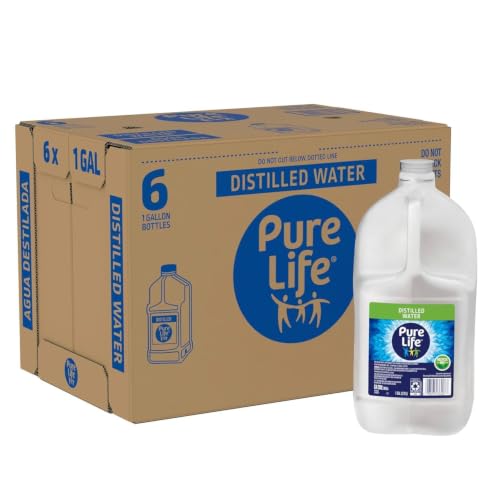
Distilled water is the preferred emergency water type. Distilled water is the way to go if you must use water temporarily, and it is better than spring water or tap water because it reduces scaling. Purified water is not always the same thing as distilled water, so read the label carefully.
Distilled water versus tap, spring, and softened water
Use distilled water first, then purified water only if distilled is unavailable and the label makes the treatment clear. Tap water and spring water can leave minerals behind, which can add scale inside the radiator, heater core, and engine passages. Softened household water is not a great emergency choice either, because it may contain sodium after softening.
A common first-timer mistake is reaching for the nearest kitchen jug without checking the label. A bottle marked “purified” may still be different from distilled water, and that difference matters when the system is already stressed.
What to avoid if tap water is the only option
If tap water is the only choice, use it only as a temporary top-up and only to reach help. Do not turn that into a normal fill habit. Water freezes at 32°F / 0°C, so a water-heavy system is a cold-weather risk. Water also boils at 212°F / 100°C, which leaves less margin when the engine is hot.
Why water is riskier than coolant
Coolant keeps engine temperature in a narrower, safer range. It also contains additives that help prevent rust and corrosion. Water can move heat, but it offers less protection against overheating, freezing, and internal wear, especially if it stays in the system too long.
Boiling point and overheating
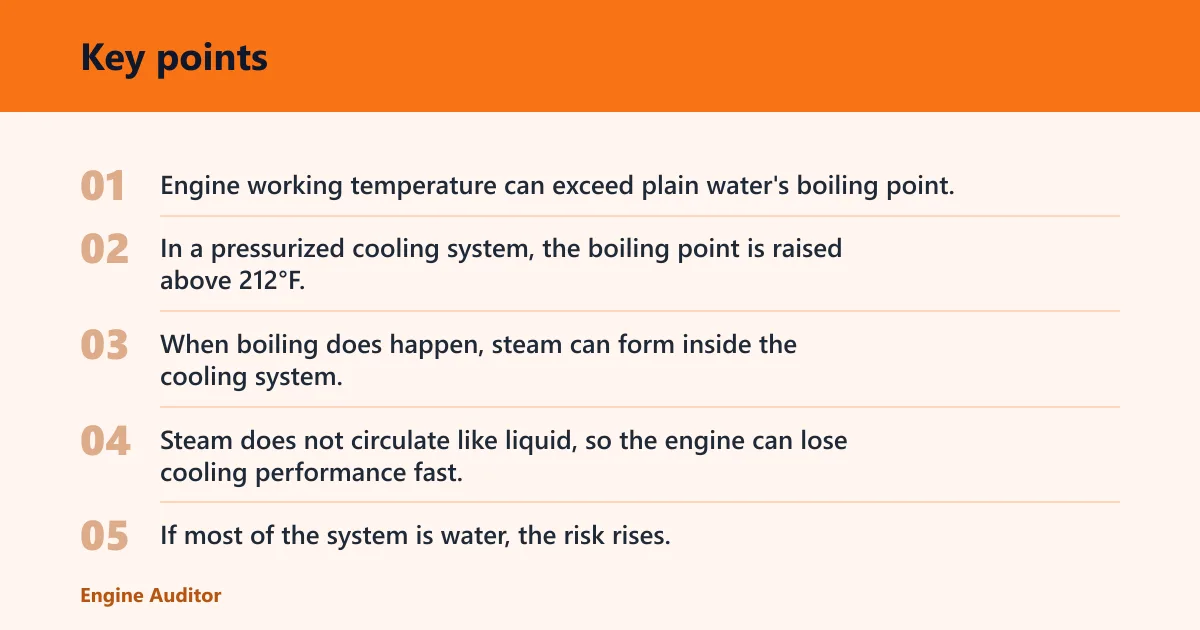
Engine working temperature can exceed plain water’s boiling point, which is why water can boil over more easily than coolant. In a pressurized cooling system, the boiling point is raised above 212°F, but water still leaves less margin than the proper coolant mix. When boiling does happen, steam can form inside the cooling system. Steam does not circulate like liquid, so the engine can lose cooling performance fast.
If most of the system is water, the risk rises. The first failure is often a pressure loss or boiling at hot spots, followed by steam pockets and weaker circulation. That can lead to the temperature climbing even if the vehicle was fine a moment earlier.
Freezing point and cold-weather damage
Water freezes at 32°F / 0°C, and a frozen coolant mix can crack components. If water dominates the mixture in cold weather, the system has less freeze protection and more chance of damage before the engine even starts. That is why a proper coolant mix matters before winter driving.
Corrosion and scale inside the system
Coolant’s additives help protect metal and seals from rust and corrosion. Water alone cannot do that job for long. Scale can build up inside passages, which hurts heat transfer and can shorten the life of the radiator, thermostat, water pump, and heater core.
What if the engine is already overheating?
Pull over and shut it down before checking anything. If the gauge is in the hot zone or steam is visible, do not pop the cap right away and do not keep driving to “see if it settles down.” That is how a small problem becomes a bigger one.
Why steam pockets make it worse
When coolant boils, steam pockets can form and block circulation. The water pump cannot move steam the way it moves liquid, so hot spots build quickly. That can damage a cylinder head, head gasket, or other engine parts that rely on steady cooling.
When to skip the top-up and call for a tow
Skip the top-up if the system is still overheating after a cool-down, if the leak is obvious and active, or if the reservoir empties again right away. A tow is the safer move when the engine cannot hold temperature long enough to move a short distance without risk.
Suppose your compact car is parked after a short commute and the gauge is already high with steam from the hood. Adding water and trying to drive another five miles is the wrong move. Let it cool, then inspect for loss before touching the system again.
What to do after you top up with water
Let the engine cool fully before opening the system. Then check the reservoir or radiator to the correct mark for your vehicle. On many modern cars, you top up the overflow reservoir only; older systems may require a radiator fill point as well. Your owner’s manual should tell you which one applies. Some vehicles also require a specific bleed procedure to remove trapped air after coolant loss.
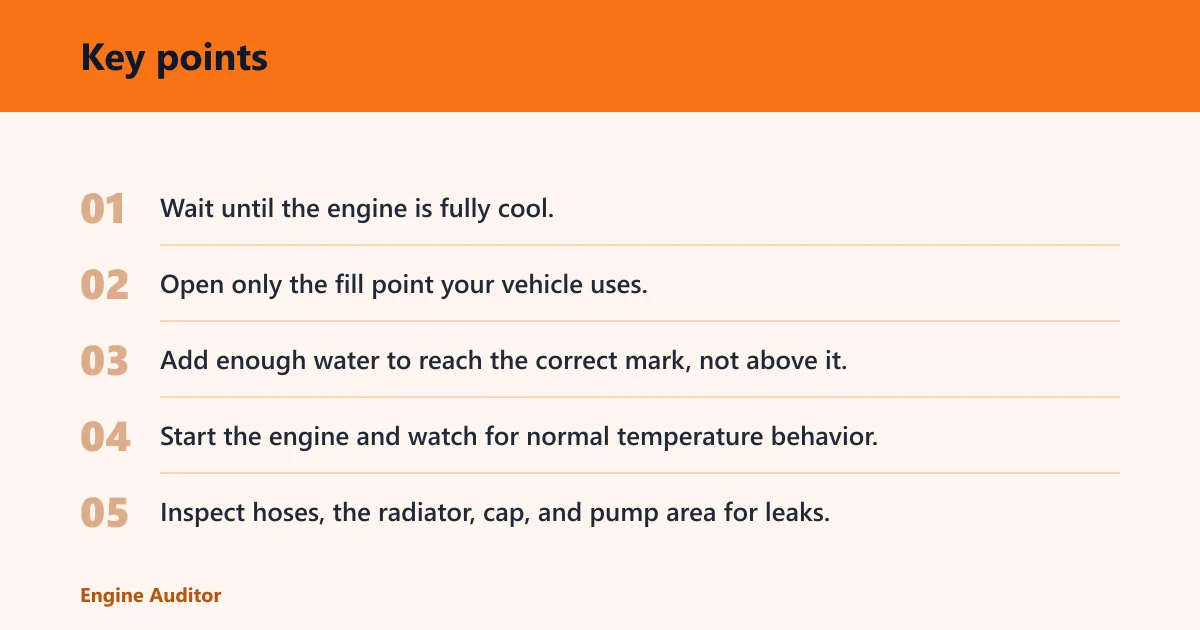
- Wait until the engine is fully cool.
- Open only the fill point your vehicle uses.
- Add enough water to reach the correct mark, not above it.
- Start the engine and watch for normal temperature behavior.
- Inspect hoses, the radiator, cap, and pump area for leaks.
- Refill with the coolant type listed in the owner’s manual as soon as practical.
Confirm the correct coolant type before the final refill
Do not guess the final coolant spec. IAT coolant is the older-car chemistry, usually used in older cars from the 1920s to before the mid-1990s, and it should be replaced every 30,000 miles or 2 years.
OAT coolant is common in most newer cars worldwide and typically lasts 150,000 miles or 5 years. HOAT coolant is also used in some vehicles and typically lasts 150,000 miles or 5 years. Check the owner’s manual before refilling, because the wrong chemistry can create compatibility problems.
Watch the gauge normally, not constantly
After the top-up, watch the temperature gauge in the normal way you would on any drive. Do not stare at it every few minutes. If the gauge climbs again, or if the heater suddenly blows cold while the engine is hot, stop and reassess instead of pushing on.
Frequently asked questions
Can you use water instead of coolant in an emergency?
Yes, but only as a temporary measure to get to a garage or home, and only if the engine is not overheating. Water is a stopgap, not a replacement. Coolant is still the correct final fill because it helps control temperature, resist freezing, and protect against corrosion.
Can you use water instead of antifreeze in an emergency?
Yes, because antifreeze is part of the coolant mix and plain water can temporarily replace it if you are trying to reach help. Do not treat that as a long-term solution. The system needs the correct coolant concentration again as soon as possible.
Can you use water as engine coolant in an emergency?
Yes, short term only. Use it only to reach service, then restore the proper coolant mix.
What happens if you use water instead of coolant?
You lose boiling and freeze protection, and you reduce corrosion protection inside the system. That can lead to overheating, freezing damage, and internal scale. If the engine is already running hot, the risk rises fast because steam pockets can interrupt circulation.
How long can you drive with water instead of coolant?
Only long enough to reach a repair shop or another safe stopping point, and only if the temperature stays normal. There is no safe long-distance rule here. If the gauge climbs, the drive ends there. The shorter the trip, the better.
Is distilled water better than tap water for a radiator?
Yes. Distilled water is the preferred emergency choice because it reduces scaling compared with tap water and spring water. Tap water can be used only if nothing else is available, and only for a short trip. Replace it with the correct coolant mix afterward.
What should you do after topping up with water?
Let the engine cool fully, confirm the correct fill mark, and inspect for leaks before normal driving resumes. Then check the owner’s manual for the correct coolant type and refill with that specification as soon as possible. Water is temporary; the final fill should not be water.
Products related to this article
Sponsored / affiliate links. As an Amazon Associate I earn from qualifying purchases. I may earn additional commission from eligible campaigns.