Why Is My Car Overheating and White Smoke?
If the white exhaust clears in a few minutes on a cold start, it is usually normal condensation; if it keeps coming out while the engine overheats or coolant level drops, shut the car off and do not keep driving. Ignoring that combination can turn a simple leak into warped heads, a blown gasket, or a seized engine. This guide shows how to tell steam from coolant intrusion and what to do next for each symptom mix.
Why overheating and white smoke happen together

Overheating and white exhaust smoke often start together because the same fault can move coolant into the combustion chamber and remove heat from the cooling system at the same time. When coolant burns, it makes white vapor at the tailpipe, and the cooling system loses fluid fast enough for the temperature gauge to climb.
The first clue is the gauge. A normal reading with brief white vapor after start-up points away from an internal leak. A climbing or pegged-hot gauge, especially with coolant loss, points toward a fault that needs immediate attention.
When smoke points to an internal leak
Persistent thick white smoke with a sweet smell can indicate coolant burning in the engine. Low coolant without visible external leaks can suggest internal leakage. That is the pattern that links the smoke, the overheating, and the coolant loss instead of treating them as separate problems.
Head gasket failure is a common path here because it seals the combustion chamber, coolant passages, and oil passages. When it fails, coolant can enter a cylinder, combustion gas can enter the cooling system, and oil can be contaminated.
Exhaust condensation or a serious fault?
Thin white vapor on a cold start that clears within minutes is usually condensation. It is most common on short trips, damp mornings, and cool weather. It does not usually come with coolant loss, rough idle, or a rising temperature gauge.
A serious fault behaves differently. Persistent white smoke, a sweet smell, coolant loss, overheating, or misfire shifts the diagnosis toward coolant intrusion or another cooling-system failure. FixMyCar says white smoke can come from a blown head gasket, damaged radiator, cracked engine block, cylinder head, hoses, condensation, or injectors.
Cold-start steam that clears
Exhaust condensation is common after an overnight stop or a short trip. It looks thin and wispy, then clears as the exhaust system warms. If the engine temperature stays normal and the coolant level stays steady, this pattern is usually harmless.
Persistent white smoke with coolant loss
White smoke that keeps coming after warm-up is a different problem. If the coolant level falls in the reservoir or expansion tank and you do not see a puddle under the car, internal leakage becomes more likely. That is the point where a compression test or cooling-system pressure test becomes useful.
Sweet smell, rough idle, and misfire clues
Coolant burned in the engine often has a sweet smell. If the engine also shakes at idle, misfires, or loses power, coolant may be entering one cylinder more than the others. That combination is more concerning than smoke alone because it suggests active combustion-chamber contamination.
Exhaust smoke triage matrix
| Symptom combination | Most likely cause | Immediate risk | Next action |
|---|---|---|---|
| Cold-start thin white vapor only, clears in minutes | Exhaust condensation | Low if coolant level and gauge stay normal | Monitor coolant and gauge; no urgent repair unless it changes |
| Persistent white smoke with sweet smell | Coolant entering combustion chambers | High | Stop driving and arrange diagnosis |
| Overheating plus coolant loss | Internal leak, radiator leak, hose leak, or water-pump failure | High to severe | Shut the engine off; do not keep adding distance |
| Milky or frothy oil on dipstick or filler cap | Coolant contamination from head gasket, head crack, or block crack | Severe | Do not run the engine; tow for diagnosis |
| Rough idle or misfire with white smoke | Coolant entering one cylinder | High | Stop driving and test for internal leakage |
| Bubbles in the reservoir or expansion tank | Combustion gas entering the cooling system | High | Do not ignore; pressure test and compression test |
| Overheating with no visible external leak | Internal coolant leak or blocked cooling circuit | High | Check reservoir level, hoses, radiator, then tow if hot |
| White smoke after a recent coolant top-up | Ongoing coolant loss, possible internal leak | High | Recheck level cold; if it drops again, do not drive |
| Diesel white smoke at idle only | Injector-related white smoke, cold combustion, or coolant steam | Moderate to high depending on coolant loss and temperature | Check for sweet smell, rough running, and coolant drop before driving |
| White smoke with loss of power | Head gasket failure, cylinder head crack, or severe combustion leak | High | Stop driving and arrange tow and diagnosis |
| Gauge climbing fast while smoke continues warm | Serious cooling-system failure or internal leak | Severe | Shut down immediately |
| Smoke plus recent thermostat or water-pump history | Cooling-system fault may still be present or repair may have exposed a weak gasket | High | Inspect for repeat coolant loss and pressure-test the system |
Say your sedan starts with a thin cloud on a damp morning, then clears before the engine reaches normal temperature. That points to condensation. Suppose the same car warms up, then a sweet white plume returns at a stoplight while the gauge climbs and the reservoir is empty. That points away from condensation and toward coolant intrusion or a cooling-system leak.
Is it a blown head gasket?
A blown head gasket is a common serious cause, but it is not the only possible one. The gasket seals the combustion chamber between the cylinder head and engine block. If it fails, coolant can enter a cylinder, oil can mix with coolant, and combustion gas can leak into the cooling system.
That failure often shows up as overheating, white smoke, coolant loss, and sometimes loss of power. It can also produce bubbles in the reservoir, rough idle, or a misfire if one cylinder is affected more than the others.
What a compression or pressure test can show
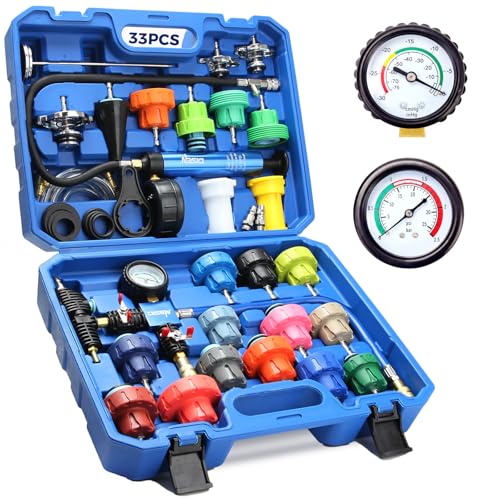
A compression test can help identify low pressure in damaged cylinders. A cooling-system pressure test can help reveal a leak that is not obvious on the ground. Together, they help separate condensation from a gasket fault and point to the cylinder or passage that is failing.
Low coolant with no external leak, plus a bad compression reading on one cylinder, strongly raises suspicion for an internal leak. That is a practical repair decision point, not a guess.
Could it be a cracked cylinder head or block?
A cracked cylinder head can follow severe overheating stress and allow coolant into the combustion chamber. A cracked engine block is less common, but it is generally considered the more severe version of the same problem. CarProblemSolved lists damaged cylinder head or engine block as leading causes of overheating and smoke.
These faults usually look worse than a simple hose or radiator leak because the smoke persists, the coolant loss repeats, and the engine may run poorly even after a top-up. Replacement of a cylinder head is typically more severe than a gasket repair, and a block crack can mean major repair or replacement.
When the cylinder head is the concern
If overheating has happened more than once, or the engine lost coolant while the gauge climbed, the cylinder head moves up the list. Persistent white smoke, bubbles in the reservoir, and a misfire all fit that pattern. A pressure test and compression test can help confirm it.
When the engine block is the concern
If overheating was severe or repeated and the smoke keeps returning, the engine block becomes a concern. Persistent white smoke at all temperatures is a major coolant-leak warning. In that situation, a simple top-up is not a fix.
Cooling system checks you can do now
Start with the reservoir or expansion tank when the engine is cool. Check the level, look for repeated loss after a recent top-up, and note whether the coolant is disappearing without a visible leak. Low coolant without an external drip suggests internal leakage or a leak that only opens under pressure.
Driveway workflow
- Confirm whether the smoke clears after warm-up or continues.
- Check the temperature gauge. Normal, climbing, or pegged hot tells you how urgent the fault is.
- Inspect the reservoir or expansion tank for low coolant, bubbles, or oily residue.
- Look for wet radiator hoses, soft spots, cracks, or dried coolant stains.
- Check around the radiator for corrosion, leaks, or steam trails.
- Inspect oil for milky or frothy contamination.
- If smoke persists warm or the gauge climbs, shut the engine off.
Radiator, hoses, and visible leaks
The radiator can leak or corrode and cause overheating. Radiator hoses can split, soften, or leak at the clamps. Coolant that drips onto hot engine parts can vaporize and look like smoke, so a visible external leak matters even when the tailpipe smoke is the bigger clue.
Watch the gauge during a short idle test
If the engine is already cool, a short idle test can add useful information. A gauge that climbs quickly, especially with smoke that continues, points to an active problem. A stable gauge with brief cold-start vapor points away from an emergency.
The same source says low coolant levels can raise engine temperatures and let coolant boil or leak as vapor. That is why the gauge and the smoke pattern should be read together.
What should you do before driving again?
If the engine is overheating and the white smoke continues after warm-up, stop driving immediately. A tow is the safer call when the gauge is climbing, coolant is disappearing, the engine runs rough, or the oil looks milky. The cost of a tow is usually lower than repairing a warped head or a seized engine.
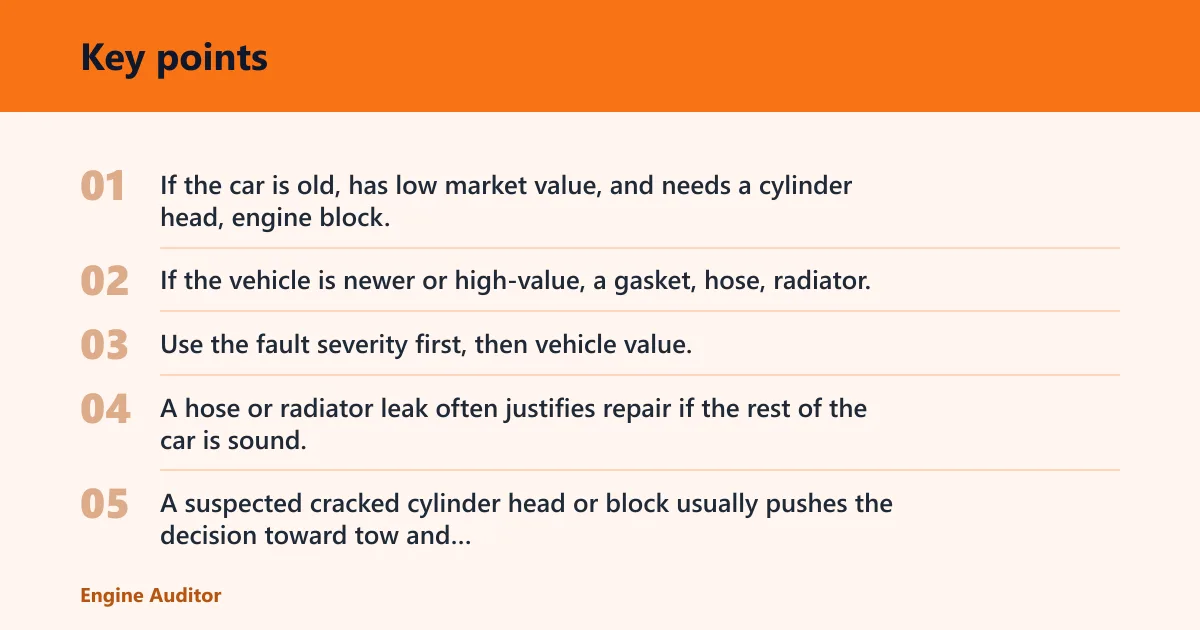
If the car is old, has low market value, and needs a cylinder head, engine block, or repeated cooling-system work, scrappage may make more sense than repair. If the vehicle is newer or high-value, a gasket, hose, radiator, or water-pump repair is usually worth pursuing once the fault is confirmed.
Repair, tow, or scrappage
Use the fault severity first, then vehicle value. A hose or radiator leak often justifies repair if the rest of the car is sound. A suspected cracked cylinder head or block usually pushes the decision toward tow and full diagnosis. If the repair estimate is a large share of the car’s value and the engine has already overheated badly, replacement or scrappage may be the practical choice.
A recent coolant top-up does not clear the fault by itself. If the level drops again, the leak is still there. If there is also a thermostat or water-pump history, treat repeat overheating as a sign that the original problem may not have been fully fixed.
A common tow-first case is a 12-year-old hatchback with low value, a pegged-hot gauge, and a sweet-smelling plume that returns after about one top-up. That car is a tow-first case, and a major internal repair may not be economical. A newer car with a single hose leak and no smoke after warm-up is a different call.
Frequently asked questions
Why is my car overheating and blowing white smoke from the exhaust?
That combination usually means coolant is getting where it should not, often into a combustion chamber. The smoke comes from coolant being burned, while the overheating comes from coolant loss or a cooling-system fault. If the smoke keeps going after warm-up, stop driving.
Is white smoke from the exhaust always a blown head gasket?
No. Thin white vapor on a cold start is usually condensation. White smoke can also come from a damaged radiator, cracked cylinder head, cracked engine block, hoses, condensation, or injectors. A blown head gasket is common, but it is not the only cause.
Can condensation cause white smoke and overheating at the same time?
Usually no. Exhaust condensation is common on cold starts and short trips, and it normally clears as the engine warms. If the gauge is climbing or coolant is dropping, look for a real cooling-system fault or internal leak instead of treating it as harmless steam.
What does sweet-smelling white smoke from the exhaust mean?
Sweet-smelling white smoke is a classic clue that coolant is burning in the engine. That pattern is more serious when it keeps coming after warm-up, especially if the car is losing coolant, idling roughly, or misfiring. It should not be ignored.
What checks can I do before driving the car again?
Check the coolant reservoir or expansion tank when the engine is cool, inspect the oil for milky or frothy contamination, and look for leaks around the radiator and hoses. Then watch the temperature gauge at idle. If the smoke persists warm or the gauge rises, do not drive it.
How do I know if coolant is getting into the combustion chamber?
Look for persistent white smoke, a sweet smell, rough idle, misfire, loss of power, bubbles in the reservoir, and coolant loss with no visible external leak. A compression test can help identify low pressure in damaged cylinders, and a cooling-system pressure test can help confirm an internal leak.
Products related to this article
Sponsored / affiliate links. As an Amazon Associate I earn from qualifying purchases. I may earn additional commission from eligible campaigns.