What Oil Viscosity Is Best for Winter Driving?
Use the thinnest oil your owner’s manual approves for your coldest expected startup temperatures, such as 0W-20 or 5W-30 if both are listed. In severe cold, the lower first number flows faster at startup. Too-thick oil can slow lubrication, strain the starter, and increase wear during cold cranking. This guide explains how to choose winter viscosity by temperature, engine design, mileage, towing use, and variable valve timing limits.
This guide is part of our Cold Weather Engine Care: Oil Viscosity, Cold Starts and Fuel Problems series.
What oil viscosity means in winter
Oil viscosity is oil thickness and how easily it flows. In winter, that matters in the first few seconds after startup, when oil is cold and slow to reach bearings, cam lobes, timing chains, and hydraulic lifters. Thinner oil flows more easily when cold. Thicker oil can keep a stronger film at operating temperature.
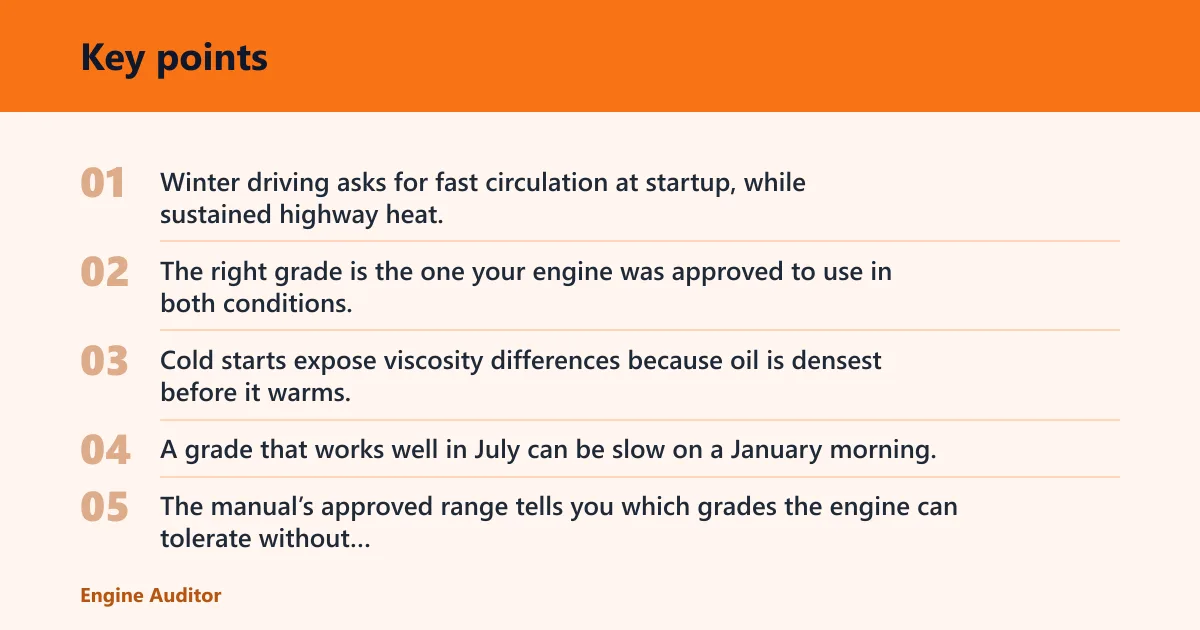
That tradeoff drives the choice. Winter driving asks for fast circulation at startup, while sustained highway heat, towing, or turbocharger heat asks for film strength once the engine is warm. The right grade is the one your engine was approved to use in both conditions.
Cold starts expose viscosity differences because oil is densest before it warms. A grade that works well in July can be slow on a January morning, especially if the car sits outside. The manual’s approved range tells you which grades the engine can tolerate without losing oil pressure control or cold-flow margin.
What does the W rating mean?
The W marks the winter grade. SAE multigrades such as 0W-20, 5W-30, and 10W-40 are tested so they behave one way when cold and another when hot. Single-number grades are less common in passenger cars, while multigrades cover winter startup and operating temperature in one bottle.
Those winter numbers are not guesses. They are tied to lab tests such as the cold crank simulator and mini-rotary viscometer, which measure how the oil behaves at low temperature. Lower W numbers meet colder-flow limits, so they are easier to crank and pump in cold weather. (Wikipedia)
That does not mean the second number is optional. The second number describes the hot-viscosity range, which affects film thickness once the engine is at operating temperature. A winter pick still has to fit the engine’s approved hot protection needs.
How cold-crank testing relates to winter starting
Cold-crank testing matters because the starter has to spin the engine through thick oil before pressure builds. If the oil resists movement too much, the engine cranks slowly, oil reaches critical parts later, and the battery works harder. That is why a lower W rating can help on very cold mornings.
Picture a sedan parked outside overnight at 0°F. If the manual allows 0W-20 and 5W-30, the 0W oil is the better winter start choice for that temperature band. If the manual allows only 5W-30, that grade still matters more than picking a random thinner oil that is not approved.
Should you follow the manual or the weather?
Follow the owner’s manual first. It is the main source for approved viscosity, oil type, and service standards, and it should override guesswork. Climate comes next. If the manual lists more than one viscosity, choose among the approved grades by your lowest startup temperature, not by convenience.
The weather narrows the choice inside the approved list. It does not replace the list. If your manual approves 0W-20 and 5W-30, severe cold favors 0W-20. If your manual approves only 5W-30 for your engine, that is the winter grade to use, even in cold climates.
How to rank multiple approved viscosities
- Start with the owner’s manual and note every approved viscosity and required service spec.
- Identify your coldest realistic startup temperature, not just daytime highs.
- Choose the thinnest approved winter grade that fits that temperature band.
- Check for engine-specific limits such as turbocharging, VVT, or oil-pressure sensitivity.
- Keep the approved hot-viscosity grade if the engine sees towing, long grades, or sustained high load.
Winter oil selection matrix
This matrix uses common approved grades and three winter temperature bands. It does not replace the manual. It ranks approved options by cold-start behavior first, then flags engine types that deserve extra caution.
| Viscosity | Below -10°F / -23°C | -10°F to 20°F / -23°C to -7°C | Above 20°F / -7°C and up | Engine risk flags | Decision rule |
|---|---|---|---|---|---|
| 0W-20 | Best cold-start choice if approved | Still a strong winter pick | Works well if approved | Watch VVT and turbo specs; common in newer engines | Use when the manual lists it and cold starts are the priority. |
| 0W-40 | Good cold-start flow with higher hot viscosity | Useful where hot load is high | Fits some performance or high-heat applications | Check exact factory approval; not universal | Choose only when the manual approves a 0W-40 range or a matching spec. |
| 5W-20 | Acceptable for many winters | Good cold-weather use | Usually fine in mild winter climates | Common in modern engines; verify VVT requirements | Use when approved and temperatures stay above severe-cold territory most of the time. |
| 5W-30 | Works in cold weather, though slower than 0W grades | Versatile year-round choice | Strong all-around option | Often suitable for many modern engines, including some turbo models | Choose if the manual allows it and you want a balanced winter and hot-running grade. |
| 10W-30 | Marginal in severe cold | Acceptable in moderate winter | Fine for many warm starts | May suit some pushrod engines; caution with VVT | Use only when the manual approves it and winter lows stay relatively mild. |
| 10W-40 | Often too stiff for sub-zero starts | Better as temperatures rise | Better suited to higher-temperature operation | Check oil pressure needs; less friendly to cold cranking | Avoid as a winter default unless the manual and climate both support it. |
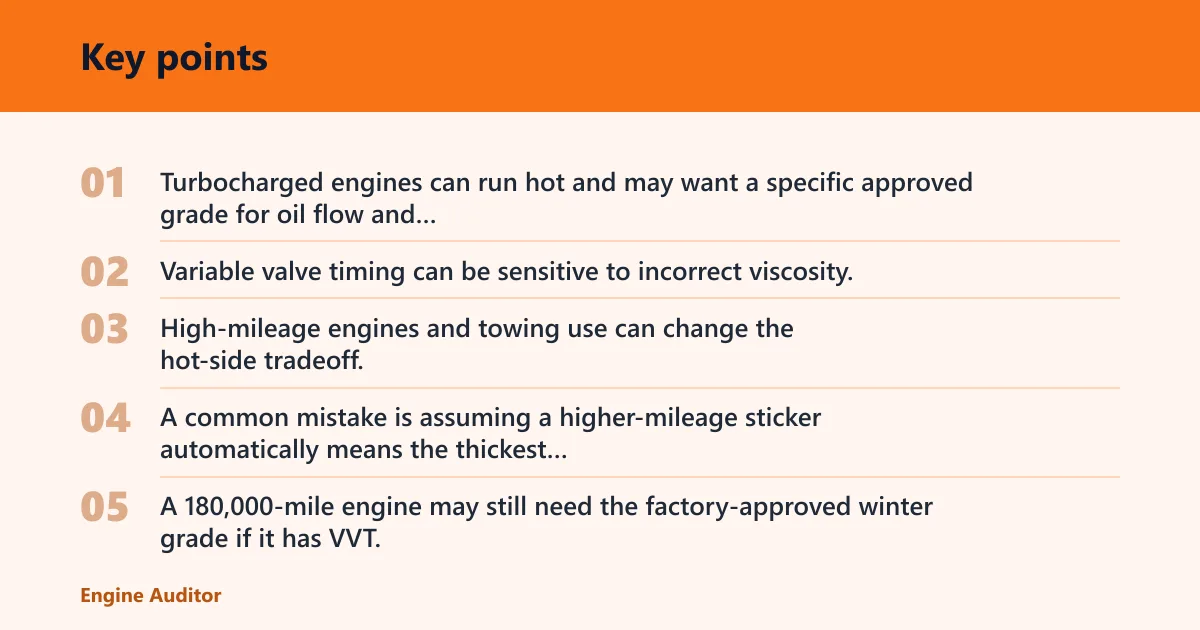
Risk flags matter. Turbocharged engines can run hot and may want a specific approved grade for oil flow and heat control. Variable valve timing can be sensitive to incorrect viscosity, and some systems are less forgiving than others. High-mileage engines and towing use can change the hot-side tradeoff, but they do not cancel the manual.
A common mistake is assuming a higher-mileage sticker automatically means the thickest winter oil is the safest choice. A 180,000-mile engine may still need the factory-approved winter grade if it has VVT, a turbo, or tight oil passages. If the manual allows 0W-20, that does not become “too thin” just because the odometer is higher.
Suppose a crossover is approved for 0W-20 and 5W-30, sits outside in Minnesota, and sees short trips at -15°F. The 0W-20 is the better winter choice because it reaches moving parts faster at startup. If that same vehicle tows a trailer through the mountains in summer, the hot-side grade still has to stay within the approved range.
Is 0W-20 better than 5W-30 for cold weather?
For cold weather alone, 0W-20 usually has the edge because the lower winter rating flows more easily at startup. That does not make it better in every engine. If the manual lists both grades, choose the one that matches your coldest startup temperature and your engine’s hot-running needs, not just the thinnest bottle on the shelf.
Cold-start benefit versus hot-running protection
0W-20 gives faster flow in severe cold. 5W-30 gives a thicker hot-viscosity profile, which can help when the engine runs hotter, sees long highway loads, or has design requirements that favor that grade. The right answer is the approved grade that best fits both sides of the temperature range.
For many newer vehicles, 0W-20 is the winter pick because the engine was designed around it. For others, 5W-30 is the approved compromise that works across seasons. If the manual says both are acceptable, climate and duty cycle decide the tie.
Will synthetic oil help in winter?
Synthetic oil often helps winter starting because it can flow well at low temperature and resist thickening better than many conventional oils. That said, synthetic oil does not change the viscosity grade your engine needs. A synthetic 5W-30 is still a 5W-30, and a wrong grade stays wrong.
Use synthetic as part of the approved spec, not as a substitute for it. Many winter-filled engines use synthetic oil because it performs well across a wider temperature range, but the first step remains the manual’s viscosity recommendation. The bottle type never overrides the grade.
What synthetic changes and what it does not
Synthetic oil can improve cold cranking, pumping, and high-temperature stability within the same SAE grade. It may also hold viscosity better over the service interval. It does not authorize a thinner or thicker grade than the manual allows, and it does not fix a VVT mismatch.
Older engines, high mileage, and towing
Older engines can have different oiling needs, but thicker oil is not a blanket winter fix. Some pushrod engines and older designs may approve 10W-30, and a few may accept 10W-40 under specific conditions. Even then, the approved range still sets the limit, especially for cold starts and oil-pressure-controlled systems.
High mileage sometimes points to oil consumption, leaks, or wear, but it does not automatically justify thicker oil. A worn engine may still need the factory winter grade to start cleanly in cold weather. Towing and turbocharging raise operating temperature, so you have to respect the hot-viscosity side too.
When thicker oil can still be approved
Thicker oil can be appropriate when the manual lists it and the engine design expects it. That is more common in some older or pushrod engines than in late-model engines with tight oil passages and VVT. If the engine uses hydraulic lash adjusters, cam phasers, or narrow galleries, viscosity accuracy matters more.
Do not move to 10W-40 just because the engine has mileage. In sub-zero weather, that grade may be too stiff for easy cranking. If the manual allows a lighter winter grade, that is usually the safer winter choice even for a seasoned engine.
Why factory grade still matters in winter
Factory grade matters because engineers set oil pressure targets, pump capacity, and control strategy around it. A thicker oil can delay pressure rise and affect VVT response. A thinner oil can improve cold flow but may not provide the hot-side protection the engine expects if it is outside the approved range.
Can using the wrong oil viscosity cause hard starts?
Yes. Wrong viscosity can make the engine crank harder, take longer to build oil pressure, and start with less immediate lubrication. In cold weather, that effect gets worse because oil thickens as temperature drops. The starter and battery feel the load first, then the engine does.
Hard starts do not always come from viscosity alone. Battery health, fuel delivery, plugs, and temperature also matter. But if the oil is too thick for the weather or not approved for the engine, it can make a cold start noticeably slower and harsher.
What oil viscosity should I use in winter?
Use the thinnest approved winter grade your manual allows for your coldest startup temperature. If your engine approves 0W-20 and 5W-30, severe cold usually favors 0W-20. If the manual only approves 5W-30, use that. If the approved list includes 10W-30 or 10W-40, treat those as warmer-winter or engine-specific choices, not automatic cold-weather upgrades.
What oil grade is best for older engines in winter?
The best grade for an older engine is the one the manual approves for that engine and climate. Some older designs do well on 10W-30, while others still need 5W-30 or a lower winter grade. Mileage alone should not push you to thicker oil if cold starts are already difficult.
How do I choose oil if my manual lists more than one viscosity?
Rank the approved grades by your lowest startup temperature, then check engine design. Use the lowest W rating that is approved for your climate, but do not ignore VVT, turbocharging, towing, or oil-pressure requirements. If two grades are approved, the colder one usually wins for winter mornings and the thicker one may fit hotter duty better.
Frequently asked questions
What does the W mean on oil bottles?
The W marks the winter rating. Lower W numbers are tested to flow better in cold conditions, which helps cold cranking and faster lubrication. The second number is the hot-viscosity rating, so both parts of the grade matter when you choose oil for winter driving.
Is 10W-40 too thick for cold weather starts?
Often, yes. In sub-zero conditions, 10W-40 can be slow to move and harder for the starter to turn, especially if the engine was not approved for it. It may be fine in milder winter weather if the manual allows it, but it is not the first pick for severe cold.
Can I use thicker oil in winter if my car has high mileage?
Not by default. High mileage does not automatically justify thicker oil in winter, and it can make cold starts worse. If the manual approves a thinner winter grade, that is usually the better choice unless the engine has a specific factory-approved exception.
Will synthetic oil help my car start better in winter?
Often, yes, because synthetic oil usually flows well at low temperature within the same SAE grade. But it does not change the grade requirement. A synthetic 5W-30 is still a 5W-30, so you still need the correct approved viscosity for the engine.
Should I follow the owner’s manual or the climate when choosing oil?
Start with the manual, then use climate to choose among the approved viscosities. The manual sets the safe range for the engine. Climate decides which approved grade is best for your coldest startup temperatures, but it should not override factory requirements.
Products related to this article
Sponsored / affiliate links. As an Amazon Associate I earn from qualifying purchases. I may earn additional commission from eligible campaigns.
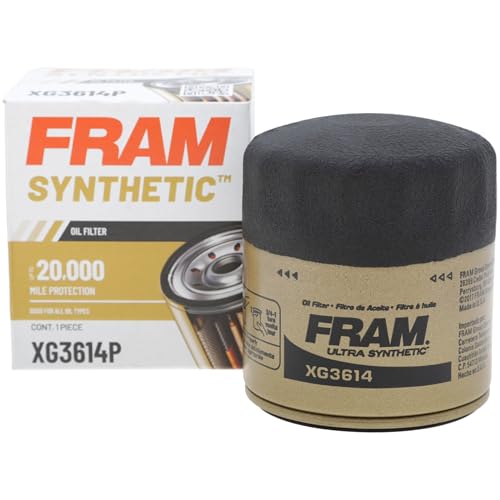 FRAM Synthetic XG3614P 20K Mile Change Automotive Replacement Engine Oil Filter for Synthetic Oil Changes, Premium Vehicle Engine Protection Oil Filter for Select Vehicle Model Years
 ECOGARD X10023 Cartridge Engine Oil Filter for Conventional Oil - Premium Replacement | Fits 2018-2023 Volkswagen Atlas 3.6L; 2020-2023 Atlas Cross Sport 3.6L