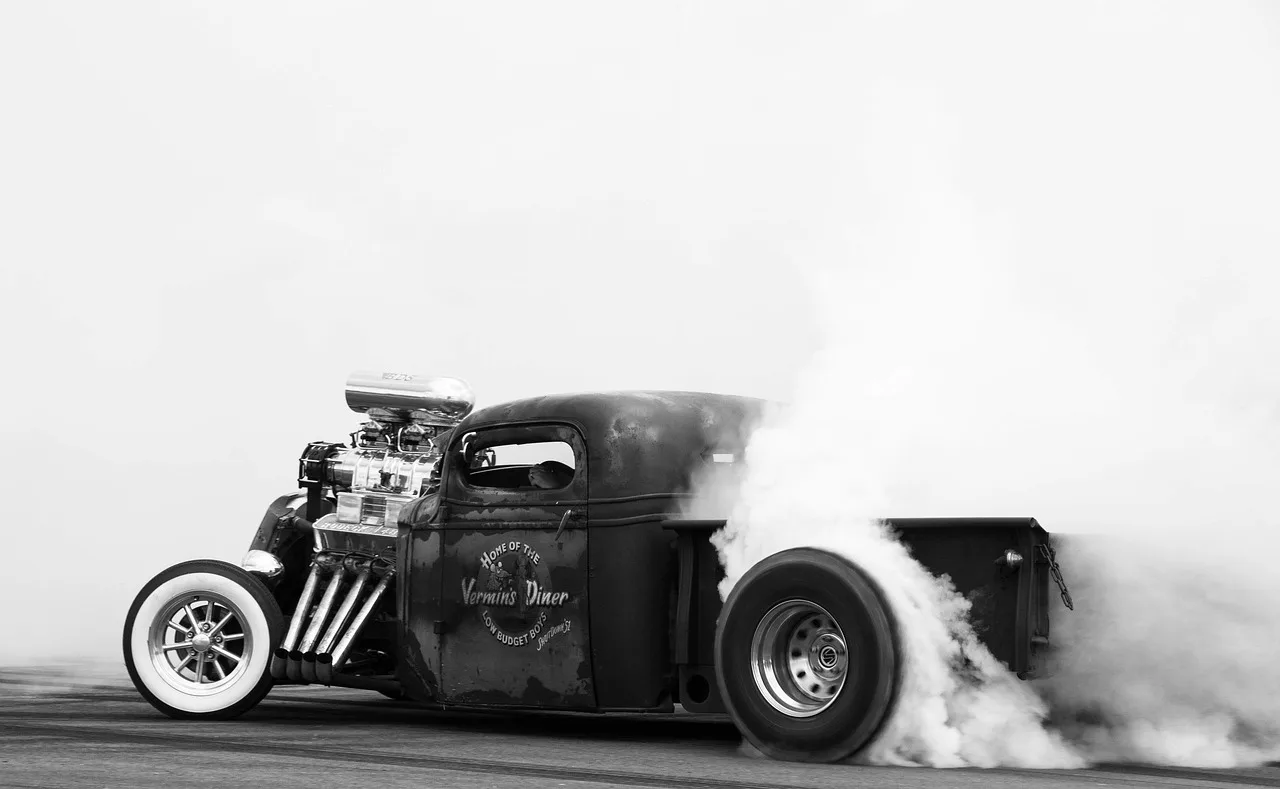
Is White Smoke From the Exhaust Normal on Cold Mornings?
Yes, white exhaust can be normal on cold mornings if it fades within about 5 to 10 minutes and does not smell sweet or cause coolant loss. Miss that warning sign, and you can overlook a coolant leak or head-gasket fault that can overheat the engine. This guide shows a fast two-minute check using duration, odor, and coolant level so you can tell steam from trouble.
Quick answer
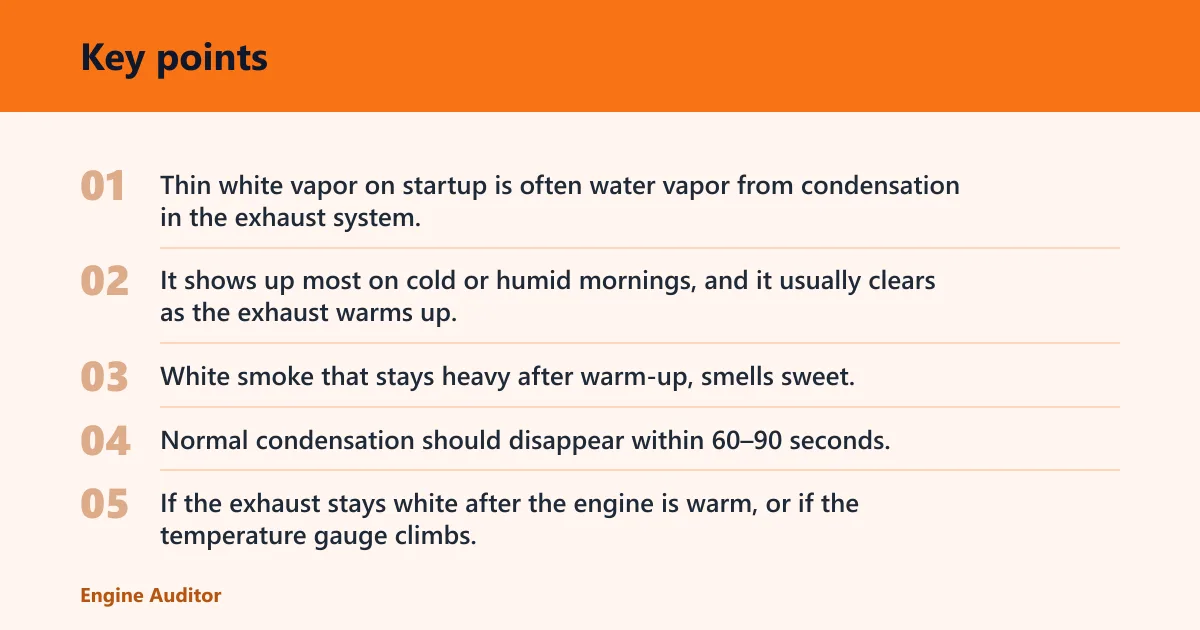


Thin white vapor on startup is often water vapor from condensation in the exhaust system. It shows up most on cold or humid mornings, and it usually clears as the exhaust warms up. White smoke that stays heavy after warm-up, smells sweet, or comes with a falling coolant level points to a different problem.
The key is timing. Normal condensation should disappear within 60–90 seconds, and many cold-start plumes fade within a couple of minutes. If the exhaust stays white after the engine is warm, or if the temperature gauge climbs, treat it as a cooling-system fault until proven otherwise.
Cold morning exhaust triage matrix
| Smoke duration | Density | Smell | Coolant level change | Temperature-gauge behavior | Likely cause | Next action |
|---|---|---|---|---|---|---|
| Under 60–90 seconds | Thin wisps | Neutral or slightly damp | No change | Rises normally | Normal condensation in the exhaust | Drive normally; recheck only if it returns warm |
| About 1–5 minutes | Light to moderate vapor | Usually neutral | No obvious loss | Normal warm-up | Monitor territory, especially after short trips or humid weather | Watch the coolant reservoir and recheck on the next cold start |
| Beyond warm-up | Thick, persistent cloud | Sweet smell | Coolant level drops | Hot, climbing, or unstable | Coolant entering the combustion chamber; head gasket, cracked head, or cracked block | Stop driving and inspect immediately |
White vapor can be strongest on a cold or humid morning, especially after a short trip the day before. Moisture collects in the muffler and exhaust pipes overnight, then leaves a visible plume when the engine starts. Short trips also keep the exhaust too cool to boil off that water.
How to tell steam from smoke
Steam from condensation is thin, short-lived, and usually fades as the exhaust gets hot. White smoke from a coolant leak tends to hang in the air longer, smell sweet, and keep coming after the engine reaches normal temperature. The difference is clearer when you check duration, odor, and coolant level together.
Normal condensation signs
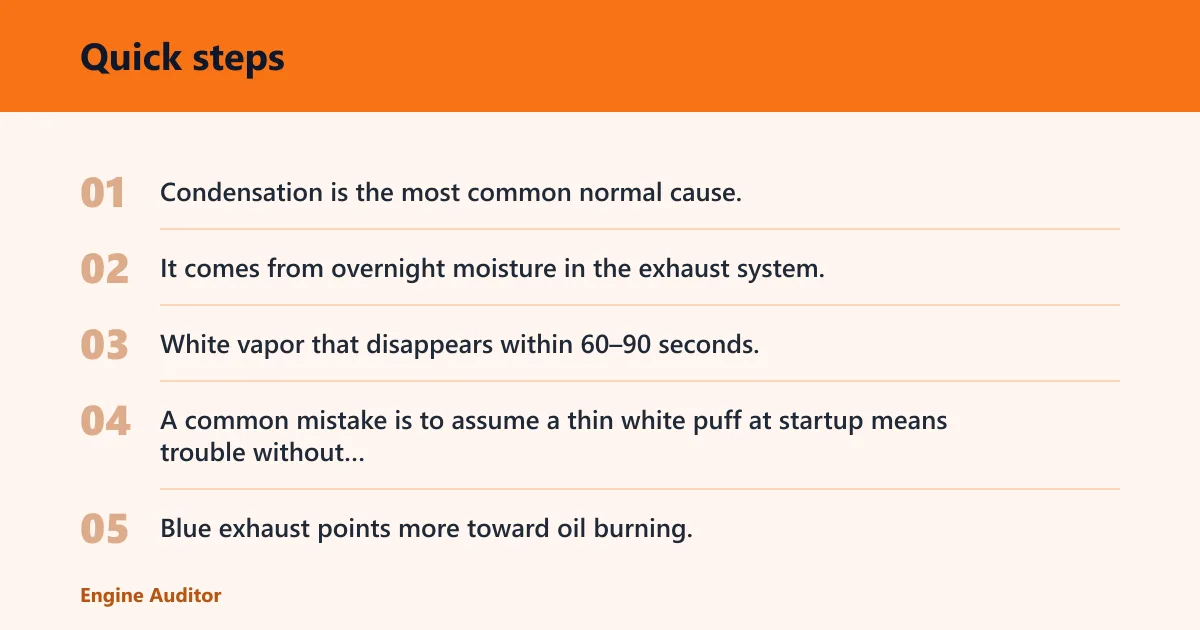
Condensation is the most common normal cause. It comes from overnight moisture in the exhaust system, and it is most noticeable on cold or humid mornings. White vapor that disappears within 60–90 seconds, or at most soon after the engine begins to warm, fits this pattern.
A common mistake is to assume a thin white puff at startup means trouble without checking whether it disappears once the engine warms up. Blue exhaust points more toward oil burning, and black exhaust points more toward excess fuel. White exhaust needs its own check because water vapor, coolant, and diesel cold-start issues can all look similar at a glance.
Signs of coolant in the cylinders
Persistent white smoke after warm-up can point to coolant entering a cylinder. Thick white smoke with a sweet smell is especially suspicious. If the coolant reservoir level drops, or if the temperature gauge runs hotter than usual, the odds shift away from harmless condensation and toward internal engine damage.
Suppose your sedan puts out a thick white cloud for several minutes, then the level in the reservoir drops again the next morning. That pattern is not typical condensation. It points toward a leak path that lets coolant enter the combustion chamber or another part of the intake or exhaust stream.
Why short trips make it worse
Short trips leave moisture behind because the exhaust never stays hot long enough to dry out. More water remains in the muffler, pipes, and catalytic converter, so the next cold start makes the vapor more visible. That extra moisture can also speed muffler corrosion over time.
When is white smoke a head gasket problem?
A head gasket is a common serious cause because it seals the block to the cylinder head and keeps coolant and combustion gases separate. When it fails, coolant can enter a cylinder and burn, creating persistent white smoke, a sweet smell, coolant loss, and sometimes overheating.
Other internal coolant leaks to consider
Not every coolant-burning problem is a head gasket. A cracked cylinder head or cracked block can produce the same kind of white smoke if coolant reaches the combustion chamber. Some engines can also leak coolant through intake-manifold seals or turbo-related faults, depending on design.
What overheating changes
Overheating makes the problem more urgent. If the gauge climbs above normal, or if the heater blows cooler air while the engine runs hot, stop driving. Continued driving can turn a repairable leak into warped metal, blown seals, or a larger cylinder-head failure.
White smoke that is heavy, persistent, or paired with overheating means the problem has crossed from monitor into stop-driving territory. A cooling-system fault can escalate fast. If the temperature gauge is rising and the exhaust stays white after warm-up, the safest move is to shut it down and inspect it.
What to check first on startup
Start with the reservoir, the dipstick, and the temperature gauge. Those three checks tell you a lot before any tools come out. Then look for obvious leaks around hoses, the radiator, the cap, the heater core area, and the water pump.
- Check the coolant reservoir level when the engine is cold.
- Look at the oil dipstick for a milky, foamy, or unusually frothy appearance.
- Watch the temperature gauge during warm-up for normal rise and stable behavior.
- Inspect the ground and engine bay for coolant at hoses, radiator seams, the cap, heater hoses, or the water pump.
- If the smoke persists, look for bubbles in the reservoir with the engine running.
Only check the reservoir when the engine is cool. A hot cooling system can be pressurized. If the level is low before startup and the smoke is white after warm-up, the chance of an internal leak rises. Milky oil is another red flag because coolant can contaminate the crankcase too.
Picture a compact car that smokes white for 30 seconds on a frosty morning, then clears. The reservoir stays full, the gauge stays normal, and the smell is neutral. That pattern fits condensation. Now change only one variable: the smoke continues after ten minutes and the reservoir has dropped. That is no longer a normal cold start.
Bubble check in the reservoir
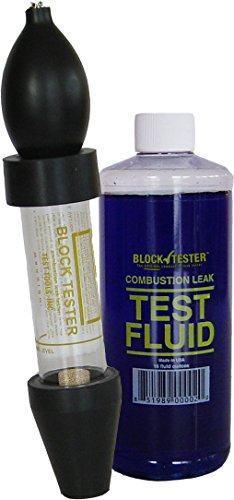
With the engine running and the cap on as designed, watch the reservoir for continuous bubbles or repeated pressure loss. A few small disturbances at startup can happen, but steady bubbling can suggest combustion gases entering the cooling system. That is one reason a compression test, leak-down test, or block test may be needed.
Why it happens more in cold weather
Cold weather lengthens warm-up time, so exhaust condensation stays visible longer. Vapor can collect overnight in the exhaust system, then leave the tailpipe as a white plume when the engine starts. Cold air also makes the cloud easier to see, even when the amount of moisture is small.
Warm-up time and ambient temperature
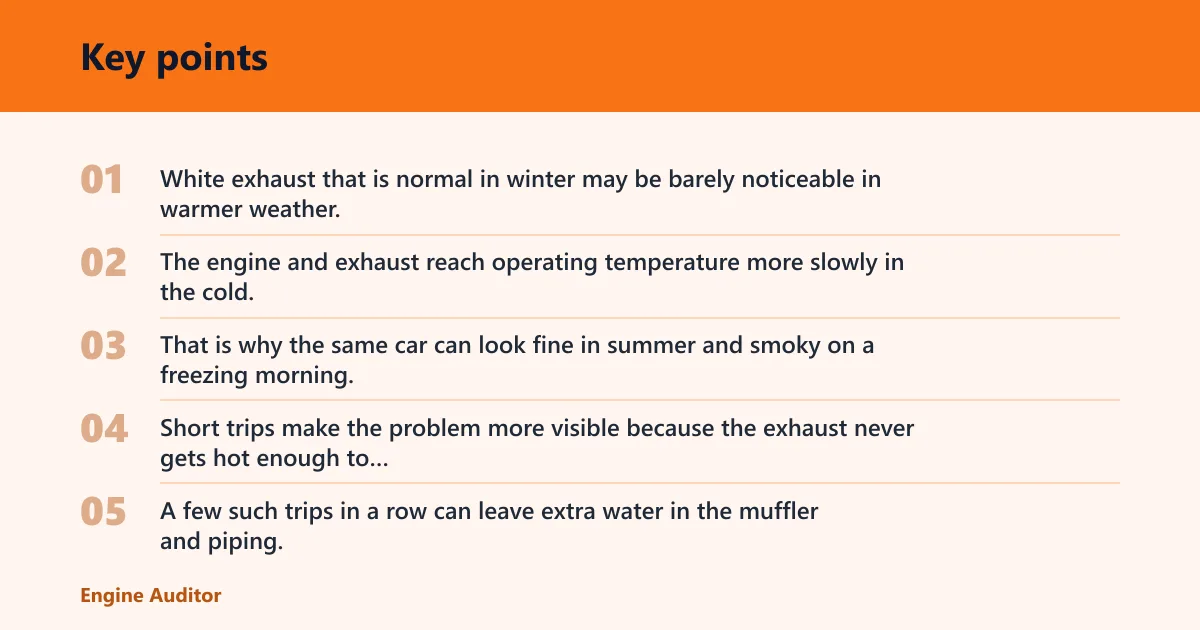
White exhaust that is normal in winter may be barely noticeable in warmer weather. The engine and exhaust reach operating temperature more slowly in the cold, so the moisture takes longer to clear. That is why the same car can look fine in summer and smoky on a freezing morning.
Short-trip moisture buildup
Short trips make the problem more visible because the exhaust never gets hot enough to dry itself. A few such trips in a row can leave extra water in the muffler and piping. That water does not mean engine damage by itself, but repeated moisture can lead to rust inside the exhaust.
Diesel engines and cold-start white smoke
Diesel engines need separate handling. A small amount of white smoke during a cold diesel start can be normal, and incomplete combustion is a common reason. Glow plugs, injectors, timing, and compression problems can also cause white smoke on startup before the engine settles down.
Incomplete combustion on diesel cold starts
Diesel fuel can burn poorly when the chambers are cold, which creates a whitish plume and rougher running for a short time. If the smoke fades as the engine warms, that can fit normal cold-start behavior. If it lingers, the issue may be fuel delivery, glow plug operation, timing, or compression.
What differs from gasoline engines
Gasoline engines more often point you toward condensation or coolant intrusion when the smoke is white. Diesel engines add another layer: cold combustion can look similar to coolant smoke. That is why duration, odor, and warm-up behavior matter even more on diesel vehicles.
Suppose a diesel truck starts on a 20-degree morning and gives off a small white plume for the first minute. If it clears, idles smoothly, and the coolant stays steady, that can be normal. If the smoke stays heavy after warm-up, the next check is not guesswork; it is fuel, glow plugs, timing, compression, and the cooling system.
Frequently asked questions
Is white smoke from the exhaust normal on a cold morning?
Yes, thin white wisps on a cold morning are often normal. They are usually water vapor from condensation in the exhaust system, especially after short trips or humid weather. If the smoke fades within 60–90 seconds and there is no sweet smell or coolant loss, it usually points to harmless moisture.
How long should white smoke from the exhaust last after startup?
Normal condensation should disappear within 60–90 seconds, and many cold-start plumes clear within a couple of minutes as the exhaust warms up. If white smoke keeps going after the engine reaches normal temperature, treat it as a fault to inspect rather than a normal cold-morning effect.
What is the difference between steam and white smoke from the exhaust?
Steam from condensation is thin, short-lived, and usually odorless or damp-smelling. White smoke from coolant burning is thicker, may smell sweet, and tends to persist after warm-up. Smell, duration, and coolant level together give a better answer than color alone.
When is white smoke from the exhaust a head gasket problem?
Think head gasket when white smoke stays heavy after warm-up, the coolant level drops, the engine runs hot, or the exhaust smells sweet. A failed gasket can let coolant and combustion gases mix. Cracked heads and cracked blocks can cause the same pattern, so the diagnosis should not stop at one guess.
Can low coolant cause white smoke from the exhaust?
Low coolant does not create white smoke by itself, but a coolant leak that lowers the reservoir can allow coolant to enter a cylinder. If the exhaust is white, the level is falling, or the engine overheats, the low coolant is part of the fault pattern and needs inspection.
What should I check first if the exhaust looks white on startup?
Check the coolant reservoir level first, then the oil dipstick, then the temperature gauge. Look for leaks at hoses, the radiator, the cap, the heater core area, and the water pump. If the smoke stays white after warm-up or the gauge climbs, stop driving and inspect immediately.
Products related to this article
Sponsored / affiliate links. As an Amazon Associate I earn from qualifying purchases. I may earn additional commission from eligible campaigns.
 RVS Technology G6 Engine oil Treatment; For Gasoline Engines with a Motor oil capacity up to 6 quarts; Save fuel, Boost Power and Safely Restore and protect your Car, Truck, and all other engines
 FUELHOOD Engine Oil Level Indicator Dipstick for Honda CR-V 1997-2001 No.15650-P3F-A00 Premium Fit Design