Cold Weather Engine Care: Oil, Starts, Fuel
Use the lowest winter oil grade your owner’s manual allows—typically 0W-20 or 5W-30 for gasoline engines, 5W-40 or 0W-40 for many diesels—and treat slow cranking below 20°F (-7°C) as a battery, oil, or fuel clue. Choose wrong and you raise start-up wear, load the starter and battery harder, and turn small fuel problems into a no-start. This guide sorts winter failures by symptom, temperature, oil choice, and engine type.
The split is straightforward. A slow, heavy crank usually points first to oil drag, battery weakness, or both. A normal-speed crank that does not fire more often points to fuel delivery, ignition, or glow-plug-related issues, with gasoline moisture freezing and diesel gelling calling for different first checks.
Why cold starts cause more wear

What changes in the first seconds after startup
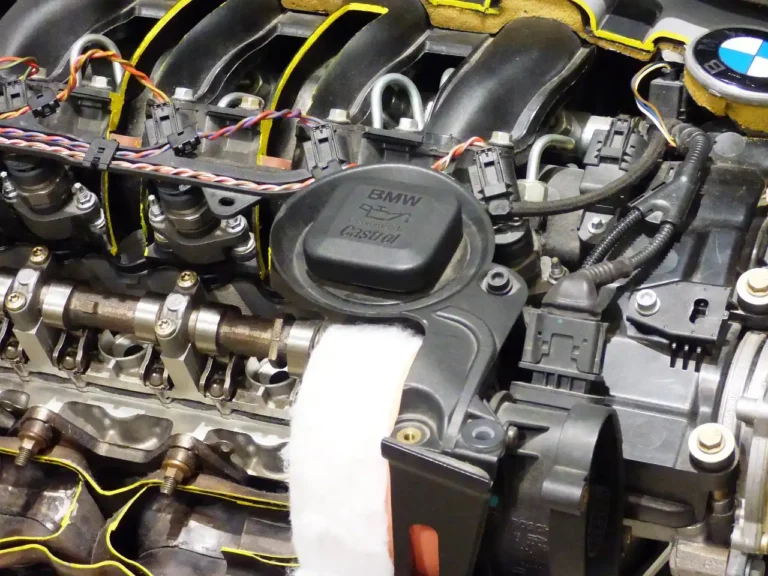
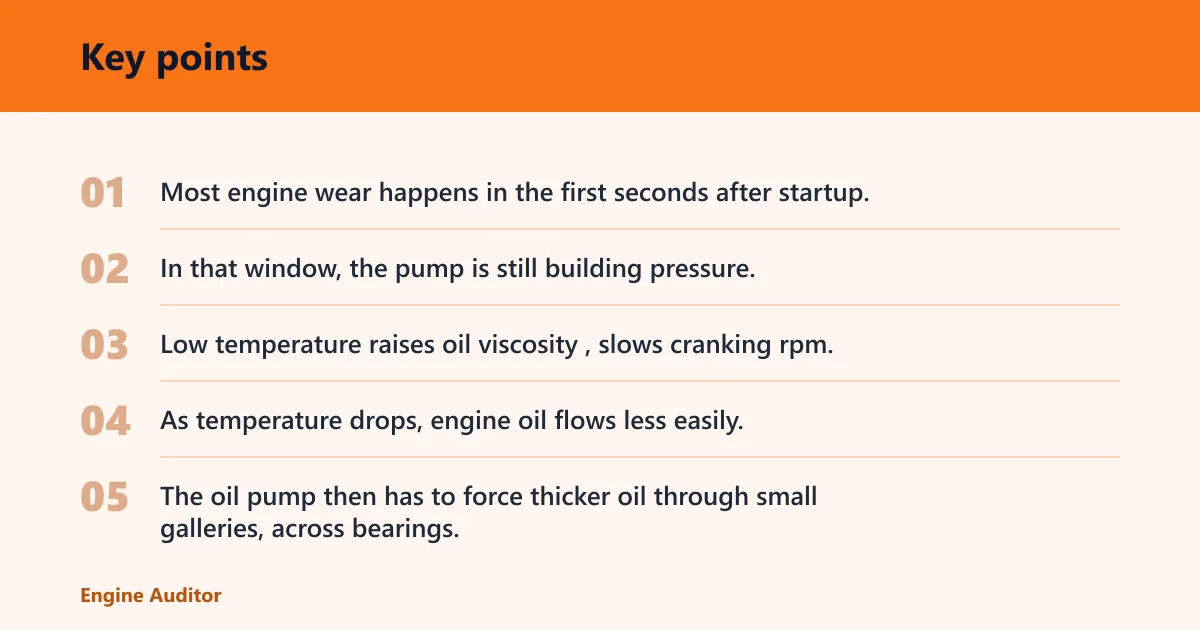
Most engine wear happens in the first seconds after startup. In that window, the pump is still building pressure, oil has not reached every tight clearance, and moving parts can touch under a thinner oil film than they have once flow stabilizes.
Cold weather makes that window longer. Low temperature raises oil viscosity, slows cranking rpm, and can make the first combustion events less consistent.
How thickened oil slows pressure and circulation
As temperature drops, engine oil flows less easily. The oil pump then has to force thicker oil through small galleries, across bearings, and up to the valvetrain and turbo oil feeds before full circulation settles in.
That delay matters most on short trips. If the engine seldom reaches full operating temperature, the cold-start phase takes up a bigger share of its total running time.
Why battery output and starter load worsen at low temperature
A battery that seems fine in mild weather can turn marginal in winter. At the same time, thicker oil makes the starter work harder, so battery condition and oil viscosity often stack together.
If cranking speed drops and the dash lights dim hard, the battery is often involved. If the crank sounds slow and heavy while the lights stay fairly steady, move oil drag higher on the suspect list, especially when the oil grade sits near the thick end of the approved range.
Where the oil pump fits into the wear picture
The pump does not create lubrication on its own, it moves oil through the system fast enough to establish full flow. Thicker oil takes longer to move, and that lag leaves bearings, cam lobes, timing components, and turbocharger bearings waiting longer.
That is why cold-start oil choice affects more than whether the engine eventually starts. It changes how hard those first few seconds are on the hardware.
How to tell harmless cold-start exhaust from engine trouble
White exhaust on a cold morning is often just condensation, and it should thin out as the engine warms up. The key is what happens next: if the cloud fades in about 5 to 10 minutes, has no sweet smell, and coolant level stays steady, it is usually normal. If it lingers, smells sweet, or comes with dropping coolant, that points to a possible leak or head-gasket issue that needs attention fast. The supporting guide breaks down a simple startup check so you can separate steam from a real fault: white smoke exhaust.
What does oil viscosity mean in winter?
The winter part of a multi-grade oil tells you how it behaves during cold starts, and the hot number tells you its viscosity once the engine reaches operating temperature. The first number with a W indicates low-temperature performance, and lower W numbers flow better in the cold.
Reading the W rating on multi-grade oil
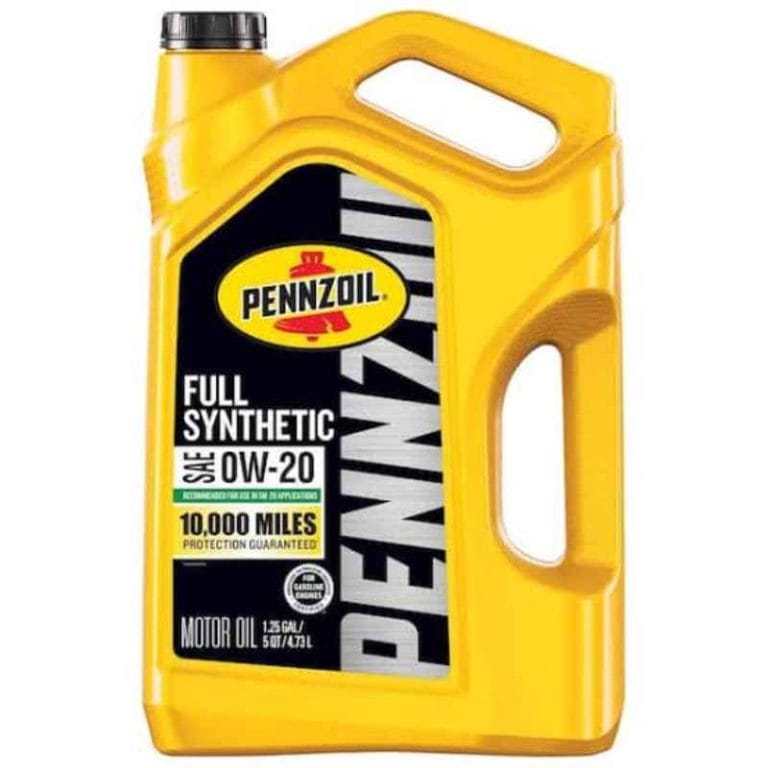
On labels like 0W-20, 5W-30, and 10W-40, the first number matters most on cold mornings. A 0W oil will usually pump and crank better at very low temperatures than a 5W oil, and a 5W oil will generally beat a 10W oil as ambient temperature falls.
That does not make the lowest number automatically correct. The owner’s manual and manufacturer oil specification define the approved viscosity range and approvals for that engine.
What 0W-20, 5W-30, and 10W-40 actually tell you
A 0W-20 aims for easier cold flow and a lower operating-temperature viscosity. A 5W-30 gives up some cold-flow margin versus 0W but keeps a thicker hot viscosity. A 10W-40 can ask more from the starter in winter and may maintain a thicker oil film when hot.
The second number covers the operating-temperature side of the job. It has to match bearing clearances, valvetrain design, oil-consumption targets, and, in many engines, turbocharger demands.
Why pour point is related but not the same
Pour point is the lowest temperature at which an oil will still pour. It matters for storage and severe cold, but it is not the same as viscosity grade and does not replace the manufacturer’s approved winter rating.
Conventional mineral oil pour point is around -25°C to -40°C. Synthetic oil pour point is commonly around -45°C to -60°C. Those numbers help explain why synthetic often behaves better in severe cold, but they do not justify an unapproved grade.
Which oil grade should you use in cold weather?
The best winter oil is the lightest cold-weather grade your owner’s manual permits while still meeting the required hot-viscosity grade and approval. Common winter-grade options include 0W-20 or 0W-30, and common alternatives also include 5W-30 or 5W-40.
Start with the owner’s manual and OEM approvals
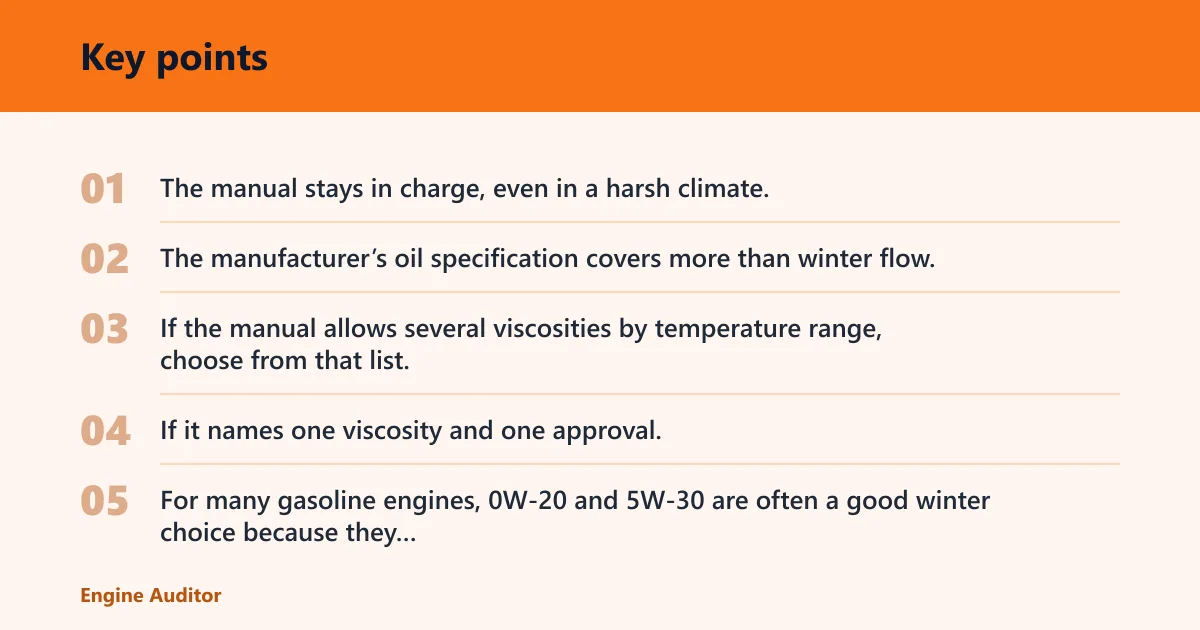
The manual stays in charge, even in a harsh climate. The manufacturer’s oil specification covers more than winter flow, including additive package, deposit control, timing-chain wear, emissions-system compatibility, and in many cases turbo protection.
If the manual allows several viscosities by temperature range, choose from that list. If it names one viscosity and one approval, stay there unless the manufacturer has issued a newer service recommendation.
Matching ambient temperature bands to approved winter grades
For many gasoline engines, 0W-20 and 5W-30 are often a good winter choice because they can reduce cranking resistance while staying within the recommended range. For many diesels, 5W-40 or 0W-40 can make sense when those grades are approved for the engine.
Below -20°F/-29°C, the article says to consult the manufacturer for special oil advisories. At that point, factory cold-weather guidance matters more than guesswork.
Picture a crossover parked outside in northern Minnesota at 5°F (-15°C). If the manual allows both 0W-20 and 5W-30, the lower winter number will usually cut starter load and shorten the delay before oil reaches the top end. If the same manual requires a specific approval tied to timing-chain wear or turbo deposits, that approval still comes first.
Older, high-mileage, and turbo engines
Older engines and high-mileage engines can complicate the choice. A lower winter number can help cold starts, but the hot side still has to fit oil consumption, bearing clearances, and oil-pressure targets the manufacturer intended.
Turbocharged engines shrink the margin further. Fast spool-up and high bearing temperatures make the hot-viscosity requirement and approval especially important. Dropping from an approved 5W-40 to an unapproved 0W-20 because the weather turned cold is the wrong trade.
Why summer oil can create winter starting problems
A thicker warm-weather oil can raise cranking resistance, slow oil circulation, and push a weak battery over the edge. The result can look like a dead battery when the battery was only borderline.
Using the wrong oil weight can also cause the opposite problem. Choosing a thinner hot-viscosity grade than the manual allows may improve cranking, yet reduce the protection the engine was designed to have once fully warm.
Is synthetic oil better for cold weather?
Synthetic oil is usually the better winter choice when the correct approval and viscosity are available because it often flows better in severe cold and thickens less than conventional oil. That advantage is real, but it does not remove the need to match the manufacturer’s spec and hot-viscosity requirement.
Cold-flow differences between synthetic and conventional oil
Conventional oil often thickens more in low temperatures and usually has a higher pour point than synthetic. That is why synthetic often gives easier cranking and quicker circulation during cold starts, especially on short trips where the engine spends little time fully warm.
The difference shows up in normal use. A synthetic 0W-20 or 5W-30 often places less load on the starter than a conventional oil at the thick end of the approved range.
Where synthetic helps most
Severe cold, overnight outdoor parking, and repeated short winter trips are the strongest cases. In those conditions, the engine returns to a cold-soaked state again and again, so better low-temperature flow matters every morning.
Suppose a compact SUV does five-mile school runs and sits outside overnight in Alberta. Moving from an approved conventional 5W-30 to an approved synthetic 5W-30 will not change the label grade, but it can still improve cold-start behavior because synthetic commonly has a lower pour point and better low-temperature flow.
Limits of the synthetic advantage
Synthetic is not a cure for every winter no-start. If the battery is weak, the terminals are corroded, or diesel fuel has gelled in the filter, better oil alone will not fix it.
It is also not permission to use a lower-viscosity grade than the engine allows. Better base oil cannot make an unapproved viscosity correct.
How do you tell oil drag from battery trouble?
Use the symptom pattern. Slow cranking with dimming dash lights points first to battery weakness or high electrical resistance. Slow cranking with fairly steady lights and a heavy, labored starter sound points more to thick oil or combined oil-and-battery drag. A normal-speed crank points away from oil as the main cause.
Slow crank, dim lights, and heavy starter sound
If the engine turns slowly and the interior lights or cluster fade hard during cranking, start with battery state of charge, terminal condition, and cable connections. Cold cuts available cranking power, and a marginal battery often fails first in winter.
That does not clear the oil. Thick oil can raise current draw enough to expose a battery that was already weak.
Slow crank with good lights
If the crank is slow but the dash lights stay comparatively strong, the battery may still be adequate while the starter fights thick oil and a cold engine. This pattern becomes more likely if the oil is overdue, at the upper end of the approved viscosity range, or simply wrong for the season.
A 10W-40 in an engine that allows 0W-20 or 5W-30 is a classic setup for sluggish winter cranking.
When a marginal battery and thick oil stack together
Many winter no-starts are combination failures. The oil is a little too thick for the temperature, the battery is a little weak, and together they drag cranking speed below what the engine needs for easy ignition.
Say your sedan parked outside at 12°F (-11°C) used to start fine with a brief pause. Now it drags for two seconds, the cluster dims, and the engine barely catches. That pattern fits battery-plus-oil drag better than a fuel fault, because fuel problems more often leave cranking speed normal.
What symptom pattern points away from oil entirely
If the starter spins the engine at normal speed but it never fires, oil viscosity is usually not the lead suspect. Move to fuel delivery, spark on gasoline engines, or glow-plug and fuel-filter issues on diesels.
No-crank conditions point elsewhere too. A click with no rotation suggests battery, cables, solenoid, or starter problems rather than oil grade.
When is fuel the real cold-weather problem?
Fuel becomes the lead suspect when the engine cranks at normal speed but will not start, or starts and dies quickly. Gasoline engines often suffer from moisture freezing in lines or filters, while diesel engines are more prone to paraffin wax gelling that restricts the filter and fuel flow.
Gasoline engines: frozen moisture in lines or filters
Water contamination can freeze in a line, at the pickup, or in a filter, especially after temperature swings and low fuel levels. The engine may crank normally yet fail to catch because fuel pressure never reaches the injectors as it should.
This differs from thick oil. Crank speed stays close to normal because the starter is not fighting abnormal mechanical drag.
Diesel engines: wax gelling and clogged filters
Diesel fuel can gel in cold weather as paraffin wax crystals form and restrict flow. The fuel filter is often the first bottleneck, followed by lines and pickup strainers.
When that happens, the engine may crank well but fail to start, or it may start briefly and stall as the filter starves the injection system. That is a fuel-side failure, not an oil-side one.
Cranks normally but will not fire
For a gasoline engine, look for signs that point to fuel delivery before blaming oil: normal cranking speed, no heavy starter sound, and no major dash-light sag. For a diesel, add the chance of cold-soaked fuel restriction, especially if the vehicle ran recently and then refused a restart after sitting outside.
A common first-timer mistake is hearing healthy cranking and still blaming thick oil because the weather is cold. If crank speed sounds normal, oil is less likely to be the main blocker.
First actions by fuel type
- Gasoline engine: If cranking speed is normal, suspect fuel delivery or ignition before changing oil assumptions. Move the vehicle to a warmer space if possible and check for known water-contamination or filter issues.
- Diesel engine: If cranking speed is normal and the engine will not stay running, suspect filter restriction from gelling. Warming the vehicle and filter area is a more logical first move than chasing oil grade.
- Either engine: If the crank is slow, address battery and oil drag first because poor cranking speed can block ignition even when fuel is present.
When fuel antifreeze is worth considering
Fuel antifreeze only matters in specific winter conditions, and the supporting guide explains how to tell whether your vehicle actually needs it. In many cases, the bigger issue is water in the fuel system, not the temperature itself. That makes the choice less about buying an additive by default and more about matching the product to the problem.
The article breaks down what fuel antifreeze does, when a fuel stabilizer or anti-gel is the better fix, and how to avoid using the wrong additive for your vehicle. See the full fuel antifreeze winter guide for the practical decision points that matter before cold weather sets in.
Can Gas Freeze in a Fuel Line?
Gasoline itself usually doesn’t “freeze” in a car fuel line, but extreme cold can still cause a no-start if water in the system turns to ice or if cold fuel flow becomes restricted. That distinction matters because the fix depends on the cause: a frozen line, water contamination, or a separate battery, filter, or ignition problem all need different checks.
The fuel line freeze guide explains what actually stops fuel delivery, how ethanol and moisture change the risk, and how to tell ice-related symptoms from other winter no-start issues before you replace the wrong part.
Cold-start decision table
Symptom-by-temperature path
| Temperature range | Crank speed | Dash lights | Noise pattern | Most likely subsystem | Recommended next step |
|---|---|---|---|---|---|
| 32°F to 20°F (0°C to -7°C) | Normal | Normal brightness | Even cranking, no fire | Fuel or ignition more likely than oil | Check fuel delivery symptoms first; do not assume oil caused the no-start |
| 32°F to 20°F (0°C to -7°C) | Slow | Noticeable dimming | Labored starter | Battery, with oil adding load | Charge and test the battery; inspect terminals and verify the oil grade matches the manual |
| 20°F to 0°F (-7°C to -18°C) | Slow | Mostly steady | Heavy, dragging rotation | Oil drag or oil-plus-battery | Confirm the approved winter viscosity; if an approved lower W grade is available, plan that change and check battery reserve |
| 20°F to 0°F (-7°C to -18°C) | Normal | Normal brightness | Cranks evenly, may start then die | Fuel delivery | Gasoline: suspect frozen moisture. Diesel: suspect filter restriction or early gelling |
| 0°F to -20°F (-18°C to -29°C) | Very slow | Strong dimming | Starter strains, may click after a few tries | Battery and oil together | Stop repeated attempts, charge the battery, verify oil spec, and consider pre-warming before the next start |
| 0°F to -20°F (-18°C to -29°C) | Normal | Normal brightness | Cranks well, diesel will not catch or stay running | Diesel fuel filter and lines | Warm the vehicle and inspect for gelling at the filter before blaming oil viscosity |
| Below -20°F (-29°C) | Slow or very slow | Any dimming | Dragging or uneven crank | Oil, battery, and extreme-cold load | Consult the manufacturer for special oil advisories, use a block heater if fitted, and avoid repeated cold-soaked start attempts |
| Below -20°F (-29°C) | Normal | Normal brightness | Healthy crank, no start | Fuel system by engine type | Gasoline: move toward moisture-freeze diagnosis. Diesel: move toward gelling diagnosis and filter restriction checks |
When do block heaters and pre-warming make sense?
Block heaters start to make sense when cold starts become a repeated strain rather than an occasional event, especially near 0°F (-18°C) and below, with the strongest case below -20°F (-29°C). Pre-warming cuts starter load, helps the pump move oil sooner, and shortens the highest-wear phase after startup.
How a block heater changes startup load
Warming the block warms the oil touching engine parts, lowers cranking resistance, and gives the battery an easier job. The engine usually spins faster, fires sooner, and reaches stable oil circulation more quickly.
That matters for both reliability and wear. The benefit is mechanical.
Rough thresholds where pre-warming starts to pay off
In mild winter climates, a block heater is mostly a convenience item. Around 20°F to 0°F (-7°C to -18°C), it becomes more worthwhile for vehicles parked outdoors overnight, especially if trips are short. Below 0°F (-18°C), the case gets stronger for many engines. Below -20°F (-29°C), it is often part of the normal cold-weather plan.
Who benefits most
Outdoor-parked vehicles, diesels, and cars used for repeated short trips get the most from pre-warming. So do vehicles with approved 5W oils that live where a 0W option is not available or not approved.
Pre-warming does not replace the right oil spec or a healthy battery. It supports both.
What winter habits reduce no-start risk?
The best prevention is timed around the first real cold snap: change oil before deep winter if the service interval is near, confirm the approved viscosity, keep the battery fully charged, and fix fuel-system contamination before temperatures drop hard. Warm the engine briefly, then drive gently instead of idling for long periods.
Oil-change timing before peak cold
If an oil change is due soon, doing it before the hardest weather hits keeps tired oil and the wrong seasonal grade out of the coldest months. That is especially useful when switching within the approved range from a higher winter number to a lower one.
Battery state of charge and terminal condition
Winter starting depends on voltage holding up while current demand spikes. A good battery with dirty terminals can act bad, and a marginal battery can act dead once thick oil raises starter load.
Check charge state, terminal tightness, and visible corrosion before the weather turns severe.
Fuel-system prevention by engine type
For gasoline vehicles, low fuel levels and water contamination make freeze-up more likely. For diesels, filter condition and cold-weather fuel readiness matter more because restriction often shows up at the filter first.
Keep the diagnosis separate. Gasoline moisture freezing and diesel gelling are different failures with different first actions.
How long to warm up before driving away
Most manufacturers advise only a brief stabilization period before moving off. Let the idle settle, clear the glass, and drive gently until coolant and oil temperature rise. Long idle warm-ups waste fuel and do little to warm drivetrain components compared with light driving.
How long to idle before driving in winter
For most modern gas cars, the short answer is simple: a brief idle is enough, then drive gently. The supporting guide breaks down the winter warm-up time by temperature and vehicle type, explaining why 30 seconds to 1 minute is usually sufficient, while subzero weather may call for 1 to 2 minutes. It also notes that older carbureted engines can need more time.
That matters because idling too long wastes fuel and delays the real warm-up that happens once you start moving. The article also explains how warm-up affects cabin heat, defrosting, and when slow warm-up may point to a problem worth checking.
Frequently asked questions
What oil viscosity is best for winter driving?
The best choice is the lowest winter grade and correct hot-viscosity grade your owner’s manual approves. Common winter options include 0W-20 or 0W-30, with 5W-30 or 5W-40 also common. Lower W numbers flow better at low temperatures, but manufacturer approval still sets the boundary.
Can you use summer oil in winter?
You can only use it if the manufacturer still approves that grade for the expected temperatures. If the oil is too thick for the cold, cranking resistance rises, oil pressure takes longer to stabilize, and a weak battery may no longer spin the engine fast enough to start reliably.
Why does my engine crank slowly on cold mornings?
Slow cranking usually means the starter is fighting thick oil, a weak battery, poor cable connections, or some mix of all three. If the dash lights dim hard during cranking, suspect the battery first. If lights stay steadier but the crank sounds heavy, oil drag becomes more likely.
Can cold weather cause fuel line problems?
Yes, but the failure mode depends on fuel type. In gasoline engines, water in the system can freeze and block flow. In diesel engines, paraffin wax can gel and restrict the filter or lines. A normal-speed crank with no start points toward fuel more than oil.
What happens if you use the wrong oil weight in cold weather?
If the winter number is too high, the engine may crank slowly, the oil pump takes longer to move oil, and start-up wear rises because circulation is delayed. If the hot-viscosity grade is too low, the engine may give up protection once fully warm, especially in older or turbocharged engines.
Products related to this article
Sponsored / affiliate links. As an Amazon Associate I earn from qualifying purchases. I may earn additional commission from eligible campaigns.