Can You Mix Winter Tires and All-Season Tires?
Do not mix winter and all-season tires on the same axle; if you must run a temporary mixed set, keep identical tires paired together and follow the vehicle maker’s placement and AWD limits. Bad mixing can trigger unpredictable braking, oversteer, or abnormal AWD and traction-control behavior. This guide explains which combinations are unsafe, how failure modes change by drivetrain, and the few temporary exceptions after a partial replacement or emergency.
This guide is part of our Winter Tires vs All-Season Tires: When to Switch and What to Know series.
Can you mix winter and all-season tires?


No, not as a normal setup. Winter tires and all-season tires differ in cold grip, snow traction, and steering feel, so a mixed set can create uneven braking and cornering behavior. If you need a temporary mix after a puncture or partial replacement, keep the same type on each axle and check the vehicle maker’s guidance first.
Why identical tires are still the safer choice
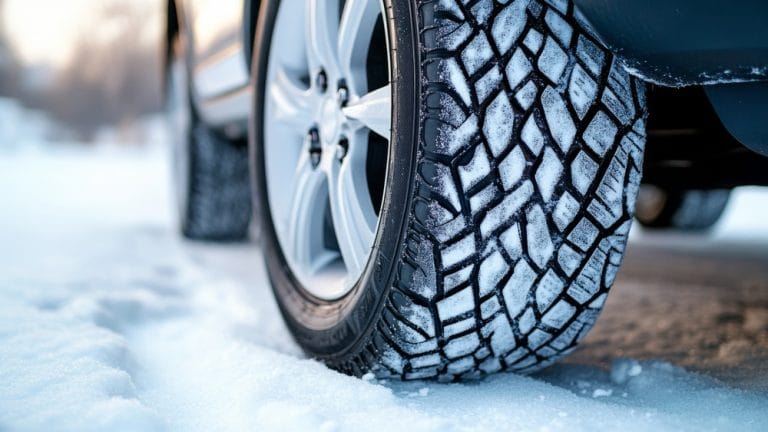
Winter tires are built for snowy, icy, and cold conditions. They stay soft and pliable in freezing temperatures, and they are often recommended when temperatures drop below 45 degrees Fahrenheit (7 degrees Celsius). Some winter tires are studded for ice traction; others are studless.
All-season tires are a compromise. They can handle light winter weather, but they may harden in cold conditions, and they are not equal to winter tires in severe winter weather. Summer tires are separate: they are tuned for warm, dry conditions and should not be mixed with winter tires for winter use.
The main issue is balance. Mixed tires can change how quickly the vehicle stops, how predictably it turns, and how the rear axle behaves during a sudden lane change or panic brake. Different compounds and tread patterns can also wear at different rates, which adds another layer of mismatch.
What happens to handling when you mix them?
Mixed winter and all-season tires can change braking distance, cornering stability, and emergency steering response. The car may still move, but the axle with less grip can react late, slide first, or recover differently than the axle with more grip. That mismatch matters most in sudden inputs and on slick pavement.
Braking distance changes
When one axle has winter tires and the other has all-season tires, the stronger-gripping tires may slow the vehicle more effectively than the weaker ones. That can lengthen stopping distance and, in some cases, make the vehicle feel uneven as weight shifts forward under braking.
Cornering and emergency steering balance
A mixed set can also reduce cornering stability. The car may turn in with one feel at the front and a different feel at the rear, which can make a lane change or evasive move less predictable. In a hard turn, the grip mismatch can show up as understeer or oversteer depending on which axle has the better tires.
Picture a front-wheel-drive hatchback with new winter tires on the front axle and worn all-season tires on the rear. On a wet on-ramp, the front may bite cleanly while the rear feels late to follow, which can make the car rotate more than the driver expects.
How traction mismatch can trigger instability
Traction mismatch is the core problem. When one axle reaches its grip limit before the other, the stability systems may intervene more often, and the driver may feel the vehicle tug, pulse, or resist the steering input. That is not the same as a simple brand difference; it is a difference in traction behavior.
Why drivetrain matters
The failure mode depends on the drivetrain. Front-wheel-drive, rear-wheel-drive, and all-wheel-drive vehicles do not react the same way to a mixed tire setup, because each system asks a different axle to do most of the work. The same tire mismatch can feel manageable on one layout and unstable on another.
FWD: front grip, rear stability, and rotation balance
On front-wheel-drive vehicles, the front tires do the pulling and most of the steering work. If the front has winter tires and the rear has all-season tires, the rear can feel loose in quick lane changes or on a wet curve. If the rear has the better tires and the front is weaker, stopping and traction suffer first because the driven axle has less grip.
The common hazard on FWD is rear instability. The front tires may control direction well enough, but the rear axle can start to slide or hydroplane earlier, which makes the vehicle harder to keep straight under braking or in a turn.
RWD: rear traction and oversteer risk
Rear-wheel-drive vehicles are more sensitive to rear traction loss. If the rear axle carries the weaker tires, the driven wheels may lose grip during acceleration, and the car can step sideways more easily. That is why rear traction matters so much when the road is wet, slushy, or icy.
New tires generally go on the rear when replacing only two tires. Continental advises that if only two tires are replaced, they should go on the rear, and it warns that worn rear tires have less traction and lower hydroplaning resistance. That placement helps reduce oversteer risk.
AWD: diameter match, driveline stress, and sensor confusion
All-wheel-drive systems are often described as especially sensitive to tire mismatch. Uniform tire diameter matters, because mismatched tread depth changes rolling circumference. That can stress central differentials or clutch packs and may confuse electronic safety systems that expect all four wheels to behave similarly.
AWD does not erase the problem of grip mismatch; it can spread it around. If one tire pair is notably taller or shorter, the driveline may work harder to reconcile the difference, and the vehicle may react in ways that seem inconsistent during acceleration, cornering, or stability-control intervention.
Continental says drivers should never mix winter tires with all-season or summer tires, and it advises using identical tires on all wheel positions. General Tire also says never mix winter tires with all-season or summer tires. Those warnings are especially important on AWD vehicles, where tire diameter uniformity is part of driveline health.
What should you do if only two tires are replaced?
If only two tires are being replaced, a common short-term rule of thumb is to keep the same axle paired together and place the new tires on the rear. That layout helps preserve rear grip and hydroplaning resistance, especially when the road is wet. The owner’s manual can override that rule only if the vehicle maker says so.
How tread depth should be matched
Tread depth is a separate issue from seasonal type or brand. Uneven wear can create performance differences even when the tires are the same model. Remaining tread depth should ideally match across tires so the vehicle maintains similar grip and rolling diameter at each corner.
That matters most on AWD, but it matters on every drivetrain. A deep-tread winter tire on one axle and a heavily worn all-season tire on the other can create both grip mismatch and diameter mismatch, which is a poor combination for braking and stability.
When to refuse a partial fitment
Refuse a partial fitment if the shop cannot keep the better-matching tires on the same axle, cannot measure tread depth accurately, or cannot explain how the new setup aligns with the owner’s manual. If the vehicle is AWD and the tread-depth difference is large, a matched full set is often the better answer.
A common first-timer mistake is accepting two winter tires up front on an AWD sedan because the front pair were available the same day. If the rear tires are older and significantly shallower, the car may pull and correct in a way that feels odd even at city speeds, especially on slush or packed snow.
What to Do if you can’t replace all four tires
If a full set is not possible, start with the axle placement rule, then check whether the vehicle maker allows the temporary match you have. Measure the tread depths, compare the two axles, and refuse the install if the difference is large enough that the setup would create a mismatch the manual does not permit. For AWD vehicles, that last check matters most because diameter uniformity can affect driveline behavior.
| Vehicle type | Remaining tread depth match | Weather severity | Safest short-term action |
|---|---|---|---|
| FWD | Close match, same axle pairing | Light winter or cold rain | Keep the new pair on the rear if replacing two tires; avoid mixing summer tires with winter tires for cold use; plan a full set soon. |
| FWD | Noticeable mismatch | Snow, slush, or icy roads | Do not continue unless the shop can match tread better or the vehicle maker allows the setup; rear stability is too important in low-grip conditions. |
| RWD | Close match, same axle pairing | Light winter or cold rain | Put the better tires on the rear axle; drive conservatively and schedule the remaining two tires as soon as possible. |
| RWD | Noticeable mismatch | Snow, slush, or icy roads | Do not treat the mix as routine. Rear traction loss can produce oversteer; replace or match the tires before extended driving. |
| AWD | Close match within manufacturer limits | Light winter or cold rain | Only proceed if the manual allows it and all four tire diameters remain acceptable; verify that the system will not object to the mismatch. |
| AWD | Meaningful diameter or tread-depth mismatch | Snow, slush, or icy roads | Do not drive far on the mixed set. AWD systems can be stressed by diameter differences, and the electronics may react unpredictably to the grip split. |
If you are unsure whether the tread match is close enough, ask the shop to measure each tire and compare the numbers side by side. That answer matters more than the label on the sidewall when the vehicle depends on near-equal rolling diameter.
What should you ask the tire shop before you drive away?
Ask direct questions before leaving the shop. You want to know which tires were installed, where they were placed, how much tread remains on each tire, and whether the setup follows the owner’s manual. That conversation can prevent a bad axle placement or an AWD mismatch from being treated as normal.
- What are the tread depths of all four tires in 32nds or millimeters?
- Which axle has the new tires, and does that placement follow the vehicle maker’s guidance?
- Are the two tires matched closely enough in tread depth for this vehicle?
- Does the owner’s manual allow this tire combination temporarily?
- Will the tire pressure monitoring system need a reset after the change?
- Are these winter tires, all-season tires, or summer tires, and are they paired by axle?
- Keep the invoice or work order that lists the installed sizes and positions.
- Confirm the tire type on each axle before leaving.
- Verify that the new pair is on the rear unless the manufacturer says otherwise.
- Ask for the tread-depth readings of every tire.
- Check whether the vehicle has AWD, and ask if the diameter match is acceptable.
- Keep the invoice or work order that lists the installed sizes and positions.
Frequently asked questions
Can you mix winter tires and all-season tires on the same car?
No, not as a standard setup. A mixed set can create grip and response differences that affect braking, steering, and stability. If you must do it temporarily, keep identical tires on each axle and check the owner’s manual first, because manufacturer guidance can change the allowed setup.
Is it safe to put winter tires on only one axle?
Only as a short-term exception, and even then it depends on axle placement and drivetrain. Putting winter tires on one axle can create front-to-rear traction imbalance, which may lead to oversteer or reduced braking stability. The safer temporary placement is usually the rear axle.
If I have to replace two tires, should the new ones go on the front or rear?
New tires should generally go on the rear. That placement improves hydroplaning resistance at the rear and helps reduce oversteer risk, especially in wet weather. The owner’s manual can override that rule only if the vehicle maker specifies a different approach.
What happens if winter tires are mixed with all-season tires?
The vehicle can show longer braking distances, weaker cornering balance, and less predictable emergency steering. The exact symptom depends on which axle has the winter tires and how much tread remains on each tire. The mix can also increase uneven wear over time.
Can mixing tire types affect ABS, traction control, or AWD systems?
Yes. Mixed grip levels can make ABS and traction control react more often or in ways that feel inconsistent. On AWD vehicles, different rolling diameters can stress central driveline parts and create abnormal system behavior in systems that expect similar wheel speed and traction at all four corners.
Is it okay to mix different tread depths on the same vehicle?
No, not as a preferred setup. Different tread depths can change rolling diameter and grip, even when the tires are the same brand and model. That separate problem can matter as much as seasonal mismatch, especially on AWD vehicles and on any car driven in wet or snowy conditions.
Do winter tires need to be used only below 45 degrees Fahrenheit?
No, but they are recommended when temperatures drop below 45 degrees Fahrenheit (7 degrees Celsius). Their rubber is designed to stay soft and pliable in freezing temperatures, which helps them grip better than all-season tires in cold conditions, snow, and ice.
Should all four tires be the same brand and model?
Using identical tires on all four wheels is the safest choice. That does not mean brand alone is the issue; tread depth, type, and size matter too. If you cannot match all four, match the axle pair carefully and follow the vehicle maker’s guidance.
Products related to this article
Sponsored / affiliate links. As an Amazon Associate I earn from qualifying purchases. I may earn additional commission from eligible campaigns.