What Causes Brake Vibrations at Highway Speed?
Brake vibration at highway speed is often linked to rotor thickness variation, pad material transfer, or a sticking caliper; if the shake appears only while braking, inspect the front brakes first because they do most of the stopping work. Ignore it and stopping distances can grow, parts can overheat, and a small pulse can turn into rotor damage or a failed caliper. For a quick pattern check, compare braking-only shake with cruise-only shake and look for heat clues, pull, or pedal pulse before replacing parts.
Safety note: If one wheel is much hotter than the others, you smell burning brakes, or the car pulls hard while braking, stop driving and let the brakes cool before inspecting them. Do not touch hot wheels or rotors; use a contactless thermometer or wait until components are safe to handle.
Brake vibration symptom table
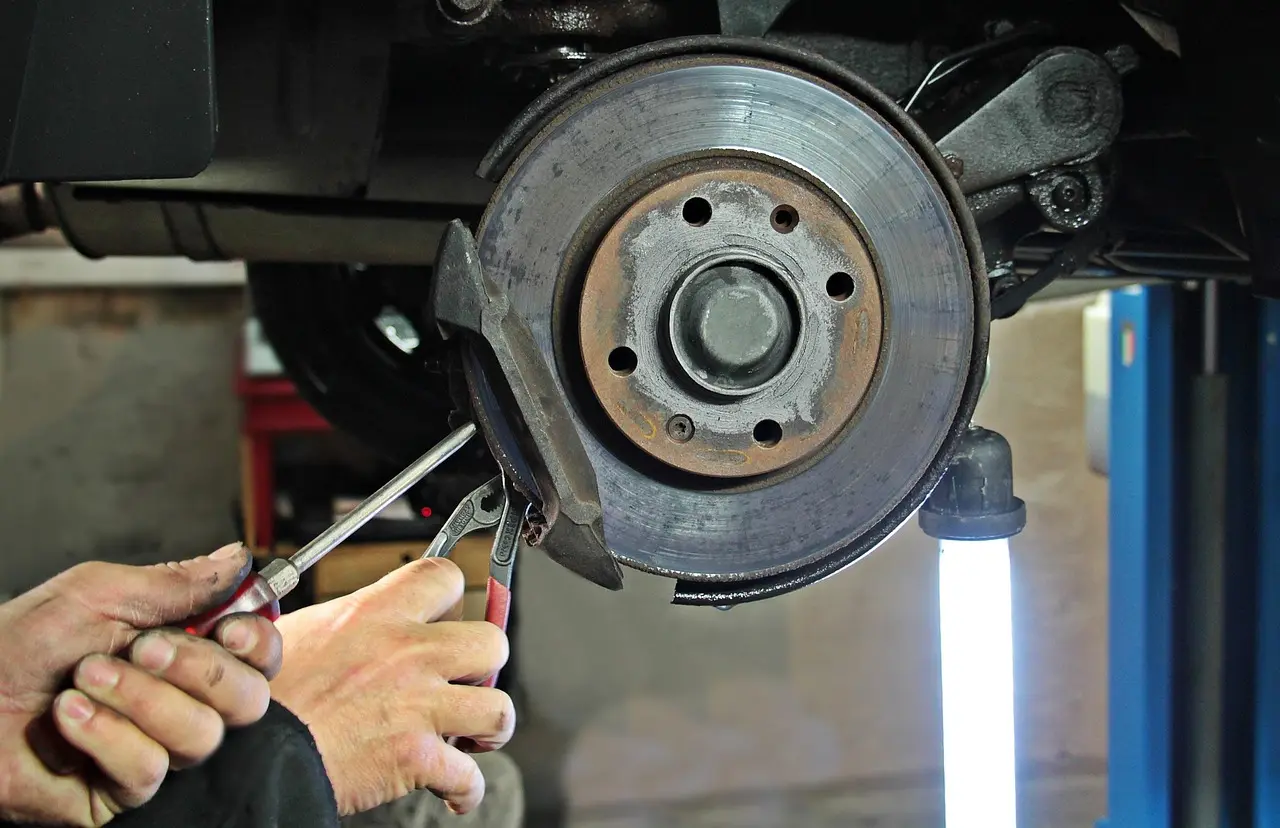

Start with when the shake happens. That single detail often splits brake hardware from tire, wheel, or suspension trouble. The table below maps the symptom pattern to the most likely cause, how urgent it is, and the first check that gives you a real answer.
| When vibration happens | Where it is felt | Whether braking is required | Whether heat is involved | Likely cause | Urgency | First verification tool/test | Next check |
|---|---|---|---|---|---|---|---|
| Only while braking from highway speed | Steering wheel | Yes | Often yes | Front rotor thickness variation or pad deposit | High | Dial indicator | Inspect front rotor surface, pad wear, and caliper movement |
| Only while braking from highway speed | Seat or rear of car | Yes | Often yes | Rear rotor problem, rear brake drag, or rear suspension issue | High | IR thermometer | Compare rear wheel temperature and pad wear side to side |
| At a steady cruise, with no braking | Steering wheel or body | No | No | Wheel balance, bent wheel, tire defect, or road-force problem | Medium | Road-force balancer | Check wheel weights, tire condition, and road-force balance |
| Only after long downhill braking, towing, or repeated hard stops | Brake pedal and steering wheel | Yes | Yes | Heat-related pad material transfer or caliper drag | High | IR thermometer | Check for hot wheel, odor, and uneven pad contact |
| After new pads or rotors | Pedal pulse or shake through the body | Usually yes | Sometimes | Incomplete bedding, hub runout, or lug torque error | High | Lug torque check | Verify bedding procedure and measure hub face before blaming parts |
| Brake pedal pulses, but steering wheel stays calm | Brake pedal only | Yes | Often yes | Rear brake issue, rear rotor variation, or brake hydraulics feeling the pulse first | High | Dial indicator | Check rear rotors, pad wear, and caliper slide action |
| Vibration changes with brake input but is also present lightly at cruise | Steering wheel or body | Sometimes | Sometimes | Wheel balance, tire force variation, or a brake issue that becomes more noticeable under load | Medium | Road-force balancer | Verify tire/wheel condition before replacing brake parts |
Why does it shake only when braking?
Brake-only vibration means the fault appears when brake torque loads the rotor, pad, caliper, or hub. Cruise-only vibration points elsewhere, usually wheel balance, a bent wheel, tire force variation, or suspension play. A highway-speed window matters because small defects are easier to feel as wheel speed rises.
Brake-only vibration versus cruise-only vibration
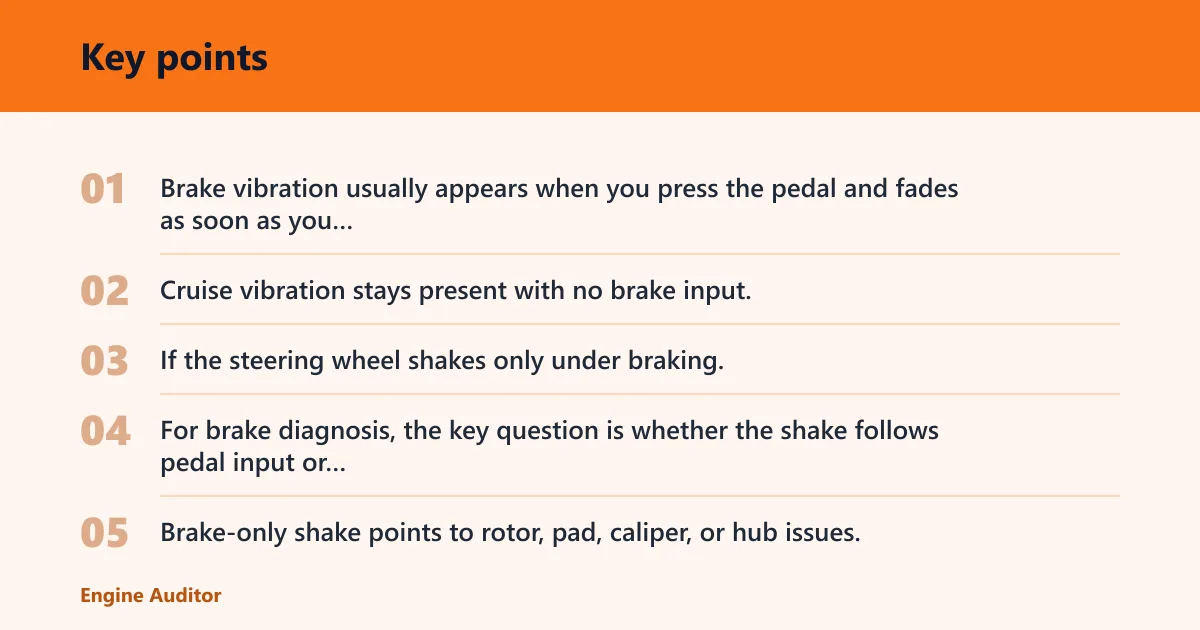
Brake vibration usually appears when you press the pedal and fades as soon as you release it. Cruise vibration stays present with no brake input. That difference is the first filter. If the steering wheel shakes only under braking, start with the front brake path before tires or alignment.
For brake diagnosis, the key question is whether the shake follows pedal input or vehicle speed. Brake-only shake points to rotor, pad, caliper, or hub issues. Speed-only shake points to wheels, tires, or suspension. If both happen together, inspect both systems rather than assuming the rotors are the only problem.
Heat cycles, towing, and long downhill braking
Heat changes the diagnosis. Repeated hard stops, towing, and long downhill braking can create localized overheating, which can leave uneven pad material on the rotor face or push a weak caliper into drag. That is why vibration after a mountain descent is often a heat story, not a brand-new rotor problem.
Brake manufacturers warn that repeated high-energy stops can overheat components and change friction behavior, which is why symptoms often appear after the brakes have been worked hard. When the complaint starts after heat, inspect for uneven transfer, drag, and any part that is running hotter than the others.
Are warped rotors the most common cause?
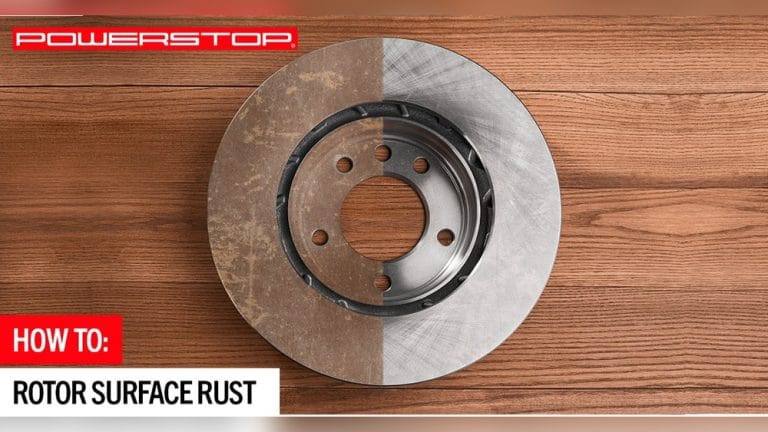
Rotor-related problems are a common explanation, but “warped” is often the wrong label. Many brake vibrations come from rotor thickness variation or pad material transfer, not a rotor that has physically bent. The industry’s technical guidance generally points to thickness variation, runout, and friction-film buildup as the core causes of brake judder.
Thickness variation versus true warping
Rotor thickness variation means the disc is not the same thickness all the way around. As the pads squeeze it, pedal force changes once per wheel revolution, which creates a pulse. True rotor warping is less common than drivers assume. The symptom can feel the same from the seat.
A common rotor-related complaint is a pulsing brake pedal or vibration through the steering wheel. That pulse can come from uneven friction, not just a bent rotor. Industry references on brake judder also tie the feeling to disc thickness variation and friction variation, not only visible damage.
For background, disc brake vibration is commonly explained by rotor thickness variation, disc runout, or uneven pad transfer rather than literal warpage; see engineering and brake-industry guidance from Brembo and technical brake references such as Autodata-style service literature and SAE-based explanations of brake judder.
Runout and pad-material transfer
Runout is wobble as the rotor turns. Even a small amount can push the pads back and forth, create uneven contact, and start a deposit pattern. Heat makes that worse. When the rotor face has transferred pad material in one area, the braking force changes as the wheel spins.
The most useful distinction is this: runout is a geometry problem, while pad transfer is a friction-surface problem. Both can trigger a pulse, and both can coexist. That is why checking rotor runout and rotor thickness variation together gives a better answer than looking only at surface appearance.
Resurfacing versus replacement
Resurfacing is not the right fix for every shaking brake. If the hub face is out of true, a new rotor can inherit the same wobble. That is why a proper new-rotor installation should check hub runout before assembly. A perfect rotor on a bad hub still runs out of true.
Replacement is the better choice when the rotor is near minimum thickness, has recurring hot spots, or shows a return of thickness variation after heat cycles. If machining would leave too little material or would not remove the root cause, the part should not be reused.
Can the vibration point to front or rear brakes?
Yes. Steering-wheel shake usually points to the front end, while seat or rear-end shake points more toward the rear brakes, rear tires, or rear suspension. That location clue is not absolute, but it is one of the best ways to narrow the fault before replacing parts.
Steering-wheel shake and front brake clues
Front brake issues tend to show up in the steering wheel because the front axle does most of the braking and the steering gear transmits vibration directly to your hands. Front-wheel vibration at highway speed also fits wheel balance or front-suspension problems, so the front end deserves a careful look first.
When braking creates steering-wheel shake, the likely path is front rotor runout, thickness variation, pad deposit, or caliper drag. If the same wheel also shows balance-related shake at cruise, do not assume one fault explains everything; a tire problem can coexist with a brake issue.
Seat or rear-end shake and rear brake clues
Vibration in the seat or rear of the car usually suggests rear brake or suspension problems. It can also point to rear tire imbalance or a bent rear wheel. Do not assume the front brakes are guilty just because the problem happens at highway speed.
Rear brake vibration often becomes clearer when the front end feels relatively calm but the cabin or seat still shudders during braking. That pattern warrants a rear brake and tire inspection before front parts are replaced.
How to compare side-to-side heat
After a drive with a safe stop, compare the temperature of left and right wheels by touch only if they are cool enough to avoid burns, or use a contactless thermometer. One wheel that runs noticeably hotter than the others points to drag, a sticking caliper, or a parking brake issue.
A wheel that is significantly hotter than its opposite side gives you an immediate clue: that corner is doing more work than it should. That makes the fault more likely to be brake drag, seized hardware, or a restricted hose than to be simple wheel balance.
Brake pads, calipers, and heat damage
Pad condition and caliper movement control how evenly the rotor is loaded. Uneven pad wear, worn backing plates, sticking slide pins, and caliper seizure can all create the heat pattern that leads to vibration. These problems often show up after repeated brake heat cycles rather than on the first stop.
Uneven pad wear and backing-plate contact
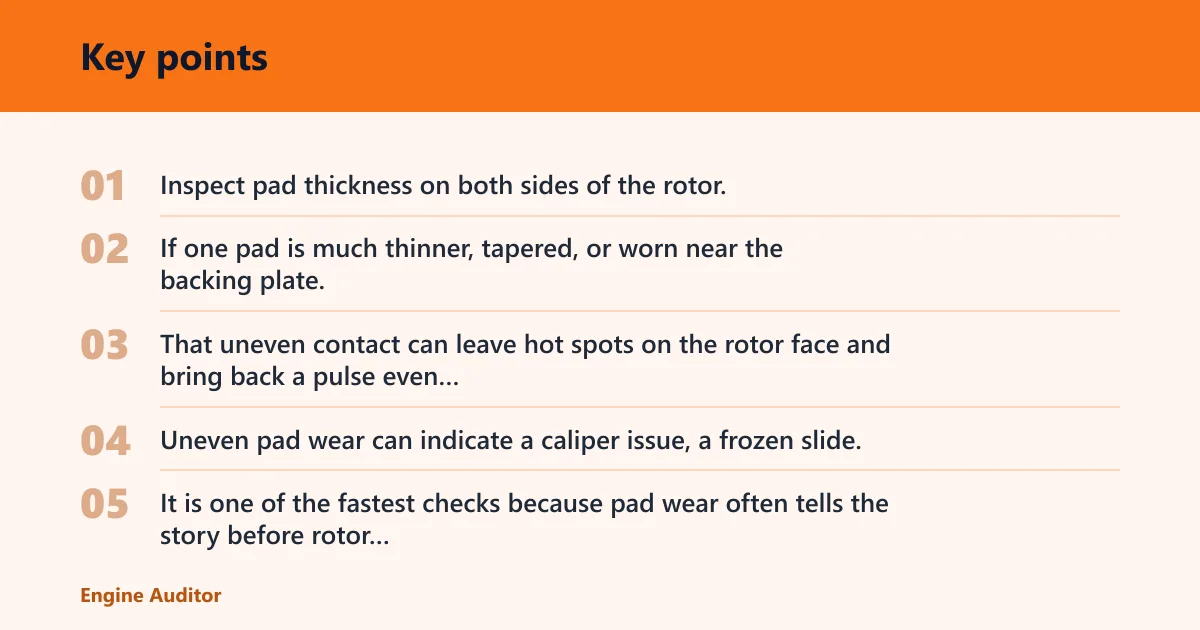
Inspect pad thickness on both sides of the rotor. If one pad is much thinner, tapered, or worn near the backing plate, the caliper may not be applying force evenly. That uneven contact can leave hot spots on the rotor face and bring back a pulse even after rotor replacement.
Uneven pad wear can indicate a caliper issue, a frozen slide, or hardware that is no longer allowing both pads to clamp with equal force. It is one of the fastest checks because pad wear often tells the story before rotor measurements do.
Sticking calipers and seized slide pins
Sticking calipers can cause localized overheating and uneven pad deposit. Seized slide pins do the same thing by preventing the caliper from floating as designed. The result can be a draggy wheel, odor from overheated brakes, and brake pull during stops.
Suppose the left front wheel smells hot after a short highway drive, the car pulls left under braking, and the left pad is worn much more than the right. That pattern points to caliper drag or seized slide pins before it points to wheel balance or alignment.
Bedding-in and material transfer after new parts
A brake vibration after new brakes may be a bedding issue. New pads need an even transfer layer on the rotor face. If the bedding steps were skipped, interrupted, or followed by a hard stop that overheated one spot, the pad can leave uneven material and start a pulse.
Do new brakes need bedding to stop vibration? Yes, when the system is new or when fresh rotors and pads are installed together. Incomplete bedding can leave patchy transfer, which feels like rotor damage even when the parts are not defective.
Wheel balance, hub runout, and tire checks
Not every highway-speed shake is a brake issue. Wheel balance problems can create vibration in a specific speed range, and road-force tire issues can act differently from static imbalance. If the car shakes at cruise, or shakes whether or not you touch the brake pedal, start with the wheels and tires.
Speed-specific vibration and balance weights
Wheel balance issues often show up in a narrow highway-speed window. A tire imbalance can create vibration around a specific speed range, and a bent wheel or shifted tire can do the same. Weight loss, a bent wheel, or an out-of-round tire can all create that pattern.
Balance issues can worsen tread wear and stress suspension components if they are ignored. If the vibration is tied to vehicle speed rather than braking, the wheel and tire assembly should be checked before brake parts are replaced.
Road force balancing versus static balance
Static balance corrects simple weight imbalance. Road force balancing checks how the tire behaves under load, which can reveal a stiff spot, radial force variation, or a tire-wheel combination that looks fine on a basic balancer but still shakes on the road. That difference matters when the symptom is speed-specific.
Road-force testing is useful when the tire assembly looks acceptable at rest but still causes vibration at speed. It helps separate a basic weight issue from a tire construction problem that can mimic brake shake.
Hub face flatness before rotor installation
Hub runout can mimic a bad rotor after replacement. If the mounting surface is rusty, pitted, or bent, the new rotor sits crooked and wobbles every time it turns. Clean hub faces and a runout check before installation prevent a false brake diagnosis later.
What else should be checked if new rotors still shake? Inspect hub runout, wheel torque, pad bedding, and caliper slide action before blaming the new parts. A bad hub face or uneven lug torque can make a brand-new rotor behave like a failed one.
What should you inspect next?
If the symptom pattern is still unclear, move through the next checks in order before blaming the new parts. That keeps you from replacing rotors when the real cause is tire balance, hub wobble, or loose steering parts. A mechanic should measure rotor and hub runout if the basic checks do not settle the question.
- Confirm when the vibration appears: braking, cruising, or both.
- Note where it is felt: steering wheel, pedal, seat, or whole body.
- Check for heat clues: odor, pull, or one wheel hotter than the others.
- Inspect front and rear pads for uneven wear, taper, or backing-plate contact.
- Look at caliper slides, pistons, and hoses for sticking or seizure.
- Check wheel weights, bent rims, and tire condition.
- Verify hub face flatness and rotor installation torque.
- Inspect tie rod ends, ball joints, and wheel bearings for play.
Suspension and steering play
Loose tie rod ends, worn ball joints, or wheel bearings with play can add vibration and make brake shake feel worse than it is. These parts do not usually create a pure brake pulse by themselves, but they can magnify a front-end shimmy and blur the diagnosis.
Use suspension checks to separate a brake problem from a chassis problem. If there is looseness in the steering or wheel support, the brake symptom can be amplified even if the rotor itself is only part of the story.
When to involve a mechanic
If the shake persists after wheel balance checks, or if the car pulls, smells hot, or has one wheel that runs hotter than the others, the next step is a brake measurement. Ask for rotor thickness variation, rotor runout, hub runout, and caliper movement to be checked together, not one at a time.
That combined check matters because a single part rarely tells the whole story. Measuring the rotor, hub, and caliper together helps distinguish a surface problem from a mounting or drag problem.
Frequently asked questions
What causes my car to vibrate when I brake at highway speed?
The most likely causes are rotor thickness variation, pad material deposit, or a sticking caliper. If the shake happens only while braking, the front brakes are the first place to inspect because they do most stopping force and commonly send vibration into the steering wheel.
Are warped rotors the most common cause of brake vibration?
Rotor problems are a common brake-vibration explanation, but the issue is often thickness variation or pad deposit rather than true warping. Those surface and thickness changes can create the same pedal pulse and steering shake that drivers usually describe as warped rotors.
How can I tell if the shaking comes from front brakes or rear brakes?
Steering-wheel shake points to the front end, while seat or rear-end shake points more toward rear brakes, rear tires, or rear suspension. Compare left and right wheel temperatures too. One hot wheel can point to a dragging caliper rather than a balance problem.
Can tire balance cause vibration when I brake?
Yes, if the vibration is already present at speed. Wheel balance issues often show up in a specific highway-speed window and can feel worse when braking, but they do not require brake application. A true brake-only pulse usually points elsewhere.
Why does my brake pedal pulse only at high speeds?
At higher wheel speeds, small rotor thickness changes, runout, or pad deposits repeat faster and become easier to feel through the pedal. That is why a problem may be faint around town and obvious at 55 to 75 mph or during longer, hotter stops.
Could a sticking caliper make my car shake when braking?
Yes. A sticking or seized caliper can cause localized overheating, uneven pad contact, pad transfer, and a pull to one side. If one wheel is much hotter than the others, the caliper and slide pins need attention before you replace rotors again.
Do new brakes need bedding to stop vibration?
Yes, new pads and rotors need proper bedding so the pad leaves an even transfer layer on the rotor. If bedding is incomplete, the brake can pulse even with new parts. A fresh rotor can still shake if the hub runout or lug torque is wrong.
Products related to this article
Sponsored / affiliate links. As an Amazon Associate I earn from qualifying purchases. I may earn additional commission from eligible campaigns.