Why Your Car Pulls When Braking and What It Usually Means
A car that pulls while braking usually has one corner braking harder or slower than the others, and the first step is to inspect the brakes before you assume alignment. Ignoring it can wear pads and rotors unevenly, overheat a caliper, and lengthen stopping distance. This guide maps the symptom pattern to likely causes and gives quick checks for brake, tire, road, and suspension faults.
Why it pulls only when braking
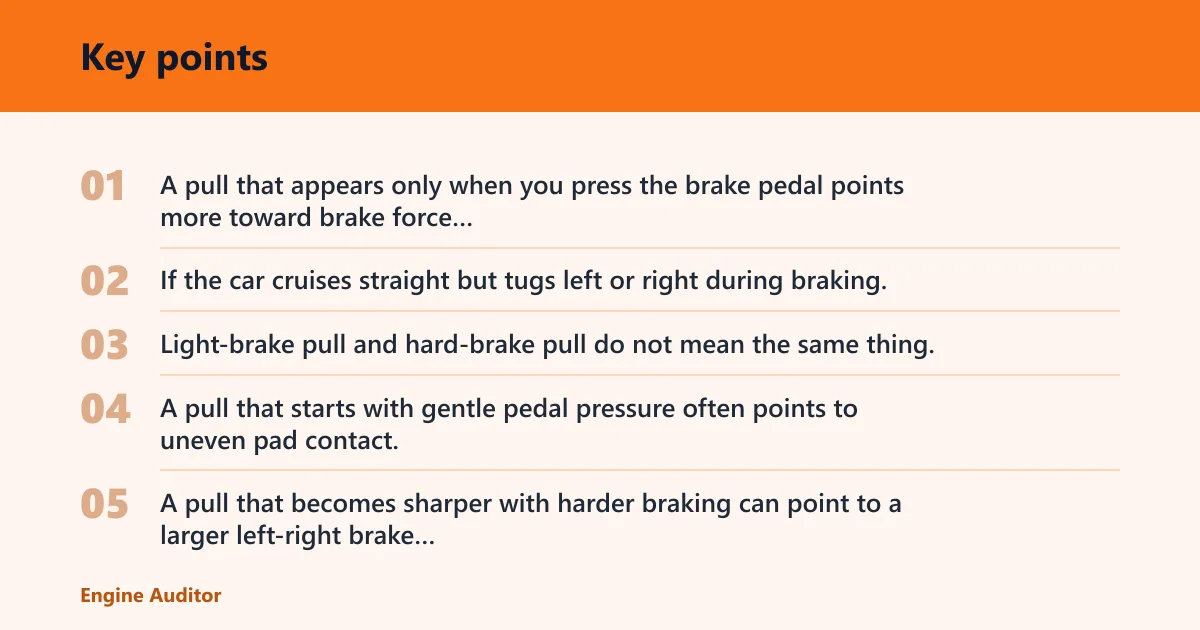

A pull that appears only when you press the brake pedal points more toward brake force imbalance than wheel angle. If the car cruises straight but tugs left or right during braking, the fault is usually in one corner, one hydraulic circuit, or a part that changes clamp force under pedal pressure.
Light-brake pull and hard-brake pull do not mean the same thing. A pull that starts with gentle pedal pressure often points to uneven pad contact, pad hardware issues, or a hose or caliper that is dragging slightly. A pull that becomes sharper with harder braking can point to a larger left-right brake imbalance, such as an overheated rotor or a caliper applying too much force on one side.
Suppose the car stays straight on a flat parking lot at about 20 mph, then drifts right the moment the brake pedal is pressed. That pattern fits a brake imbalance better than toe or camber. If the same car drifts right even with no brake input, alignment, tire pressure, or road slope moves higher on the list.
Brake pull diagnostic matrix
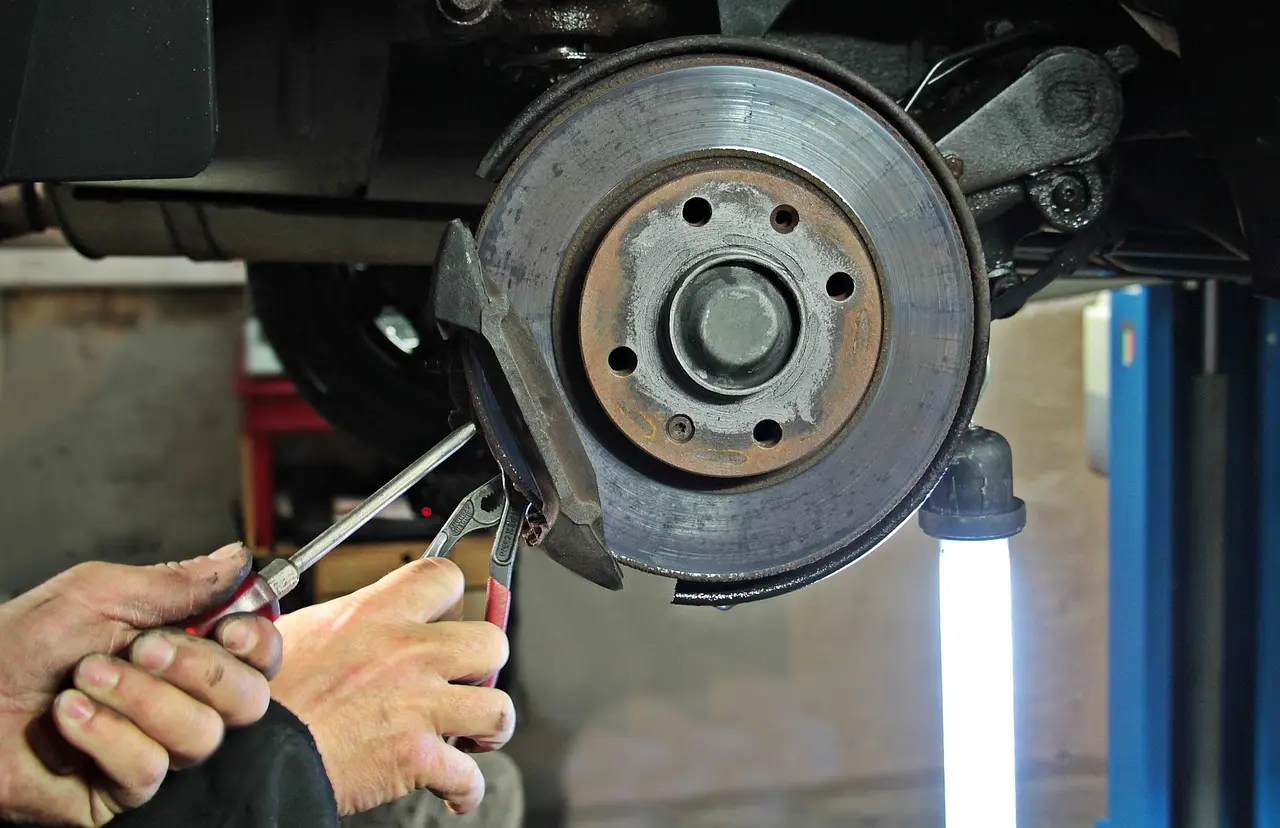
This table separates common symptom patterns so you can narrow the fault before paying for parts that may not be needed.
| Symptom pattern | Likely corner/component | Quick at-home check | Stop driving? |
|---|---|---|---|
| Pull only when braking, with a hotter left-front wheel | Left-front caliper, hose, pads, or rotor | Carefully compare front wheel heat after a short drive; look for burning smell and uneven pad wear | Yes, if heat is strong or smell is present |
| Pull only when braking, with a hotter right-front wheel | Right-front caliper, hose, pads, or rotor | Check for one wheel that is much hotter than the other front wheel and for a dragging feel after release | Yes, if the wheel is much hotter than the rest |
| Pull only under light braking, then straightens under harder braking | Pad hardware, glazed pad, uneven pad thickness, minor rotor variation | Inspect pad thickness through the wheel or by pulling the wheel; compare inner and outer pad wear | Usually no, unless heat or smoke appears |
| Pull gets worse under hard braking | Seized caliper, restricted hose, rotor scoring, hydraulic imbalance | Look for one wheel that heats faster and for pedal feel that changes after repeated stops | Yes, if the pull is sudden or severe |
| Burning smell after a drive, one wheel hotter than the others | Sticking caliper or hose restriction | Check for drag after releasing the brake; inspect for discoloration near the rotor or caliper | Yes |
| Pull after recent brake service | Pad hardware, caliper bracket corrosion, installed-part mismatch, rotor issue | Confirm the correct pads, anti-rattle hardware, and caliper bracket condition on both sides | Drive only cautiously to a repair bay if mild; otherwise no |
| Drift while cruising, but not much change when braking | Alignment, tire pressure, tire conicity, suspension wear | Check all four cold tire pressures against the door-jamb placard and test on a flat road | Usually yes, if no brake heat or smell exists |
One useful threshold is temperature difference. A wheel that is noticeably hotter than its mate on the same axle deserves attention, especially if the heat comes with a burning smell, a dragging feel after pedal release, or a pad that wears faster on one side than the other.
Check tire pressure and road crown first
Start with the cheapest check: verify all four tires cold against the door-jamb placard. Uneven tire pressure is one of the easiest things to check, and a six to eight PSI difference can be enough to feel on the road. That kind of gap can make a car drift and can confuse the diagnosis.
Then test on flat ground. A road that slopes across its width can make a vehicle drift toward the right shoulder, especially on crowned roads or sloped streets. That is not a mechanical fault. A car can track straight on a flat parking lot but drift on the road because of camber.
If the pull changes when you switch from a sloped road to a level parking lot, that points away from the brakes. If the pull stays present only during braking on level ground, the brake system moves back to the top of the list.
Quick tire and road checks
- Check all four tires cold and match them to the placard on the driver door frame.
- Inspect for a visibly low tire, uneven wear, or a tire that looks more flattened on one side.
- Drive the same route on a level lot if possible, then repeat a gentle stop.
- Note whether the pull appears with no brake input, only during braking, or only on crowned roads.
A common first-timer mistake is to blame alignment after seeing one side of the car drift on the road. If the pull shows up only when the pedal is pressed, alignment is usually not the first answer. If the pull happens while cruising too, then alignment, tire pressure, and suspension wear deserve more weight.
Is a sticking caliper or hose the cause?
Yes. A sticking caliper can make one wheel feel hotter after driving and can pull the car toward that side. A seized caliper can drag one wheel, create heat, and sometimes leave a burning smell. A collapsed brake hose can do something subtler, it can act almost like a one-way valve and trap partial pressure on one caliper after the pedal is released.
That trapped pressure can keep one brake slightly applied. The result is drag, uneven pad wear, a hotter rotor, and a pull that shows up when you brake because that corner is already out of balance. The failure chain often starts with corroded slide pins, a piston that does not retract cleanly, or a hose that restricts return flow.
What to look for at home
- One front wheel is much hotter than the other after a normal drive.
- A burning smell comes from one corner after stopping.
- The car feels slower to roll after the brake pedal is released.
- Pad wear is uneven on the same axle, especially inner versus outer pad thickness.
- The wheel on the problem side may show more brake dust or discoloration.
If the pull worsens after repeated stops, heat and hydraulic restriction move higher on the list. That pattern fits a part that is binding as it warms, or a hose that is not releasing pressure cleanly. A severe hot-wheel symptom should be treated as a brake fault, not a calibration issue.
Can uneven pads or rotors make it pull?
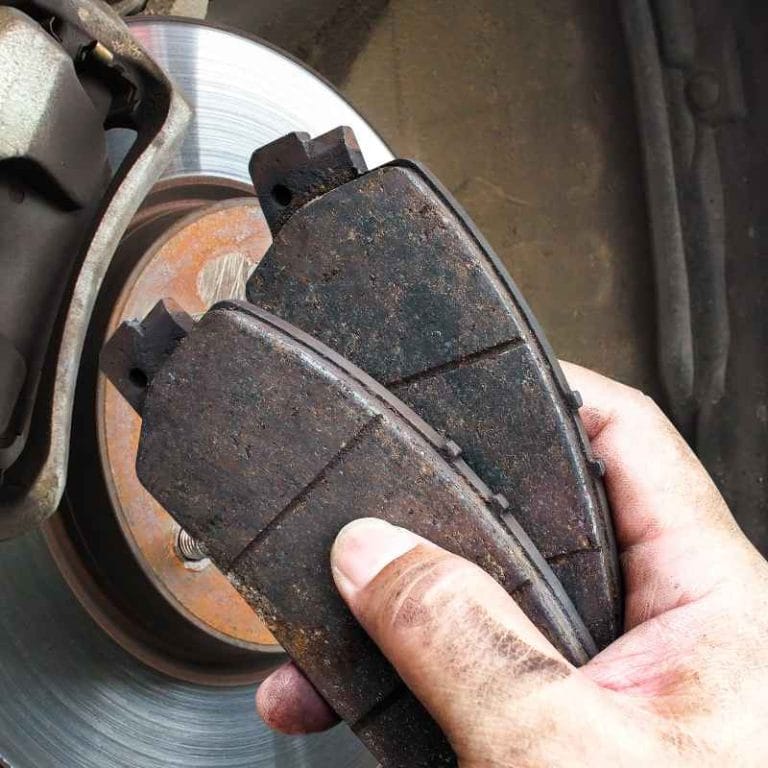
Uneven brake pads can cause a car to pull when braking. If one side has less friction material, a worn wear indicator, or a glazed surface, braking force can differ from side to side. Brake pads that overheat can glaze, and that changes how they grip. Rotor condition matters too, because scoring or uneven wear affects braking balance.
Recent brake service can be a clue. A pull that starts after new pads or rotors may trace to pad hardware, a caliper bracket that is corroded, wrong hardware, or an installed-part mismatch between sides. If the caliper slides are dry or the bracket is rusty, the pad may not sit squarely against the rotor.
Signs the pads or rotors are involved
- One pad is visibly thinner than its mate on the same axle.
- The wear indicator squeals on one side only.
- The rotor face is scored, unevenly worn, or has hot spots.
- The pull appeared right after a brake job.
- The pedal feel is normal, but braking force is uneven.
Picture a front brake job done a week ago, with a new pull to the right under light braking. If the left-front pad is dragging because a bracket is corroded or the wrong hardware was installed, the car can brake unevenly even though the parts look new. New does not always mean matched.
Could alignment or suspension still be involved?
Yes, but usually not first when the pull appears only during braking. Alignment angles such as toe, camber, and caster can be knocked out by potholes or curbs, and they can cause drift while cruising. They usually do not explain a pull that only shows up when you press the brake pedal. Roughly half of cars that come in for a pull never needed an alignment.
Suspension and steering wear can still matter. Tie rods, ball joints, bushings, control arms, shocks, and struts can let the car wander and can make alignment readings inaccurate. Under braking load, worn parts can shift enough to change how the car tracks. But if the symptom is brake-only, brake force imbalance is the more likely path to inspect first.
Where alignment fits in the fault tree
- Toe affects straight-line tracking and steering wheel centering.
- Camber can make the car drift, especially if road slope is added to the mix.
- Caster affects return and stability after steering input.
Alignment makes sense when the car drifts while cruising, follows road crown strongly, or shows uneven tire wear that did not start with a brake symptom. It should not be the first assumption for a pull that appears only under braking. A brake inspection should come before an alignment visit in that case.
When to stop driving and get help
Stop driving if the pull is severe, sudden, or tied to heat. A very hot wheel, a burning smell, smoke, or a pull that suddenly became much worse can mean a stuck caliper, trapped hydraulic pressure, or a dragging brake that can damage pads and rotors quickly. If the car feels unstable under braking, it should not be treated as a routine alignment problem.
A sudden new pull after brake service deserves extra caution. It can mean an installed-part mismatch, a hose issue, a caliper problem, or hardware that was not seated correctly. If the pull is mild and there is no heat or smell, a careful drive to a repair shop may be reasonable. If the wheel is much hotter than the others, arrange for towing.
Best order for diagnosis
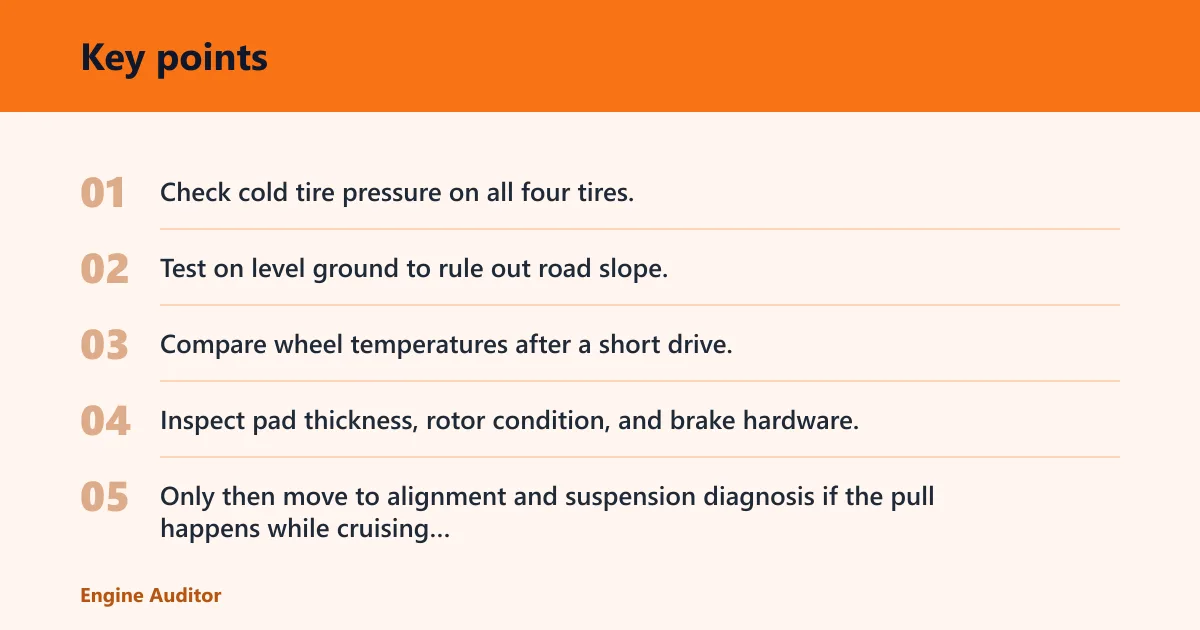
- Check cold tire pressure on all four tires.
- Test on level ground to rule out road slope.
- Compare wheel temperatures after a short drive.
- Inspect pad thickness, rotor condition, and brake hardware.
- Only then move to alignment and suspension diagnosis if the pull happens while cruising too.
The safest rule is simple: brake-only pull means brake inspection first. Cruise drift means look harder at tires, road slope, alignment, and suspension. When both happen together, start with the brake fault that creates the hotter wheel or uneven pad wear, then move outward through the rest of the chassis.
Frequently asked questions
Why does my car pull to one side when braking?
It usually means one side is braking harder or slower than the other. That can come from a sticking caliper, a restricted hose, uneven pads, rotor wear, or a hydraulic imbalance. If the pull happens only during braking, brakes deserve inspection before alignment.
Is it safe to drive if my car pulls when I brake?
It depends on how strong the pull is and whether there is heat or smell. A mild pull without heat may be driven carefully to a shop. A severe pull, a very hot wheel, a burning smell, or smoke means you should stop driving and get help.
Can a sticking caliper make a car pull left or right?
Yes. A sticking caliper can drag one wheel, create heat, and pull the car toward that side when you brake. It often leaves clues such as a hotter wheel, uneven pad wear, and sometimes a burning smell after driving. One corner usually stands out more than the others.
Could a brake hose cause pulling during braking?
Yes. A collapsed brake hose can act almost like a one-way valve and trap partial pressure on one caliper. That can keep one brake partially applied after you release the pedal. The result is drag, heat, and a pull that often gets worse as the brake gets hotter.
How do I tell if the pull is brakes or wheel alignment?
If the pull appears only when you press the brake pedal, it is usually a brake fault, not a wheel angle. If the car drifts while cruising too, alignment, tire pressure, road slope, or suspension wear become more likely. Testing on flat ground helps separate those patterns.
Can uneven brake pads cause a car to pull when braking?
Yes. Uneven pad thickness, glazing, or a wear indicator issue can make one side brake differently from the other. Rotor scoring or uneven rotor wear can add to the imbalance. Recent brake service can also reveal hardware, bracket, or part-mismatch problems that create a new pull.
Products related to this article
Sponsored / affiliate links. As an Amazon Associate I earn from qualifying purchases. I may earn additional commission from eligible campaigns.