What Causes Brake Pedal Pulsation While Stopping?
Brake pedal pulsation usually comes from ABS cycling during hard stops, rotor thickness variation or runout, or heat-related brake fade, and the feel usually points to the cause. Ignoring that pattern can push you toward needless rotor and pad replacement while the real fault stays on the car. This guide shows how speed, temperature, and pedal feel separate ABS action from wheel-service errors and brake hardware problems.
Brake pulsation signals
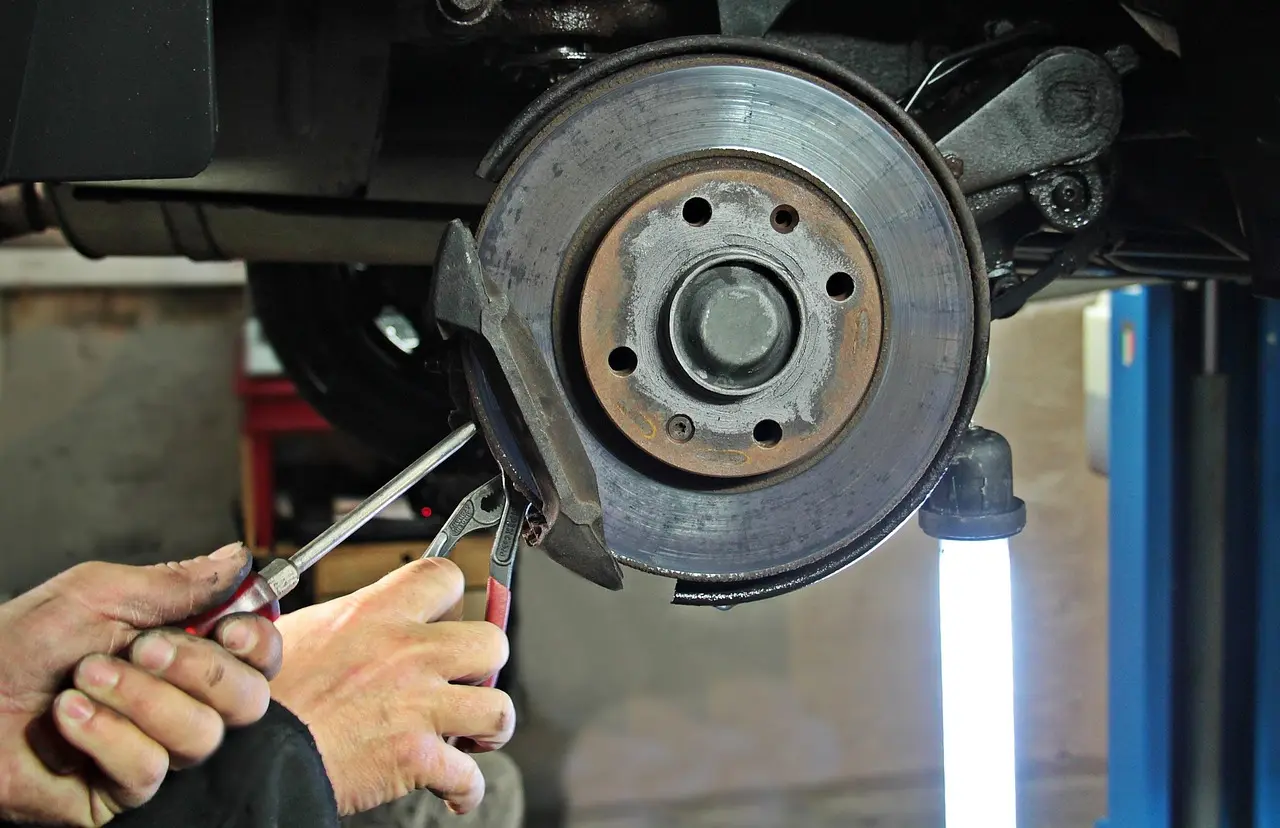


What you feel first matters more than the part you want to blame. A steady pulse in the pedal on dry pavement usually points to a mechanical brake issue, while a rapid chatter during a hard stop or on a slick road is more consistent with ABS activity. Speed, heat, and where the vibration shows up help narrow the fault fast.
What the pedal feel tells you
A pulse felt mainly in the brake pedal can come from either front or rear rotors. If the steering wheel also shakes, the front brake assemblies move to the top of the list. If the seat or floor vibrates more than the pedal, rear brake hardware deserves attention too.
Brake pedal pulsation from a mechanical issue generally appears on dry pavement during ordinary stops. It often feels repeated and steady, not random. If the symptom appears only after several stops or only after a long downhill grade, heat is part of the diagnosis.
Why speed and brake force matter
Speed changes how obvious a rotor problem feels. At higher road speeds, small variations in the rotor can create a more noticeable pulse because the wheel rotates faster through each high and low spot. Harder brake force can also make a light defect easier to feel.
A sedan that feels smooth at neighborhood speeds but starts pulsing at about 55 mph with moderate pedal pressure may fit a rotating brake issue better than ABS. That pattern may fit a rotating brake issue better than ABS, because ABS is not expected to intervene on dry pavement during a normal stop.
When heat makes the symptom appear
Heat matters because some faults grow worse as parts get hot. A sticking caliper can hold a pad against the rotor after pedal release, raise temperature, and may create uneven wear or deposit buildup. That can make the pulsation show up after a few stops instead of from a cold start.
Picture a minivan that stops cleanly first thing in the morning, then develops pulsation after several miles of city driving. That points toward heat-related brake behavior, caliper drag, or uneven pad material transfer rather than a simple one-time road surface issue.
Pedal pulse or ABS?
ABS activation is a normal safety function on slippery surfaces or during hard braking. It feels like fast chatter or vibration, often with a buzzing pedal and a brief increase in stopping control. A true mechanical pulse is steadier, usually repeatable on dry pavement, and tied to wheel rotation rather than traction control.
How ABS vibration feels on dry roads
On dry pavement, ABS should not cycle during an ordinary stop. If the pedal chatters hard on a dry road with normal braking force, the system may be reacting to a wheel-speed sensor issue, but the symptom still differs from the smooth, repeating pulse of rotor-related trouble.
How it differs on wet or icy pavement
On wet, icy, or gravelly surfaces, ABS can sometimes activate even in a straight-line stop. The pedal may kick back and make a rapid noise or vibration. That is expected safety behavior, not rotor damage. Once traction returns, the vibration should stop with the ABS cycle.
What a true mechanical pulse feels like
A mechanical pulse feels like the pedal is being pushed back in a repeating rhythm. The rhythm often rises with vehicle speed and is present on ordinary stops. Brake pulsation can come from disc thickness variation or lateral runout, both of which affect how the pads contact the rotor as it turns.
Brake pulsation triage table
Use the symptom pattern first. Then choose the inspection path that matches it.
| Symptom pattern | Likely cause | First inspection step | Safe to drive? |
|---|---|---|---|
| Pedal-only pulse on dry pavement | Brake rotor thickness variation, rotor runout, or rear brake issue | Road test, then measure rotor runout and thickness variation on the affected axle | Usually short-term only; inspect soon |
| Steering-wheel shake while braking | Front rotor runout or front rotor thickness variation | Check front rotor face, hub seating, and front brake hardware | Inspect soon |
| Seat or floor vibration while braking | Rear rotor or rear drum issue | Inspect rear brakes and compare left-right wear | Inspect soon |
| Heat-only pulsation after repeated stops | Sticking caliper, pad deposits, or overheated hardware | Check for uneven pad wear, odor, discoloration, and caliper drag | Use caution; may worsen fast |
| Post-wheel-service pulsation | Hub contamination, wrong lug torque, or rotor seating issue | Inspect hub mounting surface and verify lug nut torque pattern | Usually no; recheck before further driving |
Rotor runout and thickness variation
Brake rotor thickness variation is a common mechanical cause of pulsation. It is measured around the rotor circumference, not judged by appearance alone. A rotor can look fine and still send a pulse through the pedal if the thickness changes enough from one spot to the next.
How lateral runout starts
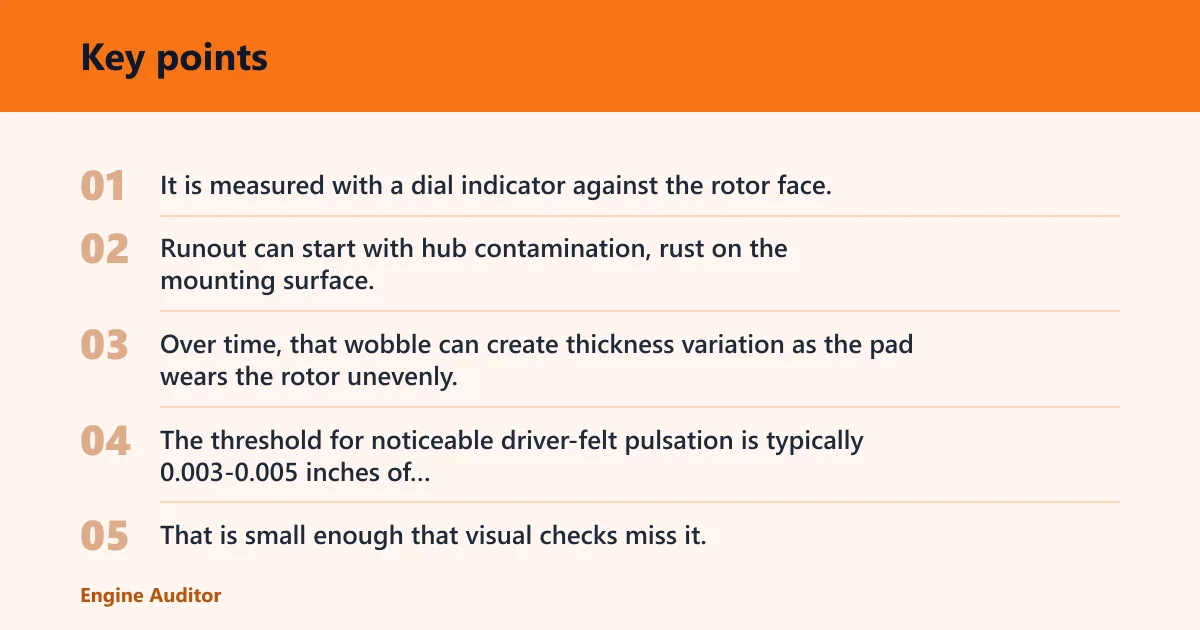
Lateral runout is side-to-side rotor wobble. It is measured with a dial indicator against the rotor face. Runout can start with hub contamination, rust on the mounting surface, or improper wheel tightening. Over time, that wobble can create thickness variation as the pad wears the rotor unevenly.
The threshold for noticeable driver-felt pulsation is typically 0.003-0.005 inches of variation. That is small enough that visual checks miss it. Because of that, a brake disc thickness variation measurement should be paired with runout testing before any parts decision.
How thickness variation develops
Uneven pad deposits can mimic rotor trouble and can also contribute to it. If one part of the rotor runs hotter or gets clamped harder, material transfer can build a high spot that the driver feels as a pulse. A caliper that drags can make that process worse by holding heat in one area.
Brake disc thickness variation measurement requires precise measurement, not visual inspection alone. That matters after resurfacing, after new rotors, and after a complaint returns. If the cause that created the first variation stays on the car, the new rotor can come back with the same symptom.
Why a dial indicator matters
A dial indicator gives a real runout number instead of a guess. Without it, it is easy to blame the rotor when the hub face is dirty or the wheel was tightened unevenly. The measurement sequence should usually start at the hub, then the rotor, then the pad wear pattern.
Can wheel service cause this?
Yes. A common cause of immediate pulsation after new brake installation is hub surface contamination. Rust, dirt, or old scale can keep the rotor from sitting flat, which affects runout right away. Wrong lug nut torque or an incorrect tightening pattern can do the same thing after tire or wheel work.
Hub rust and debris
The hub mounting surface should be clean and flat before a rotor goes on. Even a thin layer of corrosion can tilt the rotor enough to create a pedal pulse. If new rotors seem bad immediately, the hub face is one of the first places to inspect.
Lug nut torque and tightening pattern
Wheel bolt or lug nut torque must be applied in the proper pattern and to the correct value. Uneven tightening can distort rotor seating. That is why a complaint can appear right after tire rotation, brake work, or a wheel swap and then return even after new rotors are installed.
A common first-timer mistake is replacing rotors, finding the pedal still pulses, and assuming the new parts are defective. In many cases, the hub was never cleaned well enough or the wheels were tightened in a way that left runout behind.
Why the complaint can return after new rotors
If the source of the runout stays in place, the symptom can come back fast. That includes a corroded hub face, a sticking caliper, or wheel torque that was not even across the studs or bolts. Fixing only the rotor often solves the symptom for a short time, then the pulse returns.
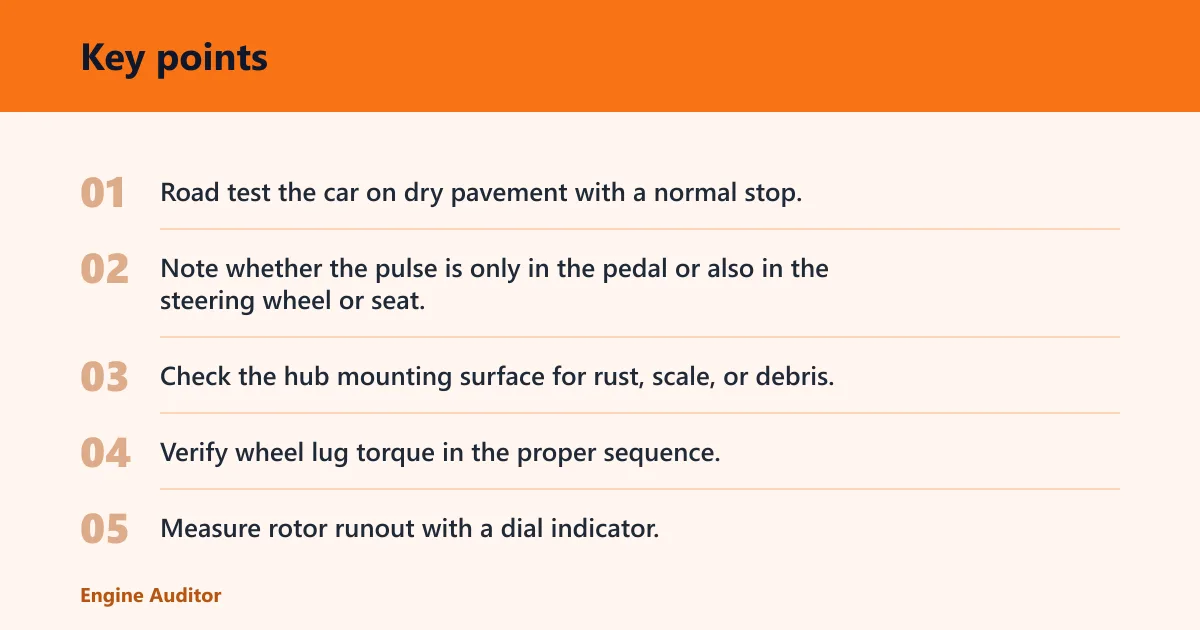
- Road test the car on dry pavement with a normal stop.
- Note whether the pulse is only in the pedal or also in the steering wheel or seat.
- Check the hub mounting surface for rust, scale, or debris.
- Verify wheel lug torque in the proper sequence.
- Measure rotor runout with a dial indicator.
- Measure rotor thickness variation around the circumference.
Calipers, pads, and hardware
Not every pulse starts with the rotor itself. Brake pads and hardware can create uneven contact, and a sticking caliper can keep one pad pressed against the rotor after release. That extra heat can create uneven wear, deposit buildup, and sometimes a pull to one side.
Sticking caliper signs
Look for one wheel that runs hotter than the others, a pad set with uneven inner and outer wear, or a car that pulls during braking. A caliper that does not release fully can distort the wear pattern enough to mimic a rotor problem.
Uneven pad wear and deposits
Compare the inner and outer pads on the same wheel. If one is much thinner or the material looks glazed, the hardware may not be moving freely. Uneven pad deposits can also make the pedal pulse even when rotor thickness is still within spec.
Hardware that changes pad contact
Clips, shims, abutment hardware, and anti-rattle pieces matter. If they are damaged, missing, or installed wrong, the pad can sit crooked or hang up in the bracket. That changes contact pressure and can create a complaint that sounds like a rotor fault.
Brake pulsation from blended braking on EVs still needs a brake-system check. Do not assume the symptom is regenerative braking if the pulse happens in the friction brakes on dry pavement. The same checks still apply: hub seating, wheel torque, runout, thickness variation, and caliper release.
When should you stop driving?
Stop driving and get the brakes inspected if the car pulls hard to one side, you smell hot brakes, see smoke, or feel repeated fade and long pedal travel. Those signs suggest a drag, overheating, or hydraulic problem that can worsen quickly. Rear brakes and rear drums can also create pulsation-like complaints.
Pulling, smoke, or odor
A pull during braking can point to a sticking caliper or a rear brake issue. Smoke or a strong hot-brake odor means a part is overheating. That is not a diagnosis to postpone, because heat can damage pads, fluid, seals, and rotors in a short drive.
Repeated fade or long pedal travel
If the pedal gets longer or the braking force fades after several stops, the system needs inspection soon. That symptom is not the same as a simple pulse. It can mean overheated fluid, caliper drag, or worn hardware that needs more than a rotor swap.
When rear brakes need inspection too
A pulse felt in the pedal does not prove the front brakes are the only problem. Rear rotors can create the same pedal feel, and rear drums can also send a vibration through the car. A complete diagnosis should include the rear axle if the symptom pattern points there.
Frequently asked questions
What causes brake pedal pulsation while braking?
Brake pedal pulsation while braking usually comes from rotor thickness variation, rotor runout, ABS activation during a hard or slippery stop, or heat-related brake problems. The exact feel matters. A steady pulse on dry pavement points more toward a mechanical brake issue than ABS cycling.
Is brake pedal pulsation a warped rotor problem?
Not always. Many drivers call the problem warped rotors, but the usual causes are disc thickness variation or lateral runout. Those issues can come from uneven pad deposits, hub contamination, improper wheel tightening, or a sticking caliper that has overheated one area of the rotor.
Can wheel installation cause brake pulsation?
Yes. Wheel installation can create brake pulsation if the hub face is dirty or if lug nuts are tightened unevenly or in the wrong pattern. That can prevent the rotor from sitting flat and can create runout right away, even on a new rotor.
How do you tell brake pulsation from ABS activation?
ABS feels like a rapid chatter or vibration during slippery or very hard braking. Mechanical pulsation is steadier, usually on dry pavement, and often repeats with road speed. If the symptom happens during an ordinary stop on a dry road, ABS is less likely.
Can a sticking caliper cause brake pedal pulsation?
Yes. A sticking caliper can hold a pad against the rotor after the pedal is released, which raises heat and can create uneven pad wear and deposits. That can cause pulsation and sometimes a pull to one side, especially after repeated stops.
What should be checked first for brake pedal pulsation?
Start with a road test, then check where the vibration is felt, whether the car was recently serviced, and whether the hub face is clean and flat. After that, verify lug torque, then measure rotor runout and thickness variation instead of replacing parts by guess.
Products related to this article
Sponsored / affiliate links. As an Amazon Associate I earn from qualifying purchases. I may earn additional commission from eligible campaigns.