How to Prevent Uneven Brake Pad Wear on Front and Rear Wheels
Match the wear pattern first: inner-pad wear usually points to a stuck caliper or slides, outer-pad wear to a seized slider or hose fault, and one axle wearing faster than the other to a hydraulic or parking-brake problem. Ignore it and you can lose braking balance, overheat rotors, and buy pads, rotors, and labor twice. This guide shows how to read front-versus-rear pad wear, rank the most likely fault by symptom, and choose the next inspection step.
What you’ll need


- Floor jack and jack stands rated for the vehicle
- Wheel chocks
- Lug wrench or impact gun for removal only
- Flashlight
- Brake cleaner
- Wire brush
- High-temperature brake grease compatible with caliper hardware
- Pad thickness gauge or caliper rule marked in millimeters
- Rotor micrometer or vernier caliper for thickness checks
- Owner’s manual for pad wear limits, rotor minimum thickness, and torque specs
- Gloves and eye protection
Brake wear pattern diagnostic table
| Wear pattern | Most likely cause | Next check | Urgency |
|---|---|---|---|
| Inner-only | Floating caliper slides, piston drag, or a collapsed hose holding pressure | Check slide pin movement, hose swelling, and caliper retraction with the proper tool | High if one pad is near the wear indicator |
| Outer-only | Seized slider, pad hardware binding, or uneven caliper release | Inspect pins, abutment clips, and bracket rust | High |
| One-wheel | Hydraulic drag, hose restriction, or a parking-brake fault on that corner | Compare hose heat, rotor temp, and rear parking-brake operation side to side | High |
| Both-front | Normal front bias or a front system fault if the wear is much faster than rear | Check pad thickness against rear axle and inspect front calipers and rotors | Moderate to high |
| Both-rear | Parking-brake drag, rear hose issue, or rear caliper problem | Inspect cable, actuator, and rear caliper release | High |
| Tapered wear | Bracket or pad-hardware binding, bent hardware, or poor pad seating | Check pad edges, abutments, and rotor surface condition | Moderate |
| One-side-to-the-metal | Severe mechanical binding or a pad that has worn past its backing plate | Stop driving and inspect the full corner | Immediate |
| Hot-smell-after-drive | Brake drag from caliper, hose, or parking-brake fault | Check wheel temperature, rotor color, and pedal release | Immediate |
Why do my front brake pads wear faster than the rear?
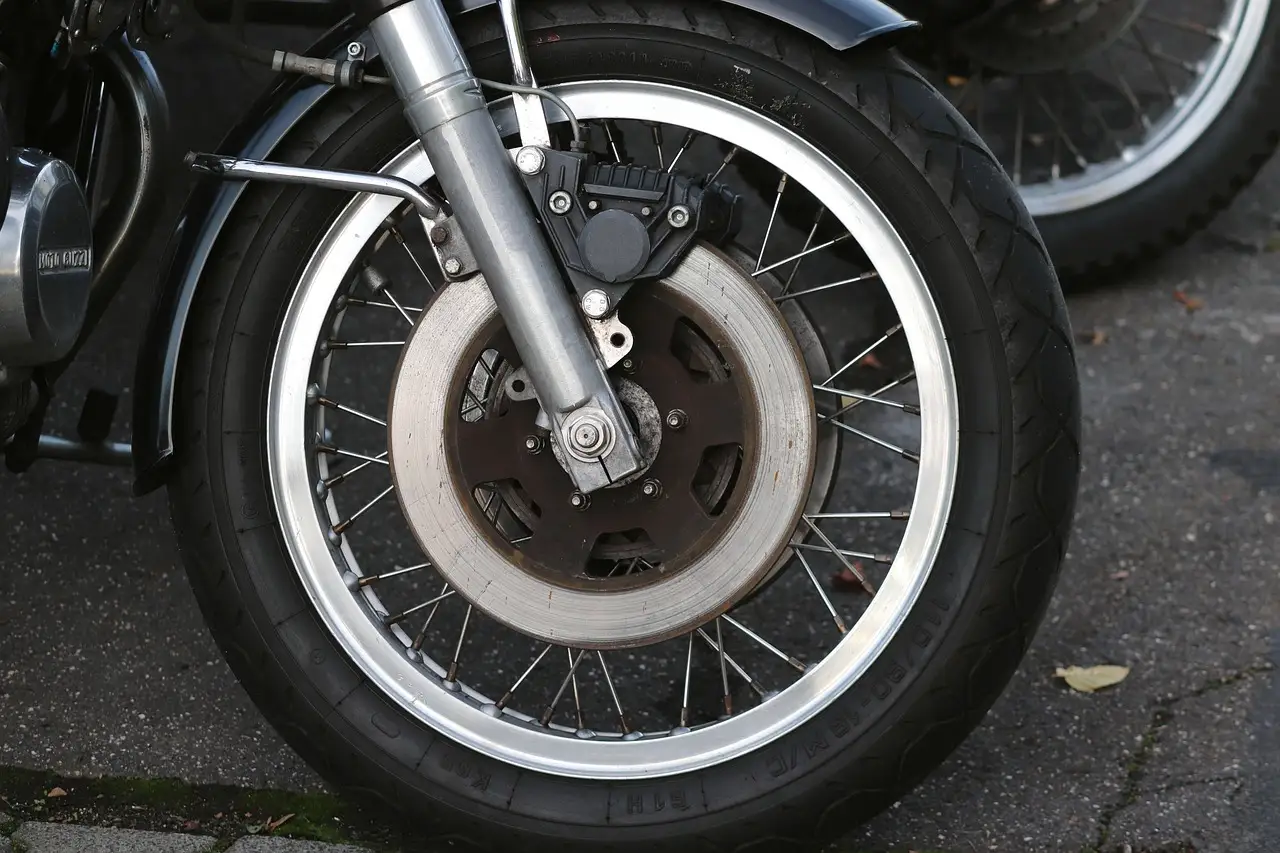
Front pads commonly wear faster because braking load shifts forward during deceleration, so the front axle often does more work on many vehicles. That is normal if the wear is even left to right and the front pads still have more than the minimum thickness listed in the manual. Large side-to-side gaps are not normal.
Normal front-to-rear wear differences
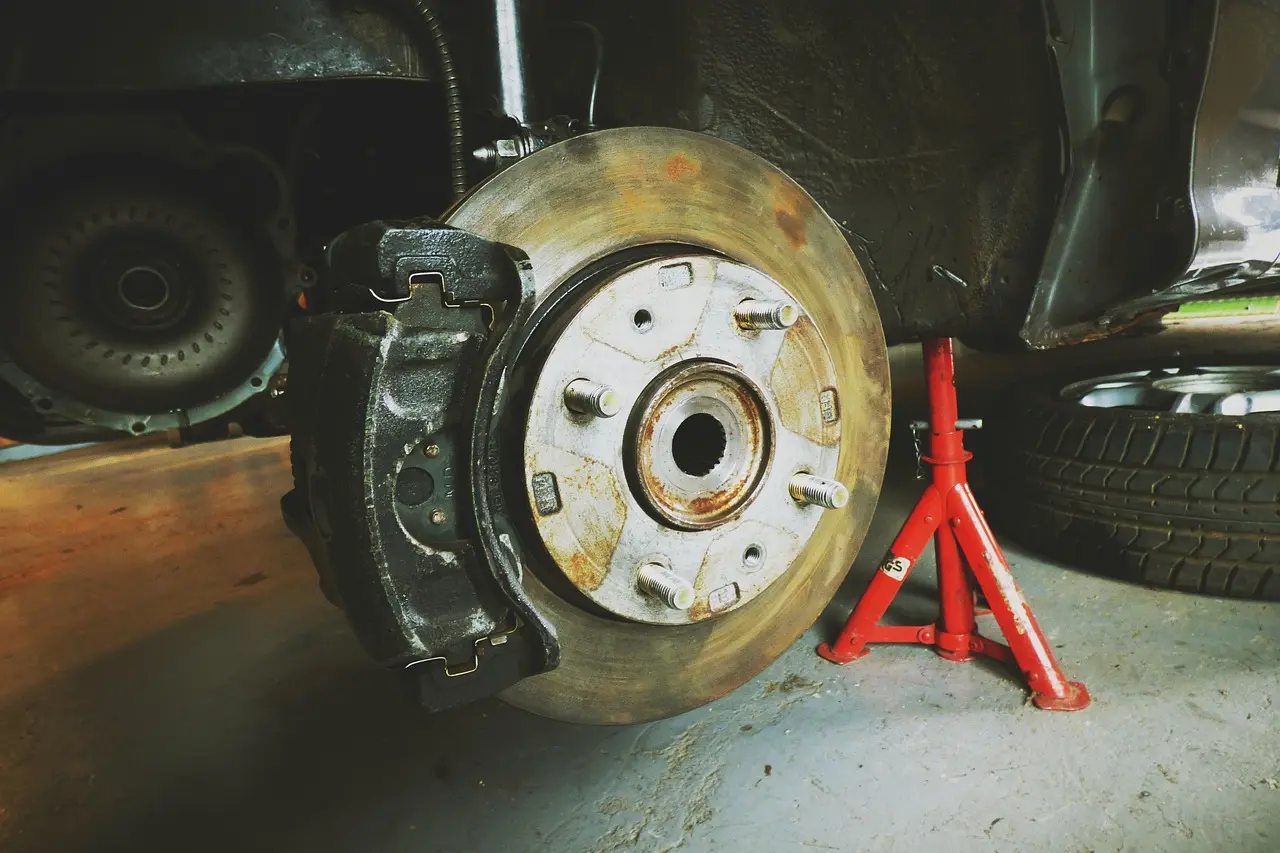
Floating front calipers are common, and they rely on piston movement plus slide pins to clamp both pads evenly. Rear brakes may use smaller pads, but many vehicles also use rear parking-brake hardware that changes the wear pattern. If the fronts are far thinner than the rears, compare both axles and check for drag, not just mileage.
When faster front wear is still abnormal
If one front wheel is hotter, noisier, or thinner than the other, treat it as a fault, not normal bias. A rotor with scoring, hotspots, or thickness below the manufacturer’s minimum should be replaced with the matching parts specified by the manual. A quick look at the pads is not enough.
Can bad calipers make brake pads wear unevenly?
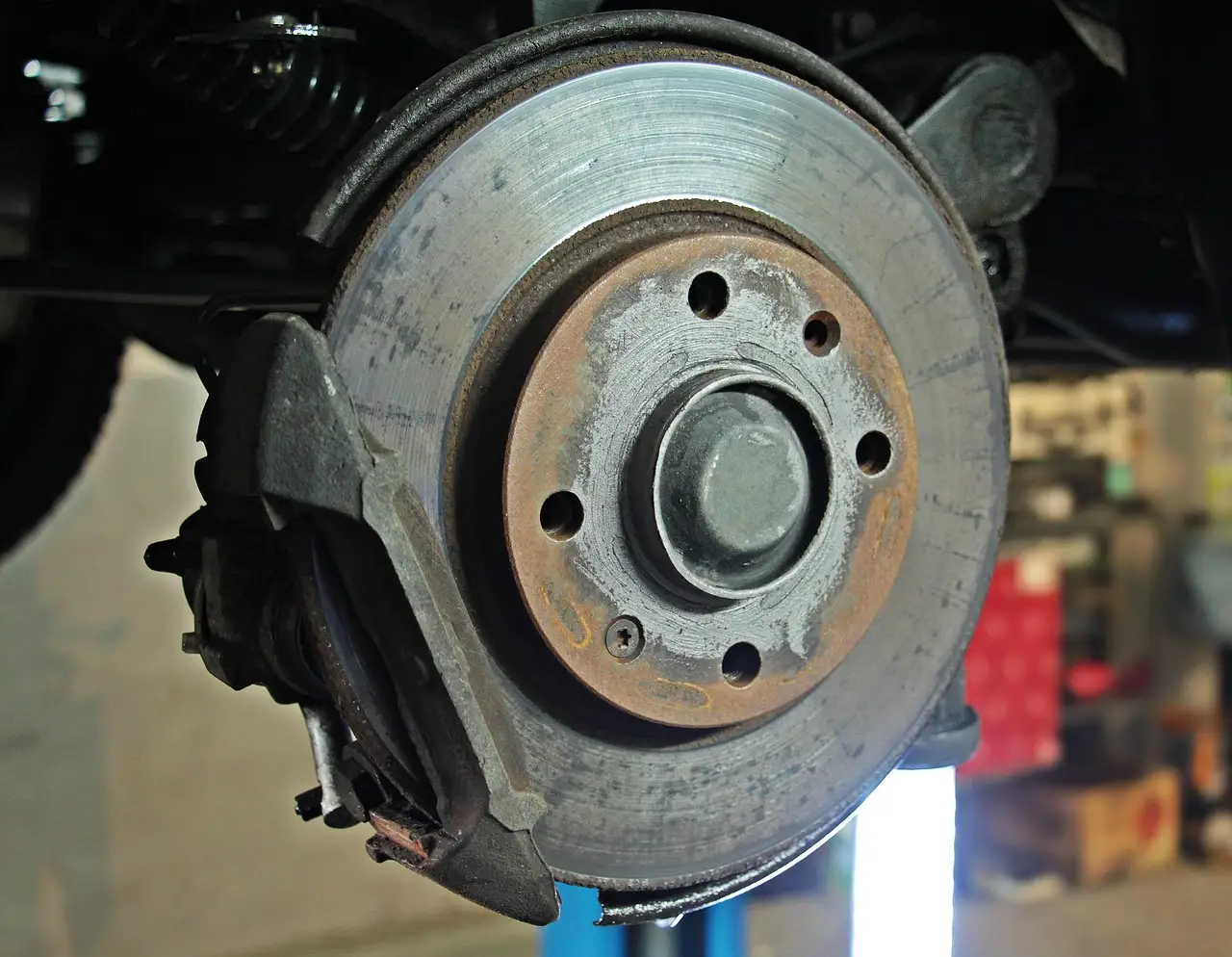
Yes. A caliper can cause uneven wear when the piston sticks, the guide pins seize, or the caliper body cannot float freely. On some fixed calipers, one piston may hang up while the opposite side still moves, which leaves one pad thinner than the other. Caliper drag also overheats the rotor and fluid.
Floating caliper problems
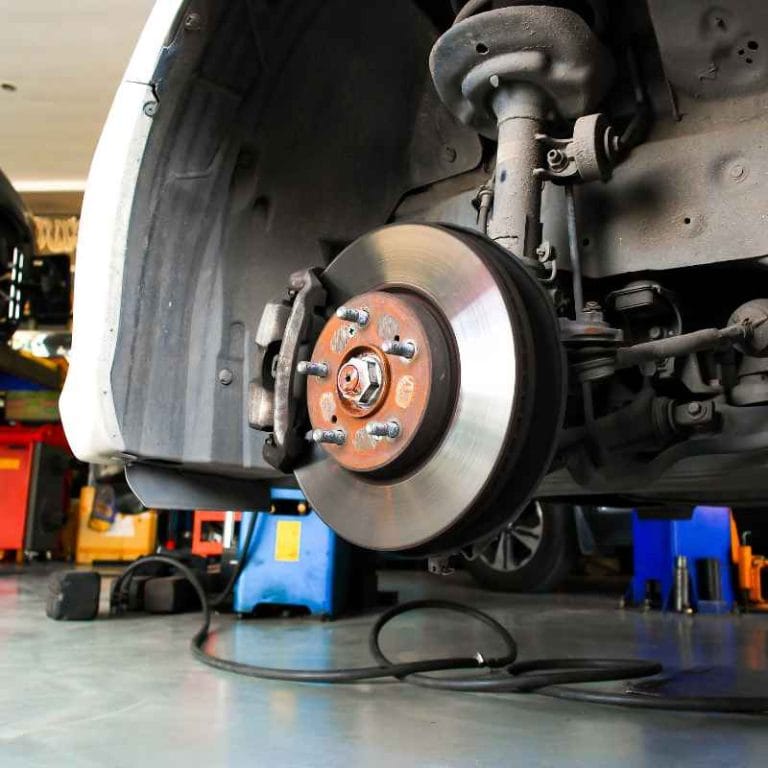
Floating calipers depend on clean, lubricated slide pins and guide pins. Corrosion, wrong grease, or torn pin boots can make one pad stay clamped after release. Clean the pins, inspect the boots, and use only brake grease that matches the hardware. If the caliper will not retract with the proper tool, replace or rebuild it as directed by the vehicle maker.
Fixed caliper piston problems
Fixed calipers use pistons on both sides, so a seized piston can create pad wear that looks uneven even when the bracket is clean. Check for a wheel that stays hot after a short drive, a brake smell, or a pad that is much thinner on one side. Those signs point to hydraulic or piston drag, not rotor runout alone.
Sticking symptoms that point to caliper drag
Say the left front wheel is hotter than the right after about a 10-minute drive and the inner pad is about 2 mm thinner. That pattern points first to drag, then to the hose, piston, or slides on that corner. If the wheel frees up after the bleeder is opened, pressure is trapped upstream.
How do I stop one-wheel wear?
Start with the corner that wears fastest, then compare it to the other wheel on the same axle. One-wheel wear usually comes from a local fault: a sticky slide, a hose that holds pressure, or rear parking-brake hardware that does not release. Replace parts only after you isolate the cause.
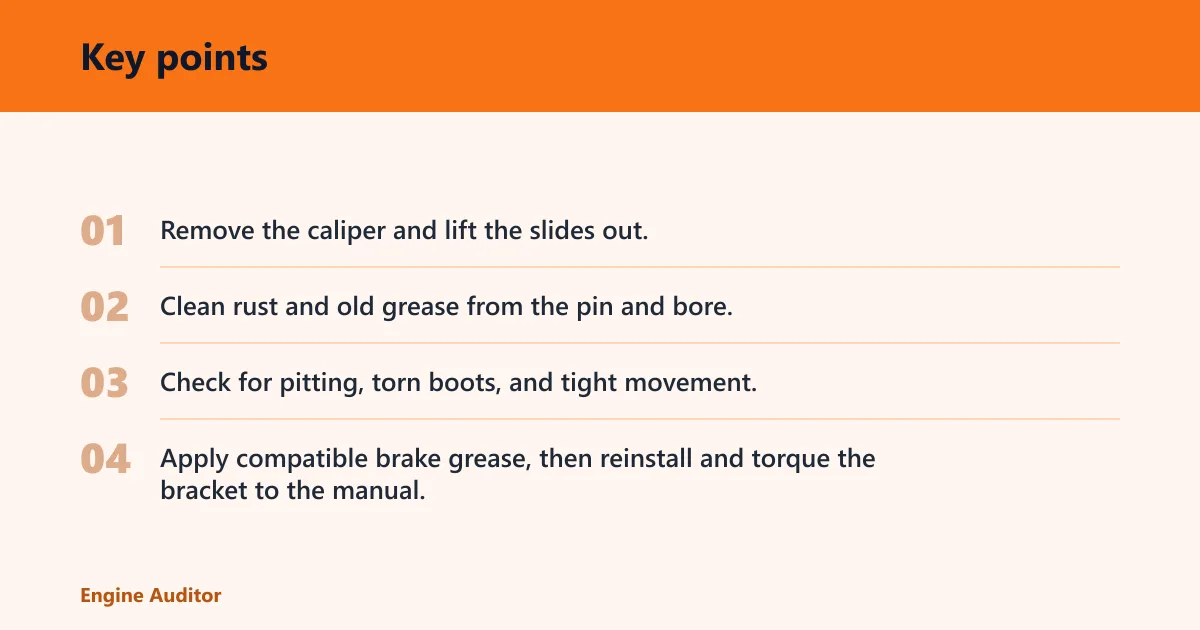
Check slide pins and guide pins first
- Remove the caliper and lift the slides out.
- Clean rust and old grease from the pin and bore.
- Check for pitting, torn boots, and tight movement.
- Apply compatible brake grease, then reinstall and torque the bracket to the manual.
Inspect brake hoses for restriction or swelling
A hose with cracks, swelling, or an internal collapse can let pressure apply the brakes but slow the release. Look for a wheel that stays warm, then crack the bleeder only as a diagnostic step. If the wheel frees when pressure is released, the hose or upstream hydraulic path is suspect and should be replaced as a matched axle repair when the manual calls for it.
Check rear parking brake parts for drag
Rear-only uneven wear often comes from a parking-brake cable, lever, or electronic actuator that does not return fully. Some rear calipers with integrated parking brakes must be wound back with the correct tool; pushing them straight in can damage the caliper. Check the manual before compressing the piston.
Confirm torque and rotor seating after service
Uneven lug torque can distort rotor seating and create noise, vibration, or uneven contact. Use the vehicle’s lug torque spec and the proper star pattern. Caliper bracket torque matters too, because loose or uneven clamping can let the pad sit crooked and wear tapered. If the manual requires a specific sequence, follow it exactly.
How often should I inspect brake pads to catch uneven wear early?
Inspect pads at every tire rotation, oil change, or, if those services do not line up, at least every about 5,000 to 7,500 miles. Check brake fluid at the interval in the owner’s manual, because moisture contamination can affect caliper operation and internal seals over time. Check again after any brake repair, then compare the new readings to the earlier ones.
What to measure
Record the thinnest pad measurement in millimeters, the rotor thickness, and the wear pattern on each wheel. Compare the current rotor thickness to the minimum stamped on the rotor or listed in the manual. If a dial indicator and the manual’s procedure are available, measure runout; otherwise, look for scoring, hotspots, and visible wobble signs.
What to look for on the rotor
A rotor with deep scoring, heat spots, or an uneven surface can change pad contact and accelerate wear. Thickness and surface condition matter together. A rotor that is still above minimum thickness may still need service if the surface is too rough to let the pads contact evenly.
What should I check if my car pulls while braking?
Check the wheel that is doing the pulling side first, then the opposite wheel on that axle. Pulling during braking usually means one brake is doing more work than the other because of hydraulic drag, a sticky caliper, or a hose problem. Rear parking-brake drag can also pull the car if the fault is on one rear corner.
Suppose the car pulls right only during brake application and the right front rotor is hotter. That makes the right side the first inspection target, not the left. Compare pad thickness, hose condition, and caliper release on both front wheels before replacing rotors.
Common mistakes
Skipping the opposite wheel on the same axle hides the comparison that solves the fault. Replacing pads without cleaning and lubricating slide pins lets the same wear return. Many people blame the rotor first, but a bad hose or sticky parking-brake part can create the same pattern.
Another error is using the wrong torque sequence or reusing dirty hardware. Uneven lug torque can seat the rotor poorly, and a loose caliper bracket can shift the pads. If the rear caliper has an integrated parking brake, do not push the piston straight in unless the manual says that is allowed.
Frequently asked questions
What causes one brake pad to wear faster than the other?
One pad usually wears faster when the caliper cannot release evenly. On floating calipers, stuck slide pins are common. On fixed calipers, a piston may hang up. Check pad thickness in millimeters on both pads, then inspect the bracket, boots, and hose before replacing parts.
How do I know if a brake hose or slide pin is causing uneven wear?
A hose fault can leave the wheel hot after a drive and may release when the bleeder is opened. A slide-pin fault usually shows rust, torn boots, or one pad that drags in the bracket. Compare side to side, then check whether the caliper moves freely with the proper service tool.
Can worn rotors cause uneven brake pad wear?
Yes. Deep scoring, hotspots, or a rotor below minimum thickness can change contact pressure and make a pad wear faster on one edge. Measure rotor thickness against the manual and inspect surface condition. If runout is suspected, use the proper measuring method for the vehicle, usually with a dial indicator.
Is uneven brake pad wear dangerous to keep driving on?
Yes, if the wear is severe, one pad is near metal, or the brake smells hot after a short drive. That can overheat the rotor, reduce stopping power, and damage the caliper. If the car pulls, drags, or has a burning smell, get it inspected before more driving.
Does driving style affect front and rear brake pad wear?
Yes. Hard stops and stop-and-go traffic increase front wear because the front axle does more braking work. But driving style does not explain one-wheel or one-side-to-the-metal wear. When the pattern is uneven from side to side, look for a mechanical or hydraulic fault first.
How do I stop brake pads from wearing unevenly on one wheel?
Clean and lubricate the slide pins, inspect the hose, and verify rear parking-brake release before installing new pads. Use the factory torque values for the caliper bracket and wheel lugs, then recheck pad movement and rotor condition. If the wheel still runs hot, stop and diagnose the hydraulic path.
Products related to this article
Sponsored / affiliate links. As an Amazon Associate I earn from qualifying purchases. I may earn additional commission from eligible campaigns.
 QivaZira Brake Pad Measuring Tool Set Brake Lining Thickness Gauge for Automotive Maintenance Color Coded SAE and Metric Wear Indicator for Cars Trucks
 Fitcamx Front 4K+Rear 1080P Dash Cam Adapts for Toyota Tacoma 2018-2023 (3rd Gen/N300), OEM Factory Look, 2 Channel HD Video, Built-in WiFi & APP, Loop Recording, G-Sensor, Easy to Use, 128GB Card