Vehicle types vs trim level: why the names differ in forms
Vehicle type is the broad class of the whole vehicle, sedan, SUV, truck, or van, while trim level is the feature set inside a specific model, such as Corolla LE or F-150 XLT. Mix them up, and registrations go sideways, price checks get noisy, and forms get bounced. I separate vehicle class, model name, trim, and package labels with side-by-side examples and the naming traps I see most often.
| Decision factor | Vehicle types | trim level: Why the names are not the same | Winner |
|---|---|---|---|
| What it identifies | Broad body class or use case, such as sedan, SUV, truck, van, coupe, or hatchback. | Manufacturer-defined equipment tier inside one model. | tie |
| What can change | Main shape, cargo layout, ride height, and basic utility. | Seats, cameras, wheels, audio, safety gear, engine, drivetrain, and suspension. | trim level: Why the names are not the same |
| Risk of mislabeling | Usually low once the body style is obvious. | High, because badges, ads, and forms often mix trim, package, and special edition language. | Vehicle types |
| Best use in a search or form | Choosing the right class of vehicle. | Choosing the exact version of a known model. | tie |
Vehicle types vs trim level: the core difference

Vehicle type tells you the widest classification. Trim level tells you which version of that vehicle you are looking at after the model is already fixed. They answer different questions, and the paperwork errors start when a badge or ad makes them look the same.
What a vehicle type label tells you
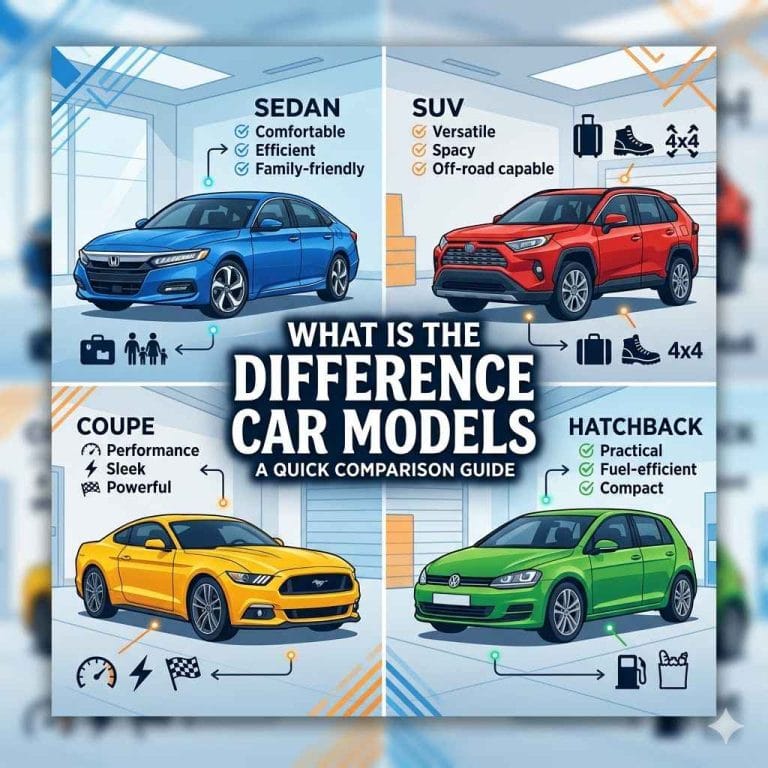
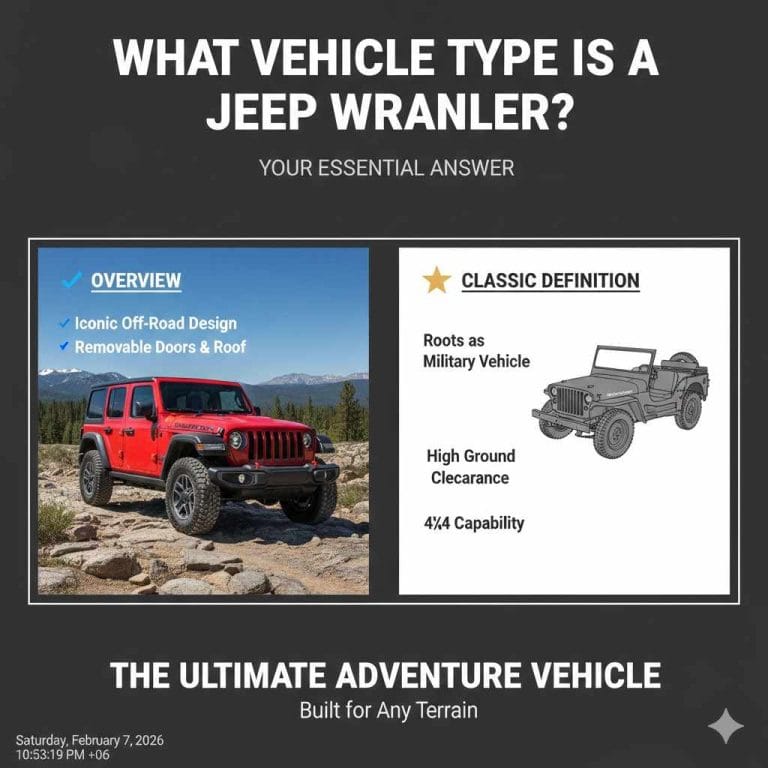
A vehicle type is the broad classification of the body and use case. Sedan, SUV, truck, van, coupe, and hatchback all sit at this level. It says more about shape and role than about comfort or equipment.
What a trim level label tells you
Trim levels identify a vehicle’s equipment level or special features. They can include interior gear like leather seats and reversing cameras, and some trims add mechanical changes such as different engines, suspension, or all-wheel-drive systems.
Why people mix them up in listings and badges
Badges can mislead. Dealers may print the trim in large type, hide the model in small type, and mention a package in the fine print. Some shoppers then treat the trim as if it were the model name, or treat a package as if it were a separate vehicle.
According to Automotive trim level – Wikipedia — GMC’s trim ladder example includes SLE, SLT, AT4, and Denali. (source)
How model, trim, and package fit together
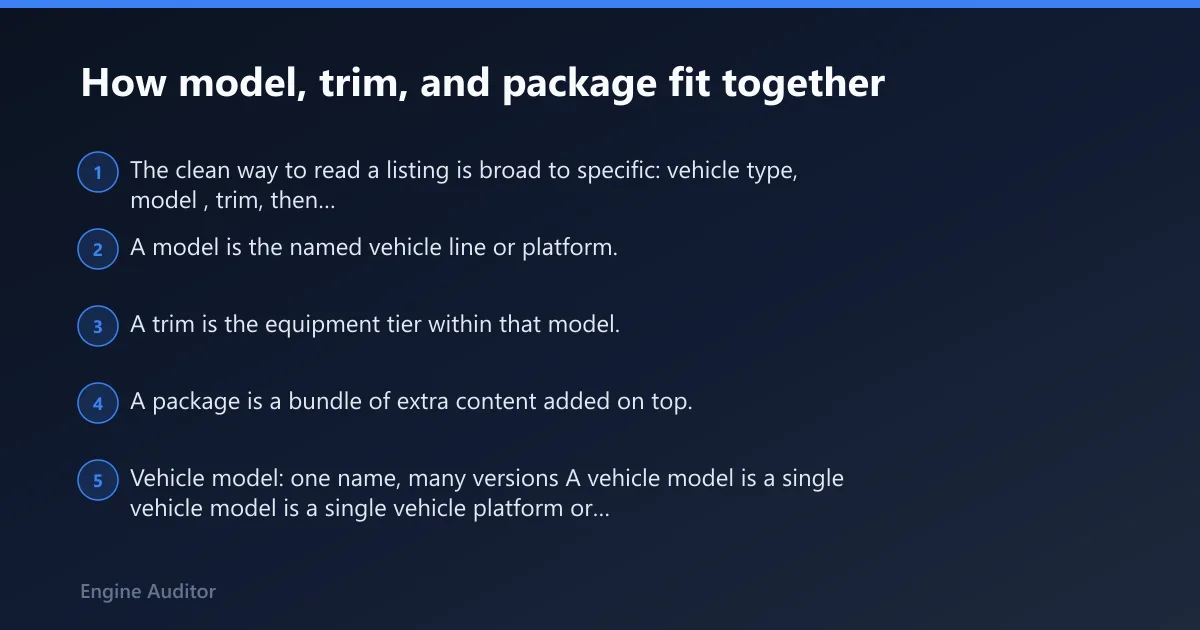
The clean way to read a listing is broad to specific: vehicle type, model, trim, then package. A model is the named vehicle line or platform. A trim is the equipment tier within that model. A package is a bundle of extra content added on top.
Vehicle model: one name, many versions
A vehicle model is a single vehicle platform or name with multiple trims. The body shape and engineering stay the same across those trims, even when the badges and equipment change. Corolla, F-150, Civic, and RAV4 work this way.
Trim level: the equipment tier inside the model
Trim levels are the base, mid-level, and top-level variants inside one model family. The least equipped version is the base model. Higher trims add content, and the top trim may be called fully loaded by sales staff, even though that phrase is informal.
Options package: bundled features sold on top of a trim
An options package bundles features together. That bundle can sometimes cost less than buying each feature separately, and it may include trim appearance, sports or performance content, towing gear, safety tech, handling parts, or navigation. A package is not automatically a trim.
Special edition vs trim: when the label is marketing, not a new model
A special edition often uses a trim as its base and adds naming, styling, or content changes. It may sound like a new model in an ad. That does not make it a separate model, and it does not always make it a new trim tier either.
Why do car brands use names like LX, EX, SE, or Limited?
Brands use short trim names to signal equipment level, price step, or market position without rewriting the model name. Letter codes and word labels are shorthand inside a brand’s own ladder. The same badge can mean something different on another brand, so the context matters.
Letter codes and short labels
Common trim abbreviations include DX, LX, LS, EX, GL, SE, and GT. These labels usually mark a move from basic to better equipped, but the order is not universal across brands. Chevrolet, Ford, GMC, and Toyota all use ladders that customers learn by pattern, not by law.
| Brand | Example ladder from base to top trim |
|---|---|
| Chevrolet | LS to LTZ |
| Ford | XL, XLT, STX, Limited |
| GMC | SLE, SLT, AT4, Denali |
| Toyota | LE, XLE, SE, Limited |
Word-based trim names
Some brands use words such as Executive or Deluxe instead of letters. Those names still mean the same thing: a version of the model with a specific equipment set. The naming style changes; the classification logic does not.
Alphanumeric performance labels
Trim names can also be alphanumeric codes such as Z28, XR5, and GT3. These are often used where the badge needs to signal a performance theme, a special engine, or a racing link. They can look like separate models even when they sit inside one family.
Can a trim change the engine or drivetrain?
Yes. A trim level can change the engine or drivetrain, and some trims also change suspension or all-wheel-drive systems. That is why trim is more than paint and upholstery. It can change how the vehicle drives, not just how it looks or feels inside.
What usually changes between base and higher trims
Base trims usually carry the least equipment and the lowest-spec version of the model. Higher trims may add leather seats, reversing cameras, premium audio, heated features, larger wheels, and driver-assist equipment. Those changes are common, but they are not the whole story.
When a trim adds a different engine, AWD, or suspension
Some trims carry mechanical differences, including different engines, suspension tuning, or all-wheel-drive systems. That is where a trim starts to act more like a distinct mechanical version of the same model. Buyers often notice the price gap first, then the performance difference later.
Performance trims that blur the line
Performance trims can include engine upgrades and handling upgrades, and they may use labels like GT, RS, or Type S. These versions can feel close to sub-models because they alter the car’s character in a visible way. Volkswagen may market the Golf GTi as either a standalone model or a trim level.
Are special editions and packages the same as trims?
No. A package is a bundle of features added to a trim, while a special edition is usually a marketing label tied to an existing model or trim. A package changes the content. A special edition changes the presentation, content, or both, but it does not always create a new trim tier.
How packages get mistaken for trims
Dealer ads often list a package next to a trim and make the package sound like its own version. That creates confusion when the buyer later sees a form that asks for the exact trim only. If the package name is not on the manufacturer’s trim list, it is probably not a trim.
Common package types
Trim packages can include a sports or performance package, a towing package, a safety package, or a handling package. A towing package may include items such as a heavy-duty radiator and extra transmission cooling provisions. A safety package may include additional air bags and collision avoidance system (AEB).
A handling package may include stiffer springs, stiffer shock absorbers, and larger/lightweight wheels. Those items can be sold together because the bundle makes sense as a set. The important point is that the package sits on top of a trim, rather than replacing the trim name.
How do I tell the trim on my car from the VIN or badge?
The VIN usually identifies the vehicle configuration, but trim confirmation often comes from the build sheet, window sticker, dealer record, or the badge combination on the car itself. The badge can help, but it is not enough on its own when a package, special edition, or dealer-added content is involved.
- Read the model name first, then the trim badge.
- Check whether the badge matches a known trim ladder for that brand.
- Look for package names that are listed separately from the trim.
- Compare the VIN-based record with the sales order or registration form.
- Watch for special edition wording that may sit on top of a standard trim.
Checklist for spotting mislabels on dealer ads and forms
- Does the ad mix a body type word with a trim name?
- Does the form list a package where the trim should be?
- Does the badge match the brand’s published trim ladder?
- Is a performance name being used as a model when the brand treats it as a trim?
- Is the same vehicle called two different things in the ad and the registration paperwork?
Why do some manufacturers market a trim like it is a separate model?
Manufacturers do this when a performance or premium version matters enough to get its own marketing treatment. The car may still sit on one model platform, but the badge, brochures, and dealer speech make it feel separate. That is a branding choice, not always a classification change.
Where the naming breaks in real listings
In listings, a performance badge may be shown more prominently than the model name. In dealer forms, the same vehicle may be filed under the model family with the trim hidden in a dropdown. That split is what causes shoppers to think they are comparing different cars when they are really comparing versions.
Edge case: sub-model behavior
Some performance variants act like sub-models because they change enough hardware to matter in the real world. The line gets blurry when the engine, AWD setup, brakes, and suspension all move together. Even then, the paperwork may still place the vehicle inside one model family with a specific trim code.
Map listing labels to the right category
The table below shows how common listing labels should usually be read. It is the fastest way to separate a body type, a model name, a trim, and a package when an ad, form, or badge makes the labeling messy.
| Listing label | Right category |
|---|---|
| SUV | Vehicle type |
| Corolla | Model |
| LE | Trim |
| Limited | Trim |
| Sport Package | Package |
| Towing Package | Package |
| Denali | Trim |
| GTi | Trim or model-family label, depending on the brand’s naming |
Common dealer-ad labels that are often misread
Terms like premium, sport, luxury, appearance, and technology may describe a package rather than a trim. A buyer who reads only the headline can easily miss that the actual trim sits lower in the ad. The same happens when a special edition is shown as though it were the entire model.
Choose vehicle type if… / Choose trim level if…
Choose vehicle type when the first question is about body style, cargo layout, or use case. Choose trim level when the model is already known and the real decision is about equipment, comfort, price, or mechanical content. One answer sets the class; the other sets the version.
Choose vehicle type if…
Choose vehicle type if you need to separate a sedan from an SUV, a truck from a van, or a coupe from a hatchback. Choose it if a registration, search filter, or fleet form asks what the vehicle is before asking which version it is. Choose it if body style drives the decision.
Choose trim level if…
Choose trim level if you already know the model and now need the exact equipment tier. Choose it if you care about leather seats, cameras, AWD, towing gear, or a performance tune. Choose it if you are comparing the same model across base, mid-level, and high-end versions.
How to shop without mixing category and version
Read the label in order: type, model, trim, package. If a listing skips one of those steps, stop and identify what is missing before comparing price. That habit prevents the classic mistake of comparing a base trim in one model with a loaded package in another.
Frequently asked questions
What is the difference between a vehicle type and a trim level?
A vehicle type is the broad class of the whole vehicle, such as sedan, SUV, truck, or van. A trim level is the equipment version within one model. The type tells you what shape and role the vehicle has; the trim tells you how it is equipped.
Is trim level the same as model?
No. The model is the named vehicle line, and the trim is one version inside that line. A model can have many trims, and the same trim name can mean different things across brands. That is why the model name and trim badge should be read together.
Can a trim level change the engine or drivetrain?
Yes. Some trims change the engine, suspension, or all-wheel-drive system, not just the features inside the cabin. Performance trims can go even further, adding handling changes and stronger mechanical parts. That is why trim is sometimes a mechanical choice as much as an equipment choice.
Products related to this article
Sponsored / affiliate links. As an Amazon Associate I earn from qualifying purchases. I may earn additional commission from eligible campaigns.