Transmission Control System Not Shifting Right: Likely Causes
Start with power and scan-data checks. Low battery voltage, blown fuses, poor grounds, or communication codes can keep the transmission control system from shifting correctly before hard parts fail. If you miss the wrong fault, you can waste hours, replace good parts, and leave the vehicle stuck in limp mode or with damaging shift behavior. This guide sorts electrical, sensor, hydraulic, and module faults in a step-by-step order so you can narrow the cause without guessing.
Why is it not shifting right?


Begin with the symptom pattern. A late shift in every gear points somewhere different from a single harsh 2-3 shift, a no-upshift condition, or a vehicle that locks in one gear. Those patterns help separate a power, sensor, wiring, solenoid, fluid, or module fault before you touch parts.
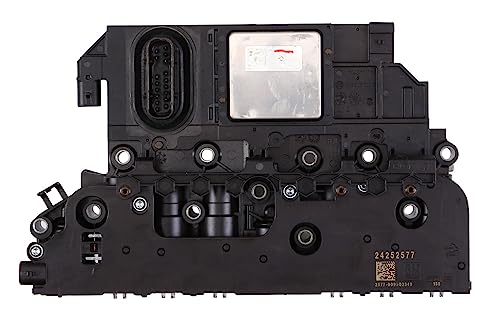
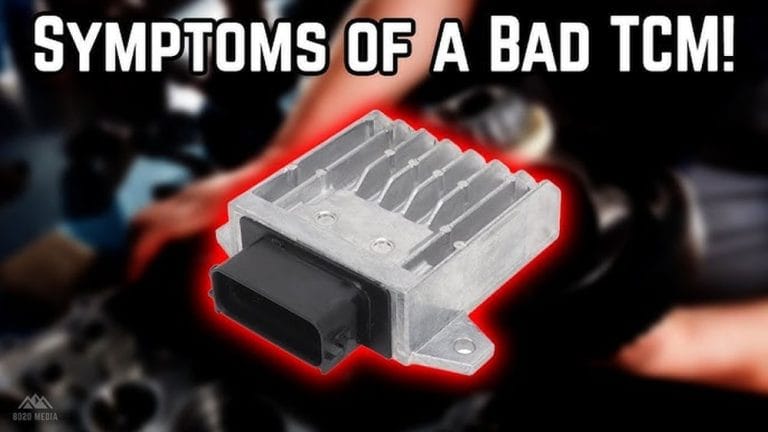
The Transmission Control Module (TCM) controls shift timing and gear selection. It can store diagnostic trouble codes, and it may fail from power loss, poor grounding, software errors, or internal faults. The larger Transmission Control System includes the module, wiring, sensors, solenoids, and communication lines, so a bad shift does not automatically mean a bad module.
Use the symptom to decide if driving is still wise. Hard shifts, delayed shifts, slipping, or a stuck-in-gear condition can signal an active fault that may get worse. If the vehicle is in limp mode, the control system is already limiting shifting to help protect the transmission.
Power and ground checks first
Check battery and charging voltage before replacing anything. Low system voltage can create false transmission symptoms, corrupt module inputs, or trigger communication faults that look like a control problem.
- Measure battery voltage key off and running.
- Inspect fuses and relays that feed the TCM and transmission circuits.
- Check main grounds for looseness, corrosion, or broken strands.
- Inspect connectors and wiring routing near the battery, engine, and transmission.
- Look for rubbed-through wiring, water intrusion, or heat damage.
A weak battery or bad alternator can imitate a transmission fault. The system depends on clean voltage and clean signal inputs. If supply voltage drops under load, the module may shift late, set communication codes, or enter fail-safe mode even when the transmission hardware is intact.
Suppose a 12.1-volt battery drops lower during cranking and the scan tool shows U-codes plus a harsh default shift pattern. That points first to supply and communication problems, not a failed clutch pack. Fix the voltage issue, clear codes, and retest before moving deeper.
What sensors can shift timing wrong?
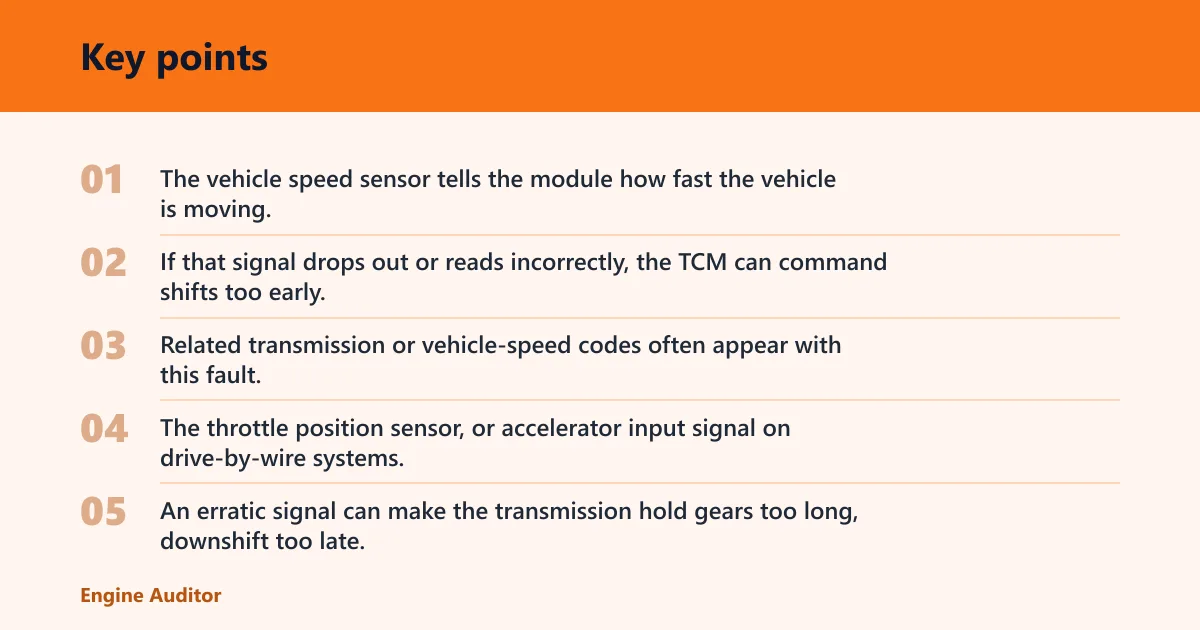
Vehicle speed sensor and throttle position or accelerator input faults can make the control system shift at the wrong time. Bad sensor data may cause late, harsh, or incorrect shifts even when the transmission’s internal parts are still working normally.
Vehicle speed sensor faults
The vehicle speed sensor tells the module how fast the vehicle is moving. If that signal drops out or reads incorrectly, the TCM can command shifts too early, too late, or not at all. Related transmission or vehicle-speed codes often appear with this fault.
Throttle position or accelerator input faults
The throttle position sensor, or accelerator input signal on drive-by-wire systems, tells the control system how much load the engine is under. An erratic signal can make the transmission hold gears too long, downshift too late, or shift at the wrong road speed.
How bad sensor data appears in live scan data
An OBD-II scan tool is needed here. Read stored codes, pending codes, live data, and freeze-frame data before swapping parts. A sensor may not fail completely; it may simply report spikes, flat spots, or mismatched values that the TCM reacts to.
Watch for speed that drops to zero for a moment while the vehicle is moving, throttle input that jumps without pedal movement, or a gear command that does not match road speed. That kind of evidence separates sensor fault from mechanical transmission damage.
Shift fault matrix
This matrix gives you the most likely fault class, the first test to run, and the red-flag result that means stop driving. Use it to sort the problem before you replace a TCM, solenoid, or transmission assembly.
| Symptom | Most likely cause category | First test to run | Red-flag result |
|---|---|---|---|
| Late upshifts at every gear | Sensor input, low voltage, or fluid issue | Scan live speed and throttle data, then check voltage | Loss of speed signal or limp mode |
| Harsh single shift | Solenoid, wiring, or module command fault | Read codes and compare commanded vs actual gear | Repeated harsh shifts with active transmission codes |
| Stuck in one gear | Fail-safe mode, power/ground fault, or major sensor fault | Check battery voltage and communication codes first | Vehicle will not shift out of default gear |
| Slip during shift | Fluid, hydraulic, or clutch pressure issue | Inspect fluid level and condition | Burnt fluid or slipping that worsens under load |
| No shift with correct engine response | TCM output, wiring, or solenoid circuit fault | Check solenoid commands and circuit resistance | Open or shorted circuit, or no command from TCM |
Can fluid problems mimic a control fault?
Low, dark, burnt, contaminated, or incorrect transmission fluid can change hydraulic pressure and shift quality enough to look like an electronic fault. Fluid problems can cause slip, flare, delayed engagement, or harsh shifts that point to the wrong direction if you skip the fluid check.
Fluid level and condition
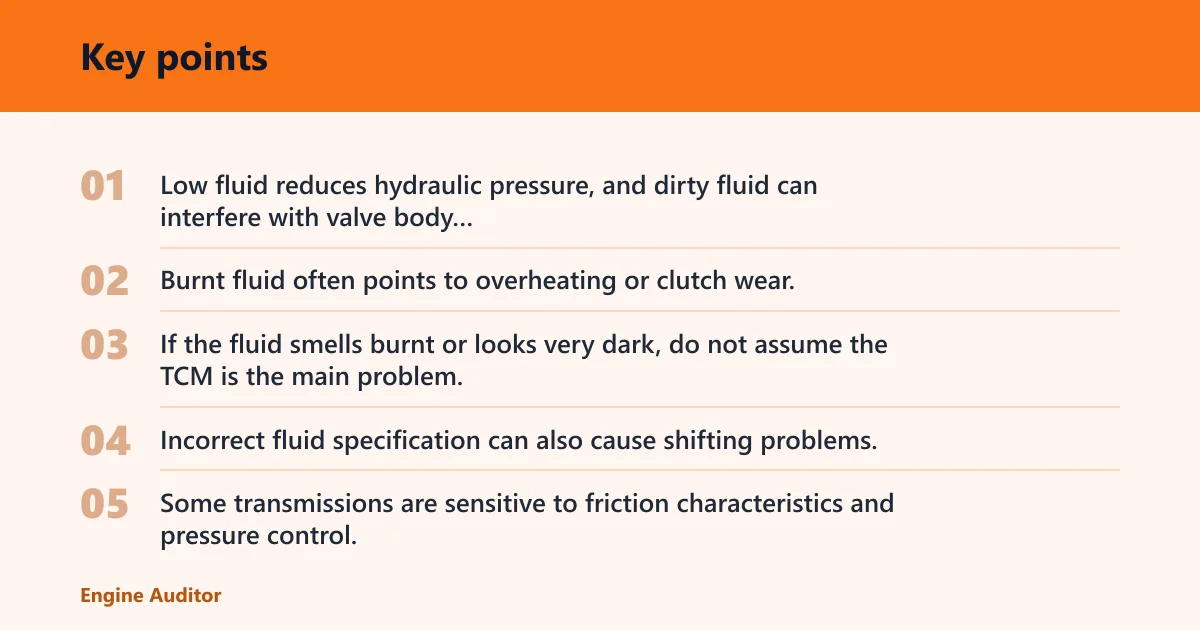
Low fluid reduces hydraulic pressure, and dirty fluid can interfere with valve body operation and clutch apply quality. Burnt fluid often points to overheating or clutch wear. If the fluid smells burnt or looks very dark, do not assume the TCM is the main problem.
Wrong fluid specification
Incorrect fluid specification can also cause shifting problems. Some transmissions are sensitive to friction characteristics and pressure control, so the wrong fluid can create symptoms that resemble solenoid or module failure. Verify the specification against the vehicle’s service information before topping off or flushing.
Signs of hydraulic trouble versus electronic trouble
Electronic faults often leave a trail of codes, abnormal live data, or a default gear pattern. Hydraulic problems often show poor apply quality, delayed engagement, or slip that tracks with temperature and load. If fluid is low or badly contaminated, fix that first and retest before chasing electronics.
A common first-timer mistake is replacing a module because the car shifts late in the morning and hard after a commute. If the fluid is low and dark, the transmission can behave badly long before the TCM becomes a valid suspect.
Can a bad transmission control module cause delayed shifting?
Yes. A bad TCM can cause incorrect shift timing, missed shifts, or gear selection errors, but it should be blamed only after power, ground, sensor, wiring, and fluid checks pass. A module failure is real, but it is not the first assumption.
Shift solenoid resistance and command checks
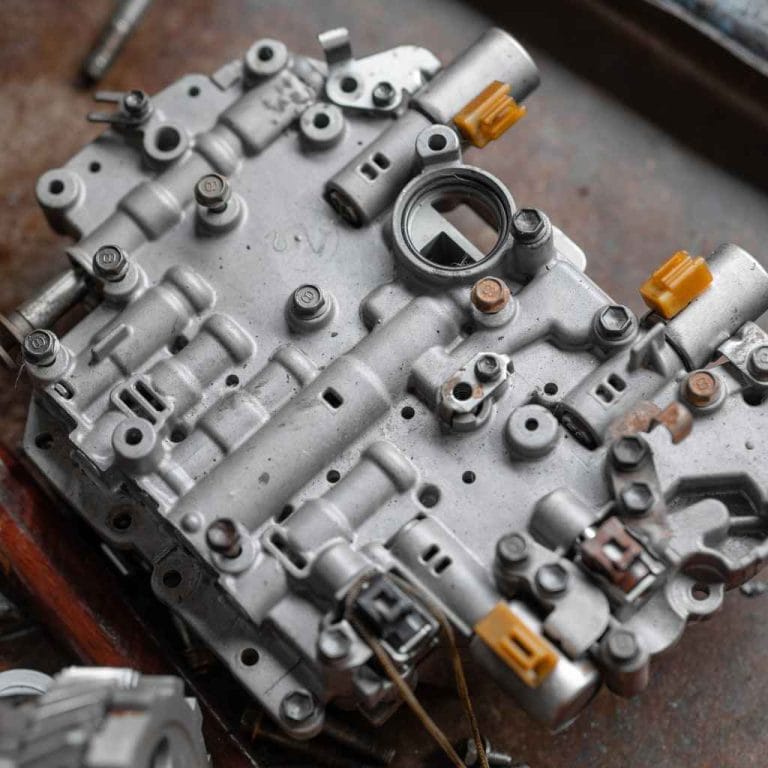
Shift solenoids open and close fluid passages for gear changes. They can stick electrically or mechanically. A resistance test and scan-data command check help separate a bad solenoid from a control issue. If the TCM commands a shift and the solenoid circuit does not respond, the fault may be in the solenoid or the wiring to it.
Wiring continuity and short checks
Wiring continuity matters because a broken wire, corroded connector, or short to ground can mimic a failed module. Check continuity end to end, then inspect for resistance spikes when you flex the wiring. Intermittent faults often show up under heat or vibration.
TCM power, software, and internal fault checks
If power, ground, sensors, solenoids, and wiring check out, inspect the module itself. The TCM may need a software update, or it may have an internal fault. Communication codes, no-output commands, or repeated code return after clearing can support that diagnosis.
When does limp mode change the diagnosis?
Limp mode, or fail-safe mode, means the control system has detected an active fault and is limiting shifting to protect the transmission. If the vehicle is locked in one gear or follows a default pattern, treat that as a diagnostic clue, not a random symptom.
What default gear behavior means
Default gear behavior usually means the module has lost confidence in a key input or output. That may be a speed sensor fault, a power or ground drop, a solenoid circuit failure, or a communication problem. It is the system protecting itself from more damage.
Which codes and freeze-frame data matter?
Read stored and pending codes first, then freeze-frame data. Freeze-frame shows the conditions at the moment the fault set, such as speed, throttle, temperature, and voltage. That data often points to the failing circuit faster than a parts swap does.
When the vehicle should not be driven
Do not keep driving if the transmission is slipping, stuck in gear, or shifting so hard that the driveline jerks. Towing is safer when the vehicle cannot select gears normally, when limp mode returns immediately, or when a low-voltage or communication fault is still active.
Frequently asked questions
Why is my transmission control system not shifting right?
Start with battery voltage, fuses, grounds, and scan data. Those checks separate supply and communication faults from sensor, solenoid, fluid, and module problems. If the vehicle is in limp mode or has active codes, the control system is likely reacting to a fault and needs diagnosis before parts replacement.
What sensors can make a transmission shift wrong?
The vehicle speed sensor and throttle position or accelerator input are the main ones to check first. Bad speed data can cause late or incorrect shifts, while erratic throttle input can shift timing under changing load. Live scan data is the fastest way to verify both signals.
Will a low battery or bad ground affect transmission shifting?
Yes. Low voltage and poor grounding can disrupt TCM operation, trigger communication codes, and push the transmission into fail-safe behavior. Check the battery, charging system, fuses, relays, connectors, and wiring continuity before condemning the module. Voltage problems can look like a transmission-only fault.
Can transmission fluid problems mimic a control system fault?
Yes. Low level, burnt fluid, contamination, or the wrong fluid specification can change hydraulic pressure and shift quality. Those issues can create slip, delayed engagement, or harsh shifts that feel electronic. Always inspect fluid condition before replacing sensors or the TCM.
Is it safe to keep driving if the transmission is shifting hard or late?
Not for long. Hard, late, slipping, or stuck-in-gear shifting can mean the transmission is already in fail-safe mode or suffering from a fault that can worsen. If the problem is severe, if limp mode returns, or if the vehicle will not shift normally, arrange towing.
Products related to this article
Sponsored / affiliate links. As an Amazon Associate I earn from qualifying purchases. I may earn additional commission from eligible campaigns.