Transmission control system symptoms you should never ignore
If your transmission slips, bangs into gear, flashes a warning light, or enters limp mode, stop driving when it won’t shift, the light flashes, or fluid smells burned. Ignoring those signs can turn a control fault into a tow bill, then a ruined clutch pack or a full rebuild. This guide separates control-system faults from mechanical damage, shows what to check first, and tells you when to park it.
What transmission control system symptoms should I never ignore?
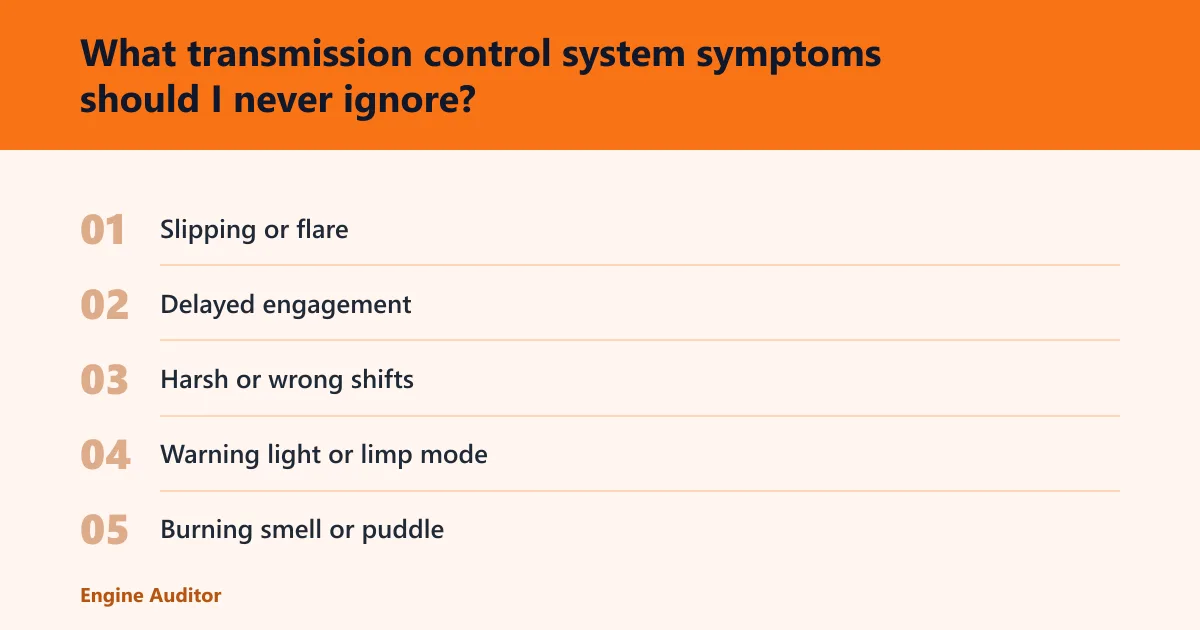


Do not ignore slipping, delayed engagement, harsh shifts, a transmission warning light, limp mode, or a burnt-fluid smell. Those symptoms can come from the TCM, solenoids, sensors, wiring, low fluid, or internal wear. The fast job is to decide whether the car has a control fault, a hydraulic problem, or hard mechanical damage.
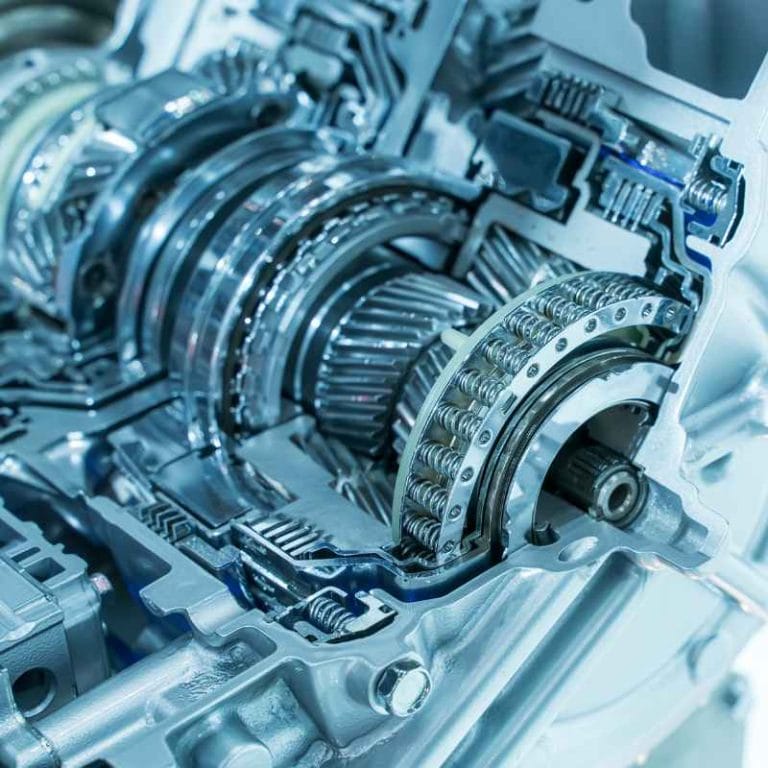
A transmission changes speed, direction of rotation, or torque multiplication and reduction. In an automatic, the system uses engine power to change gear ratio by load. Most passenger cars use 4–10 forward gear ratios plus reverse. That means a small control error can feel like a major failure.
Modern transmissions typically keep the engine near 600–7000 rpm, so shift timing matters. If the gearbox slips out of gear during acceleration or fails to stay in gear, the fault tree often starts with control input, pressure control, or fluid condition before anyone considers a rebuild. (en.wikipedia.org)
What those symptoms usually mean
- Slipping or flare: pressure loss, solenoid issues, fluid problems, or worn clutches.
- Delayed engagement: low fluid levels, worn components, or failing solenoids.
- Harsh or wrong shifts: TCM logic faults, sensor errors, bad wiring, or hydraulic pressure problems.
- Warning light or limp mode: a detected fault that needs code-based diagnosis.
- Burning smell or puddle: overheated fluid or a leak that can quickly damage the unit.
📊 Modern transmissions typically keep the engine near 600–7000 rpm. Source: Transmission (mechanical device).
Can a transmission control system cause slipping or harsh shifting?
Yes. A transmission control system can cause slipping, harsh shifts, or incorrect gear selection when the TCM, solenoids, sensors, or wiring send bad commands or bad data. Low battery voltage and poor grounds can mimic a failed transmission by confusing the controller or dropping solenoid current.
How shift solenoids affect gear changes
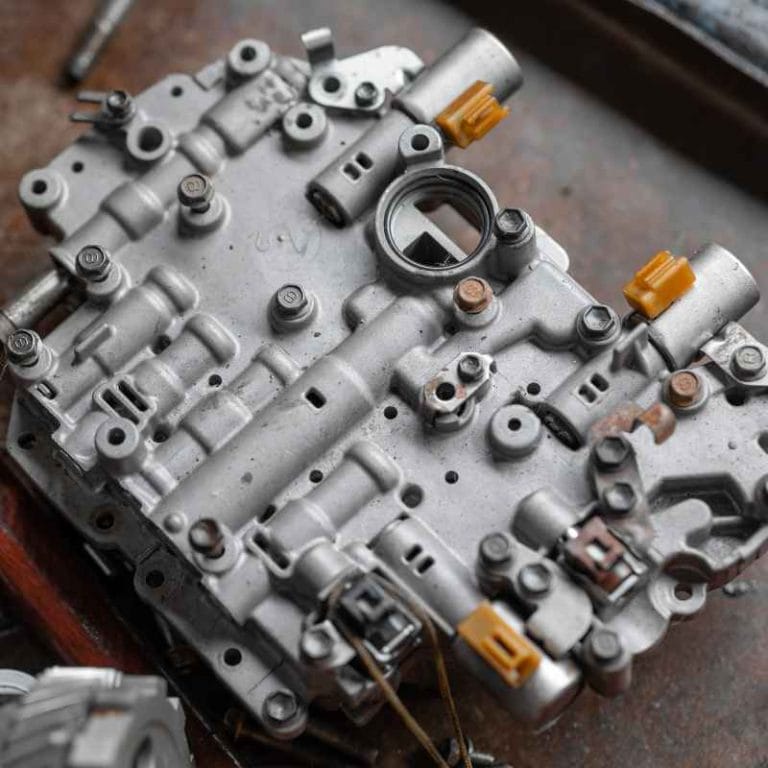
Shift solenoids route hydraulic pressure to apply the appropriate clutch or band at the right time. If a solenoid sticks, loses electrical command, or has debris in the valve body, the result can be a delayed, harsh, or incorrect shift. That is a control and hydraulic issue before it is a mechanical rebuild issue.
How sensor faults distort shift timing
Wheel speed, input, and output sensors feed speed data to the control system. If one sensor reads erratically, the TCM may command the wrong gear, hold a gear too long, or trigger a warning light. Bad speed data can make the transmission look worn out when the real issue is electrical or signal-based.
How low voltage or bad grounds create false transmission faults
Low battery voltage can trigger transmission control system problems because the TCM and solenoids need stable power. Weak grounds, corroded terminals, or a failing charging system can cause communication errors and limp mode. On electronically controlled automatics, that can happen before any internal damage is obvious.
Why is my transmission control system warning light on?
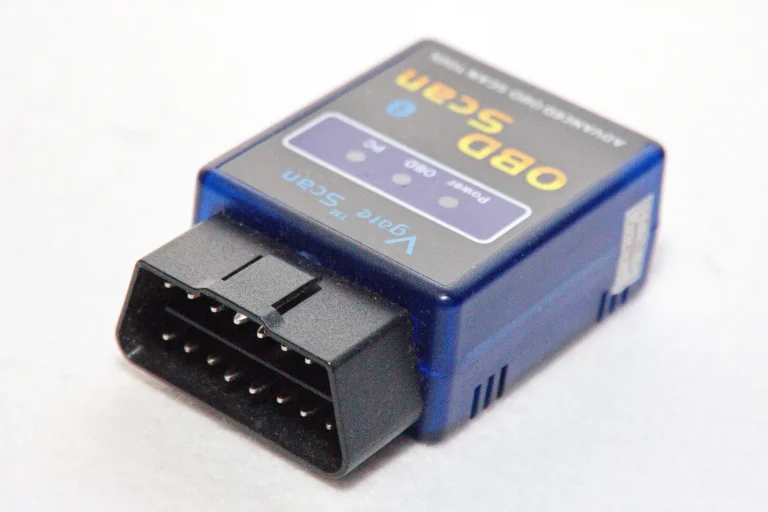
The transmission control system warning light means the controller detected a fault. It does not say which part failed. The right next step is a diagnostic scan for DTCs, because those codes can help narrow sensor, wiring, module, and hydraulic control problems better than guesswork.
What the warning light can and cannot tell you
The light is a signal, not a diagnosis. It can appear before symptoms become obvious, which is useful, but it cannot tell a driver whether the cause is a TCM fault, a wiring open, low fluid, or a slipping clutch pack. Treat it as a scan-first warning.
How DTCs point to the fault tree
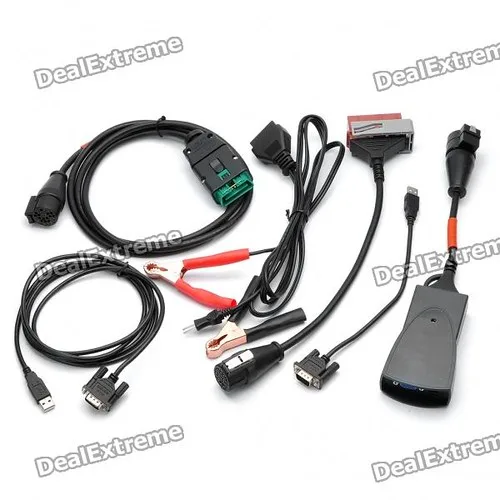
Diagnostic trouble codes are the scan-tool readout that helps separate transmission control module issues, solenoid faults, sensor faults, and communication problems. A code for a wheel speed sensor usually points in a different direction than a code for shift solenoid performance or module communication. That distinction saves time and parts.
Why guessing at parts is a bad first move
Replacing parts without codes can miss the real cause. A corroded connector, broken wire in the wiring run, or low system voltage can mimic a bad TCM. The most expensive mistake is replacing internal transmission parts when the fault lives in the control circuit.
Use this symptom-to-fault triage table first
This fault tree starts with the symptom, then moves to likely control-system causes, the first three checks, and whether short-distance driving is reasonable. If the vehicle is slipping badly, losing reverse, or entering limp mode with a flashing warning, tow it rather than gamble on one more trip.
| Warning sign | Most likely control-system causes | First 3 checks | Drive or tow? |
|---|---|---|---|
| Slipping during acceleration | Low fluid, solenoid control fault, bad sensor input, TCM torque command error | Check fluid level and condition; scan DTCs; inspect battery voltage and grounds | Tow if severe or worsening; short limp drive only if it still shifts normally and fluid is not burned |
| Delayed engagement into drive or reverse | Low fluid levels, worn components, failing solenoids, valve body issue | Check for leaks; verify fluid level; scan for solenoid or pressure codes | Tow if reverse is absent or engagement is getting slower |
| Harsh or bang shifts | TCM logic fault, sensor error, low voltage, wiring or connector problem | Scan DTCs; inspect battery and charging system; check plugs for corrosion | Usually safe only for a short drive if no slipping or warning flash; otherwise tow |
| Transmission warning light | TCM stored code, communication fault, sensor failure, solenoid circuit fault | Read DTCs; inspect battery voltage; check fuses and grounds | Drive only if the car shifts normally and the light is steady; tow if flashing or in limp mode |
| Limp mode | Detected control fault, lost sensor signal, TCM protection strategy | Scan codes; check charging voltage; inspect connectors and wiring | Tow if traffic speed, merging, or reverse is compromised |
| Burning smell or red/brown puddle | Overheated fluid, leak, low fluid, internal wear triggered by heat | Check fluid condition; look for leaks under the vehicle; inspect cooler lines | Tow if smell is strong or fluid is low |
What should I check first for a transmission communication fault?
Start with battery voltage, charging output, fuses, grounds, and connector condition. Communication faults often come from power or signal loss, not a dead transmission. After that, scan for DTCs and look for CAN communication, sensor, or module codes that point toward the failing circuit.
- Check battery terminals for looseness, corrosion, or heat damage.
- Verify system voltage with the engine off and running.
- Inspect transmission fuses, grounds, and the main connector.
- Look for water intrusion, rubbed wires, and bent pins.
- Pull DTCs before clearing anything.
Why wiring and connector faults are so common
Wiring and connector problems are common failure points because vibration, heat, and moisture can break continuity or raise resistance. That can create intermittent shifting, false sensor readings, or communication errors between the TCM and the rest of the vehicle network.
Why modern automatics need model-year context
Electronically controlled automatics can fail electronically before they fail mechanically. Some vehicles will enter limp mode to help protect the transmission and may hide the root cause until the scan tool reads codes. That is why the same symptom can mean very different faults on different model years.
When do transmission symptoms mean I should stop driving?
Stop driving now if the transmission will not engage, slips badly under load, flashes a warning, smells burned, leaks fluid quickly, or loses reverse. Limp mode can still be unsafe if merging, reversing, or highway speeds are compromised. A short move to a safe parking spot is different from a commute.
Red flags that call for a tow
- Loss of reverse or drive.
- Severe slipping during acceleration.
- Flashing transmission warning light.
- Strong burning odor from the transmission fluid.
- Red or brown puddles under the vehicle.
- Limp mode that limits usable gears or speed in traffic.
When short-distance driving may be acceptable
If the vehicle still moves normally, the light is steady, fluid is not burned, and there is no slipping, a short trip to a shop may be acceptable. Keep it local. Avoid hills, freeway merging, and hard acceleration. The moment the symptom worsens, stop.
Why overheating changes the decision fast
Burning odors can indicate overheated fluid and loss of lubricating properties. Once fluid overheats, its ability to protect clutches and hydraulics drops quickly. That is why a car that still moves can still be on the edge of major internal damage.
Frequently asked questions
Can low battery voltage trigger transmission control system problems?
Yes. Low battery voltage can confuse the TCM, weaken solenoid operation, and create communication faults that look like transmission failure. A weak charging system or bad ground can cause harsh shifts, warning lights, or limp mode. Check power supply first before assuming the gearbox itself has failed.
Is delayed shifting a sign of a bad transmission control module?
It can be, but it is not the first assumption to make. Delayed shifting can also come from low fluid, worn components, failing solenoids, sensor errors, or a wiring fault. A TCM becomes more likely only after voltage, grounds, connectors, and DTCs point that way.
What does limp mode mean in a transmission control system?
Limp mode is a failsafe that limits gears or power to help protect the transmission after the controller detects a fault. It usually means the system has already seen something abnormal. The car may move, but it needs immediate diagnosis because the underlying problem can still worsen fast.
Products related to this article
Sponsored / affiliate links. As an Amazon Associate I earn from qualifying purchases. I may earn additional commission from eligible campaigns.