Transmission Control System Sensor Problems: Causes and Symptoms
Transmission control system sensor faults usually show up as one bad speed, temperature, or pressure signal. If live data drops out, jumps, or changes when you move the wiring loom, suspect the sensor circuit before the transmission itself. Ignoring it can lead to rough shifts, delayed gear engagement, limp mode, poor acceleration, and unnecessary parts replacement. This guide shows how to separate sensor failure from wiring damage, tone-ring faults, contamination, and TCM problems by using symptoms and scan data.
Transmission sensor basics


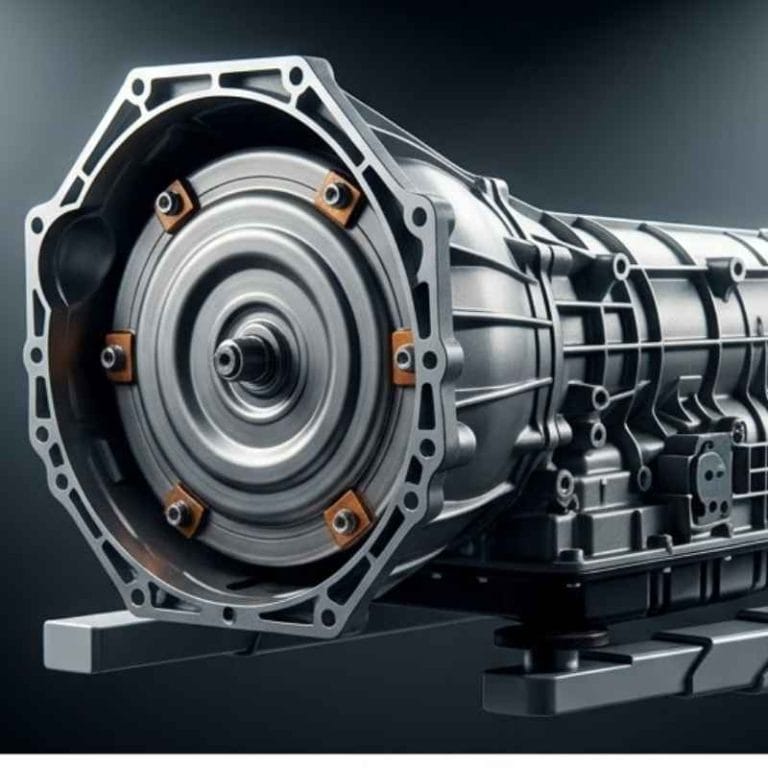
Most modern automatic transmissions use both an Input Speed Sensor (ISS) and an Output Speed Sensor (OSS). Both feed rotational-speed data to the Transmission Control Module (TCM) continuously, and the TCM uses that data to control shift timing and hydraulic pressure. A speed sensor can fail internally, but the same code path can also point to wiring, connectors, debris, or a damaged reluctor wheel.
What the transmission speed sensor does
A transmission speed sensor monitors rotational speed inside the transmission and sends that signal to the TCM. When the signal is clean, the module can compare expected and actual gear ratio and command the right shift at the right time. When the signal is missing, erratic, or implausible, the control strategy can go conservative fast.
ISS versus OSS: what each one measures
The ISS measures speed entering the transmission. When it reads wrong, the TCM can miscalculate gear ratio and shift timing. The OSS measures speed leaving the transmission. In some vehicles, a faulty OSS can also affect vehicle speed display, but that symptom is not universal and should not be treated as proof by itself.
How the TCM uses speed data
The TCM watches ISS and OSS inputs all the time, then compares them with throttle, engine load, and commanded gear. If the numbers do not agree, it may flag a DTC, alter shift behavior, or enter a backup strategy. That is why a speed sensor code does not always mean the sensor itself failed.
What symptoms point to a bad sensor?
Bad speed-sensor data often shows up as rough shifts, delayed gear engagement, limp mode, poor acceleration, and a Check Engine Light. The pattern matters. ISS faults usually distort shift timing and gear-ratio calculations, while OSS faults more often affect output-speed reporting and, in some vehicles, the speedometer.
Harsh or delayed shifts
Rough or delayed shifts fit a sensor problem when the TCM cannot verify speed changes at the right moment. An ISS fault is especially likely if shifts feel late, flare, or bang while the engine speed and road speed disagree in live data. TCM faults can mimic the same pattern, so do not stop at the symptom.
Limp mode and warning lights
A transmission sensor problem can trigger limp mode, but limp mode is not proof of a bad sensor. The TCM may also react to power, ground, communication, or internal control faults. Diagnostic trouble codes in the P0700 family and sensor-specific codes should be verified with a scan tool before any parts decision.
Speedometer or gear-ratio clues
OSS-related symptoms may include odd speedometer behavior in some vehicles, plus poor acceleration or an obvious mismatch between road speed and transmission behavior. ISS-related symptoms more often show up as wrong gear-ratio calculations and shift timing errors. If the live data looks normal while the symptom persists, suspect wiring, connector, or module issues next.
What causes sensor codes?
Speed sensor failures may come from internal failure, damaged wiring, contaminated connectors, metal debris, or fluid contamination. Damage in the sensor circuit can produce the same DTC as a failed sensor element. Damaged reluctor wheels can also generate incorrect speed readings even when the sensor is working.
Failed sensor element or internal damage
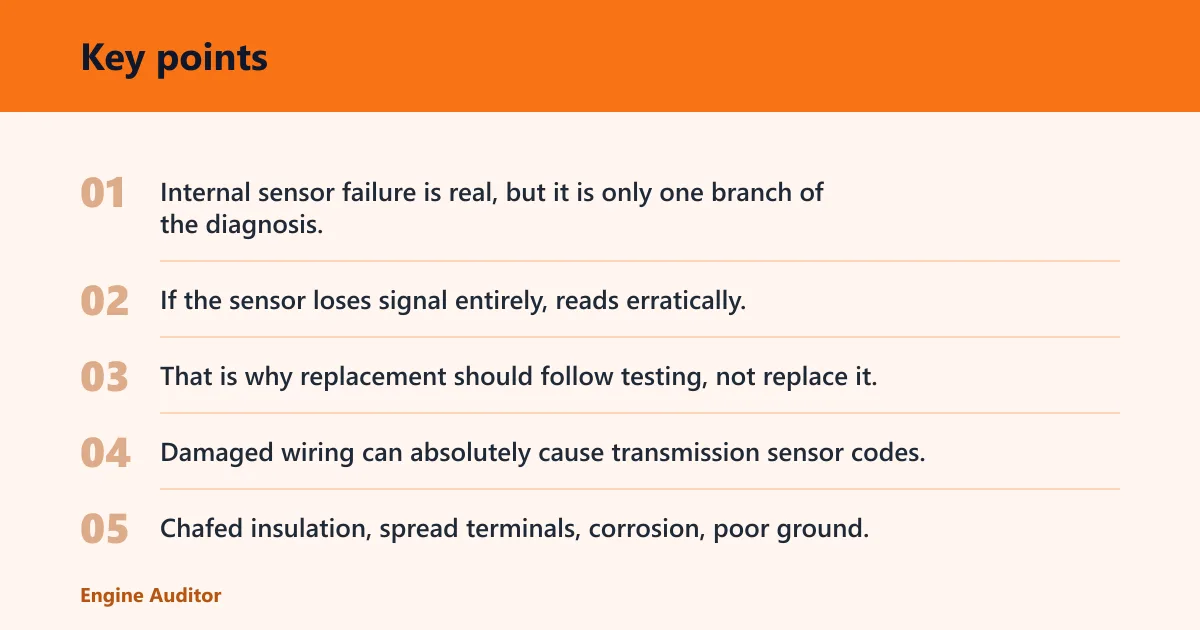
Internal sensor failure is real, but it is only one branch of the diagnosis. If the sensor loses signal entirely, reads erratically, or changes when the wiring loom is moved, the circuit may be open, shorted, or contaminated. That is why replacement should follow testing, not replace it.
Wiring, corrosion, and connector faults
Damaged wiring can absolutely cause transmission sensor codes. Chafed insulation, spread terminals, corrosion, poor ground, or a loose connector can interrupt the signal enough to fool the TCM. A digital multimeter is often the first tool used to check power, ground, and continuity.
Debris, contamination, and tone ring damage
Metal debris on magnetic sensor tips can distort speed signals. That debris may come from normal wear, but it can also point to broader internal wear inside the transmission. A worn or damaged reluctor wheel, sometimes called a tone ring, can create missing or incorrect pulses that look exactly like a bad sensor on a code report.
Say your scan tool shows an ISS code, but live data drops only when you move the wiring loom near the case connector by hand. That pattern points first to a circuit fault, not a failed sensor element. Replacing the sensor first would miss the break or corrosion in the wiring path.
Suppose the OSS signal looks steady at idle yet disappears on the road test as speed rises. That can point to a reluctor wheel problem, heat-related wiring fault, or an intermittent sensor output. The live-data pattern matters more than the code label.
How do you tell sensor, wiring, or TCM?
Start with the code, then confirm the signal. A scan tool gives stored codes and freeze-frame data, but codes alone do not prove the sensor is bad. After that, check live data for missing, implausible, or unstable speed signals; then test circuit integrity with a multimeter before blaming the TCM.
Use codes and freeze-frame data first
P0700 family codes tell you the transmission control system has a fault, but they do not identify the exact part. Sensor-specific codes narrow the search, yet they still need scan tool confirmation. Freeze-frame data shows the engine load, speed, and operating conditions when the fault set, which helps separate a cold intermittent failure from a steady electrical fault.
Check live data for missing or implausible speed signals
Live data is where the pattern shows up. An ISS that reads zero while engine speed rises can create wrong gear ratio calculations. An OSS that drops out or spikes can trigger drivability issues or, in some vehicles, speed display complaints. If both inputs look plausible, the TCM or another transmission fault moves higher on the list.
Test power, ground, and continuity before replacing parts
A digital multimeter can confirm whether the sensor has the supply voltage, ground, and continuity needed to work. If the circuit passes static checks but the signal still drops out during motion, an oscilloscope can show noise, missing pulses, or an intermittent square-wave problem that a code reader will never reveal.
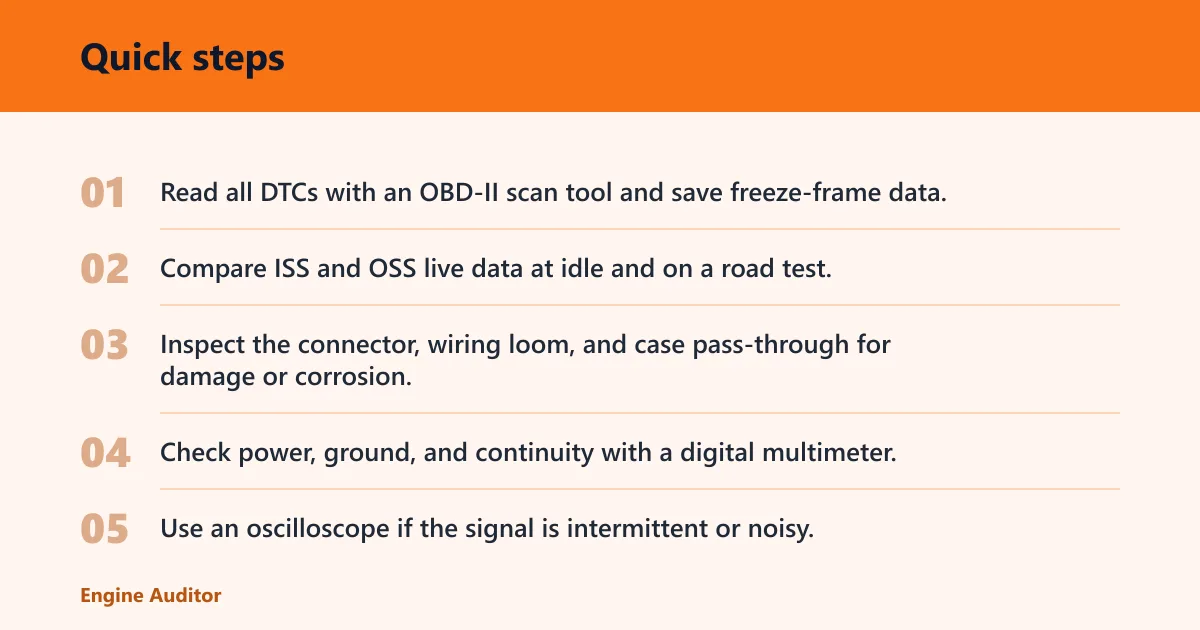
- Read all DTCs with an OBD-II scan tool and save freeze-frame data.
- Compare ISS and OSS live data at idle and on a road test.
- Inspect the connector, wiring loom, and case pass-through for damage or corrosion.
- Check power, ground, and continuity with a digital multimeter.
- Use an oscilloscope if the signal is intermittent or noisy.
- Inspect the reluctor wheel and sensor tip for debris or tooth damage.
Transmission sensor diagnostic table
| Symptom | Likely causes | First test to run | Most misleading false conclusion |
|---|---|---|---|
| Harsh 1-2 or 2-3 shift | ISS fault, wiring issue, TCM logic fault | Compare ISS live data to engine speed during a road test | “A shift complaint means the transmission is mechanically bad.” |
| Delayed engagement after start | ISS signal loss, contaminated connector, low system voltage | Check freeze-frame and verify power and ground at the sensor circuit | “Delayed engagement always means worn clutches.” |
| Limp mode with P0700 family code | TCM fault, wiring fault, sensor signal failure, network issue | Scan all modules and review transmission-specific DTCs | “P0700 proves the TCM is bad.” |
| Speedometer acts up in some vehicles | OSS fault, wiring fault, cluster strategy variation | Check OSS live data and compare it with vehicle speed | “Any speedometer issue is a bad transmission sensor.” |
| Gear hunting or wrong gear selection | ISS fault, TCM fault, ratio error from tone ring damage | Watch commanded gear versus actual ratio on the scan tool | “Gear hunting always points to solenoids first.” |
| Intermittent check engine light | Loose connector, chafed wiring loom, intermittent sensor output | Wiggle-test the wiring loom while watching live data | “If the light goes out, the fault is gone.” |
| Zero or implausible speed reading | Open circuit, short to power or ground, failed sensor | Check continuity and reference voltage with a digital multimeter | “No reading means the sensor alone is bad.” |
| Recurrent sensor code after clearing | Debris on tip, damaged reluctor wheel, persistent wiring fault | Inspect sensor tip and tone ring, then retest live data | “Clearing the code fixed the problem.” |
When a sensor problem means more
Metal debris, repeated code returns, or unstable live data can point beyond the sensor itself. A sensor code that comes back after clearing and retesting is a clue, not a verdict. If the fault stays tied to the same circuit after wiring checks and signal tests, deeper transmission diagnosis becomes the next step.
When debris suggests internal wear
Metal debris on a magnetic sensor tip can distort speed signals, but it also matters as a wear indicator. A light film may come from normal operation. Heavy buildup, shiny particles, or repeated debris after cleaning points toward internal wear that can affect the reluctor wheel, bearings, or other rotating parts.
When intermittent faults need an oscilloscope
Intermittent sensor issues often escape a basic code reader. An oscilloscope can show whether the signal is clean, noisy, missing, or collapsing under vibration or heat. That matters when a multimeter passes static checks but the live signal still drops out on the road.
When to stop at retest versus escalate
If the code clears, live data stays stable, and the wiring loom passes inspection, a retest is reasonable. If the code returns, the signal is implausible, or debris keeps appearing, the problem may be beyond a simple sensor swap. At that point, a transmission teardown or module-level diagnosis may be justified.
Can you clear the code and retest?
Yes, but only after the basic circuit checks. Clearing a code is useful when the symptom is intermittent and the live data can be watched on a repeat drive. If the fault returns quickly, the problem is still present. If the signal stays normal after repair, the retest confirms the fix.
When a code is worth clearing
Clear and retest after inspecting the connector, checking the wiring loom, and confirming power, ground, and continuity. That approach is useful for a suspected loose connection or debris-cleaning repair. It is also the right next step after confirming that the reluctor wheel is intact and the sensor tip is clean.
What repeated faults tell you
Repeated faults usually mean the underlying issue was not fixed. A recurring ISS code, OSS code, or P0700 family code after a proper retest suggests an ongoing electrical fault, mechanical signal problem, or TCM issue. Do not keep replacing sensors if the same data pattern returns.
Frequently asked questions
What are the symptoms of a bad transmission speed sensor?
Common symptoms include rough shifting, delayed engagement, limp mode, poor acceleration, and a Check Engine Light. In some vehicles, an OSS fault can also affect the speedometer. The exact symptom pattern depends on whether the ISS, OSS, wiring, or TCM is the real problem.
Can a bad transmission sensor cause hard shifting?
Yes. If the ISS or OSS sends incorrect speed data, the TCM can mistime shifts or choose the wrong pressure strategy, which can feel harsh. That said, hard shifting can also come from TCM faults, wiring damage, solenoid issues, or internal transmission wear, so confirm the signal first.
How do I know if it is the speed sensor or the TCM?
Use live data, not codes alone. If the speed signal is missing, erratic, or changes when the wiring loom is moved, the circuit or sensor is more likely. If both speed signals look correct but shift control is still wrong, check TCM power, ground, fuses, and communication faults next.
Will a transmission sensor problem trigger limp mode?
Yes, it can. The TCM may enter limp mode when it loses a believable speed signal or sees a ratio problem it cannot trust. Limp mode can also come from low battery voltage, charging faults, blown fuses, poor ground connections, or communication network faults, so do not blame the sensor alone.
Can damaged wiring cause transmission sensor codes?
Absolutely. Chafing, corrosion, loose terminals, or a broken conductor can interrupt the ISS or OSS signal and set a sensor code. That is why the inspection order matters: scan tool first, then live data, then connector and wiring loom inspection, then multimeter testing for power, ground, and continuity.
Can metal debris cause transmission speed sensor problems?
Yes. Metal debris on magnetic sensor tips can distort speed signals and trigger codes that look like sensor failure. Heavy or recurring debris also raises concern for broader internal wear, especially if the fault returns after cleaning and retesting. That is a warning sign, not a cosmetic issue.
Products related to this article
Sponsored / affiliate links. As an Amazon Associate I earn from qualifying purchases. I may earn additional commission from eligible campaigns.