Transmission control module vs transmission valve body
If scan data shows power, ground, or communication faults, I look at the transmission control module first; if codes point to shift solenoids or pressure control with clean wiring and fluid, I look at the valve body; if symptoms change when you move the wiring or the fluid is dirty or low, fix wiring or fluid first. In practice, a wrong call can waste a lot on the wrong part and still leave the same slip, harsh shift, or limp mode untouched. This guide shows how to read symptoms, codes, live data, fluid condition, and connector checks so you can choose TCM, valve body, or wiring with less guesswork.
What is actually failing when shifts go wrong?




Most shift complaints are a chain, not one part. The transmission control module commands shift logic and solenoids, the valve body routes hydraulic pressure, and the solenoids and sensors sit between those two jobs. A bad reading or a blocked passage can make the same car feel broken in very different ways.
TCM role in shift logic and solenoid commands
The transmission control module helps decide when to shift, which solenoid to energize, and how much pressure the transmission may need. It also watches inputs such as vehicle speed, throttle position, and transmission pressure sensor data. If the module loses clean power, ground, or communication, it can command limp mode even when the hydraulics are fine.
Valve body role in hydraulic pressure routing
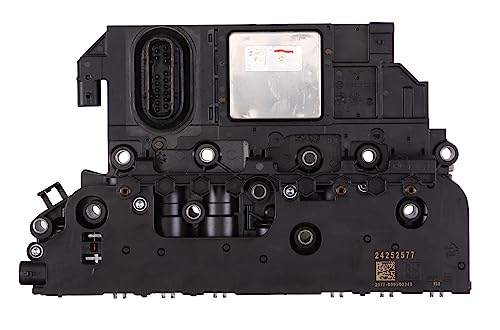
The transmission valve body is the hydraulic control block inside an automatic transmission. It typically contains passages, valves, check balls, and often solenoid assemblies. Wear, varnish, sticking valves, gasket leaks, and fluid contamination can interfere with the pressure path, so dirty or low fluid can sometimes look like an electronics problem.
Where solenoids, sensors, and wiring fit in the chain
Automatic transmission solenoids are actuators that open and close hydraulic paths or regulate pressure. A failed solenoid pack can mimic a bad TCM or a worn valve body. The wiring and connectors matter just as much; corrosion, loose pins, or damaged CAN wiring can create intermittent faults that vanish when the vehicle is stopped and reappear under load.
According to Releases · transmission/transmission – GitHub — Transmission 4.1.3 is described as a bugfix release.
Transmission control module vs transmission valve body: side-by-side comparison
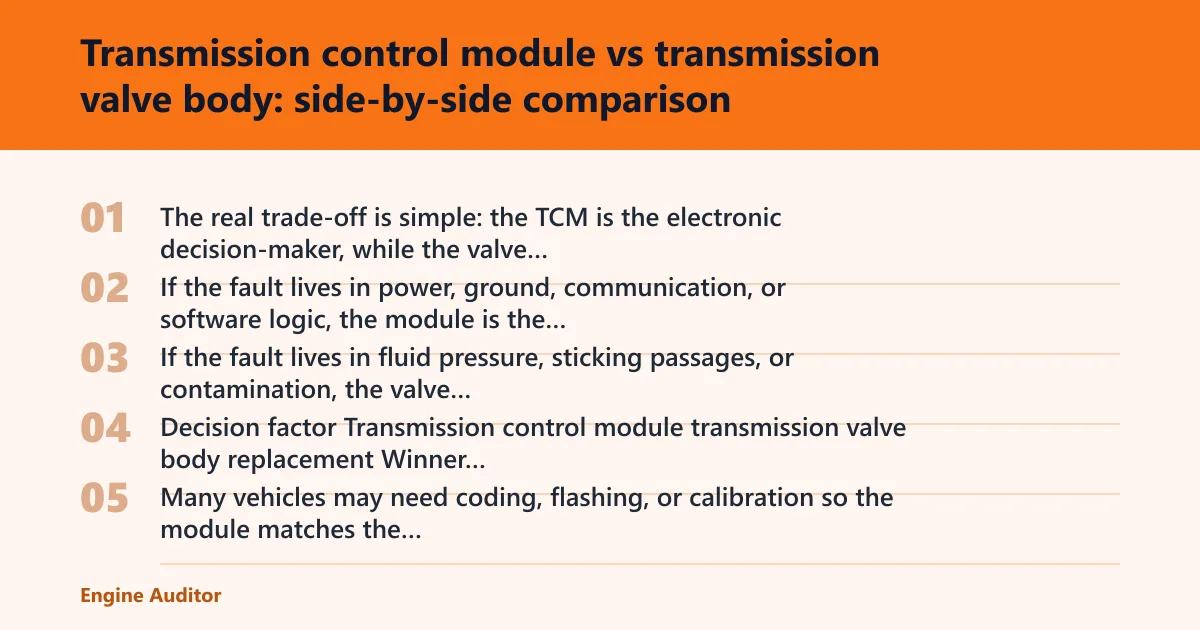
The real trade-off is simple: the TCM is the electronic decision-maker, while the valve body is the hydraulic traffic director. If the fault lives in power, ground, communication, or software logic, the module is the better target. If the fault lives in fluid pressure, sticking passages, or contamination, the valve body usually makes more sense.
| Decision factor | Transmission control module | transmission valve body replacement | Winner |
|---|---|---|---|
| Fault type | Electronic, logic, power, ground, or communication fault | Hydraulic, wear, sticking, contamination, or internal leakage | Tie |
| Programming and relearn | Often needs coding, flashing, or calibration after replacement | May need adaptation reset and relearn on some vehicles | TCM |
| Best-fit symptom pattern | Limp mode with module codes, no-shift command, or communication loss | Harsh shifts, delayed engagement, slip, or wrong-gear feel with hydraulic codes | Tie |
| Comeback risk if diagnosis is weak | High if the real fault is wiring, solenoid, or pressure related | High if the real fault is power, ground, or module communication related | Tie |
| Repair scope | Usually an electrical or module replacement path | May be repairable, rebuilt, or replaced as an assembly depending on design | Valve body |
Why the programming row favors the TCM
Replacing a TCM often means more than bolting in a part. Many vehicles may need coding, flashing, or calibration so the module matches the transmission model and platform. That extra setup is where many do-it-yourself repairs stall.
Why the repair-scope row favors the valve body
A valve body can sometimes be repaired with cleaning, updated parts, or a solenoid assembly instead of being fully replaced. On some transmissions, though, the electronics are integrated into the valve body, and the whole unit is replaced as one piece. That design detail changes the decision completely.
Which symptoms point to the TCM and which point to the valve body?
Start with slipping, harsh shifts, and delayed engagement. Those three show up early, and they tell you the transmission is losing control somewhere in the chain. Symptom clusters help, but they do not prove anything by themselves. Harsh shifts, delayed engagement, slipping, and wrong-gear behavior can come from either part, and limp mode can be triggered by module, valve body, solenoid, sensor, or wiring faults. The pattern matters more than one symptom.
Harsh shifts, delayed engagement, and slipping
Repeated harsh shifts with clean fluid and a normal wiring check often point toward hydraulic control issues in the valve body or a solenoid problem. Delayed engagement after startup can also fit a low-pressure or leaking passage complaint. If the problem changes with fluid temperature, that leans away from a pure module fault.
Limp mode and wrong-gear operation
Limp mode with communication, power, or internal module codes leans toward the TCM. Wrong-gear behavior with clear solenoid or pressure control codes can still be hydraulic, because the module may be reacting to a pressure fault rather than causing one. A module can also be blamed when it is simply responding to bad sensor data.
Intermittent faults versus repeatable faults
Intermittent symptoms that appear over bumps, rain, or engine vibration often point to wiring, connectors, or ground loss. Repeatable symptoms that happen in the same gear or the same temperature range are more consistent with sticking valves, worn bores, or a failing pressure control circuit. That distinction saves a lot of wrong-parts guessing.
What codes point to a TCM problem versus a valve body problem?
Code families matter more than one code alone. Module communication and power-related codes lean toward TCM or wiring issues, while shift solenoid, pressure control, and pressure sensor codes lean toward valve body, solenoid pack, or hydraulic faults. Live data is what separates a guessed diagnosis from a useful one.
Module communication and power-related codes
Codes for lost communication, internal control faults, low reference voltage, or power supply problems point to the electronic side first. A bad fuse, weak ground, or corroded connector can create the same code set as a failed module. Always confirm the power path before condemning the TCM.
Shift solenoid, pressure control, and pressure sensor codes
Shift solenoid and pressure control codes often pull the diagnosis toward the valve body or the solenoid pack. Transmission pressure sensor codes can mislead the scan process because a bad sensor reading may make the module command the wrong pressure. That can make the control module look guilty when the signal itself is faulty.
Why code families need live-data confirmation
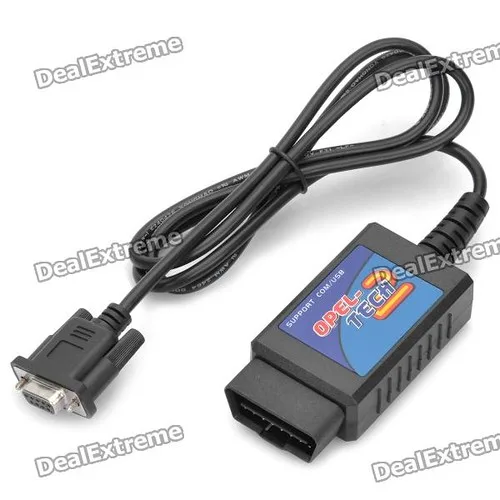
Use an OBD2 scan tool that can read stored, pending, and manufacturer-specific codes, then compare commanded gear or pressure with actual behavior. If the module commands a shift and the transmission does not respond, that is useful. If commanded and actual data disagree only when the wiring is moved, wiring jumps to the front of the line.
Do not replace yet: the checks that save people from the wrong part
Skip these checks and the repair gets expensive fast. It is worth checking transmission fluid level, fluid condition, connector condition, and doing voltage-drop testing before ordering a TCM or valve body. These tests often point to the real failure in minutes.
Fluid level, condition, and debris check
Check transmission fluid level with the correct procedure for that platform, because some units are temperature-sensitive. Burnt smell, dark fluid, glitter, clutch debris, or a low level can mimic a failed valve body or module. If the fluid is contaminated, replacing electronics first is a mistake.
Power, ground, fuse, and voltage-drop testing
Do not trust a visual fuse check alone. Measure power and ground under load, and use voltage-drop testing at the TCM and transmission connector. A circuit that looks fine at rest can collapse when current flows, which is exactly when shift problems show up.
Connector corrosion, pin fit, and wiring damage
Inspect the transmission wiring, TCM connector, and case connector for corrosion, spread pins, oil intrusion, and broken locks. Wiggle testing can expose an intermittent fault that a code reader will miss. If the symptom changes while the wiring is moved, stop and repair the circuit first.
- Verify fluid level and fluid condition.
- Scan stored, pending, and manufacturer-specific codes.
- Check power and grounds with voltage-drop testing.
- Inspect connectors, pin fit, and wiring routing.
- Review live data for commanded versus actual behavior.
Proof table: when to replace the TCM versus the valve body
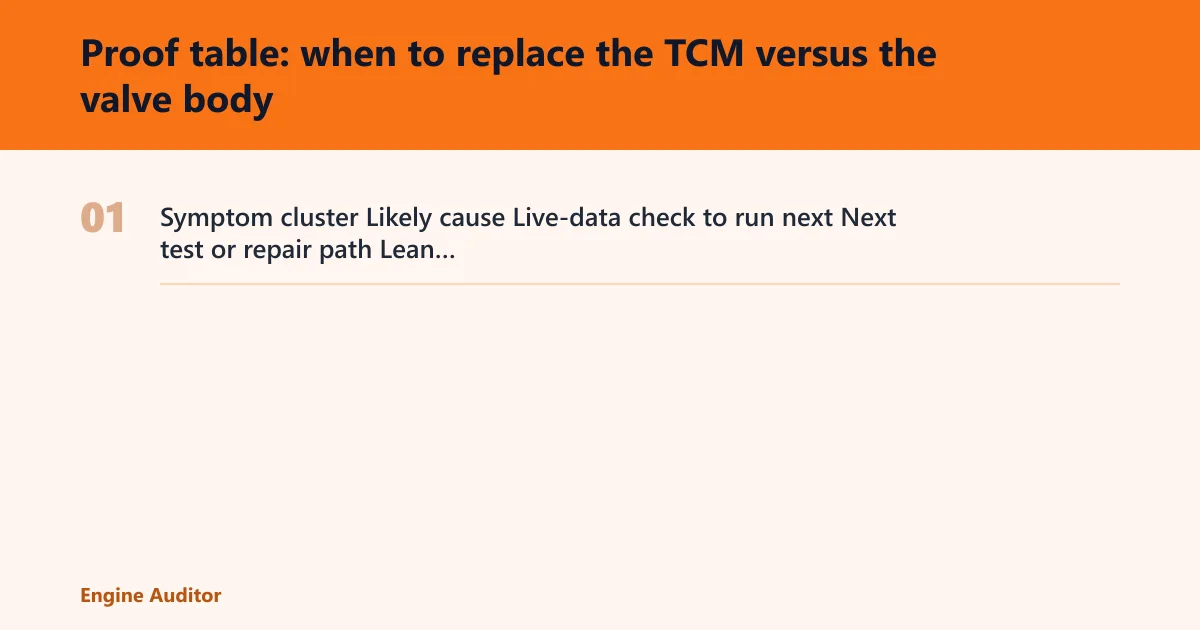
| Symptom cluster | Likely cause | Live-data check to run next | Next test or repair path | Lean toward |
|---|---|---|---|---|
| No communication, dead scanner data, random limp mode | TCM power, ground, or internal failure | Check module supply voltage and CAN communication | Inspect fuses, grounds, connector pins, then replace or program the module if the circuit passes | Replace TCM |
| Harsh shifts, delayed engagement, slip under load | Valve body wear, sticking valve, or solenoid fault | Compare commanded gear, shift timing, and pressure readings | Check fluid, test solenoids, inspect valve body, then repair or replace the assembly | Replace valve body |
| Intermittent fault after bumps or rain | Wiring or connector issue | Watch live data while wiggling wiring and connectors | Repair wiring, pin fit, or corrosion before any major part replacement | Neither yet |
| Pressure sensor code with erratic pressure data | Sensor fault, wiring fault, or valve body issue | Compare sensor reading to actual pressure behavior | Test sensor and wiring before deciding on module or valve body replacement | Depends on test |
Choose Transmission control module if… / Choose transmission valve body replacement if…
Choose the TCM when the fault is electrical or communication-based, the scan tool loses contact with the module, power and ground checks fail, or the car stays in limp mode with module codes after the wiring tests clean. Choose the valve body when the problem tracks with pressure, shift timing, contamination, or sticking hydraulic control.
Choose Transmission control module if…
The scan tool shows power, ground, or communication faults. The module will not command shifts correctly, live data drops out, and wiring checks pass. On many vehicles, the replacement still needs programming or calibration before the transmission behaves normally.
Choose transmission valve body replacement if…
The fluid is dirty or low, the transmission has harsh or delayed shifts, and codes point to shift solenoids, pressure control, or pressure sensor issues with clean wiring. Some platforms allow repair or rebuild of the valve body, while others use an integrated solenoid/valve body unit that gets replaced as an assembly.
Which is more expensive to replace: transmission control module or valve body?
Cost depends on the vehicle, the transmission family, labor access, programming, and whether the electronic parts are separate or integrated. A TCM can be cheaper in parts but still costly once flashing or coding is added. A valve body can be less expensive than a transmission overhaul, but an integrated unit may climb quickly.
Diagnostic-only work is the lowest-cost branch because it buys certainty before parts are ordered. Valve body repair or replacement sits in the middle. TCM replacement can be similar or higher once programming is included, and a full transmission service is the expensive path when contamination or internal damage has spread beyond the control parts.
Can a bad valve body cause the same symptoms as a bad TCM?
Yes. A bad valve body can produce limp mode, harsh shifts, delayed engagement, slipping, and wrong-gear behavior that looks electronic at first glance. The key difference is where the fault lives: hydraulic control problems usually show up with pressure or solenoid-related codes, while TCM faults usually bring power, ground, or communication clues.
Can a transmission valve body be repaired or does it need full replacement?
Sometimes it can be repaired, and sometimes the design makes replacement the smarter choice. A worn valve bore, sticky valve, or failed solenoid may be serviceable on some units. On others, the electronics and hydraulic body are sold as a single assembly, so the practical repair is replacement plus relearn.
Is it safe to drive with a bad transmission control module or valve body?
Not if the transmission is stuck in limp mode, slipping, banging into gear, or losing command in traffic. Those symptoms can leave the vehicle with limited acceleration or unpredictable shifts. If the fault is intermittent and the transmission still moves normally, drive only long enough to reach testing, not to keep guessing.
Do I need programming after replacing a transmission control module?
Usually yes. TCM replacement often requires coding, flashing, or calibration so the module matches the vehicle, transmission model, and platform. Some vehicles may also need a relearn drive cycle afterward. If the replacement is installed without setup, the same shift complaint may remain or return quickly.
Frequently asked questions
Should I replace the transmission control module or the valve body?
Replace neither until fluid, power, ground, connector condition, and live data have been checked. If the fault is electrical or communication-based, the TCM is the better bet. If the fault is hydraulic, sticky, or contamination-based with clean wiring, the valve body is usually the right target.
How can I tell if the TCM is bad or the valve body is bad?
Look at the code family and the live data. Power, ground, and communication faults point to the TCM or its wiring. Shift solenoid, pressure control, and pressure sensor faults point toward the valve body, solenoid pack, or hydraulic side. The diagnosis is stronger when commanded and actual behavior are compared.
What codes point to a TCM problem versus a valve body problem?
Module power, ground, internal logic, or communication codes lean toward the TCM. Shift solenoid, pressure control, and pressure sensor codes lean toward the valve body or solenoid circuit. One code alone does not prove the part; use live data and wiring checks to confirm the direction.
Can a bad valve body cause the same symptoms as a bad TCM?
Yes. Both can trigger limp mode, harsh shifts, slip, delayed engagement, and wrong-gear operation. The difference is in the test path. A bad valve body usually leaves hydraulic clues, while a bad TCM usually leaves power, ground, communication, or software clues.
Do I need programming after replacing a transmission control module?
Usually yes, and sometimes a relearn follows. Many vehicles need the replacement module coded or flashed to match the transmission model and platform. Without that step, the vehicle may stay in limp mode, shift poorly, or set fresh faults that send the diagnosis in circles.
Can a transmission valve body be repaired or does it need full replacement?
It depends on the transmission design and the fault inside the unit. Some valve bodies can be cleaned, reconditioned, or repaired with solenoids, gaskets, and seals. Others are replaced as a complete assembly, especially when the electronics are built into the body or wear is too far along.
What codes point to a TCM problem versus a valve body problem?
Codes tied to communication loss, internal module failure, or power supply faults point toward the TCM. Codes tied to shift solenoids, pressure control, or pressure sensor behavior point toward the valve body or related hydraulic control parts. Live data is what turns that direction into a decision.
Is it safe to drive with a bad transmission control module or valve body?
If the transmission is slipping, banging, refusing to shift, or stuck in limp mode, it is safer to park it until tested. Intermittent issues can still strand the vehicle or damage the transmission further. If it must move, keep the trip short and avoid load.
For shop planning, turnaround, warranty, and scheduling vary by provider. Ace Transmissions says it has more than 20 years of experience, lists business hours Monday to Friday, 08:00 AM to 05:00 PM, and says appointments are available and no appointments are necessary. Action Transmissions says it has served since 1990, advertises 40+ years of experience, offers a 12-month/12000-mile warranty, and says work is usually completed in under two weeks. Those are shop facts, not a diagnosis by themselves.
Products related to this article
Sponsored / affiliate links. As an Amazon Associate I earn from qualifying purchases. I may earn additional commission from eligible campaigns.