How to Diagnose a Transmission Control Warning Light
Diagnose a transmission control warning light by matching the symptom pattern first, then reading the code family, then checking fluid level, battery voltage, and wiring before replacing the TCM, solenoids, or transmission. Skip that order and you can buy parts you do not need, miss low voltage or a connector fault, and turn a small drivability issue into a major repair. This guide shows the fastest checks, the meaning of common code groups, and the decision point for when the problem is electrical, hydraulic, or internal.
What the transmission warning light means


A transmission warning light means the control system has seen a fault in the transmission circuit, hydraulic control, or a related sensor or module. A steady light often points to a stored fault. A flashing light is generally more urgent, especially if the vehicle also shifts hard, slips, or enters limp mode.
Steady light vs flashing light
A steady light often means the computer has stored a transmission fault and is due for a scan. A flashing light raises the urgency because the control system may be seeing a fault that can affect gear engagement or clutch control in real time. Treat any flashing pattern with drivability loss as a stop-and-check condition.
Why it may appear with the check engine light
Many vehicles turn on the transmission light together with the check engine light because the onboard computer stores transmission-related diagnostic trouble codes when the fault appears. Carista lists P0700 as Transmission Control System Malfunction, which is a request to read transmission codes, not a final diagnosis.
Which drivability changes matter most?
The most useful clues are hard shifts, delayed shifts, slipping, no upshift, a stuck single gear, or overheating. VehicleRuns links hard shifting with a warning light to transmission or control-system faults, and notes that hard shifting plus the light can mean limp mode. That symptom pattern matters more than the lamp alone.
What should you check first when the transmission light comes on?
Start with the owner’s manual message, then confirm whether the vehicle is in limp mode, then ask whether any battery work, jump starts, or low-voltage events happened recently. Those three checks separate urgent drivability problems from faults that may come from voltage loss, a reset adaptation, or a simple fluid issue.
Confirm the warning text and driving behavior
Look for the exact dashboard message, gear indicator behavior, and any change in shift timing. If the vehicle starts in one gear, refuses to upshift, or feels limited in acceleration, limp mode is a strong possibility. If the light is on but the vehicle shifts normally, scan for transmission and engine codes before you replace any parts.
Look for recent battery work or low-voltage events
A weak battery, a jump start, or a recent battery disconnect can trigger control issues or leave the transmission module needing a relearn. Battery voltage problems can mimic module trouble, so do not skip this step after electrical work. If the light came on right after a battery replacement, scan for codes before replacing transmission parts.
Do this in order
- Note whether the light is steady or flashing.
- Check for limp mode, harsh shifts, or delayed engagement.
- Review recent battery service, jump starts, or disconnects.
- Read transmission codes with an OBD2 scanner.
- Inspect fluid, connectors, and obvious wiring damage before parts replacement.
Transmission warning light matrix
This matrix helps you sort the likely fault family before you buy parts. Use the symptom combination, then check the first item in the right-hand column. The stop-driving threshold tells you when the problem has moved past basic diagnosis and into towing or immediate repair territory.
| Symptom combination | Most likely fault family | First check | Stop-driving threshold |
|---|---|---|---|
| Light only, normal shifting | Stored sensor, solenoid, or module code | Read stored and pending DTCs | Keep driving only if shifting stays normal and no flashing begins |
| Light plus hard shift | Solenoid, fluid pressure, or control fault | Check fluid level and scan for solenoid codes | Stop if shifts become violent or gear engagement is erratic |
| Light plus limp mode | Serious control fault or protection strategy | Scan codes and check for communication or power loss | Drive only to a safe spot or repair site if traffic allows |
| Light after battery work | Low voltage, relearn, or module communication issue | Verify battery voltage and recent disconnect history | Stop if the vehicle will not shift normally after restart |
| Intermittent light | Loose connector, corrosion, or intermittent wiring fault | Inspect connectors and routing | Stop if the light becomes flashing or the vehicle enters limp mode |
| Light with overheating signs | Low fluid, cooling problem, or heavy-load heat stress | Check fluid condition and recent towing or stop-and-go use | Stop immediately if the transmission is hot and shifting changes |
| Code-only, no symptoms | Pending sensor or module fault | Review freeze-frame data and pending codes | Monitor closely; stop if drivability changes start |
| Code plus drivability loss | Active hydraulic, electrical, or internal fault | Check codes, fluid, and connector condition before any part swap | Stop driving if the vehicle slips, bangs into gear, or loses propulsion |
Say your light comes on after a two-hour highway run and the transmission starts shifting late on the next exit ramp. That pattern points first to heat, fluid condition, or pressure control. A separate example is a warning light that appears right after a battery swap; that one should push you toward voltage and relearn checks before any transmission teardown.
How do you scan transmission codes?
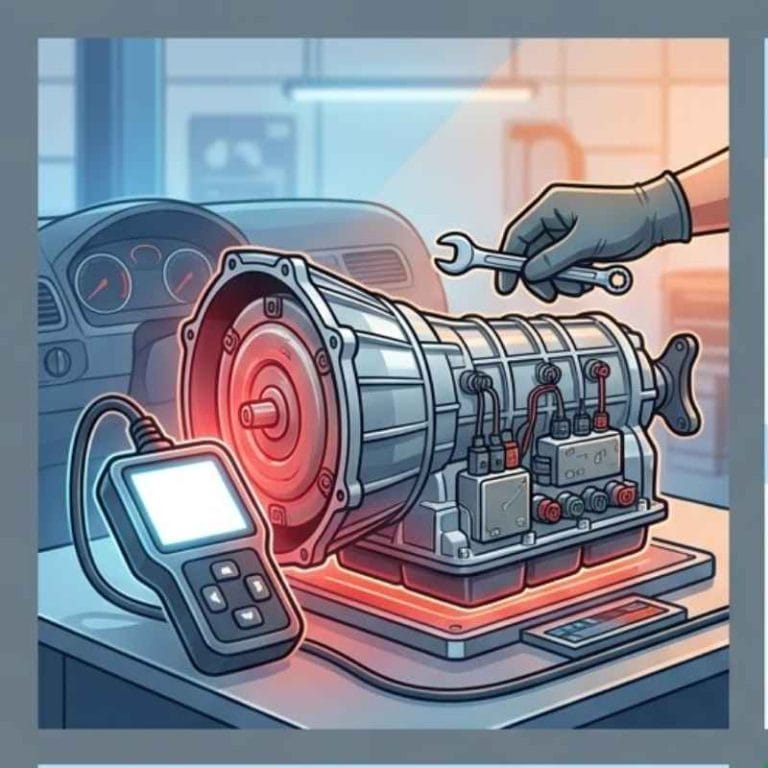
Use an OBD2 scanner to read stored and pending codes before replacing parts. The same source notes that the onboard computer stores diagnostic trouble codes when the light turns on, and those codes point the diagnosis toward sensors, solenoids, pressure control, communication faults, or a request for deeper module data.
Read stored and pending DTCs
Pull both stored and pending codes. A stored code has already been confirmed. A pending code may be early evidence of a fault that only appears under certain load, temperature, or speed conditions. If the light is intermittent, pending codes can be more useful than the warning lamp itself.
Treat P0700 as a starting point, not a diagnosis
P0700 means the transmission control system has reported a problem. It does not identify the failing part. Use it as a prompt to scan the transmission module for companion codes such as speed sensor, solenoid, pressure, or communication faults. Do not replace the TCM based on P0700 alone.
Use freeze-frame and module communication data
Freeze-frame data shows the conditions when the fault set, such as speed, temperature, and gear. Module communication data helps you spot a TCM that is not talking reliably to the rest of the vehicle. That is useful because a dead communication path can look like a failed transmission when the fault is actually electrical.
What codes point to the fault family?
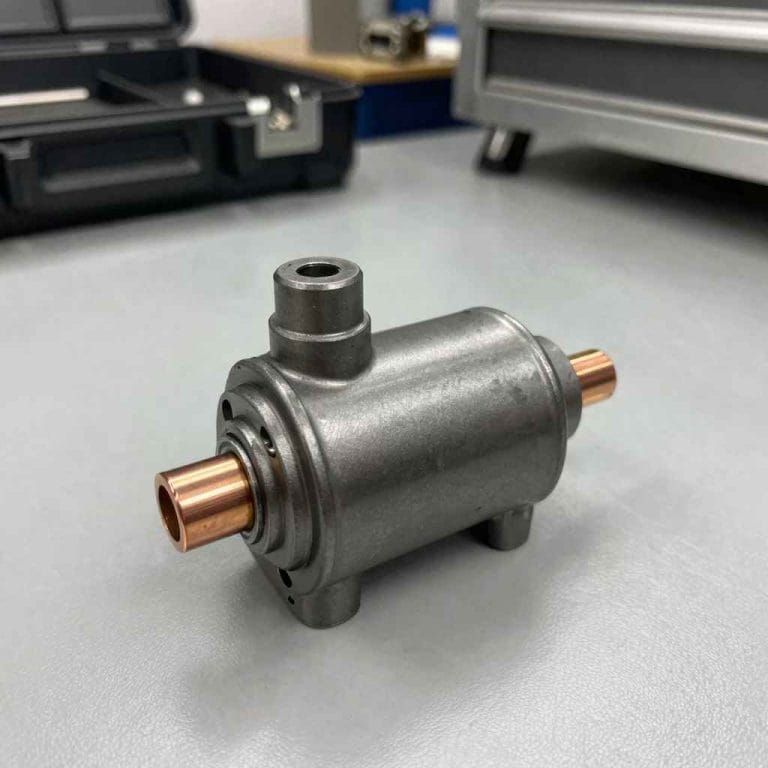
Code family matters because it tells you where to test next. Solenoid and pressure codes point toward hydraulic control or electrical actuation. Speed sensor codes point toward input or output signal problems. TCM communication or system codes point toward power, ground, network, or module failure before any internal teardown is considered.
Solenoid and pressure control codes
The same source lists P0755 as Shift Solenoid B Malfunction, P0770 as Shift Solenoid E Malfunction, and P0868 as Transmission Fluid Pressure Low. These codes often match hard shifts, delayed shifts, or limp mode. They call for fluid checks, connector inspection, and circuit testing before solenoid replacement.
Speed sensor and gear ratio codes
The same source lists P0715 as Input/Turbine Speed Sensor Malfunction, P0720 as Output Speed Sensor Circuit Malfunction, and P0730 as Incorrect Gear Ratio. Those codes can come from a failed sensor, damaged wiring, low fluid, or an internal clutch slip condition. Do not assume the sensor is guilty until the live data matches the code.
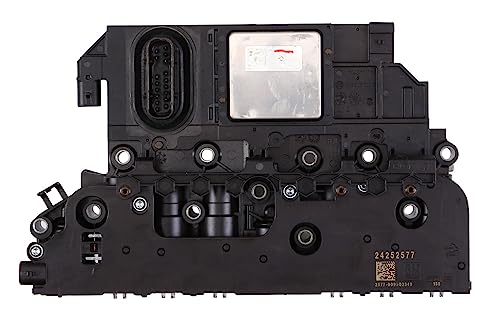
TCM communication and module codes
P0700 is a request for transmission code retrieval, not a part verdict. If the scanner cannot talk to the TCM, or the module drops off and returns, that points toward communication, power, ground, or module programming issues. A true TCM fault may require programming or relearn after replacement or battery service.
How do you separate TCM faults from transmission faults?
Separate them by communication behavior, power and ground checks, and live data. A TCM problem often shows missing data, communication loss, or codes that point to module function. A transmission problem more often shows believable sensor data with wrong gear response, pressure faults, or shift errors under load.
Communication loss and power or ground checks
If the scanner cannot read the TCM, check module power, ground, and connector condition before condemning the module. Corrosion, a loose fit, or damaged wiring can block communication and trigger a warning light. A module that loses power after a bump or heat soak is not the same as a worn transmission.
Signs of programming or relearn needs after battery work
Recent battery disconnects can wipe adaptive values or expose a marginal voltage condition. If the light appeared after battery service, and the vehicle shifts oddly but no hard fault is obvious, a relearn or adaptation issue is possible. That is why voltage history belongs in the diagnosis before any part is replaced.
When live data points away from internal damage
If input and output speed data look plausible, fluid condition is acceptable, and the problem tracks to one circuit or a communication dropout, the fault is usually not internal damage. Internal problems are more likely when the code family matches slipping, incorrect gear ratio, burnt fluid, or persistent pressure loss under load.
What simple checks can you do before parts replacement?
Check fluid condition, connectors, wiring routing, and overheating clues before buying a TCM, solenoid, or transmission. Those checks are fast, inexpensive, and often enough to separate a fluid or wiring problem from a mechanical failure. They also keep you from clearing a warning light without solving the cause.
Transmission fluid level, color, and odor
Low transmission fluid can trigger a warning light. Look for the level specified by the vehicle procedure, then check whether the fluid is dark, contaminated, or has a burnt smell. Burnt fluid suggests heat stress or clutch wear. Contamination or froth can point to aeration, overheating, or a service problem.
Connector corrosion, looseness, and wiring damage
Inspect the transmission connector, TCM connector, and visible wiring sections for corrosion, a loose fit, fluid intrusion, or rubbed insulation. Intermittent warning lights often come from a connection that opens and closes with engine movement, heat, or road vibration. That is a common false-positive path after rain, service work, or underbody damage.
Overheating clues from towing, heat, or stop-and-go traffic
Transmission overheating is more likely after heavy load, towing, high ambient temperatures, or stop-and-go driving that limits cooling airflow. If the warning light follows those conditions, check fluid condition first and review whether the vehicle cooled down and then shifted normally. Heat can set codes without an immediate hard failure.
Suppose a minivan climbs a steep grade with a trailer, then the transmission light appears and the next stoplight brings a harsh 2-3 shift. That pattern points toward heat, fluid, or pressure control more than a random sensor fault. By contrast, a light that returns only after rain points you back to connectors and wiring routing.
Frequently asked questions
How do I diagnose a transmission warning light?
Start with symptom pattern, then scan codes, then check fluid, battery voltage, and wiring. A steady light with normal shifting is usually less urgent than a flashing light with limp mode or hard shifts. Use freeze-frame data and module communication clues before you replace the TCM, solenoids, or transmission.
Can low transmission fluid trigger a warning light?
Yes. Low transmission fluid can trigger a warning light and cause delayed shifts, slipping, or pressure-related codes. Check the level using the correct vehicle procedure, then look at color, contamination, and burnt odor. If the fluid looks overheated, stop treating the light as a simple sensor issue.
Should I keep driving if the transmission warning light is on?
Only if the light is steady, shifting stays normal, and there is no limp mode, flashing behavior, or overheating. Stop driving if the vehicle slips, bangs into gear, loses propulsion, or stays in one gear. Those symptoms mean the fault may be active enough to worsen quickly.
What codes are most common with transmission warning lights?
Common codes include P0700, P0715, P0720, P0730, P0740, P0755, P0770, and P0868. They can point to module communication, speed sensors, gear ratio errors, torque converter clutch faults, shift solenoids, or low fluid pressure. The code family tells you what to test first.
How do I tell if the problem is a sensor, solenoid, or module?
Use the code family, live data, and communication behavior. Sensor codes usually show believable but wrong speed signals. Solenoid codes often match harsh or delayed shifts. Module faults are more likely when the scanner loses communication, data drops out, or the issue began after battery work or a voltage event.
Products related to this article
Sponsored / affiliate links. As an Amazon Associate I earn from qualifying purchases. I may earn additional commission from eligible campaigns.