Why Does My Car Wobble at Highway Speeds? Common Causes
A car that wobbles only at 55–75 mph is often a tire balance, bent wheel, or tire defect; if the shake changes when you brake or turn, suspect brakes or suspension instead. Ignoring it can turn a fixable vibration into tire failure, longer stopping distances, or damaged wheel and suspension parts. This guide shows how to sort the symptoms and decide what needs service first.
Why highway speed makes a wobble easier to feel



Highway speeds expose small rotating-part errors because a tire, wheel, hub, or brake problem repeats many times per second. A vibration that may be mild around town can become more noticeable at highway speeds, which can be why a steering wheel starts shaking once you get into roughly that range.
The key question is where you feel it. A steering-wheel shake usually points to front tires, front wheels, or front suspension. Seat or floor vibration often comes from rear tires, rear wheels, or driveline parts.
Why small tire or wheel errors show up around 50 to 75 mph
Start by checking wheel balance when the vibration begins in that range. Missing wheel weights, mud packed inside a wheel, or a tire that is slightly out of round can all create a repeating shake at speed.
Standard spin balancing corrects weight imbalance. Road-force balancing adds pressure against the tire as it spins, which can help reveal issues that may not show up during a standard balance and may still cause shaking on the road.
How steering-wheel shake differs from seat or floor vibration
Front-end problems usually show up in the steering wheel. Rear-end problems often show up through the seat cushion or floorboard. That split matters because it helps separate front tire and suspension faults from rear tire, wheel, or driveline issues.
If the car feels unstable rather than simply vibratory, suspension wear moves up the list. Loose ball joints, tie rods, control arm bushings, wheel bearings, struts, and shocks can allow the tire to shimmy or wander under load.
Why brake-only vibration points to a different fault path
If the shake appears only while braking, start with the braking system. Brake rotor condition, pad transfer, caliper problems, or hub issues can create a pulse in the pedal and a steering-wheel movement that feels different from a cruising vibration.
That matters because a brake shake does not usually behave like a balance problem. A wheel out of balance shakes at steady speed. A rotor problem usually appears when the brake pedal is pressed.
What does the wobble feel like?
The feel tells you which rotating part is most likely at fault. A shake through the wheel, a thump through the floor, or a wobble that starts after a pothole points to different next checks. A vibration after snow or slush can be as simple as packed material on the wheel, but it can also hide damage.
Steering wheel shake at speed
A steering-wheel shake usually points to the front tires, front wheels, or front suspension. If it starts near highway speed and stays present while cruising, wheel balance, a bent front wheel, or a front tire defect moves to the top of the list.
Seat or floor vibration
Seat or floor vibration often comes from rear tires, rear wheels, or driveline parts. If the steering wheel stays calm while the seat shudders, the rear axle area deserves attention before the front end does.
Wobble after a pothole or curb strike
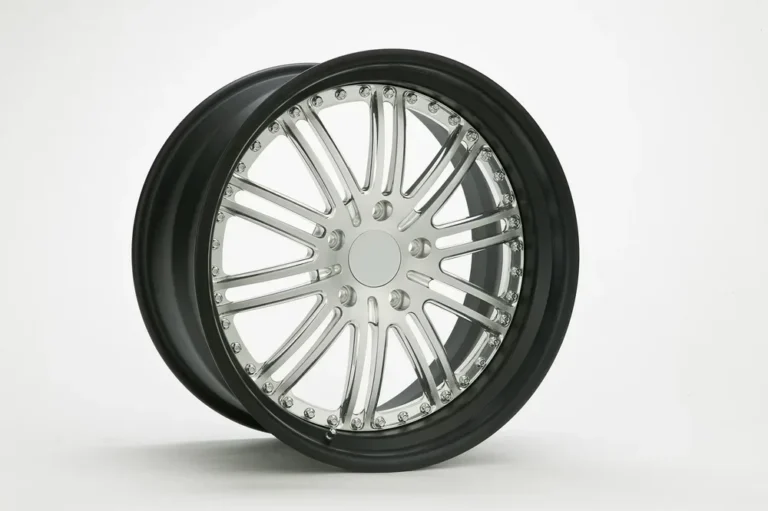
A pothole or curb strike can bend a wheel or damage a tire. Inner-lip damage can be hidden, so a wheel may look straight while still being hard to balance. A bent wheel may still balance poorly even after weights are added.
Wobble that starts after snow, slush, or ice
After snow, check for packed material inside the wheel, around the hub, and in the wheel-well liner. Tire pressure can also shift with temperature changes, and Arizona temperature swings can change tire pressure throughout the year. A thump or wobble at lower speeds can also point to a damaged tire, separated belt, or bent wheel.
The most likely causes, in the right order
Start with the rotating parts that fail most often. Wheel balance problems are the common first suspect, but they are not the only cause. Bent wheels, tire defects, uneven wear, and suspension wear can all imitate one another.
Wheel balance problems and missing weights
Missing wheel weights are a simple cause and a common first check. If a tire was recently mounted and the vibration began afterward, ask whether the wheel was spin-balanced and whether road-force balancing was needed. Standard balancing can miss a tire or wheel that is not uniformly round or stiff.
Suppose a car shakes only at 62 mph after new tires were installed. A shop may find that one tire needs far more correction weight than the others, or that the wheel passes spin balance but fails road-force testing. That points away from a basic balance-only fix.
Bent wheels and hidden rim damage
Bent wheels often result from impacts with potholes or curbs. The damage may be on the inner lip, where it is not obvious during a quick walkaround. A wheel can look straight from the outside and still wobble enough to create vibration.
If the wheel is bent enough, balancing weights cannot fully cancel the problem. The next step may be repair or replacement, depending on the damage location and severity.
Tires that are out of round or have internal belt damage
Tire out-of-round conditions can create hopping, thumping, or wobble. Broken internal belts are a serious example because the tread may look acceptable while the carcass flexes unevenly. Check for tread runout and visible high-low spots.
A low-speed thump that repeats with each wheel revolution is especially suspicious. That is not the same pattern as a brake rotor shake.
Uneven wear, cupping, and flat spots
Uneven tire wear can trigger vibration and should be inspected visually. Common wear examples include cupping, feathering, flat spots, and excessive edge wear. Cupping is repeating scallops around the tread.
Cupping often suggests worn shocks, struts, or other parts that let the tire bounce. Feathering often points toward alignment or toe wear. Flat spots can come from sitting, hard braking, or cold conditions.
Suspension wear that lets the tire move or shimmy
Suspension wear matters because it changes how the tire contacts the road. Loose ball joints, tie rods, control arm bushings, wheel bearings, struts, and shocks can create a wobble that feels worse at speed even when the tire and wheel look acceptable.
Alignment problems often travel with worn parts rather than acting alone. An off-center steering wheel, pulling, or repeat tire wear usually means the alignment needs to be corrected after the worn parts are found.
Why does my car shake at highway speeds when I brake?
A shake only while braking points readers toward brake rotors, pads, calipers, or suspension. If the steering wheel pulses or the pedal pushes back rhythmically, the brake system is more likely than tire balance. A cruising vibration that continues after the brake pedal is released points somewhere else.
The main clue is timing. If the vibration appears during braking and disappears when you let off, focus on rotors, pad condition, caliper slide action, and hub cleanliness. If the shake exists even without braking, look first at tires, wheels, and suspension.
What pedal pulse and steering-wheel movement suggest
A pedal pulse often means rotor variation or runout. Steering-wheel movement during braking usually points toward the front brakes. If the seat shakes more than the wheel during braking, the rear brakes or rear suspension may be involved.
When pads, rotors, or hub issues need inspection
Visible rotor heat spots, uneven pad wear, or rust/debris between the hub and rotor can create braking vibration. If the issue started after brake service or a wheel removal, the hub face and wheel mating surfaces deserve attention.
Use this diagnostic matrix to narrow the cause
This matrix separates common highway wobble patterns by location, trigger, and urgency. Use it to decide whether you can inspect safely at home or whether the car needs a shop now.
| Symptom pattern | Likely cause | DIY check | Safety level | Next repair step |
|---|---|---|---|---|
| Steering wheel shake at 55–75 mph | Front wheel balance, bent front wheel, front tire defect | Check weights, tire pressure, visible rim damage, tread high-low spots | Usually moderate risk | Spin balance or road-force balance; repair or replace damaged wheel or tire |
| Seat or floor vibration at highway speed | Rear wheel balance, rear tire defect, driveline issue | Inspect rear tires and wheels for damage or uneven wear | Usually moderate risk | Balance rear assemblies; inspect driveline if tires check out |
| Shake only while braking | Rotor variation, caliper issue, hub contamination | Check for pedal pulse and steering movement during a gentle stop | Drive cautiously | Inspect rotors, pads, calipers, and hub faces |
| Wobble after pothole, curb, or snow impact | Bent wheel, tire damage, packed snow or ice | Look for inner-lip bends, missing weights, debris, or broken tread | Can range from low to high risk | Clean, then balance and inspect; replace damaged wheel or tire if needed |
| Vibration under acceleration | CV axles or driveshaft issues | Note whether the shake increases with throttle and eases on coast | Moderate to high risk | Inspect axles, joints, and driveline components |
What you can check at home before booking service
A short inspection can rule in or out several common causes. Keep it basic and safe. If a tire looks damaged, the car feels unstable, or the wheel has obvious bend or cracking, stop and arrange service instead of pushing a highway test.
- Check tire pressure against the door placard.
- Inspect all four tires for cupping, feathering, flat spots, and edge wear.
- Look for missing wheel weights, bent rims, and damaged or missing center caps.
- Check the sidewalls for bulges, cuts, or impact marks.
- Compare front and rear tire wear patterns.
- Do a gentle brake check at low speed to see whether the pulse appears only under braking.
- Listen for clunks or looseness while turning slowly in a parking lot.
A common first-timer mistake is to see a clean-looking wheel and assume the problem is not there. Inner-lip bends, broken belt damage, and early cupping can hide until the wheel spins at speed.
What the repair path usually looks like
Some fixes are straightforward. Others need more than one step. The goal is to match the repair to the fault instead of paying for balance work when the real problem is a bent wheel, a damaged tire, or worn suspension hardware.
When a simple balance is enough
If the tire is healthy, the wheel is straight, and the shake begins in the 50 to 75 mph range, a standard balance may solve it. Missing wheel weights or a recent tire install make this especially likely.
When road-force balancing adds value
Road-force balancing helps when a tire and wheel assembly balances on a machine but still shakes on the car. It can reveal issues that a basic spin balance does not catch, especially tire stiffness variation or a wheel-and-tire combination that needs matching or replacement.
When a tire or wheel needs replacement or repair
If the wheel is bent, cracked, or badly out of shape, repair or replacement may be the answer. If the tire has a broken belt, bulge, or irregular high-low spot, replacement is the safer path. Do not keep driving a tire that looks damaged or suddenly changed behavior.
When suspension or alignment work should come next
If the vibration comes with pull, uneven wear, or an off-center steering wheel, inspect the suspension and then set alignment after worn parts are corrected. Alignment is often the wear clue, not the original cause of the shake.
Safety triage: when to stop driving, when to drive carefully, and when it is usually lower risk
Stop driving right away if you notice a bulging tire, a cracked wheel, signs that a belt may have failed, or a wobble that suddenly becomes severe. Those signs can point to an imminent tire failure or a wheel that will not hold safe speed.
Drive carefully to a shop if the shake is new, steady, and tied to a specific speed, or if braking makes the steering wheel pulse. The lower-risk group is a mild vibration with no visible damage, no pull, and no braking symptom, but it still deserves diagnosis before it grows.
Frequently asked questions
why does my car wobble at highway speeds
A wobble at highway speeds is often caused by a tire, wheel, or suspension issue that may become easier to feel as speed rises. Wheel balance is a common first suspect, but bent wheels, out-of-round tires, and worn suspension parts can create the same symptom.
why does my car shake at highway speeds
If your car shakes at highway speeds, start by separating front from rear symptoms. Steering-wheel shake usually points to front tires, front wheels, or front suspension, while seat or floor vibration often comes from the rear tires, rear wheels, or driveline.
why does my steering wheel shake at 60 mph
A steering wheel that shakes at 60 mph usually points to a front wheel balance problem, a bent front wheel, or a front tire defect. If the vibration changes when you brake, the brake rotors or related parts move higher on the list.
why does my car shake when i brake at high speeds
A shake that appears only when braking points toward brake rotors, pads, calipers, or hub issues rather than simple wheel balance. Pedal pulse and steering-wheel movement are the key clues. If the shake stops when braking ends, inspect the brakes first.
why does my car shake at high speeds after snow
After snow, the cause may be packed material inside the wheel, ice buildup, or a tire problem that was hidden before. Tire pressure can also shift with temperature. If the wobble started after winter driving, inspect for debris, missing weights, and wheel damage.
why does my car feel wobbly at high speeds
A wobbly feeling at high speeds usually comes from a rotating-part problem or worn suspension that lets the tire move too much. Tire wear patterns, wheel damage, and loose steering parts are the most useful next checks because they narrow the fault path quickly.
Products related to this article
Sponsored / affiliate links. As an Amazon Associate I earn from qualifying purchases. I may earn additional commission from eligible campaigns.