Signs Your Wheel Is Bent After Hitting a Pothole
A bent wheel after a pothole often shows up as a new vibration at around highway speeds, air loss, steering pull, or visible rim wobble; if the tire bulges or the car pulls hard, treat it as more than a wheel issue. Ignoring it can ruin the tire, damage the bead seal, and strain suspension parts. This guide shows how to tell bent-wheel signs from tire, bead-seal, and suspension damage, and when to stop driving.
What to check first
Start by confirming the pothole hit and noting what changed right after it. A new shake, drift, low tire pressure, or visible wobble tells you more than the impact itself. Do not trust a wheel that only looks fine at rest; a wheel can look fine and still be bent.
What you’ll need
- Tire-pressure gauge
- Flashlight
- Flat, safe place to inspect the wheel
- Jack and lug wrench if you already know how to use them
How to inspect the wheel
- Park on flat pavement, select park or first gear, and apply the parking brake firmly.
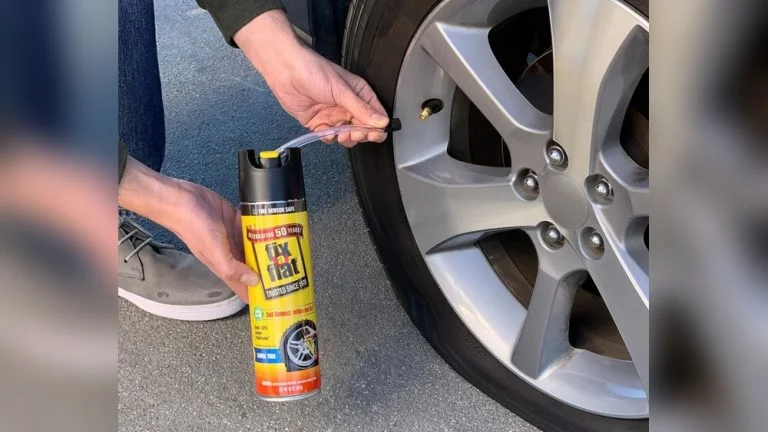
- Check the tire pressure after the impact.
- Inspect the wheel lip and outer edge for dents, waves, scrape marks, or impact marks.
- Spin the wheel slowly and watch the rim edge for wobble.
- Check the tire sidewall for bulges, cuts, or pinch marks between the road hit and the rim.
- Listen close to the wheel for a hiss or repeated air loss.
Suppose a front tire reads lower each morning after a pothole hit, but the sidewall looks normal. That pattern points more toward a bead-seal leak or rim damage than a simple pressure fluctuation, especially if the wheel lip has a fresh dent or wave.
Can you keep driving?
The safest choice depends on the symptom, not the pothole hit alone. Mild vibration with steady tire pressure can sometimes wait for a scheduled inspection. A sidewall bulge, fast leak, or cracked rim is different. Those are stop-driving signs because the tire or wheel may fail without warning.
Wheel damage decision table
| Severity level | Post-pothole symptoms | Likely failure point | Next action |
|---|---|---|---|
| Safe to monitor | Light shake only at one speed, no pull, no repeat air loss, no visible crack or bulge | Minor bend or wheel out of round | Check pressure daily for 3 days and book an inspection if the symptom returns |
| Needs same-day inspection | Steering vibration, buzz, thump, drift, or visible wobble; pressure drops again after refill | Bent rim, tire bead seal, or alignment stress | Drive only to a shop if the tire is holding air and the shake is mild |
| Do not drive | Sidewall bulge, fast leak, hissing, cracked rim, severe wobble, or hard pull | Damaged tire, cracked wheel, or major structural damage | Stop driving and arrange towing |
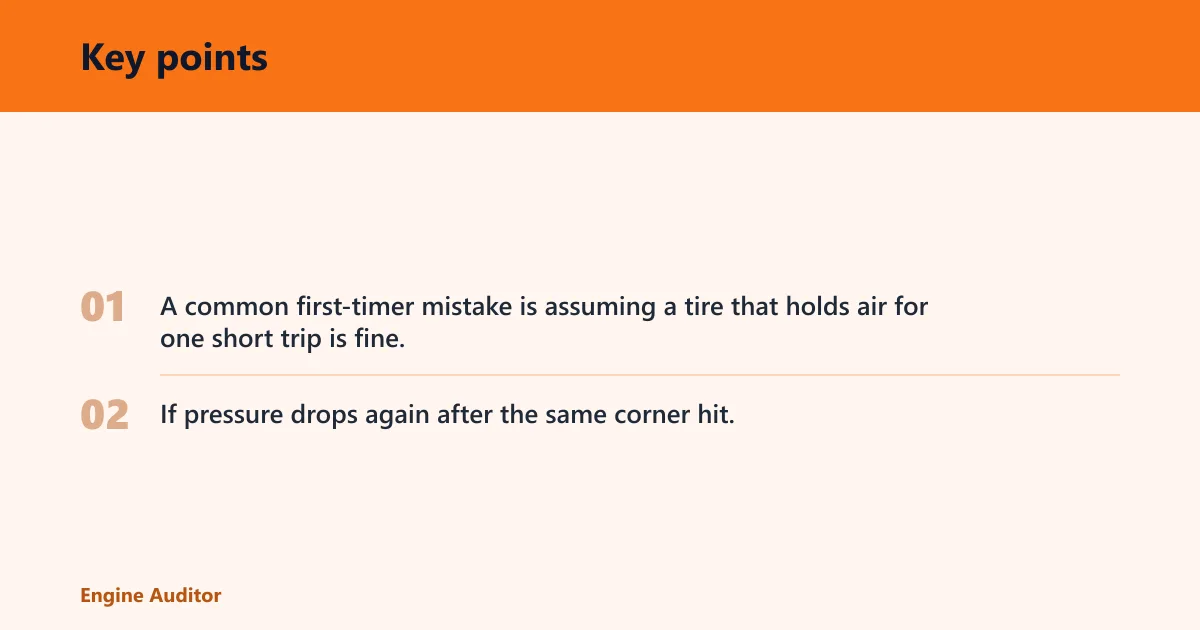
A common first-timer mistake is assuming a tire that holds air for one short trip is fine. If pressure drops again after the same corner hit, the rim or bead seal still needs inspection.
What does a bent wheel feel like?
A bent wheel can feel like a buzz, thump, or shake that shows up at certain speeds and often gets stronger as speed rises. A slight bend may feel like a buzz in the steering wheel. A larger bend may make the car thump or hop while driving.
How the symptoms differ
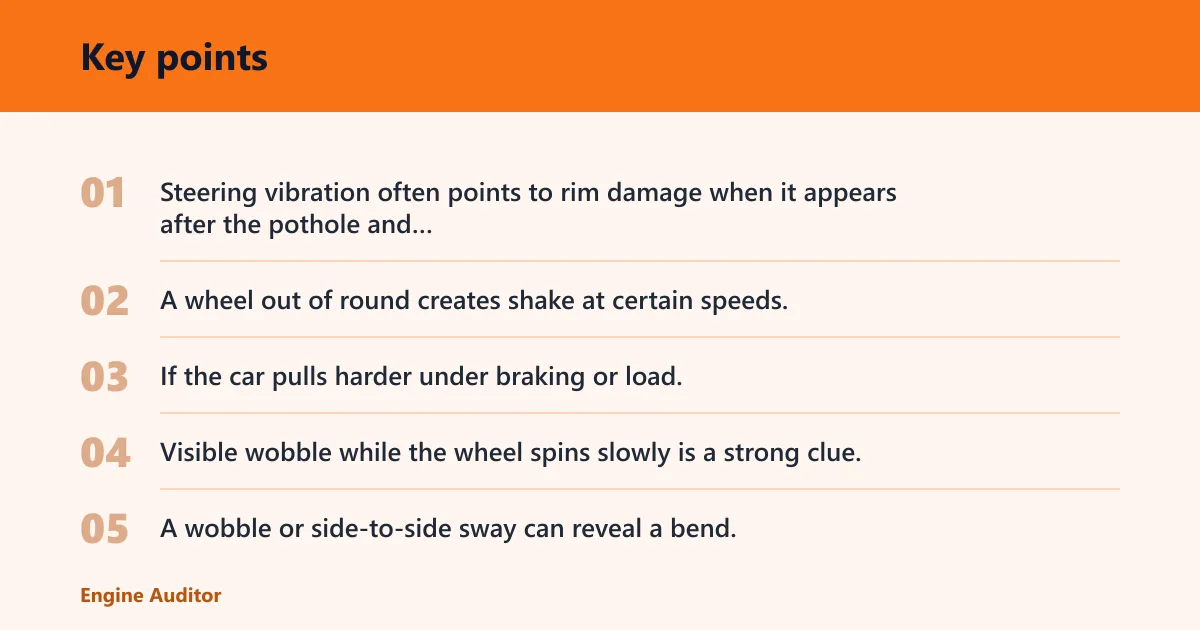
Steering vibration often points to rim damage when it appears after the pothole and changes with speed. A wheel out of round creates shake at certain speeds, while a bent wheel can make the car drift even on a straight road. If the car pulls harder under braking or load, alignment or suspension damage may also be present.
Visible wobble while the wheel spins slowly is a strong clue. A wobble or side-to-side sway can reveal a bend, and visible wobble can indicate the rim is bent or cracked. The wheel may still turn normally at a standstill and look acceptable in a quick glance.
Is it the wheel, tire, or alignment?
These problems overlap, so one symptom does not settle the diagnosis. A bent wheel can still hold air, but a damaged tire bead seal can cause repeat pressure loss. A tire can also look intact while the rim is bent enough to create shake or wobble.
Bent wheel or wheel out of round
If the shake begins at a specific road speed and the wheel lip shows a dent or wave, the rim is a likely suspect. A bent rim may make one tire keep dropping pressure, and a wheel out of round often becomes more noticeable as speed rises.
Tire bead seal or tire damage
If pressure keeps falling after a hard impact, inspect for a bead-seal leak first. The tire may not seal properly if the rim is bent. A hissing sound near the wheel needs attention right away, and a sidewall bulge means the tire itself has been damaged too.
Alignment and suspension damage
If the car pulls even after pressure is corrected, alignment may be affected. Wheel damage can coincide with suspension stress, especially after a sharp hit. If the pull started with the pothole and the wheel looks straight enough, the control arm, tie rod, or alignment setting may need inspection.
When should you stop driving after hitting a pothole?
Stop driving if you see a sidewall bulge, a cracked rim, a fast leak, or a wheel that wobbles badly while spinning. A cracked rim is more serious than a simple bend. It can make the vehicle unsafe to drive, even if the tire still holds pressure for a moment.
Do not drive signs
A bulge in the sidewall usually indicates internal tire damage. A crack in the rim can open further under load. If you hear a hiss, see rapid pressure loss, or notice the wheel tilting as it turns, park the car and arrange towing rather than trying to nurse it home.
How do you check a wheel for wobble at home?
Lift the wheel only if you know how to use a jack safely. Spin it slowly and watch the outer edge, because a wheel wobble is easier to see than to feel. Even a subtle wobble can point to bend or crack damage, especially if the wheel lip shows impact marks.
Practical at-home check
- Use a flashlight and look at the wheel lip from the front and side.
- Rotate the wheel slowly by hand.
- Watch for the rim moving side to side instead of staying centered.
- Compare the gap between the rim and a fixed point on the car.
- Check whether the tire pressure drops again after refilling.
Say your 18-inch front wheel looks normal from five feet away, but the edge drifts left and right when spun slowly. That wobble is enough to book a same-day inspection, even without obvious cosmetic damage.
What to do next if the first check was unclear
If the pressure stays steady and the vibration is mild, monitor it closely and plan a shop visit. If the car still pulls, the pressure keeps dropping, or the wheel shows wobble, escalate to same-day inspection. If the rim is cracked or the sidewall bulges, stop driving now.
Repair, reseat, or replace
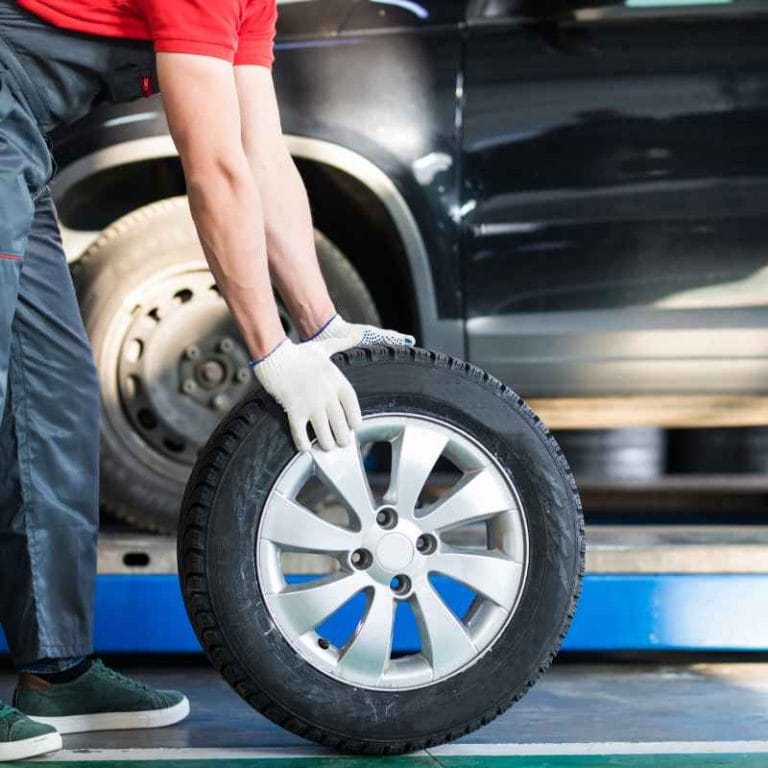
A mechanic can tell whether the wheel can be repaired or needs replacement. A tire bead seal can sometimes be reseated if the rim is not badly distorted. A cracked rim is different. It usually needs replacement, not a straightening attempt.
Cost expectations
Repair costs vary by wheel size, material, and damage. A tire reseat or leak diagnosis is usually cheaper than a wheel replacement. Towing adds more cost, but it is often the cheaper choice than driving on a cracked rim, a bulged sidewall, or a fast leak that could destroy the tire.
Common mistakes
Trusting a wheel that only looks fine at rest is a common miss. So is ignoring repeat pressure loss after a hard hit. Another error is blaming every pull on alignment alone, when the wheel or tire may be damaged first.
- Do not skip a tire pressure check after the impact.
- Do not keep driving past a sidewall bulge.
- Do not assume a slow wobble is harmless.
- Do not ignore a hiss near the wheel.
- Do not treat a cracked rim as a minor bend.
Prevention
After a pothole, reduce speed on rough roads and check pressure again the next morning. Recheck the same corner if the tire loses air twice. Early pressure checks help catch bead-seal problems before they damage the tire further.
Frequently asked questions
How do I know if my wheel is bent after hitting a pothole?
Look for new steering vibration, a drift to one side, repeat air loss, or a rim edge that appears wavy when spun slowly. A wheel can look fine and still be bent, so check tire pressure and watch the wheel from a safe, level position.
What does a bent rim feel like while driving?
It often feels like a buzz in the steering wheel at one speed range, then a thump or hop as speed rises. The feeling may get stronger under load, while braking, or on smooth pavement where tire noise does not mask it.
Can a bent wheel still hold air?
Yes. A bent wheel can still hold air if the bead seal is intact. The problem is that a damaged rim may stop the tire from sealing properly, which can lead to repeat pressure loss after the same pothole hit.
Is it safe to drive with a bent rim?
Only if the damage is minor, the tire holds pressure, and there is no crack, bulge, or major shake. Same-day inspection is safer when the wheel shakes, drifts, or wobbles. Stop driving immediately if the rim is cracked or the tire bulges.
Why is my car shaking after a pothole hit?
The shake can come from a bent rim, a wheel out of round, a damaged tire bead seal, or suspension damage. If the vibration starts at a certain speed and the wheel shows wobble, the rim is a likely cause. A pull suggests alignment may also be affected.
Can a bent rim cause my tire to lose air?
Yes. A bent rim may make one tire keep dropping pressure, especially if the bead seal no longer sits flat. Recheck pressure after refilling. If the same tire falls again, inspect the wheel lip and rim edge for damage.
Products related to this article
Sponsored / affiliate links. As an Amazon Associate I earn from qualifying purchases. I may earn additional commission from eligible campaigns.
 Car Tire Covers,4 Pack Resistant Wheel Covers, Windproof Dustproof All Season Tire Protectors, Universal Fit for RV, Trailer, Camper, Truck, SUV, Motorhome
 Car Tire Covers,4 Pack Resistant Wheel Covers, Windproof Dustproof All Season Tire Protectors, Universal Fit for RV, Trailer, Camper, Truck, SUV, Motorhome