How to Find the Source of a Vibrating Seat in Your Car
Find the source of a vibrating seat by separating three patterns: speed-related shake points to tires or wheels, brake-only vibration points to rotors or hub runout, and throttle- or load-related vibration points to axles, mounts, or driveline parts. Ignoring the pattern wastes money on wrong parts and can let a wheel, brake, or suspension fault get worse. This guide shows how to test each clue step by step and narrow the cause before you replace anything.
Why the seat vibrates

A vibrating seat usually means the seat is passing along vibration from another part of the vehicle. The source is often in the wheels, tires, brakes, suspension, steering, or driveline, not the seat itself. Your first job is to match the vibration to speed, braking, and load.
When the vibration is strongest in the seat or floor, the rear of the vehicle often deserves extra attention, but that is not a rule. A front tire imbalance, a bent wheel, or a brake problem can still be felt through the whole body structure.
When it is a safety issue
Stop driving if the vibration is severe enough to make the car dart, if a wheel is visibly damaged, if a tire shows a bulge or cord, or if the car shakes hard enough to feel unstable at normal speed. Schedule service soon if the vibration is mild but repeatable, because wear usually worsens with distance.
If you need to inspect under the vehicle, follow the vehicle manual, never work under a vehicle held only by a jack, and keep clear of airbag zones and under-seat wiring. Check local laws before road testing after repairs.
Seat vibration matrix
This matrix gives you the fastest first pass. Match the symptom pattern before replacing parts. One clue can mislead you; three clues together are usually enough to narrow the cause.
| Vibration feel | Speed range | Braking behavior | Steering wheel clue | Tire wear pattern | Most likely cause | First inspection step |
|---|---|---|---|---|---|---|
| Rhythmic shake that grows with speed | Often 45-75 mph | Usually unchanged | May be absent or mild | Cupping, uneven wear, or scalloping | Road-speed tire imbalance | Check tire pressures, wheel weights, and balance |
| Intermittent shake, sometimes one road section only | Any speed that loads the wheel | Usually unchanged | May be absent | Uneven shoulder wear or impact marks | Bent wheel or rim runout | Inspect wheel lip, spokes, and barrel for bends or cracks |
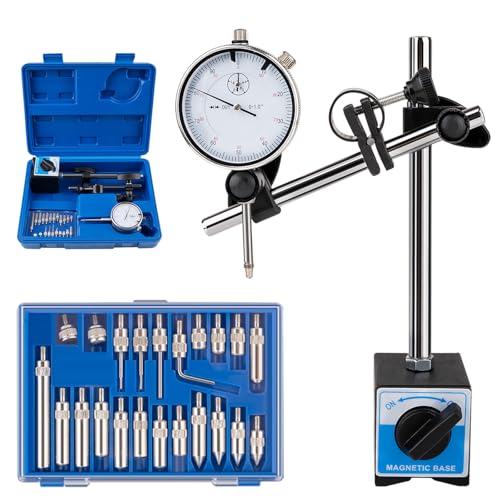
| Thumping that can feel like a suspension fault | Speed-related, often rising with road speed | Usually unchanged | May be absent | Flat spots, out-of-round wear, belt shift | Out-of-round tire | Measure tire runout and compare all four tires |
| Pulsation mainly under the brake pedal and in the seat | Appears on brake application | Worse when braking | May or may not shake | No specific tire pattern | Brake rotor variation or pad deposits | Inspect rotors, pads, and hub face for variation or contamination |
| Hum or growl plus vibration | Often more noticeable with speed | Usually unchanged | May change when steering left or right | No specific tire pattern | Wheel bearing wear | Check for play, roughness, and noise while loaded |
| Vibration with wandering, clunks, or loose feel | Can be present any time the car is moving | May worsen on brake transition | Often present | Irregular edge wear | Suspension or steering wear | Inspect bushings, ball joints, and tie rods on a lift |
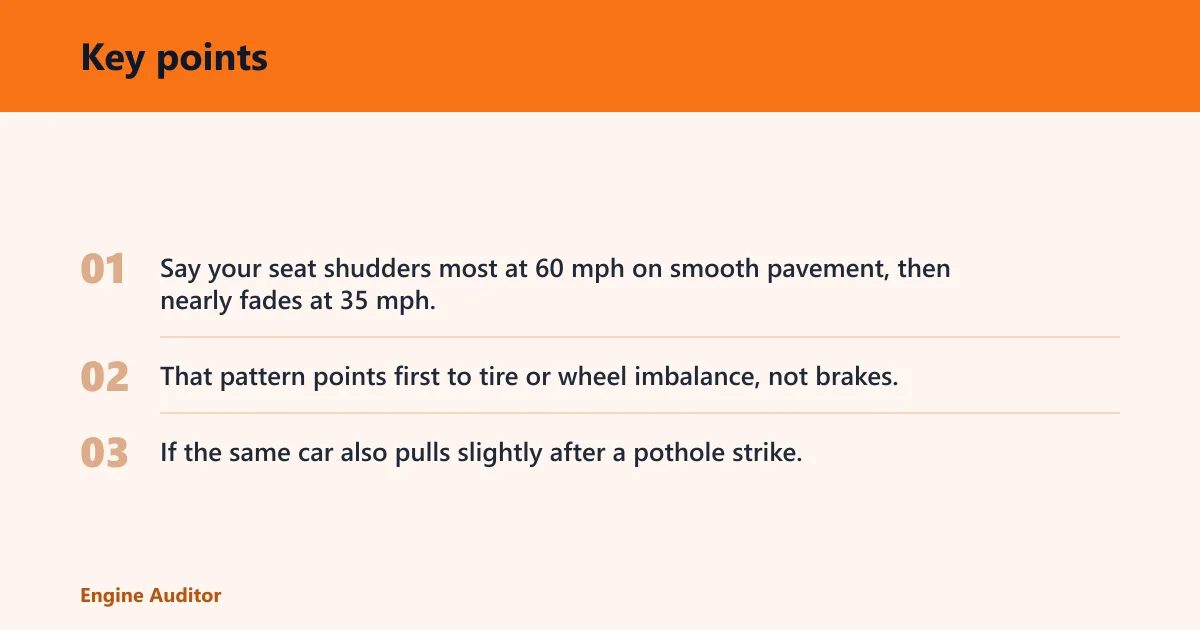
Say your seat shudders most at 60 mph on smooth pavement, then nearly fades at 35 mph. That pattern points first to tire or wheel imbalance, not brakes. If the same car also pulls slightly after a pothole strike, a bent wheel rises on the list.
Does it change with speed?
If the vibration rises and falls with road speed, start with the tire-and-wheel assembly. Road-speed shake most often comes from imbalance, bent wheel runout, or an out-of-round tire. These problems usually show up in a repeatable speed band instead of only during braking.
Road-speed tire imbalance
Wheel and tire imbalance often shows up around 45-75 mph and is commonly felt in the seat or floor more than the steering wheel, especially if the rear wheels are involved. The fix is a wheel and tire balance check, but balance alone will not solve damage or runout.
Bent wheel or rim runout
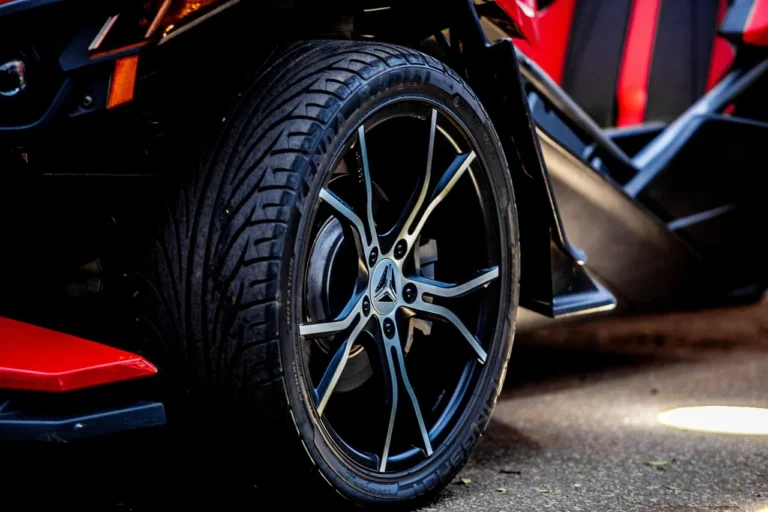
A bent wheel or rim often follows a pothole hit or curb strike. Runout can be constant or intermittent, depending on where the bend sits, and a cracked wheel can behave the same way. Inspect the outer lip, inner barrel, and spokes for visible bends, missing material, or cracks.
Out-of-round tire symptoms
An out-of-round tire can create a thumping or vibration that mimics suspension trouble. The cause may be radial runout, lateral runout, a shifted belt, or a tire that was damaged by impact. If the tire changes shape as it rolls, balancing alone will not remove the symptom.
Suppose a vehicle shakes at 50 mph on the freeway but feels fine at 25 mph, and the steering wheel stays calm. That pattern often points to a rear tire or wheel issue, because rear axle problems are felt more in the seat than in the hands.
Does it appear when you brake?
If the vibration starts or becomes much stronger only when you press the brake pedal, look at the brake system first. Brake-related shake usually does not appear during steady cruising. That pattern points away from tire balance and toward rotor variation, pad deposits, or hub runout.
Rotor thickness variation and pad deposits
What many drivers call a warped rotor is often rotor thickness variation or uneven pad deposits. The brake pedal can pulse, and the seat can vibrate, when the rotor surface is not uniform. A good inspection checks the rotor face, hub mating surface, and pad condition instead of relying on the word “warped.”
Why steady-cruise shake points elsewhere
If the car vibrates at a steady cruise with no brake input, the brake rotors are less likely to be the main cause. A brake issue can still exist, but the first suspects shift to wheel balance, tire condition, wheel damage, or a bearing that changes load with speed.
First brake inspection checks
- Confirm whether the vibration appears only on brake application.
- Inspect rotor faces for scoring, heat spotting, or obvious uneven wear.
- Check the hub face for rust, dirt, or contamination that can distort rotor seating.
- Look at pad wear and hardware condition.
- Verify that the wheel was installed correctly after any recent brake service.
Could it be wheel or tire damage?
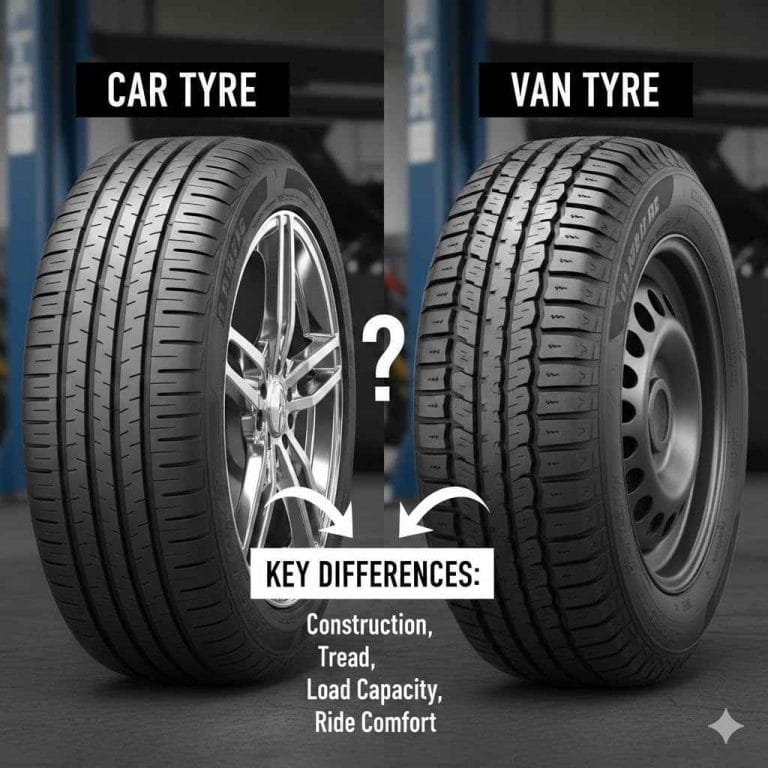
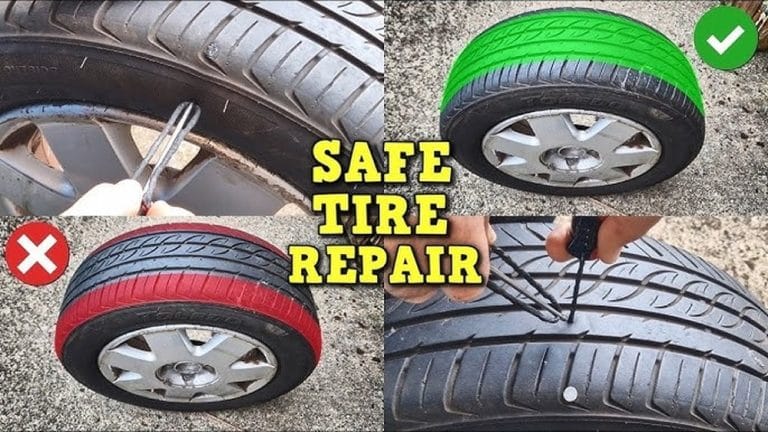
Yes. Wheel and tire damage are among the most common causes of a seat vibration that changes with speed. Tire pressure, tire matching, and wheel condition are basic checks before deeper diagnosis. Uneven inflation can change ride quality, and mismatched tires can make a vibration easier to feel.
Pothole hits and visible rim damage
A bent wheel from a pothole can create a vibration that comes and goes as the bent section rotates through the contact patch. Look for flat spots, crack lines near the spoke-to-barrel area, and fresh damage on the inner rim where the bend may be hidden from casual view.
Tire wear patterns and runout
Wear patterns matter. Cupping, scalloping, and feathered edges can point to tire, suspension, or balance issues. A tire with excessive runout can mimic a bad strut or bushings problem because the driver feels repeated thumps instead of one clean shake.
Pressure and matching checks
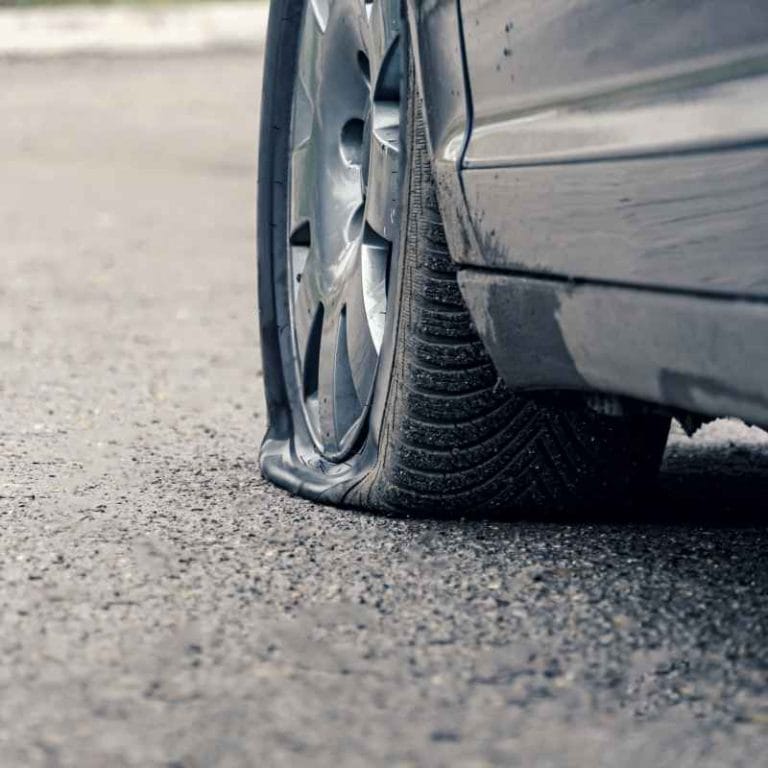
Check all four tire pressures against the door-jamb placard. Also confirm that the tires match in size and load rating for the vehicle. A mismatch does not always create a vibration by itself, but it can change how the vehicle rides and how the problem shows up.
A common first-timer mistake is to replace a tire because the seat shakes at highway speed, then discover the real issue was a bent wheel and uneven tire pressure. Pressure and visual checks take minutes. They can save a costly, wrong replacement.
Could suspension or bearing wear be the cause?
Yes. Wheel bearing wear and suspension looseness can produce vibration or amplify one that started elsewhere. These faults often add noise, looseness, or wandering to the symptom. If the car feels vague in turns or clunks over bumps, do not focus only on the tire.
Wheel bearing hum and play
A failing wheel bearing usually adds a hum or growl, then vibration as the wear gets worse. The sound may change when the car loads left or right in a turn. Balancing does not fix bearing wear, so a smooth balance result does not clear the bearing.
Bushings, ball joints, and tie rods
Worn bushings, ball joints, and tie rods can create looseness, clunks, wandering, and uneven tire wear. They also let small wheel vibrations turn into a larger body shake. On a lift, check for looseness at the wheel, visible play in joints, and cracked rubber bushings.
How looseness amplifies vibration
Suspension play often does not create the original vibration. It magnifies it. A slight tire imbalance can feel worse when control arms or tie rod ends no longer hold the wheel firmly in place.
What should you inspect first?
Start with the checks that cost the least and reveal the most. Recent wheel service, lug nut torque, tire pressure, and the road-test pattern should come before parts replacement. Scan tools and TPMS data can help, but they do not replace physical inspection.
Lug nut torque and recent wheel service
If the vibration began after tire rotation, brake work, or wheel replacement, inspect lug nut torque first. Wheel fasteners should be tightened in a cross pattern to the vehicle maker’s specified torque. Do not guess the number; use the manual or the service data for that exact model.
TPMS and scan tool clues
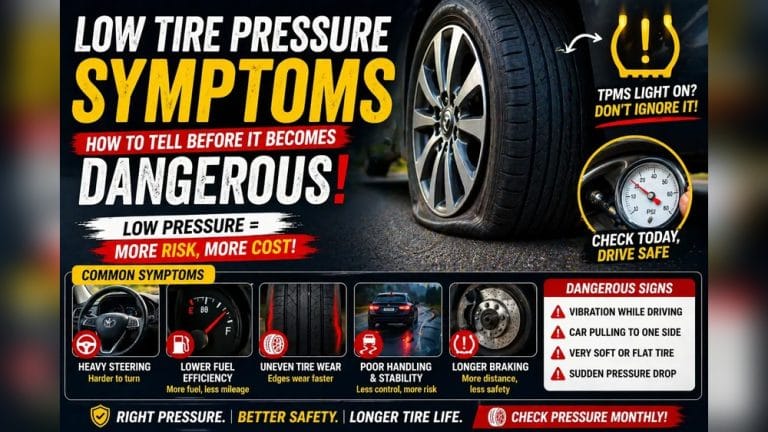
TPMS can flag underinflation, and a scan tool can reveal chassis or wheel-speed fault codes. That information helps sort warning lights from mechanical issues, but it cannot measure wheel runout, tire condition, or bearing play. The scan is a clue, not the diagnosis.
Road-test order and lift inspection
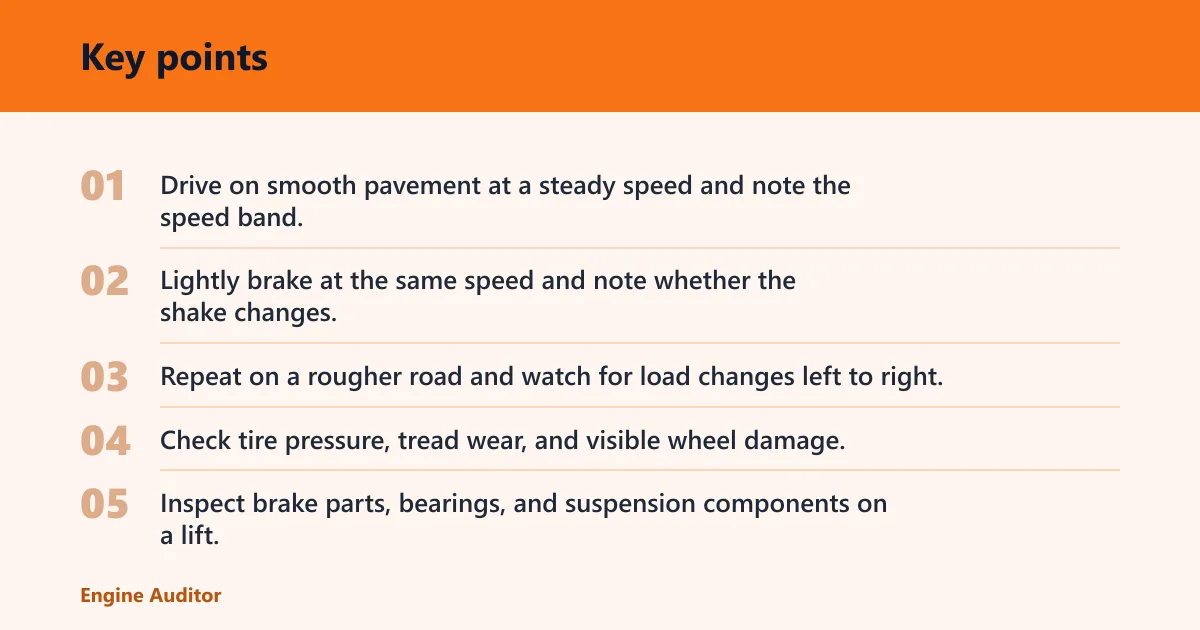
- Drive on smooth pavement at a steady speed and note the speed band.
- Lightly brake at the same speed and note whether the shake changes.
- Repeat on a rougher road and watch for load changes left to right.
- Check tire pressure, tread wear, and visible wheel damage.
- Inspect brake parts, bearings, and suspension components on a lift.
Use left-right weight transfer as a clue. If the sound or vibration changes when you steer slightly left or right, a bearing or a tire-related issue moves up the list. If nothing changes except braking, the brake system gets priority.
Frequently asked questions
What is a vibrating seat called?
In car diagnosis, it is usually called a seat vibration or a body vibration that is being transmitted through the seat. The term is less important than the pattern. Speed-related shake often suggests wheels or tires, brake-only shake often suggests the brakes, and load-related shake often suggests something elsewhere.
What can cause vibration in a car?
Common causes include tire imbalance, bent wheels, out-of-round tires, brake rotor variation, wheel bearing wear, suspension looseness, and wheel torque problems after service. Tire pressure and tire matching also matter. The fastest path is to match the symptom to speed, braking, and load before replacing parts.
What makes a car vibrate while driving?
Anything that prevents a wheel, tire, rotor, or driveline part from turning smoothly can make the car vibrate while driving. The clue is where the shake appears. A steady cruise shake points to wheels or tires, a braking shake points to rotors or hub runout, and wandering points to suspension wear.
How do I tell if the vibration is from the tires or the suspension?
Tire and wheel problems usually track with road speed and may stay steady on smooth pavement. Suspension wear more often brings clunks, wandering, and uneven tire wear, and it may change with steering input or road texture. A lift inspection is usually needed to confirm looseness.
Why does the seat vibrate more at highway speeds?
Highway speed can magnify small tire or wheel errors until they become obvious in the seat or floor. Many balance issues are commonly reported around about 45-75 mph, which is why the car may feel fine around town. If the shake fades below that band, start with wheels and tires.
Can a bent wheel make the seat vibrate?
Yes. A bent wheel can create a vibration that is intermittent or constant, depending on the bend and how the wheel seats on the hub. Pothole damage is a common trigger. Inspect the wheel for cracks, bends, and runout, then confirm whether the tire itself was also damaged.
Products related to this article
Sponsored / affiliate links. As an Amazon Associate I earn from qualifying purchases. I may earn additional commission from eligible campaigns.