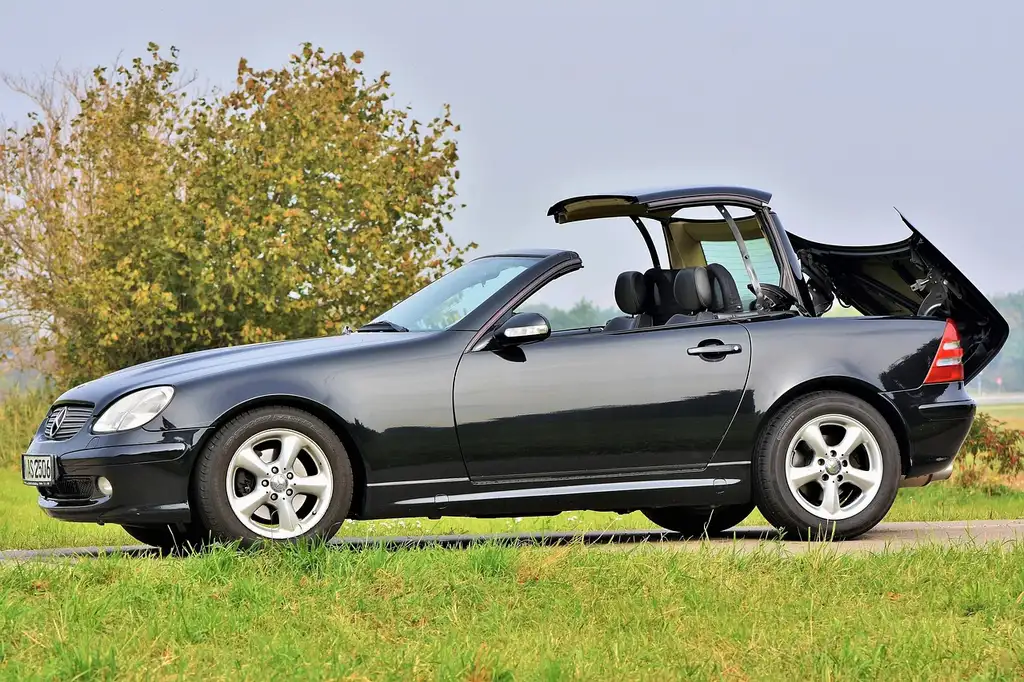
Best Budget Sports Cars: Affordable Performance Picks
The best budget sports cars balance purchase price, fuel use, tire and brake costs, cabin livability, and how you actually drive. The Mazda MX-5 Miata, Ford Mustang, Honda Civic Type R, Acura Integra Type S, Nissan Z Nismo, and Hyundai Sonata N Line each fit a different use case, so the right pick depends on total cost and daily fit, not sticker price alone. For broader value-shopping, see our best cars under $30k guide, and if you’re weighing chassis feel more than badge prestige, our RWD vs FWD explainer helps frame the tradeoffs.
What qualifies as a budget sports car?

A budget sports car delivers real pace without forcing luxury-car running costs or a harsh daily commute. You want sharp handling, useful acceleration, and a price that still leaves room for fuel, tires, brakes, and insurance. A sporty sedan or hatch can fit too, if it gives the right driving feel.
What matters more than price alone
Horsepower is only one piece of the decision. A light car with modest output can feel quicker and more eager than a heavier car with a bigger engine, especially on real roads. Daily comfort matters too, because stiff ride tuning, limited cargo space, and poor outward visibility can turn a fun car into a chore.
Rear-wheel drive usually gives the most traditional sports-car feel. Front-wheel drive can still be entertaining, and it often brings lower entry prices, easier winter use, and better cabin packaging. If you are comparing body styles as much as engines, our best sports cars for daily driving roundup shows how the practical picks stack up.
Budget sports car buyer matrix
| Model | Starting price | Drivetrain | Seating | Cargo practicality | MPG | Likely ownership pain points | Best for |
|---|---|---|---|---|---|---|---|
| Mazda MX-5 Miata | $28,985 | Rear-wheel drive | Two | Tiny trunk | 26 city / 34 highway | Two-seat limits, tiny trunk, frequent need to pack light | Traditional sports-car feel, weekend drives, autocross |
| Ford Mustang | $31,920 base MSRP | Rear-wheel drive available | Varies by body style and trim | More usable than a two-seater, but coupe storage still asks for compromise | 22 city / 33 highway | Performance trims can get expensive on tires and brakes | Value-focused power seeker who still wants a coupe feel |
| Honda Civic Type R | $45,595 base MSRP | Front-wheel drive | Four | More practical than a two-seat sports car, with hatchback utility | 22 city / 28 highway | Performance tires and a firm ride can raise running costs | Daily driver who wants track-capable pace |
| Acura Integra Type S | $52,600 | Front-wheel drive-based performance layout | Four passengers | Liftback cargo access is more useful than a coupe trunk | 21 city / 28 highway | Higher entry price, premium-performance running costs | Premium/stretch option for a buyer who wants a pricier, more polished daily performance car |
| Nissan Z Nismo | $66,890 base MSRP | Rear-wheel drive | Two | Coupe storage is limited | 17 city / 24 highway | Budget stretch, higher insurance and tire spend are likely | Premium/stretch option for the enthusiast who has moved past budget-first shopping |
| Hyundai Sonata N Line | $36,450 base MSRP | Front-wheel drive | Five-seat sedan packaging | Best cargo and rear-seat usability in this group | 23 city / 32 highway | Less theatrical than a coupe, less steering purity than rear-drive cars | Commuter who wants a sporty sedan and easy daily use |
Methodology
To compare total cost instead of just sticker price, this guide weighs the expenses most owners actually feel after purchase: fuel use, tire wear, brake wear, insurance exposure, and the practical cost of living with the car every day. Models with wider performance tires, more aggressive brake hardware, and higher theft or repair risk tend to cost more to keep on the road, even if their purchase price looks reasonable. MPG figures are included as a proxy for fuel spend, while the ownership-pain-point notes call out the parts of each car that are most likely to move the budget after the sale.
Because pricing and EPA ratings can change by model year and trim, the matrix uses base MSRP and commonly listed fuel-economy figures for the most relevant current or recent versions. That keeps the comparison honest for shoppers who are cross-shopping across trims, not just reading a brochure headline.
Which affordable sports car is best overall?
The Mazda MX-5 Miata is the best overall budget sports car if you want the clearest sports-car feel for the money. It starts at $28,985, makes 181 horsepower, uses rear-wheel drive, and pairs that with a six-speed manual. The tradeoff is simple: two seats and a tiny trunk.
Why the Miata stands out
The Miata’s appeal comes from the way it packages its hardware, not from a headline power figure. Rear-wheel drive, a manual transmission, and a light footprint create the traditional balance many shoppers want in a sports car. Its 26 mpg city and 34 mpg highway figures also help keep fuel cost in check.
If you want one car for solo commuting, back-road runs, and the occasional autocross event, the Miata fits that brief better than most cars under $30,000. It puts the driving experience first and keeps the mechanical layout simple. It falls short when you need to carry another adult or more than a small bag.
When the Miata is too small
If you regularly carry a passenger, need a child seat, or want to bring bulkier gear, the Miata becomes a compromise too far. Its tiny trunk is fine for a light weekend bag, not for a full grocery haul or travel luggage for two. That is the point where a hatchback or sedan makes more sense.
Which affordable sports car is best for value and power?
The Ford Mustang is the best value choice for shoppers who want more power potential without leaving the affordable-performance conversation. Base-model pricing sits around the accessible end of the segment, and rear-wheel drive keeps the car in classic sports-coupe territory. Performance trims raise the spend quickly, so the trim walk matters.
Why the Mustang makes sense
A Mustang can start as a sensible entry into rear-wheel-drive performance and scale upward from there. That flexibility is why it belongs on a budget list even when some versions move well beyond budget territory. The key is buying the trim that matches your use case instead of chasing the top badge.
The Mustang gives you range. You can stay near the value end with a base model, or you can step into performance trims if your budget allows. Do not compare the cheapest Mustang to a fully loaded competitor and call the result a fair fight.
Where the Nissan Z Nismo fits
The Nissan Z Nismo sits above true budget shopping. It is a premium/stretch performance variant with rear-wheel drive and a higher-end price position, so it helps define the ceiling rather than the sweet spot. For many buyers, the Mustang is the better value answer long before the Z Nismo becomes realistic.
Best for daily driving and commuting
The Honda Civic Type R is the best pick for daily driving if you want serious performance in a platform that still works as a commuter. It brings a hot hatch shape, four-seat practicality, and a performance-tuned compact-car layout that is easier to live with than a two-seat coupe. The Acura Integra Type S is the pricier liftback alternative.
Why the Type R works every day
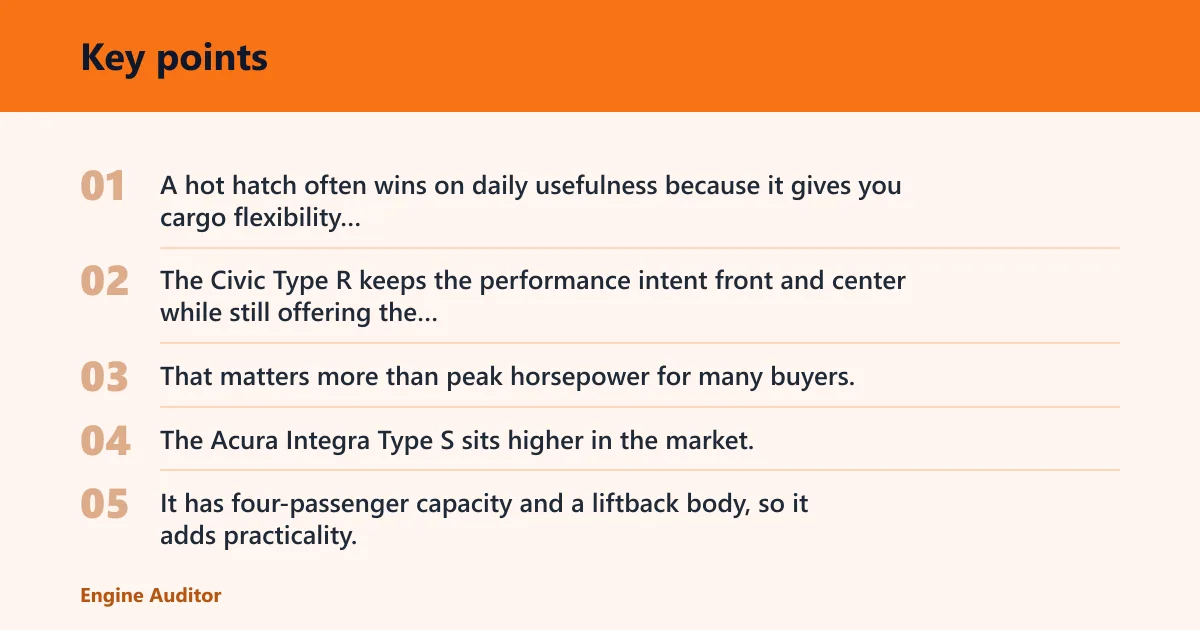
A hot hatch often wins on daily usefulness because it gives you cargo flexibility without forcing you into a large sedan. The Civic Type R keeps the performance intent front and center while still offering the kind of packaging that suits school runs, office commutes, and weekend errands. That matters more than peak horsepower for many buyers.
The Acura Integra Type S sits higher in the market, with a starting price of $52,600 and fuel economy of 21 mpg city and 28 mpg highway. It has four-passenger capacity and a liftback body, so it adds practicality, but it is not a budget buy. It fits shoppers who want a premium-feeling daily driver and are willing to pay for it.
Where the Sonata N Line fits
The Hyundai Sonata N Line is generally listed as the front-wheel-drive daily-use alternative in this group. It is a sporty midsize sedan, not a sports car, and that distinction matters. It makes sense when comfort, rear-seat space, and cargo access matter more than the sharpest steering feel.
How drivetrain changes the driving feel
Rear-wheel drive gives the most traditional sports-car experience. It usually feels cleaner at the steering wheel under hard acceleration and can make a car feel more balanced when you are driving for fun. That is why the Miata, Mustang, and Nissan Z Nismo carry such obvious enthusiast appeal.
Rear-wheel drive versus front-wheel drive
Front-wheel drive changes the recipe rather than ruining it. It can be cheaper to package, easier to use in bad weather, and better for a larger cabin or hatchback body. The Civic Type R and Sonata N Line show that quick, enjoyable cars do not have to be rear-drive to earn a spot on this list.
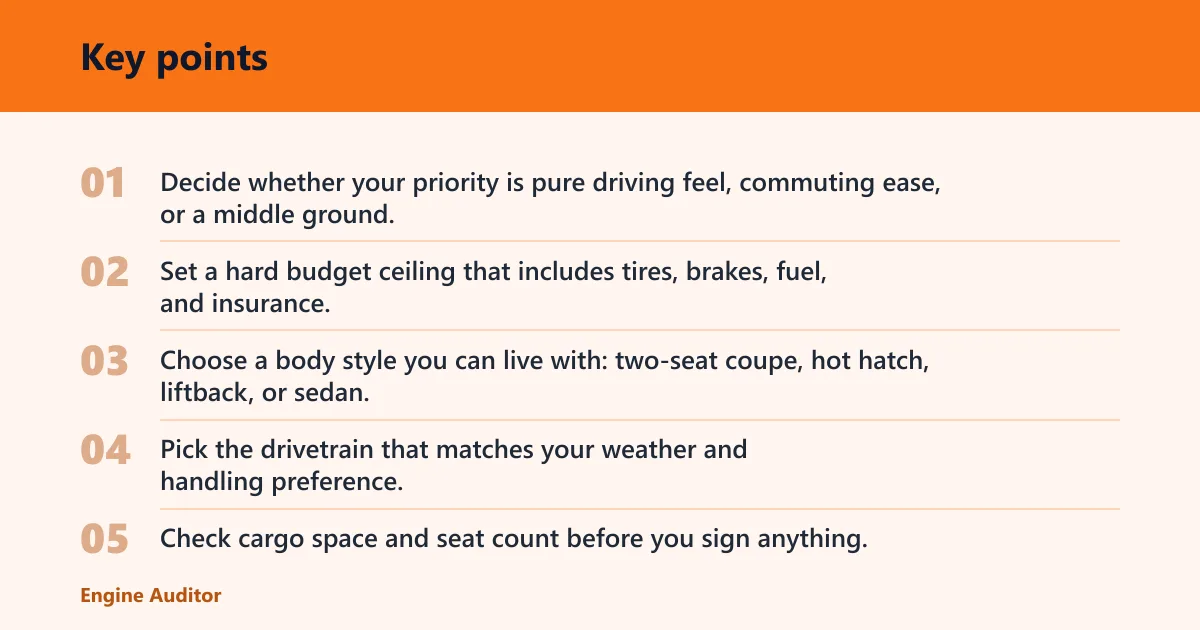
- Decide whether your priority is pure driving feel, commuting ease, or a middle ground.
- Set a hard budget ceiling that includes tires, brakes, fuel, and insurance.
- Choose a body style you can live with: two-seat coupe, hot hatch, liftback, or sedan.
- Pick the drivetrain that matches your weather and handling preference.
- Check cargo space and seat count before you sign anything.
Picture a driver in a snowy city who needs to park on tight streets and still wants something entertaining. A front-wheel-drive sporty sedan or hatch often fits better than a two-seat rear-drive coupe, because it trades some steering purity for easier daily use. The reverse is true for a weekend-only car parked in a dry climate.
Sports car or sporty sedan?
A sporty sedan makes more sense when you need space, easy cargo access, or regular rear-seat use. A dedicated sports car makes more sense when driving feel matters more than flexibility. The Hyundai Sonata N Line is the clearest example here: it gives you sporty pace and everyday space without pretending to be a coupe.
When the sedan choice is smarter
Choose the sedan or hatch when your week includes passengers, larger bags, or frequent stops that reward a bigger cargo opening. Choose the sports car when the two-seat limit or smaller trunk will not get in your way. That simple filter prevents regret after the excitement of the test drive wears off.
A common first-timer mistake is buying the lower-price coupe and then discovering that a week of normal errands means borrowing another car. The better buy is the one that fits your actual routine, not the one that looks most extreme on paper.
Frequently asked questions
What is the best budget sports car for everyday driving?
The Honda Civic Type R is the best everyday pick if you want performance and commuter-friendly packaging. The Mazda MX-5 Miata is better if you drive solo and want the most traditional sports-car feel, but its two seats and tiny trunk make it less flexible for routine errands, passengers, and luggage.
Which affordable sports car has the best handling?
The Mazda MX-5 Miata is the strongest handling pick for most budget shoppers. Its rear-wheel drive layout, manual transmission, and light, focused setup give it a classic sports-car character that rewards control and precision. The tradeoff is practicality, because two-seat packaging and a tiny trunk limit everyday usefulness.
Is a Mazda Miata worth it as a budget sports car?
Yes, if you want the most direct sports-car feel at a relatively low entry price. It is less worthwhile if you regularly need more than two seats or real cargo room.
What sports cars cost under $30,000?
Money says several picks in its list are budget-friendly, but exact pricing changes by model and trim. Always check the current listing before shopping.
Should I buy a front-wheel drive or rear-wheel drive sporty car?
Buy rear-wheel drive if you want the most traditional sports-car feel and cleaner handling balance. Buy front-wheel drive if you care more about affordability, cargo packaging, and daily usability. The Civic Type R and Sonata N Line show that front-wheel drive can still be fun and practical.
Which budget sports car is comfortable enough for commuting?
The Honda Civic Type R is often described as one of the more commuter-friendly performance picks here because it pairs strong performance with four-seat practicality and hatchback utility. The Acura Integra Type S is also useful, but its $52,600 starting price puts it outside a strict budget buy. The Miata is least commuting-friendly if you need space.
Products related to this article
Sponsored / affiliate links. As an Amazon Associate I earn from qualifying purchases. I may earn additional commission from eligible campaigns.