Can a Bad Tire Cause Your Car to Shake?
Simply put, yes — a bad tire is a leading cause of car shake. If you feel vibrations through the steering wheel, seat, or floor, the tire is likely imbalanced, damaged, or unevenly worn. Diagnosing early can prevent further damage and restore a smooth ride.
Key Takeaways

NIKCOSMK
7Pcs Car Wheel Brush kit, Tire Brush,…
- High-Quality Materials & Scratch-Free : Car wheel brush head is metal free design& extra soft woolies, perfect for gently scrubbin…
- Efficient Cleaning: The thick fibers of these synthetic woolies brushes hold tons of cleaning liquids, quickly and easily scrub aw…
- Flexible & Ergonomic Design: Our soft rim brush can bend up to 360 degrees to allow quick and easy access as you work into hard-re…
As an Amazon Associate I earn from qualifying purchases.
- A bad tire can cause your car to shake due to imbalance, belt separation, or sidewall bulges.
- Vibrations often appear at specific speeds and may intensify with acceleration or braking.
- Checking tire pressure, tread depth, and visual damage helps pinpoint the source.
- Ignoring a bad tire can wear out suspension parts and reduce safety.
- Regular rotation and balancing prevent many shake-inducing tire problems.
How a Bad Tire Causes Shaking in Your Car
When a tire is in poor condition, its ability to rotate smoothly is compromised. Even a tiny defect can create a wobble that transfers through the suspension into the cabin. The most common way a bad tire causes car shake is through loss of rotational balance.
Tires are balanced by attaching small weights to the rim. If a tire loses a weight or if the rubber wears unevenly, the wheel assembly becomes unbalanced. At higher RPMs, this imbalance produces a centrifugal force that vibrates the car.
Another mechanism is belt separation — the steel belts inside the tire shift, causing the tread to lift and create a rhythmic thumping.
Tire Balance vs. Tire Condition
An unbalanced tire shakes primarily at highway speeds (55–75 mph). A structurally damaged tire (belt separation, bulge, puncture) often shakes at lower speeds too. Here’s a quick comparison:
| Type | Typical Symptoms | Speed Range | Fix |
|---|---|---|---|
| Unbalanced tire | Steering wheel shake, mild seat vibration | 55–75 mph | Re-balance |
| Belt separation | Thumping, wobbling, even at low speed | All speeds | Replace tire |
| Sidewall bulge | Thumping, visible bump on sidewall | All speeds | Replace tire immediately |
| Uneven tread wear | Drone noise, vibration in seat | 40–70 mph | Replace or rotate + align |
This table shows how different tire problems produce different shake patterns. If you notice vibration that changes with speed, a bad tire is likely the cause.
Warning: If you feel a sudden, strong shake accompanied by a thumping sound, pull over safely. A tire with belt separation or a bulge can blow out without warning.
Signs Your Tire Is the Source of Vibration
Not every car shake comes from the tires. But bad tires cause car shake in predictable ways. Look for these specific clues:
- Steering wheel shimmies — especially between 50 and 65 mph. This points to the front tires.
- Seat or floor vibrates — the rear tires are usually the culprit. The vibration feels like a massage chair.
- Thumping noise — a rhythmic “whump-whump” that matches wheel rotation.
- Shake changes with road surface — smooth roads still produce vibration if it’s a tire issue.
- Vibration disappears when you press the brake — this often means a tire imbalance, not brake rotor warping.
- Car pulls to one side — combined with vibration, it suggests uneven tire wear or a damaged sidewall.
- Visible damage or uneven wear — feathering, cupping, or bald spots confirm tire trouble.
When to Suspect a Tire vs. Other Parts
A simple test: drive slowly on a smooth road and feel for vibration. If it’s constant and matches the wheel rotation speed (faster with acceleration), it’s likely a tire. If the shake starts only when braking, the brake rotors may be warped.
If you feel a wobble in the steering wheel that changes with turning, a worn tie rod or ball joint could be at fault.
Tip: Keep a log of what speed triggers the shake and whether it changes with braking or turning. This helps your mechanic diagnose faster.
Common Tire Problems That Lead to Shaking
Knowing the specific defect helps you decide whether to repair or replace. Here are the most frequent bad tire problems that cause car shake:
- Tire imbalance — The most common cause. Over time, tires lose the small weights that keep them balanced. Even a 1/2-ounce loss can shake the car at speed.
- Belt separation — The steel or fabric belts inside the tire separate from the rubber. This creates a bubble or lift in the tread area. The vehicle shakes strongly and the tire may fail.
- Sidewall bulge — A bump on the sidewall from internal damage (often hitting a pothole or curb). It weakens the tire structure and causes a distinct thumping.
- Uneven tread wear — Caused by poor alignment, underinflation, or worn suspension parts. Cupping (scalloped dips) and feathering (smooth on one side, sharp on the other) produce vibration.
- Internal damage — Nails, screws, or road debris can break the internal structure without losing air immediately. The damaged area creates a flat spot that wobbles.
- Flat spotting — A tire that sits in one position for weeks can develop a temporary flat spot. After driving a few miles, the tire warms up and the spot usually rounds out.
How Often Do These Problems Occur?
According to the National Highway Traffic Safety Administration (NHTSA), tire-related issues contribute to about 11,000 crashes per year. Many start with unnoticed vibration. The Tire Industry Association reports that 60% of tires on the road are underinflated, which accelerates uneven wear and imbalance.
Regular checks can catch these problems early.
| Problem | Frequency | Risk Level |
|---|---|---|
| Imbalance | Very common | Low – fixed with re-balance |
| Belt separation | Uncommon | High – can blow out |
| Sidewall bulge | Moderate (impact-related) | High – immediate replacement needed |
| Uneven wear | Common (alignment issues) | Moderate – shortens tire life |
Understanding these categories helps you communicate with your mechanic and decide whether a simple balance will fix the shake or if you need a new tire.
How to Diagnose a Bad Tire Yourself
You don’t always need a mechanic to confirm a bad tire causes car shake. With a few simple steps you can check at home:
- Visual inspection – Park on level ground, turn the steering full lock to expose the tire. Look for bulges, cracks, cuts, or embedded objects. Spin the wheel by hand and watch for wobble.
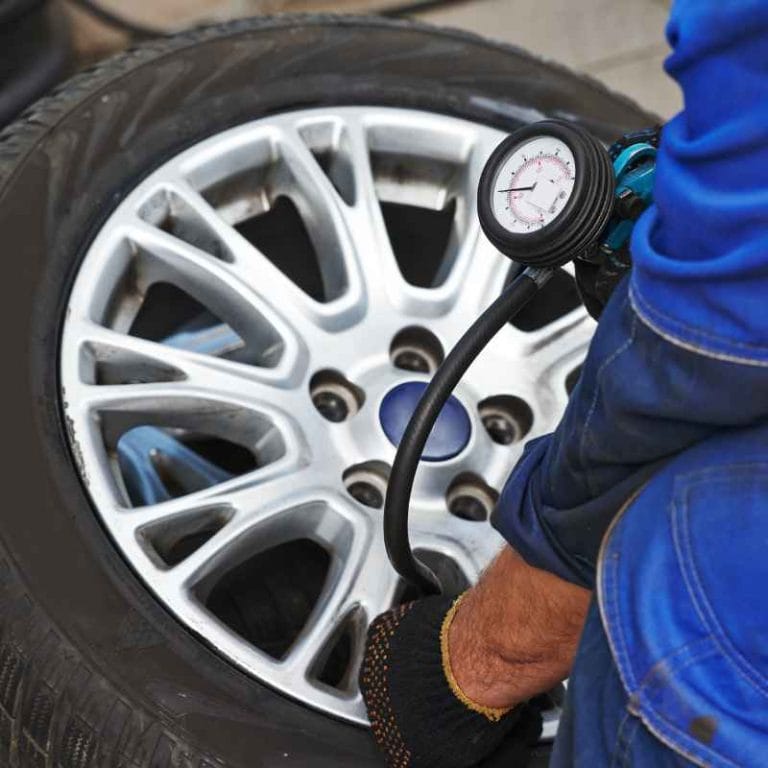
- Check tire pressure – Underinflation can cause a soft sidewall and vibration. Use a gauge and inflate to the recommended PSI (found on the door jamb sticker).
- Feel for heat – After a short drive, carefully touch each tire. An abnormally hot area indicates internal friction from a damaged belt.
- Test for balance – If the shake is speed-dependent, try temporarily rotating the suspected tire to another position. If the vibration moves, that tire is the cause.
- Listen for thumps – Drive slowly beside a wall with windows down. Listen for rhythmic thumps that sync with wheel rotation.
- Use a tread depth gauge – Measure at multiple spots across the tread. Differences greater than 2/32” indicate uneven wear from a bad tire or alignment problem.
Important: Never drive on a tire with a visible bulge or if the vibration suddenly becomes severe. Even if the tire holds air, it can fail without warning. Have it inspected by a professional.
If you identify a bad tire, the next step is deciding whether it can be repaired or must be replaced. The Rubber Manufacturers Association (RMA) states that only punctures in the tread area (not sidewall) smaller than 1/4 inch can be safely repaired. Anything larger, or any bulge/separated belt, requires replacement.
What to Do If a Bad Tire Is Causing Shaking
Once you’ve confirmed that a bad tire is causing your car to shake, take these actions:
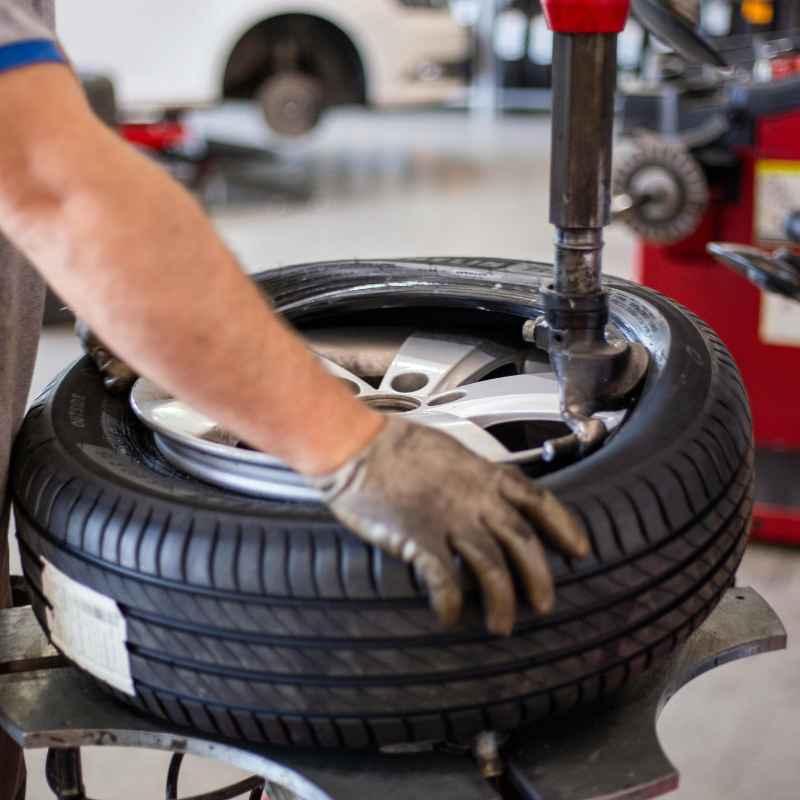
- Re-balance the tire if it’s structurally sound but shaking at highway speeds. A tire shop can re-balance for $15–$40 per tire.
- Rotate tires to move the problematic tire to a different position (rear if it was front). This changes the vibration pattern and can extend tire life if the issue is minor wear.
- Replace the tire if there’s a bulge, separation, puncture outside the repairable area, or tread depth below 2/32”.
- Check alignment – Uneven wear that caused the vibration may come from misaligned wheels. A four-wheel alignment costs $80–$150 and prevents new tires from wearing unevenly.
- Inspect suspension components – A bad tire can accelerate wear on shocks, struts, and bushings. Have the suspension checked when you replace the tire.
Cost Comparison of Solutions
| Service | Average Cost | Time Required | Effectiveness |
|---|---|---|---|
| Tire balance | $15–$40 per tire | 15 minutes | High for imbalance |
| Tire rotation | $25–$50 | 15–20 minutes | Moderate (temporary fix) |
| Tire replacement (1 tire) | $80–$300 | 30–45 minutes | Very high |
| Wheel alignment | $80–$150 | 30 minutes–1 hour | Prevents future shakes |
If you catch the problem early, a simple balance may resolve the shake. However, if the tire is physically damaged, replacement is the only safe option.
Warning: Never attempt to repair a tire with a sidewall bulge or belt separation yourself. The tire must be replaced by a professional. Driving on such a tire risks a sudden blowout at high speed.
Can Other Issues Mimic a Bad Tire?
Sometimes what feels like a bad tire causing car shake is actually another worn part. Here are the most common impostors:
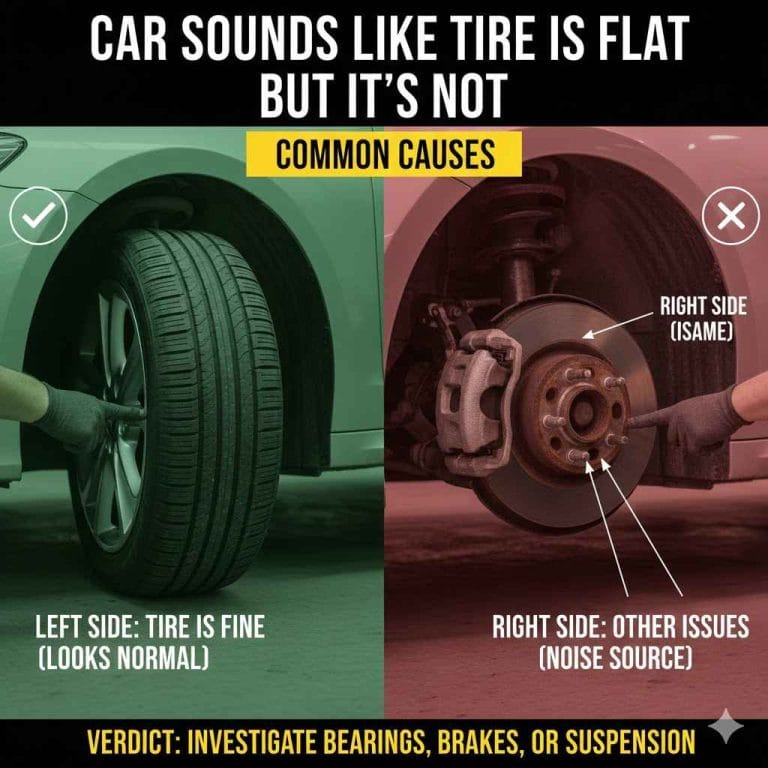
- Warped brake rotors – Vibration that appears only when you apply the brakes. The pedal may also pulsate.
- Worn wheel bearings – A humming or grinding noise that changes with turns, often accompanied by a slight shake in the steering.
- Axle imbalance or damage – A clicking or vibration that worsens during acceleration, especially in front-wheel-drive cars.
- Driveshaft issues – In rear-wheel and all-wheel-drive vehicles, a worn U-joint or unbalanced driveshaft causes a rhythmic shake that may be felt in the floor.
- Suspension components – Loose tie rods, ball joints, or control arm bushings can produce a wobble that mimics a bad tire, particularly when turning.
How to Differentiate
A simple rule: Tire shakes are speed-dependent and feel continuous. Shakes from brakes are braking-only. Suspension shakes often occur during turns or over bumps.
If you’re unsure, a shop can perform a “road test” and quickly isolate the source. According to AAA, misdiagnosing a tire vibration as a brake issue happens in about 12% of cases, leading to unnecessary repairs.
Tip: If you recently hit a pothole or curb, a tire issue is far more likely than a brake problem. Check the tire sidewall for bulges first.
Preventing Tire-Related Shaking
The best way to avoid the question “Can a bad tire cause your car to shake?” is to prevent tire problems in the first place. Here’s a maintenance checklist:
- Check tire pressure monthly – Underinflation is the leading cause of uneven wear. Use the pressure listed on the driver’s door jamb, not the tire sidewall.
- Rotate tires every 5,000–7,500 miles – This evens out wear patterns. Follow your vehicle manufacturer’s recommendation.
- Balance tires when you rotate them – A balance check only adds $10–$20 per tire and catches minor imbalances before they worsen.
- Inspect tread depth regularly – Use the “penny test.” If Lincoln’s head is fully visible, the tread is below 2/32” and the tire should be replaced.
- Check for sidewall damage – After hitting a pothole or curb, inspect the sidewall for cuts or bulges. Even small bulges can grow and cause shaking.
- Align wheels annually or after hitting a large pothole – Proper alignment prevents cupping and feathering that lead to vibration.
- Never overload your vehicle – Exceeding the tire’s load rating can cause structural damage that results in shaking.
Seasonal Considerations
Temperature changes affect tire pressure. For every 10°F drop, tire pressure decreases by about 1 PSI. This can push a borderline tire into the danger zone.
The NHTSA reports that underinflated tires contribute to roughly 600 highway deaths per year. Regular pressure checks, especially during season transitions, keep your tires in good shape.
If you drive in winter conditions, consider switching to winter tires. Summer and all-season tires lose grip below 45°F, which can accelerate tread wear. A dedicated set of winter tires often lasts longer and reduces vibration issues related to cold-weather flat spots.
Frequently Asked Questions
Can a bad tire cause your car to shake at low speeds?
Yes, especially if the tire has a bulge, belt separation, or is severely out of balance. Low-speed shaking (below 30 mph) usually indicates structural damage and should be inspected immediately.
Why does my car shake only at 60 mph?
That is a classic sign of tire imbalance. At around 60 mph, the unbalanced tire’s rotation frequency matches the vehicle’s natural vibration frequency, making the shake noticeable.
A re-balance typically fixes this.
Can a bad tire cause a shaking steering wheel?
Absolutely. If the front tires are affected, the vibration travels through the steering linkage to the wheel. A shaking steering wheel at highway speeds is one of the most common symptoms of a bad front tire.
Will a bad tire cause the car to shake when braking?
Not usually.
Shaking during braking is more often caused by warped brake rotors. However, a badly worn or out-of-round tire can also produce vibration that feels stronger when the brakes are applied due to added friction.
How much does it cost to fix a car shake caused by a bad tire?
It depends on the issue. A simple balance costs $15–$40 per tire.
A tire replacement ranges from $80 to $300 each. If the bad tire damaged suspension components, repairs may add another $150–$500.
Final Thoughts
A bad tire can absolutely cause your car to shake, and it’s usually the first thing to check when you feel unusual vibrations. Diagnosing early — by looking for bulges, checking balance, and inspecting tread — saves you from unsafe driving conditions and costly suspension repairs.
Keep your tires properly inflated, rotated, and balanced, and you’ll enjoy a smooth, shake-free ride for thousands of miles. See also best car tires for snow safest options for winter roads. See also best way to rotate car tires at home save money easily .
Related pick: Check today's price on Amazon
Products related to this article
Sponsored / affiliate links. As an Amazon Associate I earn from qualifying purchases. I may earn additional commission from eligible campaigns.