Ford Check Engine Light After Refueling: Causes
A Ford check engine light after refueling usually points to an EVAP leak. The usual causes are a loose or worn gas cap, a stuck purge valve, a stuck vent valve, or a saturated charcoal canister; inspect the cap first, then read the EVAP codes. Ignoring it can waste fuel, create hard-start or fuel-fill problems, and turn a small leak into a failed emissions test. This guide separates cap seal faults from purge or vent valve problems and canister saturation.
What you’ll need


- OBD-II scanner or code reader
- Flashlight
- Clean rag
- Gloves
- Access to the fuel door, filler neck, and capless seal if equipped
Why did your Ford light come on?
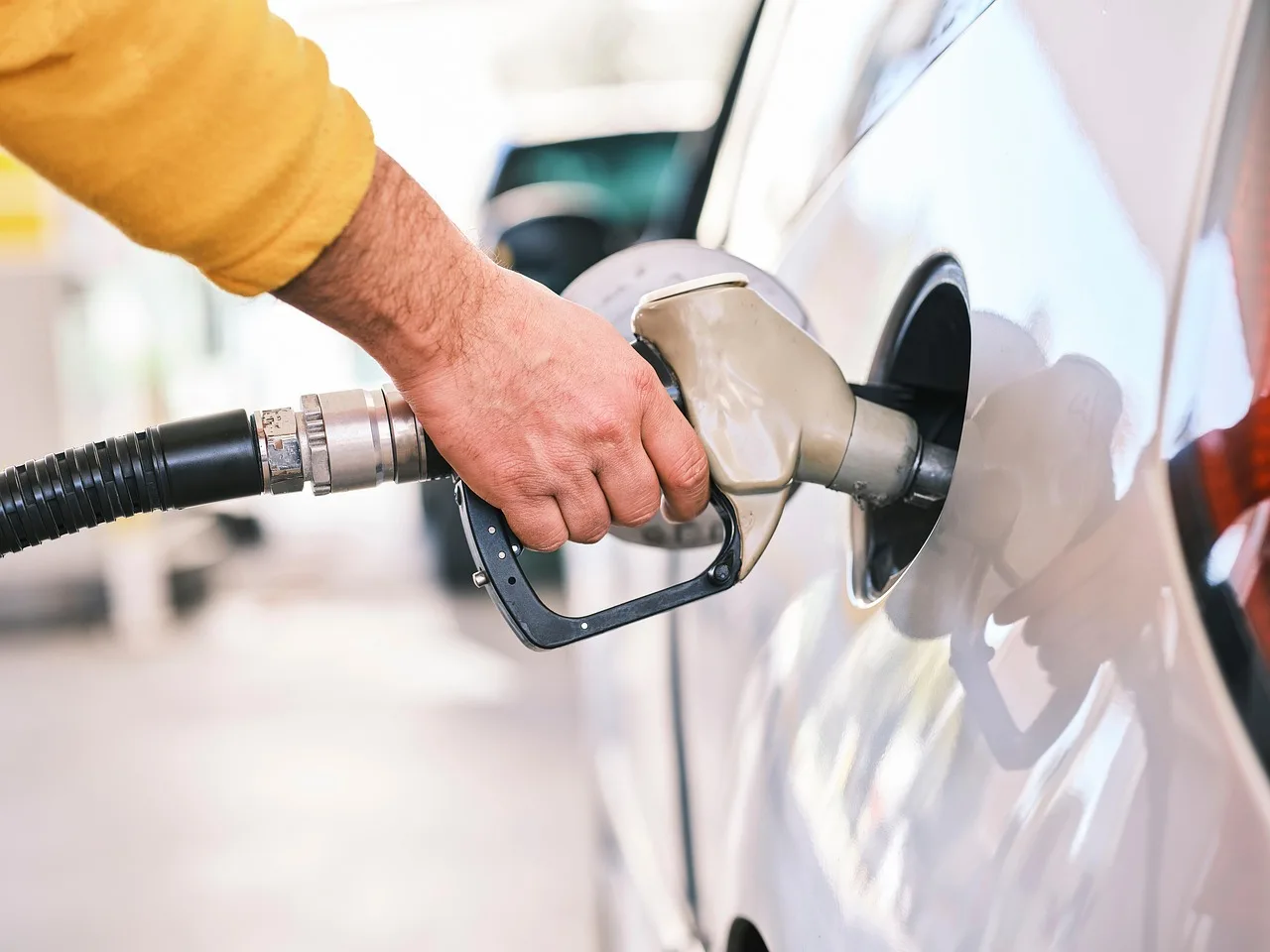
Refueling changes tank pressure, so the Ford EVAP system checks whether fuel vapor stays sealed in the tank, charcoal canister, purge valve, vent valve, and lines. If the measured pressure does not match the fuel-tank pressure sensor reading the PCM expects, it can set an EVAP code after a fill-up, even before driveability changes appear.
How the EVAP system reacts to fueling
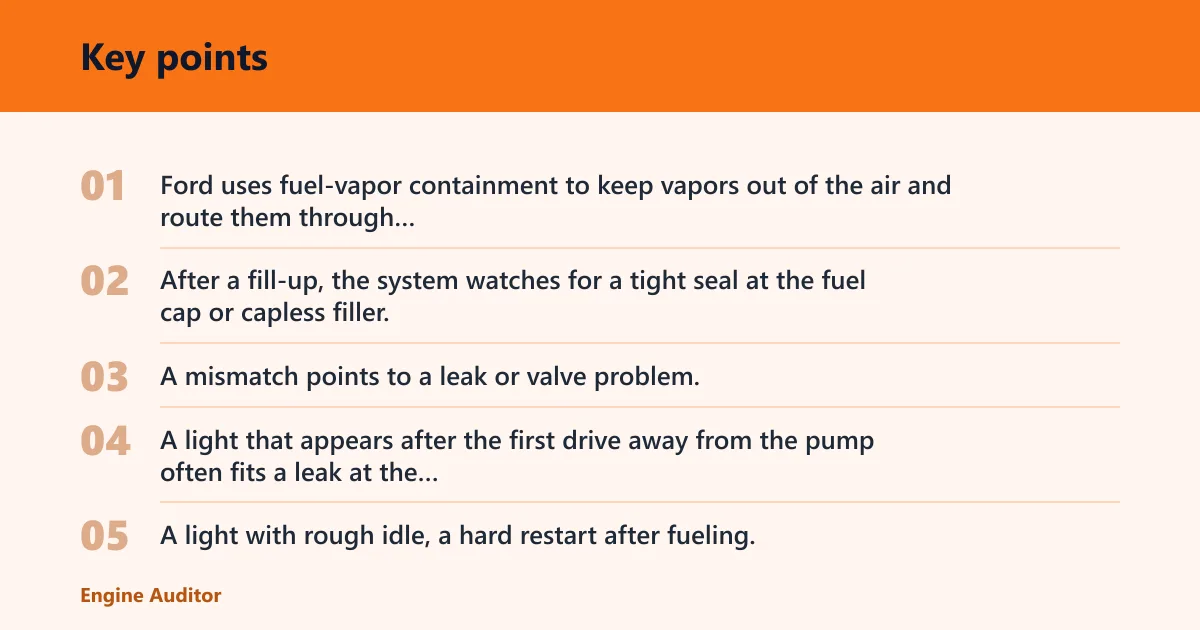
Ford uses fuel-vapor containment to keep vapors out of the air and route them through the charcoal canister and purge valve when conditions are right. After a fill-up, the system watches for a tight seal at the fuel cap or capless filler, normal tank pressure change, and a closed vent path. A mismatch points to a leak or valve problem.
What symptom patterns usually mean
A light that appears after the first drive away from the pump often fits a leak at the capless seal, filler neck, or fuel door fitment. A light with rough idle, a hard restart after fueling, or a strong fuel smell points more toward a purge valve or fuel-saturated canister. Repeated lights after every fill-up need a deeper EVAP check.
How do you diagnose it?
Start with the code and the fill-up pattern. On Ford vehicles, a post-refuel light is most useful when you match the symptom to where the EVAP system is failing, then confirm the simplest seal issue before replacing parts. If the code keeps returning, run a smoke test next.
- Read the stored codes with an OBD-II scanner, because P0442, P0455, and P0456 point to different leak sizes.
- Inspect the fuel cap or capless seal, and clean the filler neck if you see dust, grit, or fuel residue.
- Check for overflow, splash, or fuel odor around the filler area, because overfilling can wet the charcoal canister.
- Watch for purge or vent valve symptoms, such as hard starting after fueling or a tank that seems reluctant to accept fuel.
- Schedule a smoke test if the code returns, because smoke pinpoints the leak location far better than guesswork.
Say your Escape lights up 2 miles after a fill-up, the scanner shows P0456, and the capless flap has grit at the seal. Cleaning the seal and checking again is reasonable. Suppose a F-150 shows P0455, the pump clicks off early, and the next start is rough; that pattern points more toward a purge or vent issue than a simple seal problem.
Ford EVAP decision table
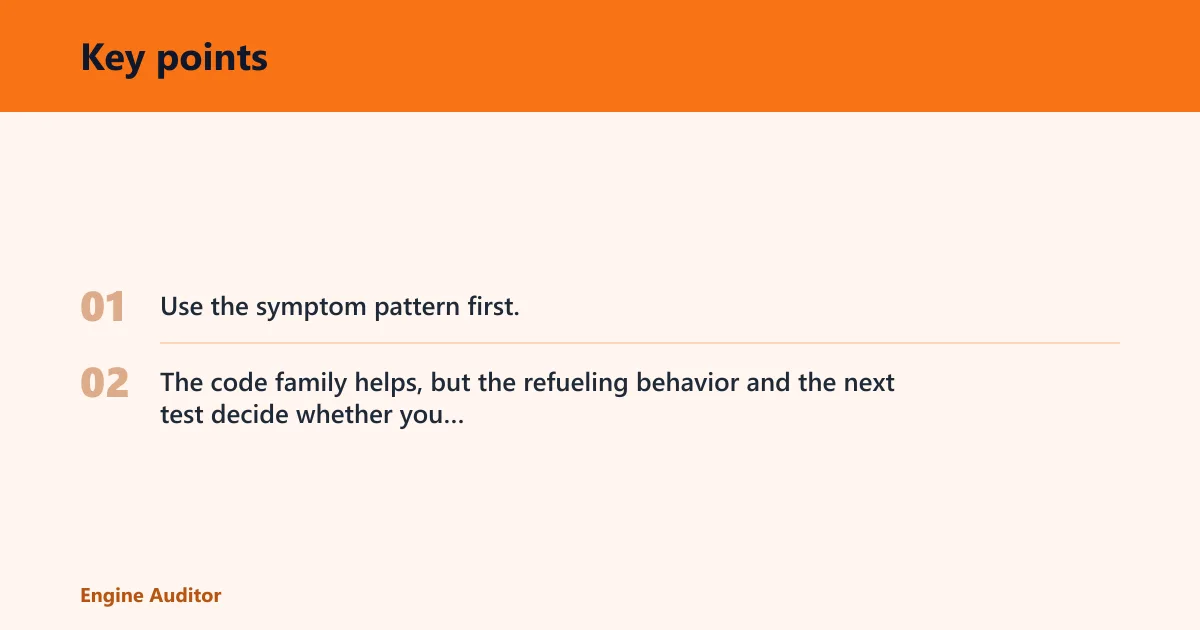
Use the symptom pattern first. The code family helps, but the refueling behavior and the next test decide whether you are looking at a cap seal issue, a valve fault, or canister saturation.
| Symptom after fueling | Likely Ford EVAP fault | Common code | DIY check | Shop-level test | Keep driving? |
|---|---|---|---|---|---|
| Light comes on after one fill-up, no drivability change | Loose cap, capless seal contamination, or filler neck fitment issue | P0456, sometimes P0442 | Inspect and clean seal, confirm fuel door closes fully | Smoke test at the filler neck and EVAP lines | Usually yes, if the light is steady and the vehicle drives normally |
| Light follows repeated topping off after pump click-off | Charcoal canister fuel saturation | P0442 or P0455 | Check for fuel odor near the canister and filler area | Smoke test plus canister and purge system inspection | Drive only short trips until inspected |
| Hard start or rough idle right after refueling | Purge valve stuck open | P0442, P0455, or purge-related EVAP codes | Look for extended cranking after a fill-up | Command purge valve with scan tool, check vacuum behavior | Yes for a short distance, but do not ignore repeated hard starts |
| Fuel pump keeps shutting off while filling | Vent valve stuck closed or restricted vent path | P0455 or vent-related EVAP codes | Note whether the tank fills normally at a lower nozzle rate | Command vent valve, check tank pressure response, smoke test | Usually yes, but refueling may remain difficult |
| Light returns after every fill-up with no obvious seal issue | Persistent EVAP leak, sensor fault, or internal valve leak | P0442 or P0456 | Recheck seal, scan freeze-frame data, note fuel level | Smoke test and fuel tank pressure sensor data review | Yes if steady and no fuel smell, but schedule diagnosis soon |
What codes usually appear?
Ford post-refuel codes are often EVAP leak codes, and the leak size can matter. P0455 usually means a gross leak. P0442 usually points to a small leak. P0456 is a very small leak that can come from a marginal seal, a capless filler issue, or a valve that does not seal tightly.
P0442, small leak
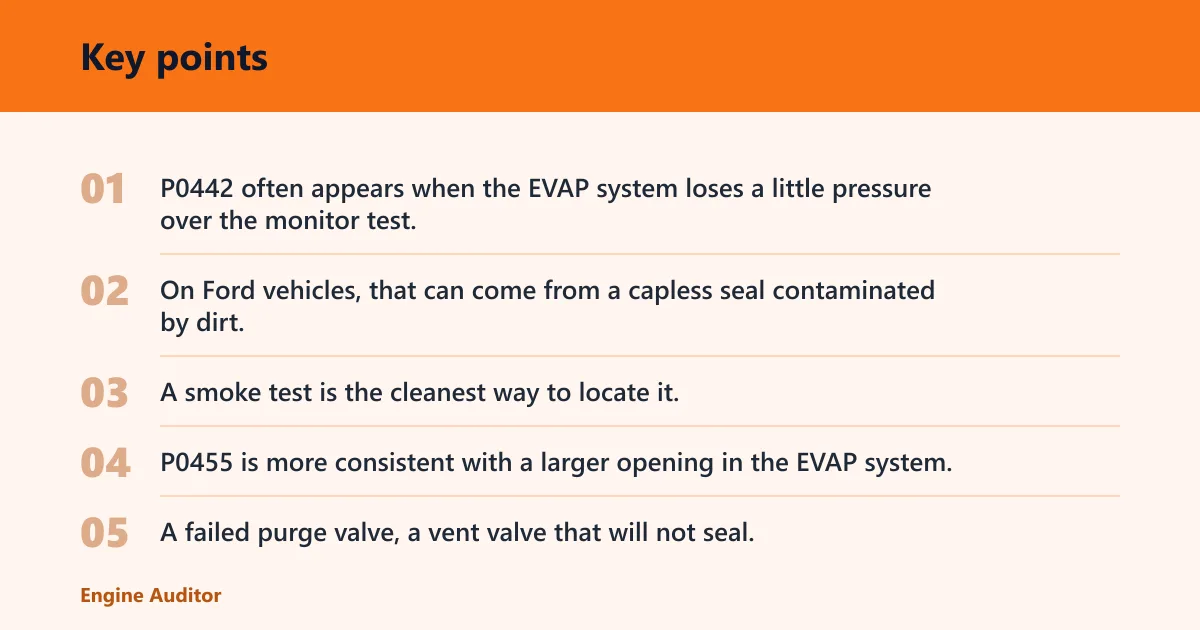
P0442 often appears when the EVAP system loses a little pressure over the monitor test. On Ford vehicles, that can come from a capless seal contaminated by dirt, a loose filler-door fitment, or a hose leak. A smoke test is the cleanest way to locate it.
P0455, gross leak
P0455 is more consistent with a larger opening in the EVAP system. A failed purge valve, a vent valve that will not seal, or a badly damaged capless seal can all fit. If the light comes on immediately after refueling and the tank also fills oddly, the fault is less likely to be minor.
P0456, very small leak
P0456 is common after a fill-up because tiny seal problems show up when the system runs its monitor. A capless filler neck with residue, a weak vent seal, or a canister line seep can trigger it. If the code returns after cleaning and a few drive cycles, stop treating it as temporary.
What scan tool data can tell you
Look at freeze-frame fuel level, EVAP monitor status, and fuel tank pressure sensor readings. A scan tool can show whether the tank saw vacuum, failed to hold pressure, or never reached the expected test range. That helps separate a true leak from a monitor that has not run yet.
Can a loose gas cap cause a check engine light on a Ford?
Yes. A loose cap, damaged cap seal, or contaminated capless seal can trigger EVAP leak codes on a Ford after refueling. If the seal is the problem, the light may clear after several drive cycles once the seal is corrected and the monitor reruns.
Capless filler points to check
Ford capless filler necks can fail at the seal lip, the internal spring door, or the fuel-door alignment that lets dirt reach the opening. Wipe the seal with a clean rag, check for grit, and make sure the fuel door closes squarely. A bent or sticky flap can mimic a bad gas cap.
Is it safe to drive a Ford with the check engine light on after fueling?
If the light is steady and the vehicle runs normally, short-term driving is usually acceptable while you check the EVAP system. If the light flashes, the engine runs rough, or the fuel smell is strong, stop driving and diagnose it before more damage or a fire risk develops.
When to stop driving sooner
Do not keep driving long if refueling is followed by hard starting, stalling, or repeated fuel smell near the filler area. Those symptoms fit a purge valve or canister problem more than a simple seal issue, and they can create hard-start or overfill behavior that gets worse.
How long after refueling should you drive before the light goes off?
There is no fixed number of miles. A minor EVAP leak may clear after about one to three drive cycles once the seal is corrected, but an actual leak, valve fault, or saturated canister can bring the light back. If the code returns after the next fill-up, do not wait for it to clear on its own.
What “drive cycle” means here
Ford EVAP monitors usually need a cold soak, some steady driving, and a specific fuel level window before they run again. If the tank is topped off, the monitor may delay. That delay does not prove the problem is gone; it only means the test has not completed yet.
Common mistakes
The most common mistakes are simple, but they waste time. One is topping off after the pump clicks off, which can splash liquid fuel into the charcoal canister. Another is replacing the purge valve or vent valve before reading codes. A third is ignoring capless seal contamination because there is no visible cap to tighten.
- Do not keep adding fuel after the first click-off. Extra fuel can saturate the canister.
- Do not clear the code before you write down the freeze-frame data. You lose the clue that matters.
- Do not assume every post-fill light is harmless. Repeated returns point to a real leak.
- Do not replace the canister first. Confirm the leak location with a smoke test.
Frequently asked questions
Why did my Ford check engine light come on after refueling?
Refueling changes EVAP pressure, so a leak or valve fault can show up right away. On Ford vehicles, the usual suspects are the capless seal, purge valve, vent valve, or charcoal canister. If the scanner shows an EVAP code, the next step is to match the symptom to the code family.
What Ford EVAP problems can happen after pumping gas?
The most common are a capless filler seal leak, a purge valve stuck open, a vent valve stuck closed, or charcoal canister saturation from overfilling. A fuel tank pressure sensor reading that never stabilizes can point to one of those faults, which is why code data matters more than the light alone.
What codes usually appear when the light comes on after a fill-up?
Scan tool freeze-frame data and EVAP monitor status help separate a tiny seal problem from a bigger valve or line failure.
How do I clear a check engine light on a Ford after refueling?
Fix the leak first, then clear the code with an OBD-II scanner under the scan tool menu. A battery disconnect is a poor substitute because it erases useful data. After clearing, drive normally until the EVAP monitor runs again, then rescan to confirm the repair held.
Which Ford models are more prone to fuel-filler or EVAP issues?
Model-specific risk varies by year and platform, so avoid broad claims without a code and inspection result. The important part is whether the vehicle uses a capless filler neck, whether the filler door seals well, and whether the stored code points to a leak, purge fault, or vent fault.
When does a post-refuel check engine light mean a real repair is needed?
If the light returns after every fill-up, the code does not clear after a few drive cycles, or the vehicle shows hard starts, fuel odor, or refueling problems, treat it as a real repair. That is the point where a smoke test and valve or canister inspection stop being optional and become the next step.
Products related to this article
Sponsored / affiliate links. As an Amazon Associate I earn from qualifying purchases. I may earn additional commission from eligible campaigns.