Carburetor vs Fuel Injection: Repair Difficulty Guide
Carburetors are usually easier to repair by hand: a rebuild kit, basic tools, and a clean bench fix most issues. Fuel injection is usually easier to keep running once it is healthy, but harder to diagnose without scan data. Ignore that difference and you waste hours chasing jets, sensors, or wiring faults, then buy parts you didn’t need. This guide compares real repair steps, tools, failure points, and when each system makes sense for DIY work.
| Decision factor | Carburetor | fuel injection: which is easier to repair | Winner |
|---|---|---|---|
| Bench rebuild effort | Can often be stripped, cleaned, and rebuilt on a bench with a rebuild kit, hand tools, and carb cleaner. | Most failures are diagnosed in place; a true bench rebuild is uncommon because injectors, sensors, and wiring stay on the vehicle. | Carburetor |
| Diagnosis speed for vague symptoms | Fast when the fault is visible, like varnish, a stuck float, or a clogged jet; slower when the issue is a vacuum leak or ignition fault. | Fast when scan data points to a sensor or fuel-trim problem; slower when the symptom is vague and needs pressure, wiring, and input checks. | fuel injection: which is easier to repair |
| Special tools | Hand tools, carb cleaner, small brushes, and sometimes a vacuum gauge are often enough. | A fuel-pressure gauge, multimeter, scan tool, and sometimes smoke testing are often used. | Carburetor |
| Cold-start repair work | Choke problems are mechanical and often fixable by cleaning, adjustment, or replacement of choke parts. | Cold-start faults may involve sensors, injector behavior, ECU input, or calibration. | Carburetor |
| Altitude and weather correction | Often needs jet changes or mixture adjustment when elevation changes enough. | Can instantly adapt the air/fuel ratio to changing weather and altitude through sensor-driven control. | fuel injection: which is easier to repair |
Carburetor vs fuel injection: which is easier to repair?


For most DIY repairs, the carburetor wins on bench work and parts-level simplicity. Fuel injection wins when the issue is a drivability complaint that the ECU can help isolate, but the diagnostic path usually needs a scan tool, wiring checks, and pressure data before a wrench ever turns.
How the repair decision changes for home mechanics, roadside fixes, and engine-restoration work
A home mechanic with a clean bench and basic tools can usually rebuild a carburetor without electronic diagnostics. Roadside, a carburetor can sometimes be coaxed home with cleaning or adjustment, but EFI usually needs data to avoid guesswork. For restoration work, the carburetor is often the easier part to restore correctly.
Fuel injection often stays in tune better after the repair is done. That does not make it simpler to fix when the fault is hidden in a sensor, wire bundle, relay, or ECU input.
Side-by-side comparison table: repair difficulty, tools, common faults, parts access, and likely repair path
The comparison gets clearer when the repair path is broken into symptom, tools, and access. Carburetor faults are often mechanical and visible. EFI faults are often data-driven and buried in inputs that do not announce themselves.
| Repair factor | Carburetor | fuel injection: which is easier to repair | Winner |
|---|---|---|---|
| Common fault type | Varnish, clogged jets, stuck float, bad needle and seat, dried gaskets, vacuum leaks. | Dirty injectors, weak fuel pressure, bad sensors, wiring faults, ECU input errors. | Tie |
| Parts access | Rebuild kit parts are usually straightforward if the carb model is matched exactly. | Parts may be a sensor, injector, pump, relay, or wire section, and the failure source may not be obvious. | Carburetor |
| Diagnosis path | Visual inspection, cleaning, float check, jet inspection, and adjustment. | Scan data, pressure test, electrical test, and possible software access. | Carburetor |
| Repair repeatability | Often repeatable on the bench once the worn part is identified. | Often repeatable only after the root cause is confirmed through electrical and fuel-system checks. | Carburetor |
| Long-term tuning burden | May need adjustment for weather, elevation, and engine changes. | Adaptive fuel trimming handles many changes automatically. | fuel injection: which is easier to repair |
According to Carburetor – Wikipedia — Carburetors have been largely replaced by fuel injection since the 1990s. (source)
How a carburetor fails in the real world
A carburetor mixes air and fuel entering the engine through a venturi-based main metering circuit, with help from the float bowl, jets, throttle valve, idle circuit, and choke. When it fails, the problem is often physical: contamination, dried seals, stuck parts, or a setting that drifted out of range.
Varnish, clogged jets, stuck float, bad needle and seat, and dried gaskets
Old fuel leaves varnish. That varnish blocks jets and idle passages. A stuck float or worn needle and seat can flood the engine, while dried gaskets and warped surfaces create vacuum leaks that look like fueling trouble but are really air leaks.
These are repairable faults because the parts are reachable. Many can be cleaned, measured, and serviced on a bench with a rebuild kit that may include gaskets, jets, needles, seals, and float parts. The key is matching the carb model exactly.
Why many carburetor faults are visible, mechanical, and rebuildable with hand tools
Carburetor work often rewards patience more than electronics. You can inspect passages, watch float height, replace a worn accelerator pump, and verify choke movement without a computer in the loop.
That same simplicity can hide the wrong diagnosis. A rough idle that looks like a carb problem may actually be a vacuum leak, weak spark, or timing issue, so the carb should not be blamed too early.

How fuel injection fails in the real world
Fuel injection is an electronically controlled metering system with injectors, sensors, ECU control, and adaptive fuel trimming. It usually keeps mixture closer to target across conditions, but when it fails the cause is often split across fuel pressure, electrical input, and software logic rather than one visible worn part.
Dirty injectors, weak fuel pressure, bad sensors, wiring faults, and ECU input errors
A dirty injector can act like a restricted jet, but the fix may be cleaning, replacement, or checking the power and ground that feed it. Weak fuel pressure points to the pump, filter, regulator, or plumbing. Bad sensors and wiring faults can create a false picture that sends the ECU in the wrong direction.
That is why EFI can be easier to keep running once healthy, yet harder to isolate when it starts acting up. The symptom may be the same as a fuel problem, but the true fault may be electrical.
Which failures need a scan tool, fuel-pressure gauge, or smoke test
A scan tool is useful when live sensor data, stored fault codes, or fuel-trim clues would help. A fuel-pressure gauge is essential when cranking no-start or lean running points toward supply problems. A smoke test helps when vacuum leaks or intake leaks are suspected.
Without those tools, a home mechanic can still do basic checks, but the repair path gets longer. EFI diagnosis is often less about disassembly and more about proving which signal is lying.
What is simpler to rebuild: carburetor or fuel injection?
In many cases, a carburetor may be simpler to rebuild. A rebuild kit with gaskets, jets, needles, seals, and float parts can restore the wear items on the bench, while most EFI repairs are part replacement or diagnosis rather than a true teardown. If ECU mapping or calibration is involved, the job becomes a tuning task.
Rebuild kit contents for a carburetor: gaskets, jets, needles, seals, and float parts
A rebuild kit is only useful if it matches the carb model. The wrong kit can leave you with the wrong jet sizes, mismatched seals, or linkage parts that do not fit. When the match is correct, the rebuild is straightforward: clean, inspect, replace, assemble, and adjust.
That is why carburetor repair is often a bench job. The worn items are reachable, and the failure usually stays inside the carb body instead of spreading into the wire loom.
Why most EFI repairs are part replacement or diagnosis, not a true bench rebuild
EFI injectors can be replaced, cleaned, or serviced, but the system as a whole does not usually get “rebuilt” the way a carburetor does. The ECU, sensors, wire loom, pump, and injectors are separate pieces, and each one needs testing before parts are bought.
That split makes the work less mechanical and more diagnostic. The repair may be simple once the bad piece is found, but finding it takes more equipment.
When ECU mapping or calibration turns a simple fix into a tuning job
ECU mapping adds another layer. If the engine has been modified, or if an EFI kit needs calibration changes after parts replacement, the repair can cross into software and tuning work. A carburetor usually asks for jets and mixture screws; EFI may ask for data files, sensor checks, and calibration access.
Which system is easier to diagnose by symptom?
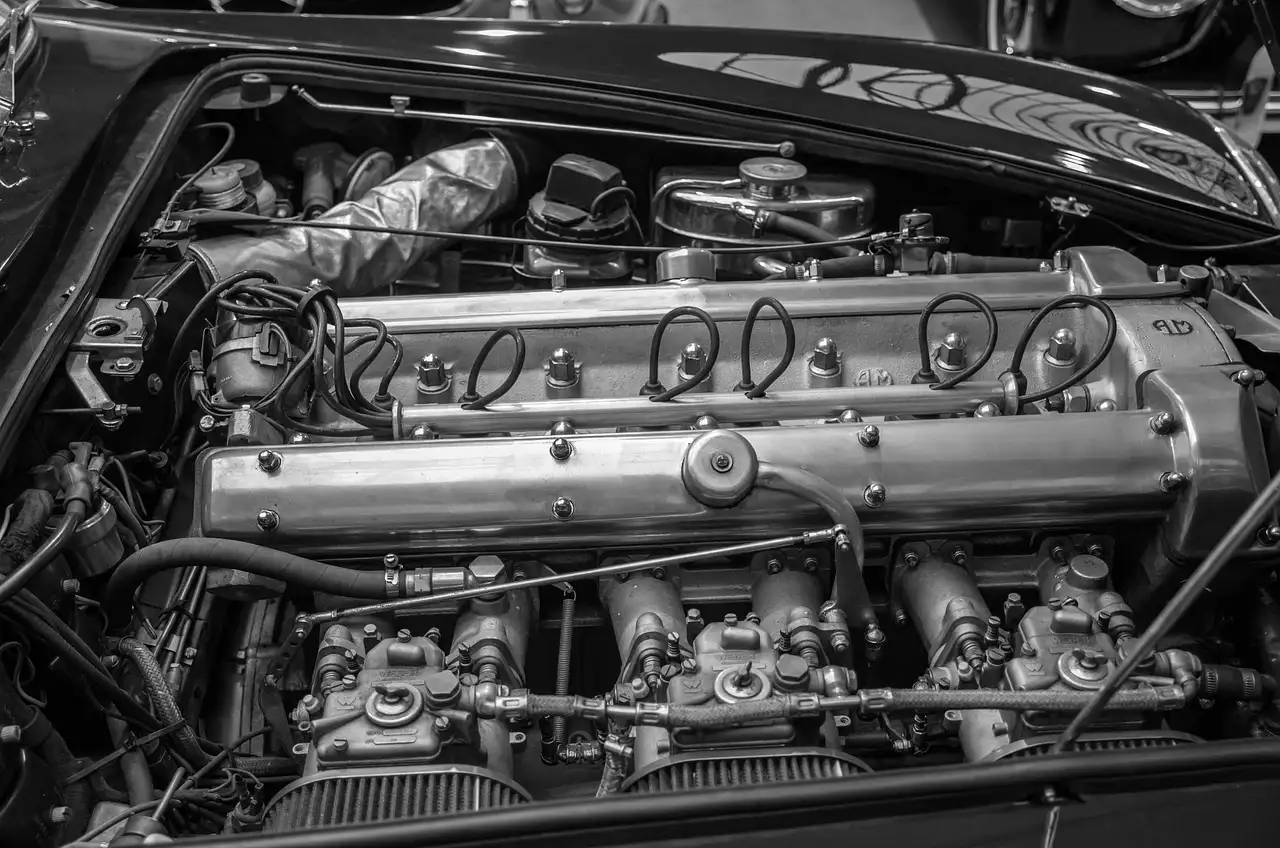
Carburetors are usually easier to diagnose by symptom when the fault is mechanical and visible. EFI is usually easier when live data points straight to the bad circuit. The hard cases are vague symptoms, because both systems can produce the same rough running, hard-start, or flooding complaint.
No-start: fuel delivery, spark, and choke versus injector pulse, pressure, and sensor input
For a carburetor no-start, the first checks are fuel delivery, spark, choke position, and whether the float bowl has fuel. For EFI, the checks shift to injector pulse, fuel pressure, crank or cam sensor input, and ECU power and grounds.
EFI can be quicker if a scan tool exposes the missing signal. The carburetor can be quicker if the fault is obvious on the bench or if the bowl is dry and the problem is mechanical.
Rough idle: idle circuit cleaning versus air leaks, dirty throttle body, or sensor drift
A rough idle on a carburetor often points to a dirty idle circuit, incorrect adjustment, or a vacuum leak. On EFI, the same symptom may come from an air leak, dirty throttle body, injector imbalance, or a sensor drifting out of range.
Carburetor cleaning is usually direct. EFI diagnosis is more layered because the computer may be correcting around the fault until the problem becomes too large to hide.
Flooding and cold-start complaints: choke problems versus sensor or injector faults
Flooding on a carburetor often means a stuck float, bad needle and seat, or choke trouble. Cold-start complaints point to choke behavior, because a street carburetor should have a manual or automatic choke for starting. EFI does not use a choke, but cold-start trouble can come from sensor errors or injector delivery issues.
Fuel injection eliminates waiting for warm-up after a cold start on a cold day, but it replaces the choke with inputs and calibration. That improves consistency, yet it also creates a longer diagnostic path when starting behavior is wrong.
Proof asset: repair difficulty by scenario
This decision matrix focuses on real repair work, not theory. It separates the symptom, the likely tools, and the repair path, because that is where the time gets spent in the garage.
| Scenario | Carburetor: likely tool set | Carburetor: likely repair path | fuel injection: likely tool set | fuel injection: likely repair path | Harder system to repair |
|---|---|---|---|---|---|
| No-start | Hand tools, carb cleaner, spark tester, maybe a vacuum gauge | Check fuel in bowl, verify choke and float, clean jets, inspect for vacuum leaks, confirm spark | Scan tool, fuel-pressure gauge, multimeter, spark tester | Check pressure, injector pulse, crank signal, ECU power and grounds, then repair the failed circuit | fuel injection: which is easier to repair |
| Rough idle | Screwdrivers, carb cleaner, vacuum gauge | Clean idle circuit, inspect gaskets, set mixture and idle speed, check for vacuum leak | Scan tool, smoke test, multimeter | Check for intake leak, sensor drift, throttle-body contamination, injector imbalance | Tie |
| Flooding | Hand tools, float level tools, carb cleaner | Inspect float, needle and seat, choke, and bowl vents; rebuild if wear is obvious | Fuel-pressure gauge, scan tool, multimeter | Check injector leak, pressure regulator, sensor inputs, and ECU enrichment data | fuel injection: which is easier to repair |
| Cold-start issue | Hand tools, carb cleaner, timing light in some cases | Check choke operation, fast idle linkage, and fuel level; adjust or repair choke parts | Scan tool, multimeter, fuel-pressure gauge | Check coolant and air temp inputs, injector behavior, fuel pressure, and ECU logic | fuel injection: which is easier to repair |
| Altitude-related mixture problem | Jetting tools, hand tools, sometimes a wideband gauge | Reduce jet size, adjust mixture, and retest after elevation change | Scan tool, sometimes software access | Verify sensor correction and adaptive fuel trimming; repair only if a sensor or calibration issue exists | Carburetor |
Which system is cheaper to fix, carburetor or fuel injection?
Carburetors are usually cheaper to fix when the fault is a worn gasket, clogged jet, or rebuildable wear item. EFI can be cheaper when the fix is a clear sensor replacement or a simple wiring repair, but the diagnostic time and tool needs can raise the real bill quickly.
Cost by common repair scenario, not just by system
A specialist Holley carburetor rebuild is listed at $325, while a Holley Sniper EFI 2300 kit is listed at $1,299.95. Those figures do not describe every repair, but they do show the gap between a mechanical rebuild and a more complex EFI setup.
The practical cost question is often labor and diagnostic time. A carburetor may need a rebuild kit and a bench afternoon. EFI may need a sensor, then a wire check, then a scan session, then another part if the first guess was wrong.
Can a home mechanic repair a carburetor without a scan tool?
Yes. A home mechanic can repair a carburetor without a scan tool because the work is mostly mechanical: clean passages, replace worn parts, check float operation, and reset basic adjustments. The main risk is misdiagnosis when the real fault is vacuum, ignition, or timing related.
What basic tools are enough
Most carb repairs can be done with hand tools, carb cleaner, a good light, and careful labeling of parts during disassembly. A vacuum gauge helps, but it is not the same as a scan tool. A clean bench matters more than advanced electronics.
That is why carburetors remain attractive on older cars and small engines. They are more forgiving of a simple repair workflow.
Does fuel injection require special diagnostics to repair?
Usually, yes. Fuel injection often needs a scan tool, a multimeter, and a fuel-pressure gauge because the fault may live in sensor data, injector control, pump output, or wire continuity. Without those checks, the repair path can become expensive guesswork.
Why diagnostics matter more with EFI
EFI uses sensor input and ECU control to meter fuel, so the system can correct for changing conditions automatically. That same control makes troubleshooting less visual. A weak signal can produce a strong symptom, and the wrong part may look guilty until data proves otherwise.
Some EFI repairs are still simple. A bad relay, a dead injector, or a failed sensor can be quick to replace once found. The search is the hard part.
What are the common failure points in a carburetor vs fuel injection?
Carburetors usually fail at the fuel passages, float system, gaskets, choke parts, or through outside air leaks. EFI usually fails through contaminated injectors, weak fuel supply, sensor errors, broken wires, poor grounds, or ECU input problems. The symptom can be similar even when the failure point is not.
Failure mode differences that matter in diagnosis
Carburetor faults tend to be mechanical and local. EFI faults often span more than one part because the injector, sensor, wires, and control logic all have to agree for the engine to run correctly.
That is why beginner diagnosis is often easier on a carburetor. The mistake usually sits in front of you.
Is EFI more reliable than a carburetor in cold weather?
EFI is usually easier to live with in cold weather because it improves atomization, fuel mixing, and air/fuel control across conditions. It also eliminates waiting for warm-up after a cold start on a cold day. Carburetors can still work well, but the choke system has to be right.
Cold-start repair burden
On a carburetor, cold-weather problems often point to choke adjustment, fast idle linkage, or fuel level. On EFI, the same complaint may involve coolant temp input, air temp input, injector behavior, or calibration. EFI is usually better once healthy, but the repair path is more technical.
How hard is it to tune a carburetor compared with EFI?
Carburetor tuning is usually simpler in the garage, because the adjustment points are physical and direct. EFI tuning can be easier day to day thanks to adaptive fuel trimming, but ECU mapping or calibration can add software dependence that makes changes slower and more specialized.
Mechanical adjustment versus software dependence
A carburetor uses jets, mixture screws, choke settings, and float level. EFI often needs software access when changes go beyond normal adaptive range. If the issue is a modified engine or a kit that needs calibration, EFI tuning becomes part of the repair, not a separate step.
Altitude shows the difference clearly. Carburetors may need one to two jet-size reductions for every 1,000 feet of elevation gain, while EFI can instantly adapt the air/fuel ratio to changing weather and altitude.
When should I rebuild a carburetor instead of converting to fuel injection?
Rebuild the carburetor when the engine is original or mostly stock, the carb body is complete, and the problem looks like wear, contamination, or a bad choke or float system. Conversion makes more sense when you want automatic altitude and cold-start correction, but conversion is not the same as repair.
Rebuild the carburetor when…
Choose a rebuild when the carb is complete, rebuild kits are available, and the issue is clearly mechanical. It is also the better call for restoration work, older small engines, and situations where bench repair is easier than wiring work.
Carburetors are still used on small engines, motorcycles, outboard engines, and piston-engine aircraft, which tells you where the repair style still fits. The parts are familiar. The workflow is familiar.
Convert to EFI when…
Choose EFI when the engine sees wide weather changes, altitude swings, or frequent cold starts and you want less adjustment afterward. EFI is also the better fit when you are willing to use diagnostic tools and accept that repair work may involve sensors, wires, and software.
That choice is about workflow. Carburetors usually win on hands-on rebuild simplicity. EFI usually wins on staying in tune once the system is healthy.
Choose Carburetor if… / Choose fuel injection if…
Choose a carburetor if you want to rebuild on a bench with hand tools, the engine is older, and the failure looks mechanical. Choose fuel injection if you are comfortable with diagnostics, want automatic correction for weather and altitude, and would rather replace or test a failed component than strip and clean passages.
- Choose a carburetor if the problem is varnish, clogged jets, a stuck float, or dried gaskets.
- Choose a carburetor if you do not have a scan tool and want the shortest path to a bench repair.
- Choose fuel injection if the symptom is vague and you can read live data, test pressure, and check wiring.
- Choose fuel injection if you want fewer mixture changes after a cold start or elevation change.
Frequently asked questions
Is a carburetor easier to repair than fuel injection?
Usually yes. A carburetor is more likely to be repaired with hand tools, a rebuild kit, and cleaning on a bench. Fuel injection often runs better when healthy, but when it fails, the diagnosis usually needs scan data, pressure checks, and wiring tests before parts are replaced.
What is simpler to rebuild: carburetor or fuel injection?
A carburetor is simpler to rebuild. The rebuild path usually involves gaskets, jets, needles, seals, and float parts. Fuel injection is usually repaired by testing and replacing individual pieces such as injectors, sensors, pumps, or wire sections rather than rebuilding the whole system.
Which system is cheaper to fix, carburetor or fuel injection?
Carburetors are often cheaper for common wear repairs because the parts are simple and the labor is mechanical. EFI can be cheaper for a single clear sensor fault, but the diagnostic time and special tools can raise the total cost when the problem is not obvious.
Can a home mechanic repair a carburetor without a scan tool?
Yes. A carburetor can usually be repaired without a scan tool because the failure points are visible and mechanical. Basic hand tools, carb cleaner, and careful disassembly often cover the job, though ignition or vacuum problems can still mimic a carburetor fault.
Does fuel injection require special diagnostics to repair?
Usually yes. Fuel injection often needs a scan tool for live data and fault codes, plus a multimeter and fuel-pressure gauge for electrical and supply checks. Without those tools, the mechanic may replace parts blindly and miss the real cause.
What are the common failure points in a carburetor vs fuel injection?
Carburetors commonly fail from varnish, clogged jets, stuck floats, worn needle and seat parts, dried gaskets, and vacuum leaks. Fuel injection commonly fails from dirty injectors, weak fuel pressure, sensor faults, wiring problems, or ECU input errors that confuse the control system.
Products related to this article
Sponsored / affiliate links. As an Amazon Associate I earn from qualifying purchases. I may earn additional commission from eligible campaigns.
 Fuel Pressure Meter, Fuel Supply System Tester, Diagnostic Tool for Automotive Fuel System, Includes Fuel Pipe and Adapters for Accurate Pressure Measurement
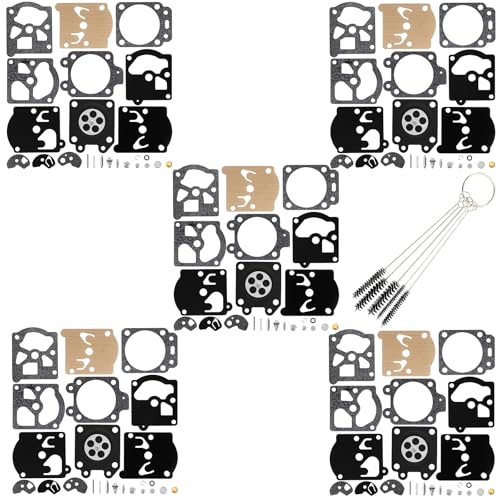 QAZAKY Pack of 5 Carburetor Rebuild Repair Kit Compatible with K10-WAT WA WT 2-Cycle Carb String Trimmer Leaf Blower Chainsaw Poulan Weedeater Ryobi Ryan IDC Homelite Lawnboy Toro McCulloch Craftsman